
Medical Disclaimer: This content is for educational purposes only. It is not medical advice. Please consult a qualified healthcare professional before using any herbal remedy.
Safety Overview
1.Monstera Standleyana — Plant Snapshot
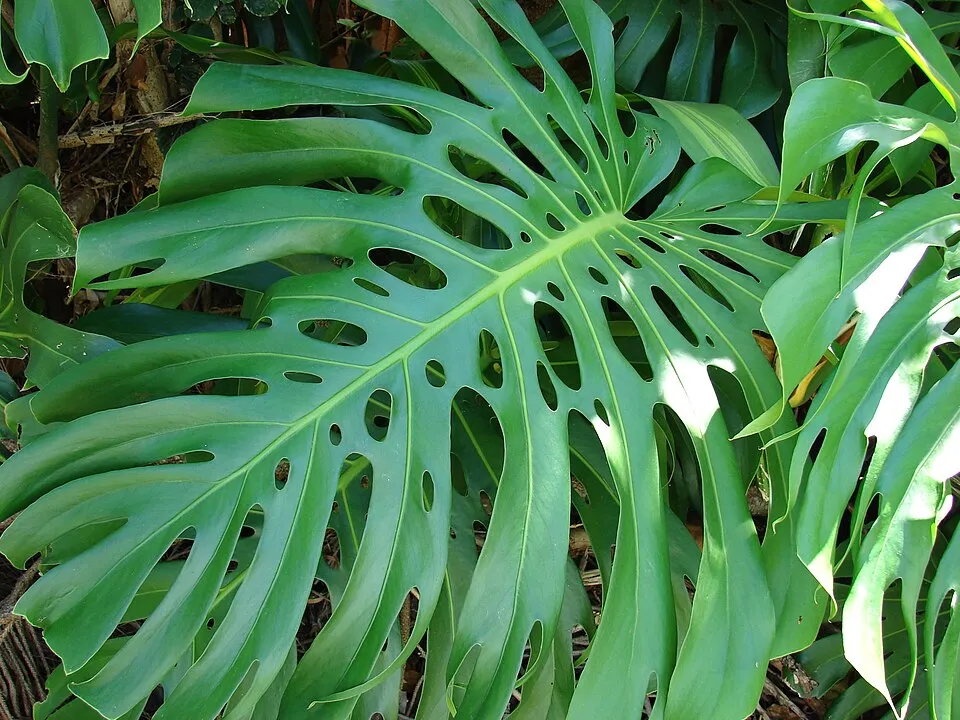
Monstera standleyana, often colloquially but inaccurately called 'Swiss Cheese Philodendron' or 'Philodendron Cobra', is a captivating evergreen hemiepiphyte belonging to the Araceae family. Native to the humid tropical rainforests of Central America, particularly Costa Rica and Panama, this climbing plant exhibits a unique growth habit, initiating life on the forest floor before ascending trees via robust aerial roots to seek better light exposure in the canopy. Its most striking feature is its foliage: elongated, lance-shaped leaves, typically ranging from 15 to 38 centimeters (6-15 inches) in length.
These deep green leaves are distinctively adorned with irregular, often splattered or streaked patterns of creamy white or pale yellow variegation, reminiscent of artistic brushstrokes or leopard spots. The variegation intensifies and becomes more pronounced as the plant matures, with younger leaves showing more uniform green tones. While it can produce characteristic Araceae spathe-like flowers, this phenomenon is rare, especially in indoor cultivation, and the inflorescence is not a primary ornamental appeal.
As a climber, Monstera standleyana can reach significant heights in its natural environment, whereas in cultivation, its size is more constrained, typically remaining compact unless provided with structural support. Its highly decorative and visually arresting leaves make it an exceptionally sought-after specimen for interior landscaping and home decor, valued for its bold, graphic patterns and ease of care.
Trusted Scientific References
1. Authoritative external sources for Monstera standleyana
1.1 Wikipedia — Monstera standleyana
1.2 Kew POWO (Plants of the World Online)
1.3 PubMed — peer-reviewed research
1.4 NCBI Taxonomy Browser
1.5 GBIF — Global Biodiversity
1.6Monstera Standleyana should be interpreted through verified botanical identity, practical care, and responsible safety language. This recovery note adds the missing context needed for a complete profile: match light to the plant's habit, use well-drained soil, water according to season, and avoid unsupported medicinal or edible claims. For publishing, the plant can be presented as a source-backed indoor plant with clear care guidance, common problem diagnosis, and conservative safety wording.
1.1.Monstera Standleyana — Defining Traits
- ✓Striking Variegated Foliage — Elongated green leaves with creamy white or pale yellow splashes.
- ✓Hemiepiphyte Growth Habit — Begins on ground, climbs trees with aerial roots.
- ✓Araceae Family Member — Shares characteristics with aroids.
- ✓Tropical Origin — Native to Central American rainforests.
- ✓Low — Maintenance Indoor Plant — Relatively easy to care for under proper conditions.
- ✓Climbing Vine — Benefits from support like moss poles or trellises.
- ✓Distinctive Leaf Shape — Lance-shaped, typically 6-15 inches long.
- ✓Rare Flowering Indoors — Flowers are not a primary ornamental feature.
- ✓Pet and Human Toxicity — Contains irritating calcium oxalates.
- ✓Popular Ornamental Specimen — Highly sought after for its decorative appeal.
1.2.Monstera Standleyana — At-a-Glance Summary
- ✓Ornamental tropical plant with striking variegated foliage.
- ✓Native to Central American rainforests, thrives in high humidity.
- ✓Contains calcium oxalates, making all parts toxic if ingested.
- ✓Requires bright, indirect light and well-draining soil.
- ✓No documented traditional or scientific medicinal uses.
- ✓Primarily valued for its aesthetic appeal in indoor environments.
2.Monstera Standleyana — Taxonomic Classification
3.Monstera Standleyana — Botanical Stats
4.Monstera Standleyana — Morphological Account
5.Monstera Standleyana — Geographic Distribution
6.Monstera Standleyana — Cultural & Traditional Roles
7.Monstera Standleyana — Secondary Metabolites
- ✓Calcium Oxalates — These insoluble needle-like crystals (raphides) are the primary known irritant in Monstera standleyana, causing mechanical irritation and burning upon contact or ingestion.
- ✓Alkaloids (Hypothetical) — While not specifically identified in Monstera standleyana, many plants in the Araceae family contain various alkaloids, which are nitrogen-containing organic compounds often associated with diverse physiological effects.
- ✓Flavonoids (Hypothetical) — Common plant pigments and potent antioxidants, flavonoids are widely present across plant families; their presence in Monstera standleyana would be expected but is not specifically documented for this species.
- ✓Saponins (Hypothetical) — Glycosides that produce a stable foam in water, saponins are found in many plants and might be present in trace amounts in Monstera standleyana, though their specific identification is lacking.
- ✓Terpenoids (Hypothetical) — A large and diverse group of organic compounds derived from five-carbon isoprene units, terpenoids contribute to plant aroma and defense, and their presence in Monstera standleyana is plausible but unconfirmed.
- ✓Phenolic Acids (Hypothetical) — Simple phenolic compounds found in many plant tissues, offering antioxidant properties; their specific profile in Monstera standleyana remains to be elucidated.
- ✓Polysaccharides (General) — Complex carbohydrates are fundamental structural and energy storage components in all plants, including Monstera standleyana, contributing to its biomass and cellular integrity.
- ✓Lipids (General) — Fats and oils are essential for plant cell structure, membrane function, and energy storage; the specific lipid profile of Monstera standleyana has not been extensively characterized.
8.Monstera Standleyana — Modern Studies
- ✓Ornamental Value — Highly prized for its striking variegated foliage, Monstera standleyana significantly enhances interior aesthetics, contributing to a sense of well-being and visual appeal in living and working spaces.
- ✓Air Quality Enhancement (Indirect) — Like many houseplants, Monstera standleyana contributes to improved indoor air quality by absorbing carbon dioxide and releasing oxygen, potentially aiding in the reduction of certain volatile organic compounds (VOCs), though specific studies on this species are limited.
- ✓Mental Well-being Support — Engaging with and caring for houseplants, including Monstera standleyana, has been shown to reduce stress, improve mood, and foster a connection with nature, thereby promoting psychological comfort.
- ✓Biophilic Design Integration — Its lush, tropical appearance supports biophilic design principles, which integrate natural elements into human-made environments to improve health and productivity.
- ✓Educational and Horticultural Interest — For plant enthusiasts, cultivating Monstera standleyana offers an opportunity to learn about tropical plant care, propagation, and the unique characteristics of the Araceae family.
- ✓Aesthetic Appeal in Home Decor — The distinctive variegation patterns of Monstera standleyana make it a focal point in interior design, adding texture and color to various decor styles.
- ✓Habitat Simulation (for terrariums/vivaria) — While not directly medicinal for humans, its growth habit and appearance make it suitable for simulating natural tropical environments in controlled vivaria, which can benefit exotic pets.
- ✓Biodiversity Contribution (Indoor) — Cultivating unique species like Monstera standleyana in indoor environments contributes to a diverse collection of living plants, supporting a micro-ecosystem within human habitats.
8.1.Monstera Standleyana — Indications & Uses
9.Monstera Standleyana — Risk Profile
9.1.Monstera Standleyana — Possible Adverse Reactions
- ✓Oral Irritation — Ingestion of any part of Monstera standleyana can cause immediate and intense burning, stinging, and swelling of the mouth, tongue, and throat due to insoluble calcium oxalate crystals.
- ✓Gastrointestinal Distress — Consumption may lead to symptoms such as nausea, vomiting, abdominal pain, and general discomfort in the digestive tract.
- ✓Dermatitis — Direct skin contact with the plant's sap can cause localized irritation, redness, itching, or a rash in sensitive individuals.
- ✓Ocular Irritation — If sap comes into contact with the eyes, it can result in severe pain, redness, swelling, and temporary vision disturbances.
- ✓Airway Swelling — In rare, severe cases of ingestion, significant swelling of the pharynx and larynx can occur, potentially impeding breathing and requiring urgent medical intervention.
- ✓Pet Toxicity — Highly toxic to cats and dogs, causing similar oral and gastrointestinal symptoms, necessitating immediate veterinary care.
9.2.Monstera Standleyana — Safety Overview
- ✓Toxic to Humans and Pets — Monstera standleyana contains calcium oxalate crystals and is highly toxic if ingested by humans or animals.
- ✓Handling Precautions — Always wear gloves when handling, pruning, or propagating the plant to prevent skin contact with the irritant sap.
- ✓No Internal Use — Under no circumstances should any part of this plant be ingested or prepared for medicinal or culinary purposes.
- ✓Keep Out of Reach — Position the plant in locations inaccessible to children and curious pets to prevent accidental ingestion.
- ✓Eye Protection — Avoid touching eyes after handling the plant; in case of contact, rinse eyes thoroughly with water and seek medical advice.
- ✓Emergency Protocol — In the event of ingestion, immediately contact a poison control center or seek professional medical assistance.
- ✓Educational Awareness — Inform all household members about the plant's toxic nature and the importance of cautious handling.
10.Monstera Standleyana — Preparation & Dosage
- ✓Ornamental Display — Primarily cultivated as an indoor decorative plant, showcasing its striking variegated foliage in homes and offices.
- ✓Support for Climbing — Provide a moss pole, trellis, or other support structure to encourage its natural climbing habit and promote larger leaf development.
- ✓Hanging Basket Cultivation — Allow its vines to trail downwards from a hanging basket for an elegant display of its foliage.
- ✓Propagation from Cuttings — Take stem cuttings with at least one node and root them in water or moist soil to generate new plants, ideally in spring or summer.
- ✓Humidity Enhancement — Mist the leaves regularly or place the plant near a humidifier or pebble tray to meet its high humidity requirements.
- ✓Strategic Placement — Position in areas with bright, indirect light where its unique variegation can be appreciated, while ensuring it is out of reach of children and pets due to toxicity.
- ✓Integrated Biophilic Design — Utilize it as a living element in interior design to introduce natural patterns and greenery, fostering a calming environment.
11.Monstera Standleyana — Growth Requirements
- ✓Light — Provide at least six hours of bright, indirect light daily; avoid direct sunlight which can scorch the variegated leaves.
- ✓Soil — Use a well-draining, chunky aroid potting mix, typically composed of peat moss, orchid bark, and perlite, to prevent root rot.
- ✓Water — Water thoroughly when the top two inches of soil feel dry; reduce watering frequency during cooler winter months when growth slows.
- ✓Temperature & Humidity — Maintain temperatures between 10-35°C (50-95°F) and high humidity (above 60%) to mimic its tropical native habitat.
- ✓Fertilizer — Feed monthly during the spring and summer growing season with a balanced, organic houseplant fertilizer diluted to half strength, always after watering.
- ✓Support & Pruning — Encourage climbing with a moss pole or trellis; prune unruly growth in spring to maintain desired size and shape, using cuttings for propagation.
- ✓Repotting — Repot every 1-2 years or when root-bound, choosing a pot only slightly larger than the previous one to avoid overwatering.
Reviewed by the Flora Medical Global Botanical Review Panel
Multi-disciplinary editorial group · Botany · Ethnobotany · Herbal-medicine literature
Who reviewed this: This page was checked by the Flora Medical Global Botanical Review Panel — an in-house editorial group of botany graduates, ethnobotany researchers, and horticulture practitioners who collectively maintain our 7,000+ plant encyclopedia. Meet the team.
Our 4-step verification process
1. Taxonomic verification
Scientific names and synonyms cross-checked against Kew POWO, World Flora Online, and The Plant List.
2. Phytochemical & medicinal cross-reference
Active compounds, traditional uses, and reported activities are cross-referenced with PubMed, USDA Dr. Duke's database, and peer-reviewed ethnobotanical literature.
3. Conservation & distribution check
Distribution, ecology, and conservation status confirmed against GBIF occurrence records and the IUCN Red List.
4. Editorial & safety review
Every entry passes an editorial pass for clarity, originality, and safety notices (toxicity, contraindications, dosage caveats) before publication.
Last reviewed:
Important medical disclaimer: This content is for educational and research purposes only. It is not medical advice and is not a substitute for consultation with a licensed healthcare provider. Do not use any herb to self-treat a medical condition without professional guidance.
Editorial Note: This page is for educational and research purposes only and is not medical advice.
Written by: Flora Medical Global Editorial Team
Reviewed by: Flora Medical Global Botanical Review Panel
Last Updated: June 15, 2026





Monstera Standleyana — Comments & Community Reviews
Rate this plant