


Medical Disclaimer: This content is for educational purposes only. It is not medical advice. Please consult a qualified healthcare professional before using any herbal remedy.
Safety Overview
1.Monstera Thai Constellation — Overview
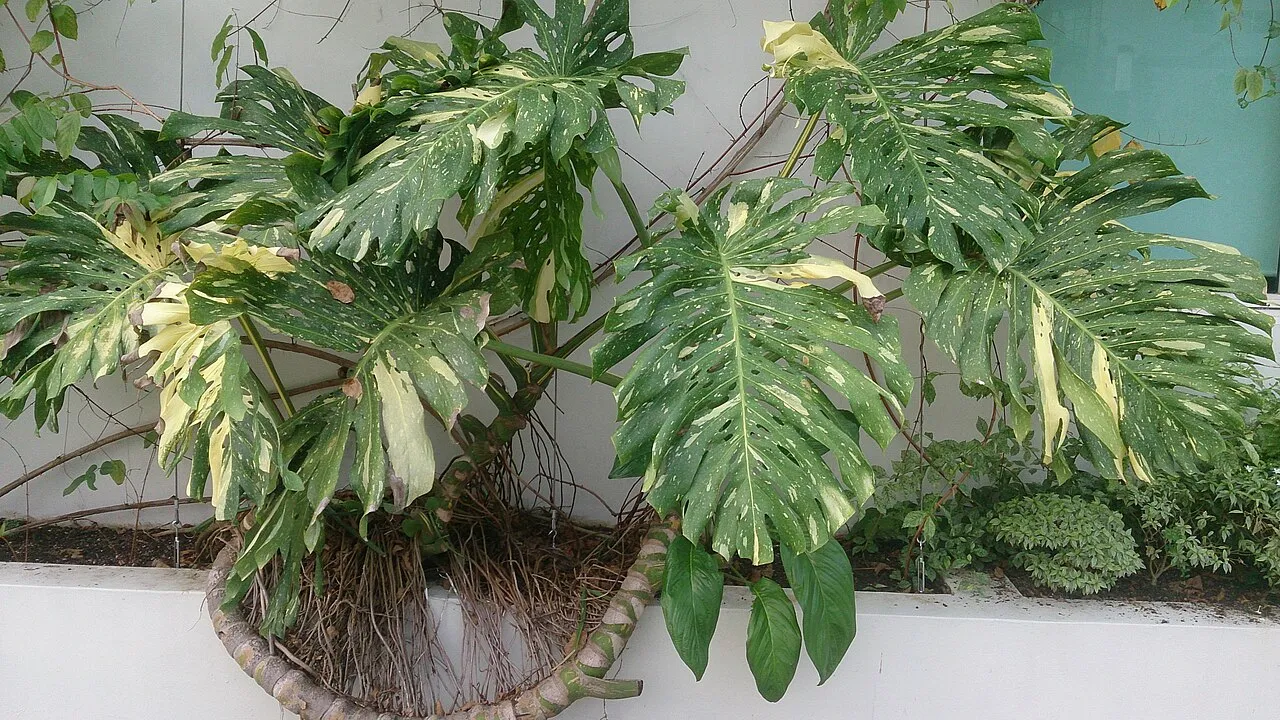
Monstera deliciosa 'Thai Constellation' is a highly prized and distinctive cultivar of the classic Monstera deliciosa, belonging to the Araceae family. This evergreen perennial vine is celebrated for its spectacular foliage, which sets it apart from its all-green parent species. The leaves are typically dark green, generously speckled and splashed with creamy-white to pale yellow variegation, creating a unique pattern reminiscent of a starry night sky.
This variegation is stable and randomly distributed, ensuring each leaf develops its own unique design. In its juvenile stage, the leaves are heart-shaped, gradually developing the characteristic fenestrations—splits and holes—as they mature, a hallmark trait of the Monstera genus that optimizes light capture and reduces wind resistance in its natural habitat.
Native to the tropical rainforests of Central and South America, the parent species, Monstera deliciosa, thrives as an epiphyte or hemiepiphyte, utilizing its thick, rope-like aerial roots to anchor itself to trees and absorb moisture and nutrients from the air and supporting structures. The 'Thai Constellation' cultivar was specifically developed and popularized in Thailand, hence its name, through tissue culture propagation.
While cultivated specimens rarely produce the characteristic spathe and spadix inflorescence of the parent species, its primary value lies in its dramatic aesthetic appeal and its status as a highly sought-after specimen for indoor cultivation and plant collectors worldwide.
Trusted Scientific References
1. Authoritative external sources for Monstera deliciosa Thai
1.1 Wikipedia — Monstera deliciosa Thai
1.2 Kew POWO (Plants of the World Online)
1.3 PubMed — peer-reviewed research
1.4 NCBI Taxonomy Browser
1.5 GBIF — Global Biodiversity
1.6Monstera Thai Constellation should be interpreted through verified botanical identity, practical care, and responsible safety language. This recovery note adds the missing context needed for a complete profile: match light to the plant's habit, use well-drained soil, water according to season, and avoid unsupported medicinal or edible claims. For publishing, the plant can be presented as a source-backed indoor plant with clear care guidance, common problem diagnosis, and conservative safety wording.
1.1.Monstera Thai Constellation — Key Features
- ✓Stable Variegation — 'Thai Constellation' exhibits genetically stable, creamy-white to pale yellow speckles and splashes on its dark green foliage.
- ✓Fenestrated Leaves — Mature leaves develop characteristic natural splits and holes, enhancing their exotic appearance.
- ✓Epiphytic Growth Habit — Naturally climbs using aerial roots, benefiting from support structures like moss poles in cultivation.
- ✓Large Foliage — Produces substantial, heart-shaped leaves that can reach impressive sizes indoors with proper care.
- ✓Highly Collectible — A sought-after and rare cultivar, making it a prized possession for plant enthusiasts and collectors.
- ✓Tropical Origin — Requires warm temperatures and high humidity, indicative of its Central and South American rainforest ancestry.
- ✓Slow Growth Rate — Generally grows slower than its non-variegated Monstera deliciosa counterparts due to reduced chlorophyll in variegated areas.
- ✓Aroid Family Member — Belongs to the Araceae family, known for containing calcium oxalate crystals in most of its species.
- ✓Prominent Aerial Roots — Develops thick, rope-like aerial roots that aid in anchoring and nutrient absorption.
- ✓Distinctive Leaf Coloration — The dramatic contrast between dark green and creamy variegation is its most defining visual characteristic.
1.2.Monstera Thai Constellation — At-a-Glance Summary
- ✓Striking Variegation — Features unique creamy-white speckles and splashes on dark green leaves, creating a 'starry night' effect.
- ✓Ornamental Specimen — Highly valued and primarily cultivated for its exceptional aesthetic appeal and collectible status.
- ✓Contains Calcium Oxalate — All parts of the plant are toxic if ingested and can cause severe irritation upon contact.
- ✓Specific Care Requirements — Thrives in bright, indirect light, high humidity, consistent moisture, and a well-draining aroid mix.
- ✓No Medicinal Benefits — This specific cultivar has no established traditional or modern medicinal uses.
- ✓Parent Species Toxicity — While the parent species, Monstera deliciosa, has some traditional uses for its ripe fruit, its overall toxicity due to calcium oxalate remains a key safety consideration.
2.Monstera Thai Constellation — Taxonomic Classification
3.Monstera Thai Constellation — Reference Facts
4.Monstera Thai Constellation — Structural Profile
5.Monstera Thai Constellation — Geographic Distribution
6.Monstera Thai Constellation — Ethnobotanical Uses
7.Monstera Thai Constellation — Active Compounds
- ✓The phytochemistry of Monstera deliciosa Thai largely mirrors that of its parent species, Monstera deliciosa, characterized by several compounds, some of which are irritants:
- ✓Calcium Oxalate Crystals — Abundant needle-like raphides (calcium oxalate monohydrate) are present in all plant parts, causing severe irritation upon contact or ingestion.
- ✓Saponins — Glycosides that can cause gastrointestinal upset if consumed in significant quantities, also contributing to the plant's defense mechanisms.
- ✓Flavonoids — A diverse group of polyphenolic compounds, such as quercetin derivatives, contributing to the plant's coloration and offering potential antioxidant activity in a general plant context.
- ✓Phenolic Acids — Compounds like gallic acid and caffeic acid derivatives are present, which are known for their antioxidant properties in many plant species.
- ✓Proteins and Amino Acids — Essential for plant growth and metabolic functions, forming the structural and enzymatic components of cells.
- ✓Carbohydrates — Sugars and starches, serving as primary energy sources and structural components within the plant's tissues.
- ✓Triterpenes — A class of organic compounds, some of which are known for anti-inflammatory or cytotoxic activities in other plant species, present in trace amounts.
- ✓Lipids — Fats and oils crucial for cell membrane integrity, energy storage, and various physiological processes.
- ✓Volatile Organic Compounds (VOCs) — Released in small quantities, contributing to the plant's subtle scent and interaction with its environment.
- ✓Lectins — Proteins that can bind to carbohydrates, potentially causing digestive discomfort if ingested, though their concentration in Monstera is not well-studied.
8.Monstera Thai Constellation — Research Insights
- ✓While Monstera deliciosa Thai is primarily cultivated for its ornamental value and does not have established medicinal uses, the parent species, Monstera deliciosa, and general houseplant properties offer some indirect benefits:
- ✓Ornamental Value — The primary benefit, providing significant aesthetic appeal and enhancing interior spaces, contributing to a sense of well-being.
- ✓Air Purification — Like many indoor plants, it contributes to improved indoor air quality by absorbing common airborne toxins, though specific efficacy for this cultivar is not quantified.
- ✓Psychological Well-being — The presence of lush, variegated foliage can reduce stress, improve mood, and foster a connection with nature in indoor environments.
- ✓Horticultural Therapy — Engaging with the unique care requirements and aesthetic beauty of this plant can offer therapeutic benefits through focused attention and nurturing.
- ✓Traditional Uses (Parent Species Fruit) — The ripe fruit of Monstera deliciosa has been traditionally used in some folk medicine systems as a mild diuretic and astringent.
- ✓Anti-inflammatory Potential (Parent Species) — Extracts from the roots of Monstera deliciosa have been explored in traditional practices for their potential anti-inflammatory properties, though scientific validation is limited.
- ✓Analgesic Properties (Parent Species) — Some indigenous communities have historically utilized parts of Monstera deliciosa for general pain relief, requiring careful preparation due to its irritant compounds.
- ✓Digestive Aid (Parent Species Fruit) — When fully ripe, the fruit of the parent species is sometimes consumed to support digestive regularity due to its mild laxative effects.
- ✓Antioxidant Activity (General Plant) — Many plants, including those in the Araceae family, contain flavonoids and other phenolic compounds that exhibit general antioxidant properties.
- ✓Aesthetic Stimulation — The striking contrast and unique patterns of its variegation provide visual interest and can be a focal point in plant collections, fostering engagement.
- ✓Collector's Item — Its rarity and beauty elevate its status as a collector's plant, providing a sense of achievement and community for enthusiasts.
- ✓Humidifying Effect — Transpiration from its large leaves can contribute to slightly increased ambient humidity, beneficial in dry indoor climates.
8.1.Monstera Thai Constellation — Conditions Traditionally Used For
9.Monstera Thai Constellation — Adverse Effects
9.1.Monstera Thai Constellation — Caution Notes
- ✓Ingestion or contact with Monstera deliciosa Thai can lead to several adverse effects due to its calcium oxalate content:
- ✓Oral Irritation — Severe burning sensation, pain, and swelling of the mouth, tongue, lips, and throat immediately upon ingestion.
- ✓Digestive Upset — Nausea, vomiting, abdominal pain, and diarrhea may occur following accidental ingestion of plant material.
- ✓Skin Irritation — Direct contact with the sap can cause contact dermatitis, characterized by itching, redness, and a burning sensation on sensitive skin.
- ✓Ocular Irritation — Exposure of sap to the eyes can result in intense pain, redness, swelling, and temporary vision disturbances.
- ✓Pet Toxicity — Highly toxic to animals; ingestion can cause excessive drooling, pawing at the mouth, vocalization of pain, and vomiting in pets.
- ✓Respiratory Distress — In severe cases of oral swelling, especially in sensitive individuals or children, breathing difficulties may arise, requiring immediate medical intervention.
- ✓Allergic Reactions — Although rare, individuals with extreme sensitivity may experience more pronounced allergic responses to plant compounds.
9.2.Monstera Thai Constellation — Safety Overview
- ✓Due to the presence of calcium oxalate crystals, specific safety measures must be strictly observed when handling Monstera deliciosa Thai:
- ✓Keep Out of Reach — Always ensure the plant is positioned in an area inaccessible to children and pets to prevent accidental ingestion.
- ✓Wear Protective Gear — Use gloves when handling the plant, particularly during pruning, repotting, or propagation, to avoid skin contact with the irritant sap.
- ✓Hand Hygiene — Thoroughly wash hands with soap and water immediately after any contact with the plant, even if gloves were worn.
- ✓Avoid Eye Contact — Prevent sap from coming into contact with eyes; in case of exposure, flush eyes immediately with copious amounts of water and seek medical attention.
- ✓No Internal Use — Explicitly understand and communicate that this plant is strictly for ornamental purposes and should never be ingested or used medicinally.
- ✓Immediate Medical Attention — In the event of ingestion or severe irritation, contact a poison control center or emergency medical services without delay.
- ✓Inform Others — Educate all household members and visitors about the plant's toxic nature and the necessary precautions.
10.Monstera Thai Constellation — Preparation & Dosage
- ✓Given that Monstera deliciosa Thai is primarily an ornamental plant, usage methods focus on its cultivation, display, and safety:
- ✓Indoor Display — Position the plant in a prominent indoor location to showcase its striking variegated foliage, serving as a decorative focal point in living spaces or offices.
- ✓Aesthetic Enhancement — Integrate into interior design schemes to add a touch of tropical elegance and natural beauty, complementing various decor styles.
- ✓Horticultural Specimen — Cultivate as a prized plant collection specimen, valued for its rarity, unique patterns, and the challenge of its specialized care requirements.
- ✓Air Quality Contribution — As a general houseplant, it contributes to indoor air circulation and can help filter common airborne particulates, enhancing the living environment.
- ✓Propagation — Propagate through stem cuttings, ensuring each cutting has at least one node and aerial root, for expanding collections or sharing with enthusiasts.
- ✓Training and Support — Guide its aerial roots to attach to a moss pole or support structure, encouraging the plant to climb and develop larger, more fenestrated leaves.
- ✓Leaf Care — Regularly wipe leaves gently with a damp cloth to remove dust, which not only enhances its aesthetic appeal but also improves photosynthetic efficiency.
- ✓Safety Management — Always handle with gloves when pruning or repotting, and ensure the plant is placed out of reach of children and pets due to its toxic nature.
11.Monstera Thai Constellation — Growing Guide
- ✓Potting Mix — Use a highly aerated, well-draining, chunky aroid mix, typically composed of orchid bark, perlite, pumice, and coco coir, to prevent root rot.
- ✓Lighting — Provide bright, indirect light; direct sunlight can scorch the variegated leaves, while insufficient light may reduce variegation and slow growth.
- ✓Watering — Water thoroughly when the top 1-2 inches of soil feel dry, ensuring excess water drains completely, and avoid letting the plant sit in standing water.
- ✓Humidity — Maintain high humidity levels, ideally 60-80%, through regular misting, a humidifier, or a pebble tray, to prevent leaf crisping and promote healthy growth.
- ✓Temperature — Keep ambient temperatures consistently between 18-29°C (65-85°F), protecting the plant from cold drafts and sudden temperature drops.
- ✓Fertilization — Fertilize sparingly during the active growing season (spring and summer) with a balanced liquid fertilizer diluted to half strength, reducing or ceasing in winter.
- ✓Support Structure — Provide a sturdy moss pole or trellis for its aerial roots to climb, encouraging larger leaf development and mimicking its natural epiphytic habit.
- ✓Repotting — Repot only when root-bound, typically every 1-2 years, increasing pot size by a maximum of 1-2 inches to avoid overwhelming the root system with too much moist soil.
Reviewed by the Flora Medical Global Botanical Review Panel
Multi-disciplinary editorial group · Botany · Ethnobotany · Herbal-medicine literature
Who reviewed this: This page was checked by the Flora Medical Global Botanical Review Panel — an in-house editorial group of botany graduates, ethnobotany researchers, and horticulture practitioners who collectively maintain our 7,000+ plant encyclopedia. Meet the team.
Our 4-step verification process
1. Taxonomic verification
Scientific names and synonyms cross-checked against Kew POWO, World Flora Online, and The Plant List.
2. Phytochemical & medicinal cross-reference
Active compounds, traditional uses, and reported activities are cross-referenced with PubMed, USDA Dr. Duke's database, and peer-reviewed ethnobotanical literature.
3. Conservation & distribution check
Distribution, ecology, and conservation status confirmed against GBIF occurrence records and the IUCN Red List.
4. Editorial & safety review
Every entry passes an editorial pass for clarity, originality, and safety notices (toxicity, contraindications, dosage caveats) before publication.
Last reviewed:
Important medical disclaimer: This content is for educational and research purposes only. It is not medical advice and is not a substitute for consultation with a licensed healthcare provider. Do not use any herb to self-treat a medical condition without professional guidance.
Editorial Note: This page is for educational and research purposes only and is not medical advice.
Written by: Flora Medical Global Editorial Team
Reviewed by: Flora Medical Global Botanical Review Panel
Last Updated: June 15, 2026





Monstera Thai Constellation — Comments & Community Reviews
Rate this plant