
Medical Disclaimer: This content is for educational purposes only. It is not medical advice. Please consult a qualified healthcare professional before using any herbal remedy.
Safety Overview
1.Moraea Polystachya — Botanical Snapshot
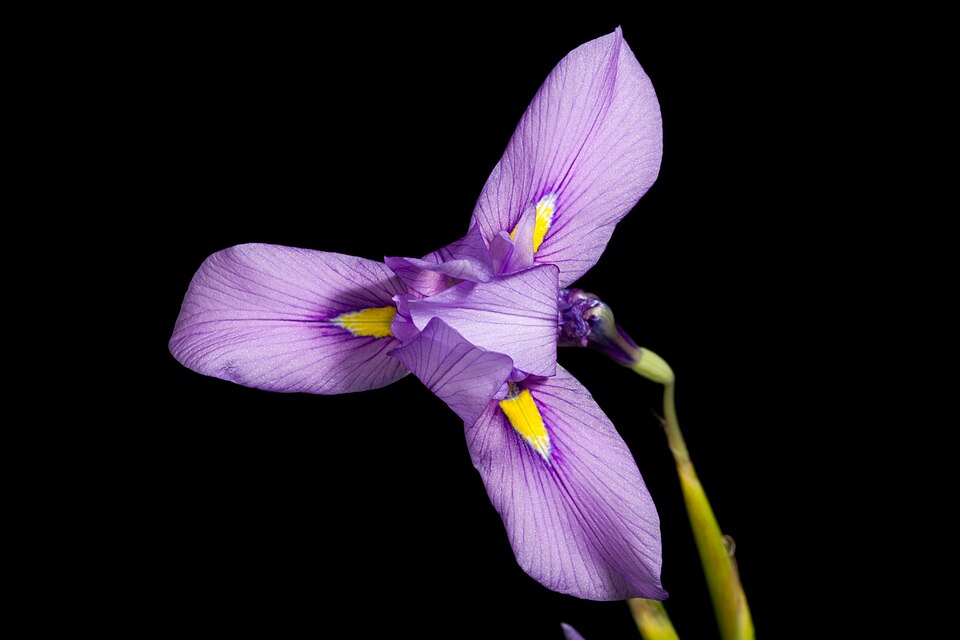
Moraea polystachya, commonly known as the African iris, blue tulp, or poison moraea, is a captivating perennial geophyte belonging to the Iridaceae family. This species is indigenous to the arid and semi-arid regions of southern Africa, with a wide distribution across South Africa, Lesotho, Eswatini, and Namibia. It thrives in diverse habitats including grasslands, open woodlands, rocky slopes, and well-drained flats often associated with calcrete deposits. Characterized by its striking, iris-like flowers, which typically bloom in autumn, winter, or spring depending on the region, these displays can be a mesmerizing sight.
The flowers exhibit a range of colors from deep blue and violet to occasionally white, each featuring three upright petals and three drooping sepals, often adorned with distinctive yellow or orange nectar guides at their base. The plant grows from a large, dark-coated corm, producing 3-6 narrow, strap-shaped leaves that are typically 6-12 mm wide and slightly twisted. These leaves emerge basally and can reach up to 50 cm in length, forming a fan-like arrangement. The flowering stems are notably branched, reaching an average height of 0.8 meters, which contributes to the species epithet 'polystachya', meaning 'many-branched'.
Each individual flower is ephemeral, lasting only a day, but a succession of blooms ensures a prolonged flowering period of six to eight weeks. While aesthetically pleasing, it is crucial to note its significant toxicity to livestock, earning it the common name 'poison moraea'.
Trusted Scientific References
1. Authoritative external sources for Moraea Polystachya
1.1 Wikipedia — Moraea Polystachya
1.2 Kew POWO (Plants of the World Online)
1.3 PubMed — peer-reviewed research
1.4 NCBI Taxonomy Browser
1.5 GBIF — Global Biodiversity
1.6Moraea Polystachya should be interpreted through verified botanical identity, practical care, and responsible safety language. This recovery note adds the missing context needed for a complete profile: match light to the plant's habit, use well-drained soil, water according to season, and avoid unsupported medicinal or edible claims. For publishing, the plant can be presented as a source-backed garden plant with clear care guidance, common problem diagnosis, and conservative safety wording.
1.1.Moraea Polystachya — Notable Characteristics
- ✓Species — Moraea polystachya (Thunb.) Ker Gawl.
- ✓Family — Iridaceae (Iris Family).
- ✓Common Names — African iris, blue tulp, poison moraea.
- ✓Native Range — Southern Africa (South Africa, Lesotho, Eswatini, Namibia).
- ✓Flower Color — Blue, violet, occasionally white, with yellow/orange nectar guides.
- ✓Flowering Period — Autumn, winter, or spring, depending on region.
- ✓Plant Type — Perennial geophyte with a corm.
- ✓Toxicity — Highly toxic due to cardiac glycosides.
- ✓Habitat — Grasslands, woodlands, rocky slopes, well-drained flats.
- ✓Growth Habit — Branched stems up to 0.8m, strap-shaped leaves.
1.2.Moraea Polystachya — At-a-Glance Summary
- ✓Moraea polystachya is a beautiful, highly toxic African iris.
- ✓Contains cardiac glycosides, lethal to livestock and humans upon ingestion.
- ✓Native to Southern Africa, thriving in arid to semi-arid regions.
- ✓Characterized by striking blue/violet flowers and strap-shaped leaves.
- ✓Primarily used for ornamental purposes due to its aesthetic appeal.
- ✓Requires careful handling and strict avoidance of consumption.
2.Moraea Polystachya — Scientific Identity
3.Moraea Polystachya — Fact Sheet
4.Moraea Polystachya — Botanical Description
5.Moraea Polystachya — Ecological Habitat
6.Moraea Polystachya — Heritage Uses
7.Moraea Polystachya — Phytochemistry
- ✓Cardiac Glycosides — The primary toxic compounds, responsible for its poisonous effects on livestock and humans, affecting heart function.
- ✓Flavonoids — Potentially present in various parts, known for antioxidant and anti-inflammatory properties, though specific to Moraea polystachya are not well-documented.
- ✓Saponins — May contribute to foaming properties and potential mild toxicity, depending on their specific structure and concentration.
- ✓Alkaloids — While not specifically identified as major constituents, many plant species contain alkaloids with diverse pharmacological activities.
- ✓Terpenoids — Could be present, offering various biological activities such as antimicrobial or insecticidal properties.
- ✓Phenolic Compounds — General class of plant compounds with antioxidant capacity, contributing to plant defense mechanisms.
- ✓Fatty Acids — Found in corms as energy storage, essential for plant growth and dormancy.
- ✓Sugars — Simple and complex carbohydrates stored in the corms, providing energy for growth and flowering.
- ✓Proteins — Essential structural and enzymatic components within the plant cells, including enzymes involved in toxin synthesis.
8.Moraea Polystachya — Scientific Evidence
- ✓Ornamental Value — Widely cultivated for its striking, iris-like flowers, enhancing aesthetic appeal in gardens and landscapes, particularly in xeriscaping.
- ✓Ecological Role — Attracts essential pollinators such as bees and butterflies, contributing to local biodiversity and ecosystem health.
- ✓Drought Tolerance — Once established, it exhibits remarkable drought resistance, making it suitable for water-wise gardening and arid environments.
- ✓Soil Stabilization — Its robust corm and root system can help stabilize soil in erosion-prone areas.
- ✓Historical Indigenous Use — Corms were historically used by some indigenous populations, though caution is paramount due to toxicity and misidentification risks with edible species.
- ✓Adaptation to Harsh Climates — Thrives in environments with extreme temperatures and varied rainfall patterns, indicating resilience and hardiness.
- ✓Research Subject — Serves as a valuable subject for botanical and toxicological research, contributing to understanding plant adaptations and natural toxins.
- ✓Bee Pollination — Its floral structure is specifically adapted for bee pollination, highlighting its role in supporting pollinator populations.
- ✓Xeriscaping Plant — Excellent choice for low-water landscaping due to its minimal water requirements once established.
8.1.Moraea Polystachya — Health Applications
9.Moraea Polystachya — Cautions & Contraindications
9.1.Moraea Polystachya — Side Effects & Warnings
- ✓Severe Cardiac Toxicity — Ingestion of any part, especially corms, causes fatal cardiac glycoside poisoning in animals and humans.
- ✓Gastrointestinal Distress — Symptoms include nausea, vomiting, diarrhea, and abdominal pain upon ingestion.
- ✓Neurological Symptoms — May lead to tremors, weakness, and incoordination in affected animals.
- ✓Respiratory Issues — Can cause labored breathing and respiratory distress in severe cases of poisoning.
- ✓Skin Irritation — Direct contact with plant sap might cause mild skin irritation or allergic reactions in sensitive individuals.
- ✓Livestock Mortality — A significant cause of death for grazing cattle, sheep, and goats, particularly when other forage is scarce.
- ✓Human Fatalities — Rare but documented cases of fatal human poisoning from corms mistaken for edible species.
9.2.Moraea Polystachya — Safety Overview
- ✓HIGH TOXICITY — All parts of Moraea polystachya, particularly the corms, are highly poisonous due to cardiac glycosides.
- ✓NOT FOR INGESTION — Absolutely contraindicated for human or animal consumption; can be fatal.
- ✓EXTREME CAUTION AROUND LIVESTOCK — Keep grazing animals away from areas where this plant grows.
- ✓AVOID MISIDENTIFICATION — Do not confuse corms with those of edible species; this is a common cause of accidental poisoning.
- ✓HANDLE WITH GLOVES — Wear gloves when handling the plant to prevent potential skin irritation.
- ✓KEEP OUT OF REACH OF CHILDREN AND PETS — Ensure children and pets cannot access or ingest any part of the plant.
- ✓SEEK IMMEDIATE MEDICAL ATTENTION — In case of accidental ingestion, contact poison control or emergency services immediately.
10.Moraea Polystachya — Preparation Methods
- ✓Ornamental Display — Primarily used for its aesthetic appeal in gardens, rockeries, and xeriscapes.
- ✓Landscape Design — Ideal for mass planting to create striking visual displays in suitable climates.
- ✓Botanical Research — Employed in scientific studies to understand plant toxicity, adaptation, and morphology.
- ✓Conservation Efforts — Cultivated in botanical gardens for species preservation and educational purposes.
- ✓Pollinator Garden Inclusion — Planted to attract and support local bee and butterfly populations.
- ✓Historical Craft — Leaves were historically plaited into mats by indigenous groups, though this use is not widely practiced today.
- ✓Avoid Ingestion — Due to high toxicity, no internal consumption or medicinal application is recommended for humans or livestock.
- ✓Caution with Livestock — Implement measures to prevent grazing animals from accessing the plant, especially during scarcity of other forage.
11.Moraea Polystachya — How to Grow
- ✓Planting Depth — Plant corms at a depth two to three times their diameter in well-drained soil.
- ✓Soil Requirements — Prefers well-drained soil mixtures; tolerates a range of soil types but avoids waterlogging.
- ✓Watering Schedule — Water lightly until sprouting, then increase, but never over-water; established plants are drought-tolerant.
- ✓Sunlight Exposure — Thrives in full sun to partial shade for optimal growth and flowering.
- ✓Fertilization — Fertilize sparingly, as excessive nutrients can negatively impact growth.
- ✓Winter Protection — Protect corms from freezing temperatures during dormancy, especially in colder climates.
- ✓Seed Propagation — Sow seeds in late summer or autumn; germination is generally reliable.
- ✓Pest Management — Monitor for common pests like red spider mites and aphids, treating as necessary.
Reviewed by the Flora Medical Global Botanical Review Panel
Multi-disciplinary editorial group · Botany · Ethnobotany · Herbal-medicine literature
Who reviewed this: This page was checked by the Flora Medical Global Botanical Review Panel — an in-house editorial group of botany graduates, ethnobotany researchers, and horticulture practitioners who collectively maintain our 7,000+ plant encyclopedia. Meet the team.
Our 4-step verification process
1. Taxonomic verification
Scientific names and synonyms cross-checked against Kew POWO, World Flora Online, and The Plant List.
2. Phytochemical & medicinal cross-reference
Active compounds, traditional uses, and reported activities are cross-referenced with PubMed, USDA Dr. Duke's database, and peer-reviewed ethnobotanical literature.
3. Conservation & distribution check
Distribution, ecology, and conservation status confirmed against GBIF occurrence records and the IUCN Red List.
4. Editorial & safety review
Every entry passes an editorial pass for clarity, originality, and safety notices (toxicity, contraindications, dosage caveats) before publication.
Last reviewed:
Important medical disclaimer: This content is for educational and research purposes only. It is not medical advice and is not a substitute for consultation with a licensed healthcare provider. Do not use any herb to self-treat a medical condition without professional guidance.
Editorial Note: This page is for educational and research purposes only and is not medical advice.
Written by: Flora Medical Global Editorial Team
Reviewed by: Flora Medical Global Botanical Review Panel
Last Updated: June 15, 2026





Moraea Polystachya — Comments & Community Reviews
Rate this plant