


Medical Disclaimer: This content is for educational purposes only. It is not medical advice. Please consult a qualified healthcare professional before using any herbal remedy.
Safety Overview
1.Mountain Ash — Introduction & Highlights
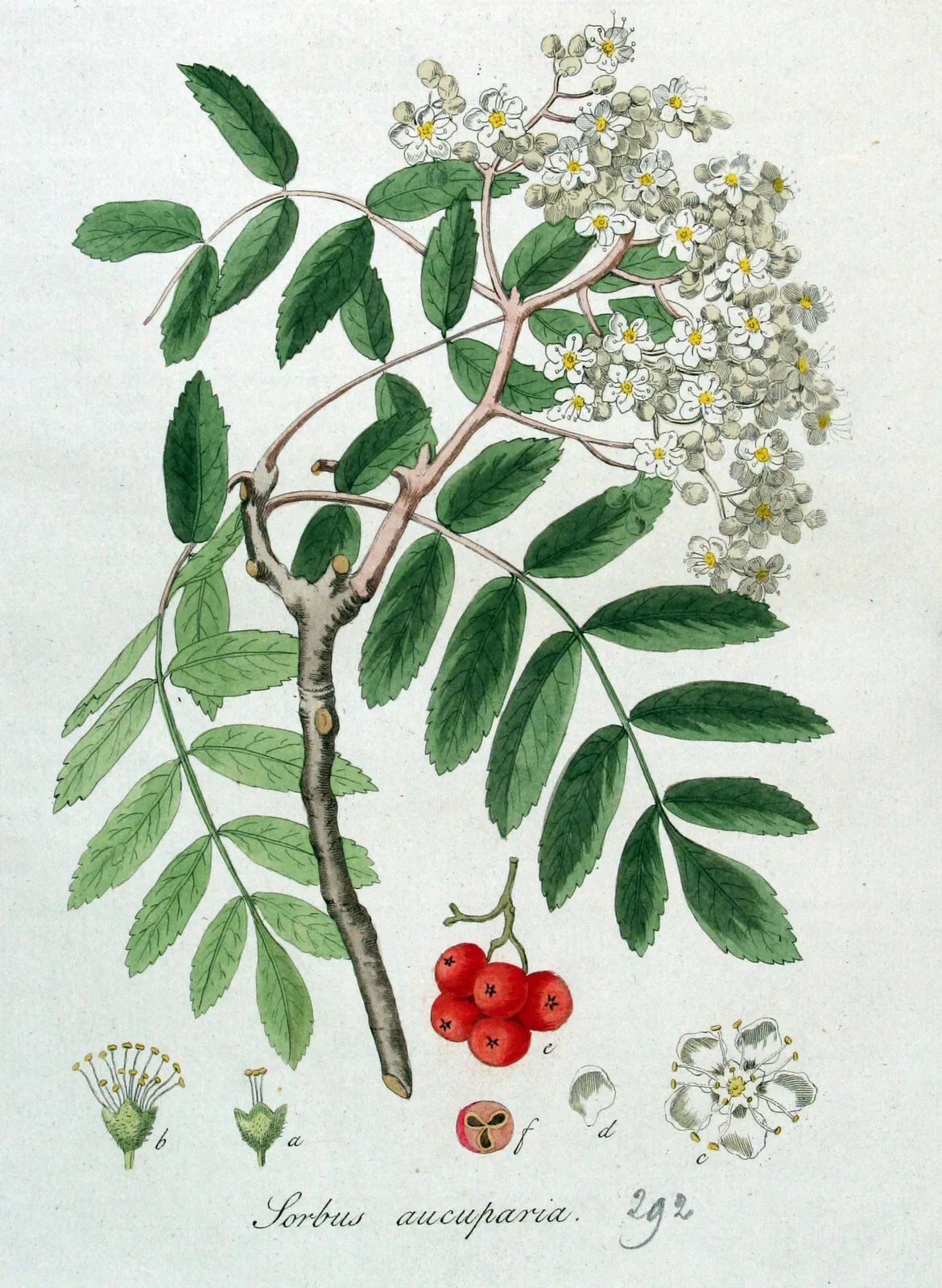
Mountain Ash, scientifically known as Sorbus aucuparia, is a resilient deciduous tree celebrated for its ornamental beauty and ecological value. Typically reaching heights of 6 to 15 meters, it develops a gracefully rounded crown. Its distinctive foliage consists of pinnate leaves, usually comprising 9 to 15 finely serrated leaflets, each measuring 5 to 10 cm in length. These leaves exhibit a vibrant glossy green throughout the warmer months, transforming into spectacular shades of fiery red and orange in autumn, contributing significantly to temperate landscape aesthetics.
In late spring, Sorbus aucuparia bursts forth with profuse clusters of small, creamy-white flowers, each about 1.5 to 2 cm in diameter, which are highly attractive to pollinators. These blossoms mature into bright orange-red berries, approximately 0.5 cm across, by late summer and autumn, serving as a vital food source for numerous bird species throughout winter. The tree's bark is characteristically smooth and grayish-brown when young, gradually developing fine fissures and prominent lenticels as it ages. Native to a wide expanse across Europe and parts of Asia, Mountain Ash thrives in diverse environments, particularly favoring mountainous regions and cooler climates.
It demonstrates adaptability but prefers well-drained, fertile soils rich in organic matter. Taxonomically, it is a prominent member of the Rosaceae family, a large and economically significant plant family that also includes numerous well-known fruit-bearing species like apples and cherries, highlighting its botanical lineage. Beyond its physical attributes, Sorbus aucuparia holds a rich cultural heritage, often imbued with folkloric significance as a protective tree against malevolent forces in various European traditions, adding a layer of mystique to its natural charm.
Trusted Scientific References
1. Authoritative external sources for Sorbus aucuparia
1.1 Wikipedia — Sorbus aucuparia
1.2 Kew POWO (Plants of the World Online)
1.3 PubMed — peer-reviewed research
1.4 NCBI Taxonomy Browser
1.5 GBIF — Global Biodiversity
1.1.Mountain Ash — Defining Traits
- ✓Deciduous Tree — Grows 6-15m tall with a rounded crown.
- ✓Pinnate Leaves — 9-15 serrated leaflets, vibrant autumn color.
- ✓White Flowers — Clusters bloom in late spring.
- ✓Orange — Red Berries — Abundant, vital bird food, traditionally used in preserves.
- ✓Rich in Vitamin C — Berries are a natural source of ascorbic acid.
- ✓Antioxidant Powerhouse — Contains flavonoids, anthocyanins, and carotenoids.
- ✓Traditional Medicinal Uses — Historically used for immune, digestive, and anti-inflammatory support.
- ✓Toxic When Raw — Fresh berries contain para-sorbic acid, neutralized by heat.
- ✓Native to Europe/Asia — Thrives in cooler, mountainous climates.
- ✓Rosaceae Family — Related to apples, pears, and other fruit trees.
1.2.Mountain Ash — At-a-Glance Summary
- ✓Sorbus aucuparia is a deciduous tree native to Europe and Asia, known for its bright berries.
- ✓Berries are rich in Vitamin C, antioxidants, and sorbitol, traditionally used for immune and digestive support.
- ✓Raw berries are toxic in large amounts; always cook or dry them before consumption to neutralize harmful compounds.
- ✓Traditional uses include remedies for diabetes, gout, and inflammation, though scientific evidence for these claims is largely insufficient.
- ✓Contraindicated in pregnancy, breast-feeding, and kidney disease, and may interact with nephrotoxic drugs.
- ✓Cultivated for ornamental value and its nutrient-rich, albeit tart, berries which are excellent for jams and preserves.
2.Mountain Ash — Systematic Position
3.Mountain Ash — Reference Facts
4.Mountain Ash — Morphological Account
5.Mountain Ash — Habitat & Distribution
6.Mountain Ash — Historical Applications
7.Mountain Ash — Active Compounds
- ✓Organic Acids — Malic acid, tartaric acid, and citric acid are abundant in the berries, contributing to their tart flavor and potentially aiding in digestion and antioxidant processes.
- ✓Ascorbic Acid (Vitamin C) — Mountain Ash berries are exceptionally rich in Vitamin C, a vital antioxidant and co-factor for numerous enzymatic reactions, crucial for immune function and collagen synthesis.
- ✓Sorbitol — A sugar alcohol unique to Sorbus species, sorbitol is present in the berries and acts as a natural sweetener, also possessing mild laxative properties in higher concentrations.
- ✓Flavonoids — Quercetin, rutin, and kaempferol derivatives are found, offering significant antioxidant, anti-inflammatory, and cardioprotective effects by scavenging free radicals and modulating immune responses.
- ✓Anthocyanins — These vibrant pigments, primarily responsible for the berries' orange-red color, are potent antioxidants with protective effects against oxidative stress and inflammation, particularly beneficial for cardiovascular health.
- ✓Carotenoids — Beta-carotene and other carotenoids are present, serving as precursors to Vitamin A and providing additional antioxidant benefits, supporting vision and immune health.
- ✓Tannins — Astringent compounds found in the bark and berries, tannins contribute to the plant's traditional use for diarrhea and inflammation due to their protein-precipitating and tissue-toning effects.
- ✓Pectins — Soluble fibers abundant in the fruit, pectins contribute to digestive health by regulating bowel movements and promoting satiety, also used in food preparation for gelling.
- ✓Coumarins — Certain coumarin derivatives may be present, contributing to various biological activities, though their specific role in Mountain Ash's medicinal profile requires further investigation.
- ✓Triterpenes — Compounds like ursolic acid are found, known for their anti-inflammatory, hepatoprotective, and potential anti-cancer properties, adding to the plant's complex pharmacology.
8.Mountain Ash — What Research Suggests
- ✓Immune Support — The berries of Mountain Ash are rich in Vitamin C, which is a powerful antioxidant essential for stimulating white blood cell production and enhancing overall immune system function, helping the body defend against infections.
- ✓Anti-inflammatory Properties — Compounds found in Sorbus aucuparia, particularly in its flowers and berries, may possess anti-inflammatory effects, potentially aiding in the reduction of swelling and pain associated with conditions like gout and osteoarthritis.
- ✓Digestive Health Promotion — Traditionally, Mountain Ash berries have been used to address digestive complaints such as diarrhea, suggesting a potential role in regulating bowel movements and soothing gastrointestinal irritation, though more research is needed.
- ✓Antioxidant Activity — High levels of polyphenols, flavonoids, and Vitamin C in the berries provide robust antioxidant protection, combating oxidative stress and neutralizing free radicals that contribute to cellular damage and chronic diseases.
- ✓Cardiovascular Health — Early traditional uses hint at a role in supporting heart health and addressing conditions like hardening of the arteries, possibly due to the plant's antioxidant and anti-inflammatory compounds that protect vascular integrity.
- ✓Blood Sugar Regulation — Folk medicine suggests Mountain Ash may assist in managing blood sugar levels, making it a subject of interest for potential applications in diabetes support, though scientific evidence is currently insufficient to confirm this benefit.
- ✓Kidney Health Support — Historically, the plant has been explored for its potential role in kidney health, with some traditional practices linking it to the management of long-term kidney conditions, although this use requires significant caution due to potential adverse effects with raw berries.
- ✓Vitamin C Supplementation — The berries are a natural source of ascorbic acid, making Mountain Ash a traditional remedy for preventing and treating Vitamin C deficiency (scurvy), especially in regions where fresh produce was scarce.
- ✓Pain Relief — Due to its purported anti-inflammatory effects, Mountain Ash has been traditionally applied to alleviate various forms of pain, including menstrual cramps (dysmenorrhea) and discomfort associated with conditions like osteoarthritis.
- ✓Oral Health — Some traditional applications suggest a benefit for oral mucositis, which involves swelling and sores inside the mouth, possibly due to the plant's soothing and anti-inflammatory properties.
- ✓General Wellness Enhancement — Beyond specific conditions, the comprehensive nutrient profile and bioactive compounds in Mountain Ash berries are believed to contribute to overall vitality and well-being, supporting various bodily functions.
8.1.Mountain Ash — Indications & Uses
9.Mountain Ash — Risk Profile
9.1.Mountain Ash — Side Effects & Warnings
- ✓Stomach Irritation — Eating large quantities of fresh, raw Mountain Ash berries can cause significant stomach irritation, leading to pain and discomfort.
- ✓Nausea and Vomiting — Ingesting uncooked berries, especially in substantial amounts, is known to induce feelings of queasiness, followed by vomiting.
- ✓Diarrhea — Fresh Mountain Ash berries can act as a gastrointestinal irritant, potentially leading to episodes of diarrhea.
- ✓Kidney Damage — There is a recognized risk of kidney damage associated with the consumption of large amounts of raw Mountain Ash berries due to specific compounds.
- ✓Allergic Reactions — As with any plant product, susceptible individuals may experience allergic reactions, though these are generally rare for Sorbus aucuparia.
- ✓Unknown Effects of Processed Berries — The full range of side effects for dried or cooked berries is not well-established, though processing significantly reduces the toxicity of fresh berries.
9.2.Mountain Ash — Clinical Safety Notes
- ✓Pregnancy and Breast-feeding — Use of Mountain Ash, particularly fresh berries, is considered possibly unsafe during pregnancy and breast-feeding; avoidance is recommended due to insufficient safety data.
- ✓Kidney Disease — Individuals with pre-existing kidney conditions should strictly avoid Mountain Ash berries, as compounds within them may exacerbate kidney damage.
- ✓Raw Berry Toxicity — Fresh, raw Mountain Ash berries are toxic in large quantities due to the presence of para-sorbic acid, which is converted to less harmful sorbic acid upon heating or drying.
- ✓Drug Interactions — Mountain Ash may interact with nephrotoxic medications (drugs harmful to the kidneys), potentially increasing the risk of kidney damage when used concurrently.
- ✓Dosage Uncertainty — There is insufficient scientific data to determine a safe and effective dosage for Mountain Ash in medicinal contexts; professional guidance is crucial.
- ✓Children and Elderly — Due to the potential for adverse effects and lack of specific safety data, caution is advised for use in children and the elderly, and medical consultation is recommended.
10.Mountain Ash — Application Forms
- ✓Fresh Berry Consumption — Fresh Mountain Ash berries are traditionally consumed in small, cooked quantities, often after the first frost, which mellows their astringency; direct raw consumption in large amounts is highly discouraged due to toxicity.
- ✓Jams and Jellies — The berries are frequently cooked down with sugar to make tart and flavorful jams, jellies, and marmalades, where heating neutralizes the problematic para-sorbic acid.
- ✓Juices and Syrups — Berries can be pressed for juice, which can then be consumed as a tonic, diluted, or further processed into syrups for medicinal or culinary purposes.
- ✓Herbal Teas/Infusions — Dried Mountain Ash berries or flowers can be steeped in hot water to create a traditional herbal tea, often combined with other herbs for taste or enhanced therapeutic effect.
- ✓Tinctures — A concentrated liquid extract can be prepared by macerating dried berries or flowers in alcohol, allowing for precise dosing and extended shelf life for medicinal use.
- ✓Wines and Liqueurs — Historically, Mountain Ash berries have been fermented to produce unique wines or infused into spirits to create flavorful liqueurs, leveraging their distinct taste profile.
- ✓Vinegar Infusions — Berries can be infused into apple cider vinegar, producing a health tonic that combines the benefits of both ingredients, often used for digestive support.
- ✓Culinary Additions — Cooked and dried berries can be incorporated into baked goods, stewed fruits, or savory dishes to add a tart, fruity dimension, similar to cranberries or lingonberries.
11.Mountain Ash — Propagation & Care
- ✓Site Selection — Choose a location with full sun to partial shade, ensuring the tree receives at least 4-6 hours of direct sunlight daily for optimal fruit production and autumn color.
- ✓Soil Requirements — Mountain Ash thrives in well-drained, fertile soils that are rich in organic matter; it tolerates a range of pH levels but prefers slightly acidic to neutral conditions.
- ✓Propagation — Can be propagated from seeds, which require stratification, or more reliably from softwood cuttings taken in early summer, or by grafting onto rootstock for specific cultivars.
- ✓Watering — Young trees require consistent moisture, especially during dry periods, to establish a strong root system; mature trees are relatively drought-tolerant but benefit from supplemental watering in extreme heat.
- ✓Pruning — Minimal pruning is generally needed, focusing on removing dead, damaged, or crossing branches to maintain tree health and shape, best performed in late winter or early spring.
- ✓Fertilization — Apply a balanced, slow-release fertilizer in spring, especially for young trees or those in poor soil, to support vigorous growth and fruit development.
- ✓Pest and Disease Management — Generally robust, but monitor for common issues like aphids, scale insects, or fungal diseases such as canker or scab, addressing them promptly with organic or appropriate treatments.
- ✓Hardiness — Sorbus aucuparia is exceptionally hardy, tolerating cold climates down to USDA Zone 3, making it suitable for a wide range of temperate regions.
Reviewed by the Flora Medical Global Botanical Review Panel
Multi-disciplinary editorial group · Botany · Ethnobotany · Herbal-medicine literature
Who reviewed this: This page was checked by the Flora Medical Global Botanical Review Panel — an in-house editorial group of botany graduates, ethnobotany researchers, and horticulture practitioners who collectively maintain our 7,000+ plant encyclopedia. Meet the team.
Our 4-step verification process
1. Taxonomic verification
Scientific names and synonyms cross-checked against Kew POWO, World Flora Online, and The Plant List.
2. Phytochemical & medicinal cross-reference
Active compounds, traditional uses, and reported activities are cross-referenced with PubMed, USDA Dr. Duke's database, and peer-reviewed ethnobotanical literature.
3. Conservation & distribution check
Distribution, ecology, and conservation status confirmed against GBIF occurrence records and the IUCN Red List.
4. Editorial & safety review
Every entry passes an editorial pass for clarity, originality, and safety notices (toxicity, contraindications, dosage caveats) before publication.
Last reviewed:
Important medical disclaimer: This content is for educational and research purposes only. It is not medical advice and is not a substitute for consultation with a licensed healthcare provider. Do not use any herb to self-treat a medical condition without professional guidance.
Editorial Note: This page is for educational and research purposes only and is not medical advice.
Written by: Flora Medical Global Editorial Team
Reviewed by: Flora Medical Global Botanical Review Panel
Last Updated: June 15, 2026





Mountain Ash — Comments & Community Reviews
Rate this plant