
Medical Disclaimer: This content is for educational purposes only. It is not medical advice. Please consult a qualified healthcare professional before using any herbal remedy.
Safety Overview
1.Mudgaparni — Botanical Snapshot
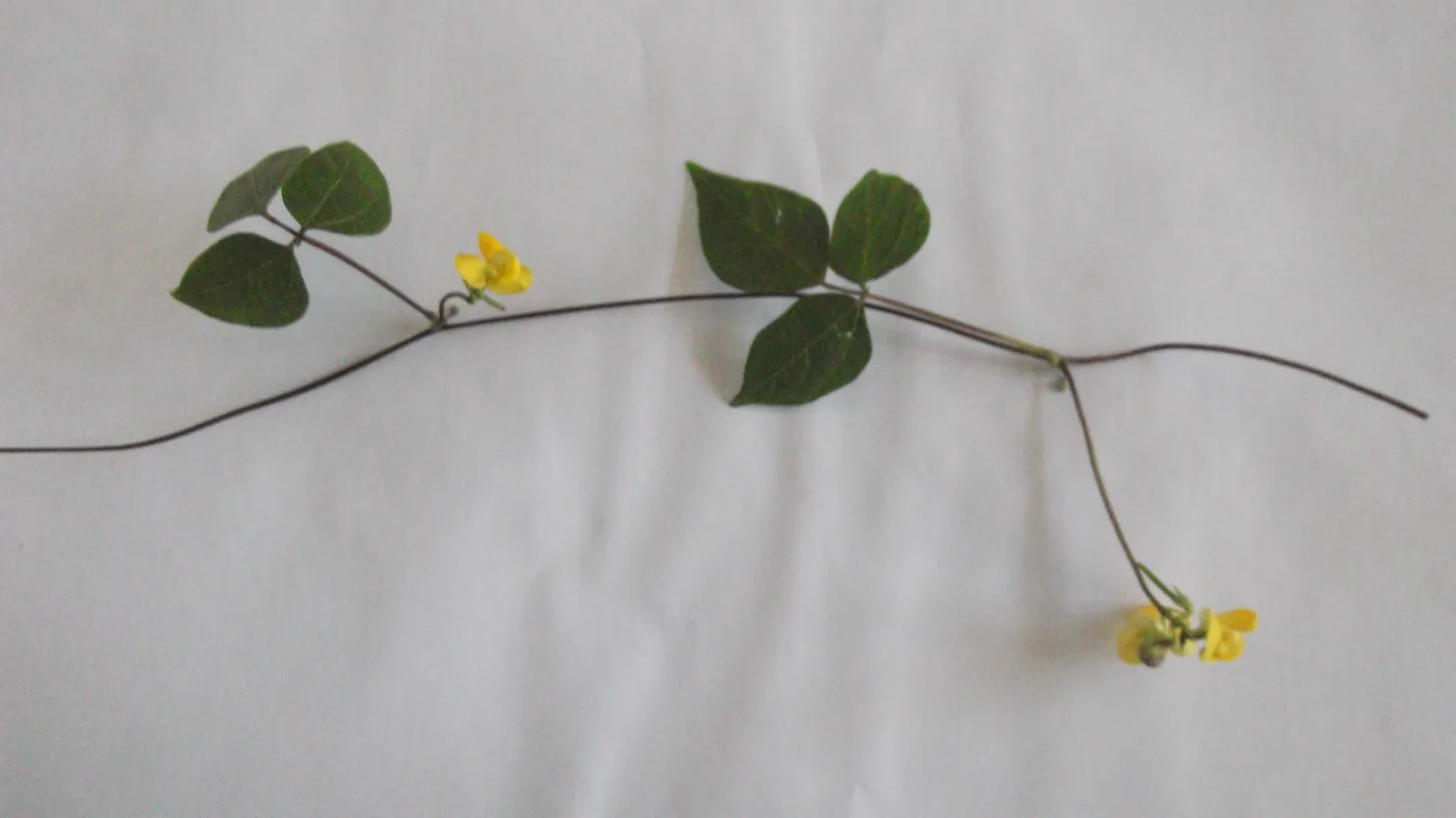
Phaseolus trilobus, commonly known as Mudgaparni or Wild Bean, is a resilient perennial herbaceous legume belonging to the Fabaceae family. This plant typically grows prostrate or as a climbing vine, reaching lengths of up to 60 centimeters, characterized by slender, often hairy stems that can range from green to purplish. Its distinctive trifoliate leaves, each leaflet measuring 5 to 10 centimeters long, possess an ovate shape with subtly serrated edges and a vibrant deep green hue.
Mudgaparni produces charming yellow flowers, typically 2-3 centimeters in diameter, arranged in small clusters at the terminal ends of its branches. Each flower exhibits a prominent, often slightly curved banner petal. Following successful pollination, the plant develops flattened legume pods, approximately 2-4 centimeters in length, containing several small, oval-shaped seeds that mature to a dark brown or black color.
Native to the tropical and subtropical regions of Asia and Africa, Phaseolus trilobus thrives in diverse environments, including grasslands, disturbed areas, and along riverbanks. It prefers well-drained, sandy to loamy soils and can tolerate both full sun and partial shade, demonstrating its adaptability. As a member of the Fabaceae family, it actively participates in nitrogen fixation through a symbiotic relationship with rhizobia bacteria in the soil, enriching soil fertility and contributing to its ecological significance.
Trusted Scientific References
1. Authoritative external sources for Phaseolus trilobus
1.1 Wikipedia — Phaseolus trilobus
1.2 Kew POWO (Plants of the World Online)
1.3 PubMed — peer-reviewed research
1.4 NCBI Taxonomy Browser
1.5 GBIF — Global Biodiversity
1.6Mudgaparni should be interpreted through verified botanical identity, practical care, and responsible safety language. This recovery note adds the missing context needed for a complete profile: match light to the plant's habit, use well-drained soil, water according to season, and avoid unsupported medicinal or edible claims. For publishing, the plant can be presented as a source-backed medicinal plant with clear care guidance, common problem diagnosis, and conservative safety wording.
1.1.Mudgaparni — Distinguishing Points
- ✓Perennial herbaceous legume — Perennial herbaceous legume native to tropical and subtropical regions of Asia and Africa.
- ✓Highly valued in — Highly valued in Ayurvedic medicine for its restorative and aphrodisiac properties.
- ✓Contains a rich — Contains a rich profile of flavonoids, including Vitexin, Kaempferol, Luteolin, and Quercetin.
- ✓Demonstrates significant hepatoprotective — Demonstrates significant hepatoprotective and antioxidant activities in pre-clinical studies.
- ✓Traditionally used to — Traditionally used to alleviate various digestive ailments, including diarrhea and IBS.
- ✓Known for its anti — inflammatory effects, beneficial for reducing swelling and pain.
- ✓Supports ocular health — Supports ocular health and is traditionally used to improve vision and address eye discomforts.
- ✓Effectively used in — Effectively used in managing fevers and reducing associated burning sensations.
- ✓Acts as an anti — emaciating agent, promoting tissue building and combating general debility.
- ✓Classified under 'Jivaniya' — Classified under 'Jivaniya' and 'Shukrajanana' groups in classical Ayurvedic texts.
1.2.Mudgaparni — In Brief
- ✓Mudgaparni (Phaseolus trilobus) is a vital Ayurvedic herb, renowned for its 'Jivaniya' (enlivening) and 'Shukrajanana' (sperm-producing) qualities.
- ✓It offers significant anti-inflammatory, antioxidant, and hepatoprotective benefits, validated by traditional use and some modern research.
- ✓Traditionally employed to support reproductive health, digestive function, eye health, and to alleviate fever and emaciation.
- ✓Rich in beneficial flavonoids such as Vitexin, Kaempferol, Luteolin, and Quercetin, which underpin its therapeutic actions.
- ✓Generally safe when used appropriately, but caution is advised for individuals with constipation or those on specific medications.
- ✓Utilized as a whole plant in various forms, including decoctions, powders, and topical applications for diverse health concerns.
2.Mudgaparni — Botanical Identity
3.Mudgaparni — Fact Sheet
4.Mudgaparni — Botanical Description
5.Mudgaparni — Native Range & Habitat
6.Mudgaparni — Traditional Uses
7.Mudgaparni — Phytochemistry
- ✓Flavonoids — Key flavonoids identified include Vitexin, Kaempferol, Luteolin, and Quercetin, which are largely responsible for the plant's potent antioxidant and anti-inflammatory effects.
- ✓Phenolic Acids — Various phenolic acids are present, contributing to the plant's overall antioxidant capacity and its ability to protect cells from oxidative damage.
- ✓Saponins — These compounds contribute to the plant's adaptogenic properties and may play a role in cholesterol reduction and immune modulation.
- ✓Alkaloids — While typically in smaller concentrations, alkaloids present in Mudgaparni may contribute to its diverse pharmacological activities.
- ✓Glycosides — A range of glycosides are found, which can influence various physiological processes and contribute to the plant's therapeutic profile.
- ✓Tannins — Providing astringent qualities, tannins are beneficial for wound healing, reducing inflammation, and addressing digestive issues like diarrhea.
- ✓Amino Acids — As a legume, Phaseolus trilobus contains essential amino acids, crucial for protein synthesis, tissue repair, and overall nutritional support.
- ✓Carbohydrates — Polysaccharides and other carbohydrates are present, contributing to the plant's demulcent properties and providing energy.
8.Mudgaparni — Pharmacological Findings
- ✓Aphrodisiac Properties — Mudgaparni is traditionally recognized for its Shukrajanana effect, meaning it helps improve sperm quantity and quality, thus supporting male reproductive health.
- ✓Anti-inflammatory Action — Its active compounds contribute to reducing systemic inflammation, making it beneficial for conditions associated with swelling and pain.
- ✓Hepatoprotective Effects — Research indicates Phaseolus trilobus possesses hepatoprotective activity, safeguarding liver cells from damage and supporting overall liver function.
- ✓Antioxidant Activity — Rich in flavonoids, this plant helps combat oxidative stress by neutralizing free radicals, thereby protecting cellular integrity.
- ✓Digestive Aid — Known for its 'Grahi' or absorbent property, it is effectively used to manage conditions like diarrhea, dysentery, and irritable bowel syndrome (IBS).
- ✓Ocular Health Support — In traditional systems, Mudgaparni is considered 'Chakshushya,' implying it supports vision and helps alleviate various eye disorders and discomforts.
- ✓Fever Management — It is traditionally employed to reduce fever (Jwara) and mitigate associated symptoms such as burning sensations (Daha) within the body.
- ✓Anti-emaciating — Mudgaparni is valued for its ability to promote healthy weight gain and counteract 'Kshaya' (depletion of body tissues), acting as a restorative tonic.
- ✓Diuretic Support — The plant aids in enhancing urine flow, which assists the body in eliminating toxins and is beneficial in managing urinary tract infections and kidney disorders.
- ✓Wound Healing — Applied topically, the paste of its leaves and roots helps to stop bleeding, reduce inflammation, and accelerate the healing process of external wounds.
- ✓Anti-gout Activity — Its properties are utilized in managing Vatarakta, a condition often correlated with gout, by reducing inflammation and alleviating joint pain.
- ✓Blood Purification — Mudgaparni is believed to act as a blood purifier, contributing to the elimination of impurities and supporting overall circulatory health.
8.1.Mudgaparni — Therapeutic Indications
9.Mudgaparni — Safety & Side Effects
9.1.Mudgaparni — Side Effects & Warnings
- ✓Constipation Exacerbation — Due to its 'Grahi' (absorbent) property, Mudgaparni should be avoided or used cautiously by individuals prone to constipation, as it may worsen symptoms.
- ✓Allergic Reactions — Sensitive individuals may experience allergic responses, including skin rashes, itching, or mild digestive discomfort upon consumption.
- ✓Gastric Upset — In some cases, particularly with high doses, mild gastrointestinal upset, such as indigestion or bloating, may occur.
- ✓Drug Interactions — Mudgaparni may potentially interact with certain medications, especially those affecting blood sugar levels or liver function; professional consultation is advised.
- ✓Pregnancy and Lactation — Lack of comprehensive safety data makes its use during pregnancy and breastfeeding not recommended without explicit medical supervision.
9.2.Mudgaparni — Risk Assessment
- ✓Professional Consultation — Always consult a qualified medical herbalist or healthcare practitioner before incorporating Mudgaparni into your health regimen.
- ✓Adhere to Dosage — Strictly follow recommended dosages to minimize the potential for adverse effects and ensure therapeutic efficacy.
- ✓Quality Sourcing — Obtain Mudgaparni from reputable suppliers to guarantee authenticity, purity, and freedom from contaminants or adulterants.
- ✓Monitor for Reactions — Discontinue use immediately and seek medical advice if any unusual or adverse reactions manifest after consumption.
- ✓Pre-existing Conditions — Individuals with chronic health conditions, especially liver, kidney, or gastrointestinal disorders, should exercise caution and seek expert advice prior to use.
- ✓Pediatric and Geriatric Use — Use in children and elderly individuals should be approached with caution and typically under the direct supervision of a healthcare professional.
10.Mudgaparni — Preparation Methods
- ✓Decoction — Prepare a decoction by boiling 50-100 ml of water with dried Mudgaparni plant material; consume this liquid for systemic therapeutic benefits.
- ✓Powdered Herb — Take 3-6 grams of the finely powdered dried whole plant, typically mixed with honey, ghee, or warm water, once or twice daily as prescribed.
- ✓Herbal Infusion — Steep fresh or dried leaves in hot water to create a soothing herbal tea, which can be beneficial for respiratory or urinary complaints.
- ✓Topical Paste — For external applications, fresh leaves or roots can be ground into a paste and directly applied to wounds, inflammatory sites, or skin conditions.
- ✓Medicated Oils — Extracts of Mudgaparni can be infused into carrier oils for topical application as part of pain-relieving or nourishing massage oils.
- ✓Traditional Formulations — It is a key ingredient in numerous Ayurvedic polyherbal preparations such as Dhanwanthararishtam or Vidaryadi Kashayam, used under expert guidance.
11.Mudgaparni — Cultivation & Care
- ✓Climate and Soil — Mudgaparni thrives in warm tropical to subtropical climates and prefers well-drained, sandy to loamy soils with a neutral to slightly alkaline pH.
- ✓Sunlight Exposure — Requires full sun exposure for optimal growth, although it can tolerate partial shade, which may result in less vigorous growth.
- ✓Propagation — Primarily propagated by seeds; these should be sown directly into prepared seedbeds or pots after the risk of frost has passed.
- ✓Watering — Needs moderate and consistent watering, especially during dry periods, to maintain adequate soil moisture without waterlogging.
- ✓Fertilization — Benefits from the incorporation of organic compost or well-rotted manure; as a legume, it fixes nitrogen, reducing the need for nitrogenous fertilizers.
- ✓Pest and Disease Management — Generally robust, but monitor for common legume pests like aphids and occasional fungal issues, managing with organic pest control methods.
- ✓Harvesting — Leaves and stems can be harvested throughout the growing season, while seeds are collected once the pods have dried and matured on the plant.
Reviewed by the Flora Medical Global Botanical Review Panel
Multi-disciplinary editorial group · Botany · Ethnobotany · Herbal-medicine literature
Who reviewed this: This page was checked by the Flora Medical Global Botanical Review Panel — an in-house editorial group of botany graduates, ethnobotany researchers, and horticulture practitioners who collectively maintain our 7,000+ plant encyclopedia. Meet the team.
Our 4-step verification process
1. Taxonomic verification
Scientific names and synonyms cross-checked against Kew POWO, World Flora Online, and The Plant List.
2. Phytochemical & medicinal cross-reference
Active compounds, traditional uses, and reported activities are cross-referenced with PubMed, USDA Dr. Duke's database, and peer-reviewed ethnobotanical literature.
3. Conservation & distribution check
Distribution, ecology, and conservation status confirmed against GBIF occurrence records and the IUCN Red List.
4. Editorial & safety review
Every entry passes an editorial pass for clarity, originality, and safety notices (toxicity, contraindications, dosage caveats) before publication.
Last reviewed:
Important medical disclaimer: This content is for educational and research purposes only. It is not medical advice and is not a substitute for consultation with a licensed healthcare provider. Do not use any herb to self-treat a medical condition without professional guidance.
Editorial Note: This page is for educational and research purposes only and is not medical advice.
Written by: Flora Medical Global Editorial Team
Reviewed by: Flora Medical Global Botanical Review Panel
Last Updated: June 15, 2026





Mudgaparni — Comments & Community Reviews
Rate this plant