
Medical Disclaimer: This content is for educational purposes only. It is not medical advice. Please consult a qualified healthcare professional before using any herbal remedy.
Safety Overview
1.Muehlenbeckia — Overview
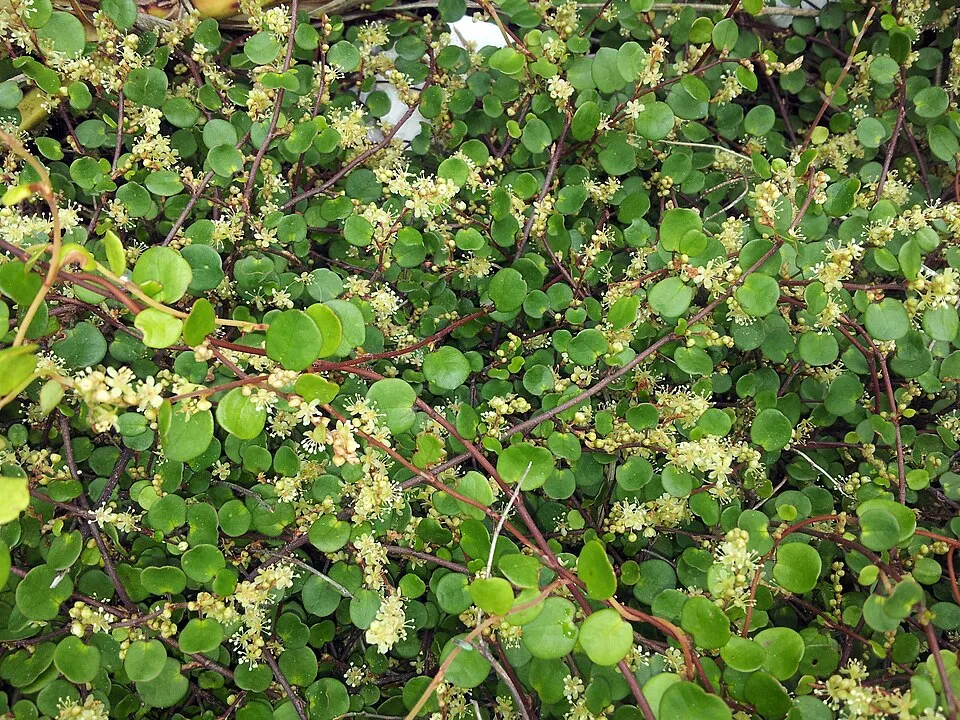
Muehlenbeckia complexa, commonly known as wire vine or maidenhair vine, is a distinctive evergreen perennial belonging to the Polygonaceae family. This resilient species is native to New Zealand and parts of Australia, where it thrives in diverse environments, from coastal areas to subalpine regions, often found scrambling over rocks, fences, and other vegetation. In its natural habitat, Muehlenbeckia complexa can form dense, intricate mats or climb up to 3 meters (10 feet) high, though it typically remains more compact when cultivated, especially indoors.
Its most notable feature is its intricate network of wiry, highly flexible, reddish-brown stems that intertwine to create a unique, often cascading texture. The small, round to heart-shaped leaves, measuring about 1 to 2 centimeters in diameter, are a glossy dark green, providing a striking contrast against the delicate stems. While the plant does produce inconspicuous, small white or greenish-white flowers, these are generally sparse and bloom sporadically, leading to small, translucent, berry-like fruits.
The thin, slightly fibrous bark contributes to the stems' flexibility, allowing for its versatile use in ornamental horticulture, particularly as a groundcover, in hanging baskets, or trained into decorative shapes.
Trusted Scientific References
1. Authoritative external sources for Muehlenbeckia complexa
1.1 Wikipedia — Muehlenbeckia complexa
1.2 Kew POWO (Plants of the World Online)
1.3 PubMed — peer-reviewed research
1.4 NCBI Taxonomy Browser
1.5 GBIF — Global Biodiversity
1.6Muehlenbeckia should be interpreted through verified botanical identity, practical care, and responsible safety language. This recovery note adds the missing context needed for a complete profile: match light to the plant's habit, use well-drained soil, water according to season, and avoid unsupported medicinal or edible claims. For publishing, the plant can be presented as a source-backed indoor plant with clear care guidance, common problem diagnosis, and conservative safety wording.
1.1.Muehlenbeckia — Key Features
- ✓Wiry, Flexible Stems — Distinctive, reddish-brown, intertwining stems creating a unique texture.
- ✓Small, Glossy Leaves — Round to heart-shaped, dark green foliage, 1-2 cm in diameter.
- ✓Evergreen Perennial — Maintains foliage year-round, suitable for continuous display.
- ✓Native to New Zealand/Australia — Thrives in diverse coastal and subalpine habitats.
- ✓Ornamental Value — Highly prized for decorative purposes in gardens and indoors.
- ✓Low Maintenance — Hardy and fast-growing, requiring minimal care once established.
- ✓Versatile Growth Habit — Ideal for hanging baskets, groundcover, or trained as topiary.
- ✓Rich in Flavonoids — Contains antioxidants like quercetin, myricetin, kaempferol, and resveratrol.
- ✓Contains Anthraquinones — Presence of emodin and physcion contributes to its toxicity.
- ✓Toxic if Ingested — Caution advised, especially around children and pets.
1.2.Muehlenbeckia — Quick Summary
- ✓Muehlenbeckia complexa, or wire vine, is an evergreen perennial native to New Zealand.
- ✓Valued primarily for its unique ornamental, wiry stems and small, glossy green leaves.
- ✓Contains bioactive compounds like flavonoids (quercetin, resveratrol) and anthraquinones.
- ✓Classified as toxic; ingestion can cause gastrointestinal upset and other adverse effects.
- ✓Offers indirect holistic benefits through aesthetic appeal and potential indoor air purification.
- ✓Requires bright, indirect light and consistent moisture for optimal growth.
2.Muehlenbeckia — Scientific Profile
3.Muehlenbeckia — Reference Facts
4.Muehlenbeckia — Structural Profile
5.Muehlenbeckia — Geographic Distribution
6.Muehlenbeckia — Ethnobotanical Uses
7.Muehlenbeckia — Secondary Metabolites
- ✓Muehlenbeckia complexa contains a complex array of bioactive compounds, primarily recognized for their antioxidant and anti-inflammatory potential, even though the plant is considered toxic for internal consumption. The key phytochemicals include:
- ✓Anthraquinones — Specifically emodin and physcion, these compounds are known for their purgative and laxative effects, influencing gut motility. However, their presence contributes to the plant's overall toxicity profile.
- ✓Quercetin — A prominent flavonoid, quercetin is a potent antioxidant and anti-inflammatory agent, widely studied for its broad spectrum of health-promoting activities, including cardiovascular support.
- ✓Myricetin — Another significant flavonoid, myricetin exhibits strong antioxidant, anti-inflammatory, and anticarcinogenic properties, contributing to cellular protection.
- ✓Kaempferol — This flavonoid is recognized for its antioxidant, anti-inflammatory, antimicrobial, and anticancer activities, playing a role in protecting against chronic diseases.
- ✓Resveratrol — A stilbenoid, resveratrol is famous for its powerful antioxidant, anti-inflammatory, and cardioprotective effects, often associated with longevity and cellular health.
- ✓Oxalic Acid — A naturally occurring organic acid, present in many plants. In larger quantities, it can bind with minerals, potentially leading to kidney stone formation, and contributes to the plant's toxicity.
- ✓Tartaric Acid — Another organic acid, tartaric acid is often used as an antioxidant and chelating agent in various applications, though its role here might be more structural or metabolic.
- ✓Proanthocyanidins — These are oligomeric flavonoids known for their exceptional antioxidant capacity, often exceeding that of Vitamin C and E, and are beneficial for vascular health.
- ✓Terpenoids — A diverse class of organic compounds, terpenoids contribute to the plant's aroma, defense mechanisms, and may possess various biological activities such as anti-inflammatory or antimicrobial effects.
8.Muehlenbeckia — What Research Suggests
- ✓Given Muehlenbeckia complexa's primary ornamental use and its classification as potentially toxic, direct internal medicinal applications are not traditionally or currently recommended. However, its rich phytochemical profile and its role in promoting holistic well-being as an indoor plant suggest several potential benefits, primarily for research and environmental enhancement:
- ✓Antioxidant Support — The presence of flavonoids like quercetin, myricetin, and kaempferol, along with resveratrol and proanthocyanidins, indicates strong antioxidant potential, crucial for neutralizing free radicals and protecting cellular health.
- ✓Anti-inflammatory Properties — Flavonoids found in Muehlenbeckia complexa are recognized for their anti-inflammatory actions, which could be explored in topical applications or further research into cellular responses.
- ✓Cardiovascular Health Potential — Resveratrol, a compound identified in wire vine, is widely studied for its beneficial effects on cardiovascular function, including promoting healthy blood flow and supporting arterial integrity.
- ✓Neuroprotective Exploration — The diverse array of polyphenols, including resveratrol and various flavonoids, suggests a potential for neuroprotective activities that warrants further scientific investigation.
- ✓Skin Health Enhancement — The collective antioxidant and anti-inflammatory compounds may offer benefits for skin health, protecting against environmental damage and soothing irritation when hypothetically applied topically.
- ✓Cellular Health Maintenance — Proanthocyanidins and other polyphenols contribute to maintaining cellular integrity and function by combating oxidative stress and supporting cellular repair mechanisms.
- ✓Holistic Stress Reduction — As an indoor plant, Muehlenbeckia complexa contributes to a calming and aesthetically pleasing environment, indirectly aiding in mental wellness and stress relief, aligning with principles of biophilia.
- ✓Improved Indoor Air Quality — Like many houseplants, wire vine can contribute to a healthier indoor atmosphere by absorbing certain airborne pollutants, thus fostering an environment conducive to relaxation and rejuvenation.
- ✓Potential Digestive Support — While requiring significant caution due to general toxicity, anthraquinones like emodin and physcion are known for their mild laxative properties, which could be a subject of highly controlled pharmacological study, not for self-medication.
8.1.Muehlenbeckia — Health Applications
9.Muehlenbeckia — Risk Profile
9.1.Muehlenbeckia — Reported Side Effects
- ✓Muehlenbeckia complexa, commonly known as wire vine, is considered toxic, especially if ingested. Caution should be exercised, particularly around children and pets.
- ✓Gastrointestinal Upset — Ingestion of any part of the plant can lead to symptoms such as nausea, vomiting, diarrhea, and abdominal pain due to its toxic compounds, including oxalic acid and anthraquinones.
- ✓Skin Irritation — Direct contact with the sap or foliage may cause mild skin irritation or dermatitis in sensitive individuals, manifesting as redness or itching.
- ✓Kidney Damage — Oxalic acid, present in the plant, can form insoluble calcium oxalates in the body, potentially leading to kidney stone formation or kidney damage if consumed in significant quantities.
- ✓Laxative Effect — The anthraquinone compounds (emodin, physcion) can induce a strong laxative effect, leading to dehydration and electrolyte imbalance if ingested.
- ✓Systemic Toxicity — While less common with typical ornamental exposure, large-scale ingestion could potentially lead to more severe systemic toxicity, affecting various organ systems.
- ✓Oral Irritation — Chewing or ingesting parts of the plant may cause irritation to the mouth, throat, and esophagus, leading to discomfort or swelling.
9.2.Muehlenbeckia — Clinical Safety Notes
- ✓Given its classification as a toxic plant, Muehlenbeckia complexa requires careful handling and placement to ensure safety, particularly in households with vulnerable individuals.
- ✓Not for Internal Consumption — Emphasize that no part of Muehlenbeckia complexa should be ingested by humans or animals due to its toxic compounds.
- ✓Keep Away from Children and Pets — Position the plant out of reach of curious children and pets who might chew on its foliage, to prevent accidental poisoning.
- ✓Handle with Gloves — Individuals with sensitive skin should wear gloves when pruning or handling the plant to avoid potential skin irritation from sap.
- ✓Wash Hands After Handling — Always wash hands thoroughly with soap and water after touching the plant to remove any residual sap or irritants.
- ✓Seek Medical Attention — In case of accidental ingestion, immediately contact a poison control center or seek emergency medical assistance.
- ✓Ornamental Use Only — Confirm that the plant's use is strictly ornamental and it is not recommended for any form of self-medication or traditional herbal remedies.
- ✓Research-Grade Extracts — Any exploration of its phytochemicals for potential benefits should be conducted only under strict laboratory conditions, not for home use.
10.Muehlenbeckia — Application Forms
- ✓Given Muehlenbeckia complexa's classification as toxic and its primary use as an ornamental plant, direct internal consumption or traditional medicinal preparations are not advised. Usage methods are therefore focused on its aesthetic, environmental, and potential research applications.
- ✓Ornamental Cultivation — Primarily used as a decorative plant in gardens, hanging baskets, or as groundcover, appreciating its unique wiry texture and delicate foliage.
- ✓Indoor Air Quality Enhancement — Integrate into indoor spaces as a houseplant to contribute to a healthier environment by potentially filtering air pollutants and increasing humidity.
- ✓Biophilic Design Element — Utilize in interior design to foster a connection with nature, promoting a calming atmosphere and contributing to psychological well-being and stress reduction.
- ✓Horticultural Artistry — Employ its flexible stems for creative shaping in topiary, bonsai, or training along trellises and other structures due to its pliable growth habit.
- ✓Phytochemical Research — Extracts from the plant can be prepared for laboratory analysis to further investigate the specific concentrations and biological activities of its identified compounds like flavonoids and anthraquinones.
- ✓Topical Preparations (Research Only) — Hypothetically, in a controlled research setting, extracts could be tested for external applications, exploring antioxidant or anti-inflammatory effects on the skin, never for self-application.
- ✓Botanical Education — Serve as a specimen for botanical studies, illustrating plant morphology, growth habits, and the diversity within the Polygonaceae family.
11.Muehlenbeckia — Propagation & Care
- ✓Cultivating Muehlenbeckia complexa, or wire vine, is relatively straightforward due to its hardy and low-maintenance nature, making it a popular choice for both indoor and outdoor ornamental use.
- ✓Optimal Lighting Conditions — Provide bright, indirect light; a spot near an east or west-facing window is ideal. Avoid direct, intense sunlight which can scorch the delicate foliage.
- ✓Watering Frequency — Keep the soil consistently moist but never soggy. Water thoroughly once a week, allowing the topsoil to dry slightly between waterings. Reduce frequency in winter.
- ✓Temperature Requirements — Thrives in moderate temperatures between 18 to 24 degrees Celsius (65-75°F). It can tolerate slight fluctuations but prefers stable conditions.
- ✓Plant Nutrition — Fertilize every two weeks from spring to autumn with a balanced liquid plant food to support vigorous growth. Suspend feeding during the colder winter months.
- ✓Repotting Schedule — Repot every two years in spring to refresh the soil and provide ample space for root expansion. Choose a pot that is only slightly larger than the previous one.
- ✓Pruning and Shaping — Regularly prune to control its fast-growing, wiry stems, remove dead or tangled vines, and maintain its desired shape, especially for hanging baskets or topiary.
- ✓Soil Preference — Prefers well-draining potting mix that retains some moisture. A standard peat-based mix with perlite or sand for drainage is suitable.
- ✓Pest and Disease Resistance — Muehlenbeckia complexa is generally robust and not overly susceptible to pests or diseases, though occasional checks for common houseplant issues are recommended.
Reviewed by the Flora Medical Global Botanical Review Panel
Multi-disciplinary editorial group · Botany · Ethnobotany · Herbal-medicine literature
Who reviewed this: This page was checked by the Flora Medical Global Botanical Review Panel — an in-house editorial group of botany graduates, ethnobotany researchers, and horticulture practitioners who collectively maintain our 7,000+ plant encyclopedia. Meet the team.
Our 4-step verification process
1. Taxonomic verification
Scientific names and synonyms cross-checked against Kew POWO, World Flora Online, and The Plant List.
2. Phytochemical & medicinal cross-reference
Active compounds, traditional uses, and reported activities are cross-referenced with PubMed, USDA Dr. Duke's database, and peer-reviewed ethnobotanical literature.
3. Conservation & distribution check
Distribution, ecology, and conservation status confirmed against GBIF occurrence records and the IUCN Red List.
4. Editorial & safety review
Every entry passes an editorial pass for clarity, originality, and safety notices (toxicity, contraindications, dosage caveats) before publication.
Last reviewed:
Important medical disclaimer: This content is for educational and research purposes only. It is not medical advice and is not a substitute for consultation with a licensed healthcare provider. Do not use any herb to self-treat a medical condition without professional guidance.
Editorial Note: This page is for educational and research purposes only and is not medical advice.
Written by: Flora Medical Global Editorial Team
Reviewed by: Flora Medical Global Botanical Review Panel
Last Updated: June 15, 2026





Muehlenbeckia — Comments & Community Reviews
Rate this plant