
Medical Disclaimer: This content is for educational purposes only. It is not medical advice. Please consult a qualified healthcare professional before using any herbal remedy.
Safety Overview
1.Muira Puama — Plant Snapshot
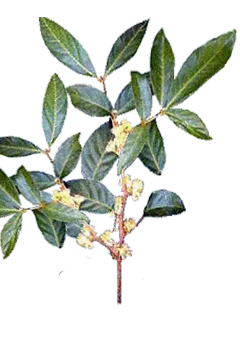
Muira Puama, scientifically known as Ptychopetalum olacoides, is a remarkable small tree, typically growing to about 4 meters in height. It is indigenous to the lush, humid ecosystems of the Brazilian Amazon rainforest, where it thrives in its natural habitat. The plant is characterized by its distinct foliage: light green leaves with noticeably darker brown undersides. These leaves are broadly ovate in shape, featuring an obtuse base and an attenuated apex, and are attached by short petioles.
Its delicate flowers are arranged in short axillary racemes, with each cluster typically containing four to six individual blooms. However, the most medicinally significant part of Muira Puama is its root system. The roots are light-brown to grayish-brown, often reaching about 0.5 meters in length and varying in diameter from 0.3 to 3.8 centimeters. They are typically conical, nearly straight, and taper into a fine point, sometimes exhibiting short, sharp projections that can cause two or more roots to unite.
The roots possess a slightly saline and acrid taste, a characteristic attributed to their rich chemical composition. As a member of the Olacaceae family, Ptychopetalum olacoides shares botanical traits with other species in this diverse group, known for their woody plants distributed across tropical and subtropical regions globally.
Trusted Scientific References
1. Authoritative external sources for Ptychopetalum olacoides
1.1 Wikipedia — Ptychopetalum olacoides
1.2 Kew POWO (Plants of the World Online)
1.3 PubMed — peer-reviewed research
1.4 NCBI Taxonomy Browser
1.5 GBIF — Global Biodiversity
1.6Muira Puama should be interpreted through verified botanical identity, practical care, and responsible safety language. This recovery note adds the missing context needed for a complete profile: match light to the plant's habit, use well-drained soil, water according to season, and avoid unsupported medicinal or edible claims. For publishing, the plant can be presented as a source-backed medicinal plant with clear care guidance, common problem diagnosis, and conservative safety wording.
1.1.Muira Puama — Standout Qualities
- ✓Native to the Brazilian Amazon Rainforest — Indigenous to specific tropical ecosystems.
- ✓Traditional Aphrodisiac — Historically used to enhance libido and sexual function.
- ✓Potential Nootropic — Animal studies suggest benefits for memory and cognitive health.
- ✓Rich in Alkaloids — Contains neuroactive compounds like magnoflorine and menisperine.
- ✓Antioxidant Powerhouse — Exhibits strong free radical scavenging activity.
- ✓Anti — inflammatory Properties — Contributes to reducing systemic inflammation.
- ✓Versatile Traditional Uses — Applied for diverse ailments from rheumatism to GI issues.
- ✓Olacaceae Family Member — Botanical classification within a diverse woody plant family.
- ✓Root and Bark Utilized — The primary medicinal parts are the roots and the bark.
- ✓Subject of Ongoing Research — Modern science continues to explore its pharmacological potential.
1.2.Muira Puama — Snapshot Summary
- ✓Amazonian 'Potency Wood' — Revered traditional aphrodisiac and tonic.
- ✓Cognitive and Mood Support — Emerging research suggests benefits for memory and antidepressant effects.
- ✓Rich Phytochemistry — Abundant in alkaloids, flavonoids, and terpenoids.
- ✓Traditional Amazonian Uses — Employed for sexual health, rheumatism, and neuromuscular issues.
- ✓Limited Human Clinical Data — Efficacy for isolated herb requires more robust clinical trials.
- ✓General Wellness Aid — Also valued for antioxidant and anti-inflammatory properties.
2.Muira Puama — Scientific Profile
3.Muira Puama — Reference Facts
4.Muira Puama — Structural Profile
5.Muira Puama — Geographic Distribution
6.Muira Puama — Cultural & Traditional Roles
7.Muira Puama — Active Compounds
- ✓Alkaloids — Key alkaloids such as magnoflorine and menisperine are major constituents in the bark, potentially contributing to neuroactive and adaptogenic effects.
- ✓Volatile Oils — The root bark contains essential oils rich in monoterpenes and sesquiterpenes, including alpha-pinene, beta-pinene, beta-caryophyllene, camphene, and camphor, which offer antimicrobial and anti-inflammatory properties.
- ✓Diterpenoids — Compounds like ptycholactone have been isolated, contributing to the plant's diverse pharmacological activities.
- ✓Flavonoids — Luteolin, 4'-methoxyluteolin, 3-methoxyluteolin, and 3,7-dimethoxyluteolin are present, known for their potent antioxidant and anti-inflammatory actions.
- ✓Phenolic Acids — Caffeic acid, ferulic acid, vanillic acid, and syringic acid contribute significantly to the plant's antioxidant capacity and overall health benefits.
- ✓Fatty Acids and Sterols — Fatty acid esters of sterols, free fatty acids (C21 to C25), and free sterols such as lupeol have been identified, playing roles in anti-inflammatory and membrane-stabilizing activities.
- ✓Resinic Acids — Alpha- and beta-resinic acids are present in whole-plant extracts, contributing to the plant's traditional tonic properties.
- ✓Coumarins — Thin-layer chromatography has detected coumarin, a compound known for its diverse biological activities including anti-inflammatory and anticoagulant effects.
- ✓Sesquiterpenoid Tropolone Glycosides — These complex compounds, isolated from related species, suggest a broader range of potential bioactivities within the Ptychopetalum genus.
- ✓Serotonin Derivatives — Compounds like 4-coumaroylserotonin and moschamine may influence neurotransmitter systems, contributing to the plant's observed mood-modulating effects.
8.Muira Puama — What Research Suggests
- ✓Aphrodisiac and Libido Enhancement — Traditionally revered as a potent 'potency wood,' Muira Puama is used to support and enhance sexual desire and function, particularly in men, by potentially influencing neurological pathways and improving blood flow.
- ✓Erectile Dysfunction Support — Folk medicine has long utilized Muira Puama for addressing the inability to attain or maintain an erection, with some open-label studies suggesting benefits, although clinical trials for the isolated herb are limited.
- ✓Cognitive Function Improvement — Animal studies indicate that Ptychopetalum olacoides may improve memory and reverse cognitive impairment, suggesting potential neuroprotective and nootropic properties for brain health.
- ✓Antidepressant Effects — Research in animal models has demonstrated antidepressant activity, possibly through its influence on serotonin receptors, offering a natural approach to mood support.
- ✓Antioxidant Activity — Extracts of Muira Puama exhibit significant antioxidant capacity, helping to neutralize free radicals and protect cells from oxidative stress, contributing to overall cellular health.
- ✓Anti-inflammatory Properties — Bioactive compounds within the plant possess anti-inflammatory actions, which may aid in reducing inflammation throughout the body and alleviating associated discomfort.
- ✓Antimicrobial Effects — In vitro screening studies have reported antimicrobial effects of Muira Puama extracts, suggesting its potential in combating various microbial pathogens.
- ✓Neuromuscular Tonic — Historically, the stems and roots were used as a tonic for neuromuscular problems, indicating a traditional role in supporting nerve and muscle health.
- ✓Rheumatism Relief — A root decoction has been traditionally employed to alleviate symptoms of rheumatism, pointing to its anti-inflammatory and pain-modulating properties.
- ✓Digestive Health Support — Teas made from the roots have been traditionally consumed for various gastrointestinal problems, suggesting a role in promoting digestive comfort and function.
- ✓Beriberi and Paralysis Remedy — In Amazonian folk medicine, root decoctions were used externally in massages and baths for conditions like paralysis and beriberi, highlighting its historical application in neurological and deficiency-related ailments.
- ✓Skin Tone and Luminance — Topical preparations containing Muira Puama have shown improvements in skin luminance and tone, particularly in reducing the appearance of periorbital hyperchromia (dark circles), attributed to its antioxidant and anti-inflammatory mechanisms.
8.1.Muira Puama — Health Applications
9.Muira Puama — Precautions & Warnings
9.1.Muira Puama — Side Effects & Warnings
- ✓Stomach Bloating — Some individuals may experience mild gastrointestinal discomfort, including a feeling of fullness or bloating.
- ✓Dyspepsia — Indigestion or upset stomach has been reported by a small number of users, particularly with higher doses or sensitive digestive systems.
- ✓Nausea and Burping — Occasional feelings of nausea or increased burping can occur as a mild adverse reaction.
- ✓Headache and Migraine — A subset of users might report headaches or, in rare cases, the onset of migraines.
- ✓Nervousness and Agitation — Some individuals may experience increased feelings of nervousness or agitation, possibly due to its stimulating properties.
- ✓Abdominal Discomfort — General discomfort in the abdominal area has been noted, often resolving with dose adjustment or cessation.
- ✓Insomnia — Due to potential stimulating effects, some users might experience difficulty sleeping if taken too close to bedtime.
9.2.Muira Puama — Safety Overview
- ✓Contraindications — Specific contraindications for Muira Puama alone have not been clearly identified in robust clinical studies.
- ✓Pregnancy and Lactation — Avoid use during pregnancy and lactation due to a lack of sufficient safety and efficacy data for these vulnerable populations.
- ✓Drug Interactions — No well-documented drug interactions have been definitively established; however, caution is advised with medications affecting cardiovascular or central nervous systems.
- ✓Mild Adverse Reactions — Generally considered to have a low incidence of severe adverse reactions; mild GI upset or nervousness are the most commonly reported.
- ✓Dosing Guidance — There are no quality clinical trials to provide definitive dosing guidance for Muira Puama used alone; traditional doses vary.
- ✓Combination Products — Most safety data comes from studies of Muira Puama as part of combination products, making direct attribution of effects challenging.
- ✓Individual Sensitivity — As with any herbal supplement, individual sensitivity can vary, and it is advisable to start with a low dose to assess tolerance.
- ✓Pre-existing Conditions — Individuals with pre-existing heart conditions, high blood pressure, or neurological disorders should consult a healthcare professional before use.
10.Muira Puama — Preparation & Dosage
- ✓Root Decoction — The most common traditional method involves boiling the roots or bark in water to extract bioactive compounds, consumed as a tea.
- ✓Herbal Tea — Dried and powdered root bark can be steeped in hot water to prepare a daily tonic, particularly for general wellness and vitality.
- ✓Tinctures and Extracts — Alcohol-based tinctures or standardized extracts are available, offering a more concentrated and convenient form for consumption.
- ✓Topical Application — A root decoction can be used externally in massages or baths, traditionally applied for neuromuscular problems, paralysis, and skin conditions.
- ✓Capsules and Tablets — For ease of dosing, powdered Muira Puama root bark is often encapsulated or pressed into tablets as a dietary supplement.
- ✓Combination Formulas — Frequently incorporated into multi-ingredient herbal tonics, such as Catuama in Brazil, alongside other synergistic plants.
- ✓Infused Oils — The root bark can be infused into carrier oils for topical application, enhancing its use in traditional massage therapies.
- ✓Culinary Use (Limited) — While primarily medicinal, some traditional practices might incorporate small amounts into beverages or foods as a health tonic.
11.Muira Puama — Growing Guide
- ✓Climate Preference — Thrives in tropical and subtropical climates, specifically the warm, humid conditions of the Amazon rainforest.
- ✓Soil Requirements — Prefers well-drained, fertile soil, rich in organic matter, typical of forest floor environments.
- ✓Sunlight Exposure — Requires adequate sunlight, ideally partial shade to full sun, mirroring its natural understory or edge habitat.
- ✓Propagation — Can be propagated effectively through both seeds and vegetative cuttings, ensuring genetic continuity and efficient cultivation.
- ✓Water Needs — Demands consistent moisture, but not waterlogging, reflecting its native environment with regular rainfall.
- ✓Nutrient Management — Benefits from nutrient-rich soil; supplementation with organic fertilizers can enhance growth and active compound production.
- ✓Pest and Disease Resistance — Generally robust, but monitoring for common tropical plant pests and fungal infections is advisable.
- ✓Harvesting — Roots and bark, the primary medicinal parts, are typically harvested from mature plants, often requiring sustainable practices to ensure long-term availability.
Reviewed by the Flora Medical Global Botanical Review Panel
Multi-disciplinary editorial group · Botany · Ethnobotany · Herbal-medicine literature
Who reviewed this: This page was checked by the Flora Medical Global Botanical Review Panel — an in-house editorial group of botany graduates, ethnobotany researchers, and horticulture practitioners who collectively maintain our 7,000+ plant encyclopedia. Meet the team.
Our 4-step verification process
1. Taxonomic verification
Scientific names and synonyms cross-checked against Kew POWO, World Flora Online, and The Plant List.
2. Phytochemical & medicinal cross-reference
Active compounds, traditional uses, and reported activities are cross-referenced with PubMed, USDA Dr. Duke's database, and peer-reviewed ethnobotanical literature.
3. Conservation & distribution check
Distribution, ecology, and conservation status confirmed against GBIF occurrence records and the IUCN Red List.
4. Editorial & safety review
Every entry passes an editorial pass for clarity, originality, and safety notices (toxicity, contraindications, dosage caveats) before publication.
Last reviewed:
Important medical disclaimer: This content is for educational and research purposes only. It is not medical advice and is not a substitute for consultation with a licensed healthcare provider. Do not use any herb to self-treat a medical condition without professional guidance.
Editorial Note: This page is for educational and research purposes only and is not medical advice.
Written by: Flora Medical Global Editorial Team
Reviewed by: Flora Medical Global Botanical Review Panel
Last Updated: June 15, 2026





Muira Puama — Comments & Community Reviews
Rate this plant