
Medical Disclaimer: This content is for educational purposes only. It is not medical advice. Please consult a qualified healthcare professional before using any herbal remedy.
Safety Overview
1.Myosotis Scorpioides — At a Glance
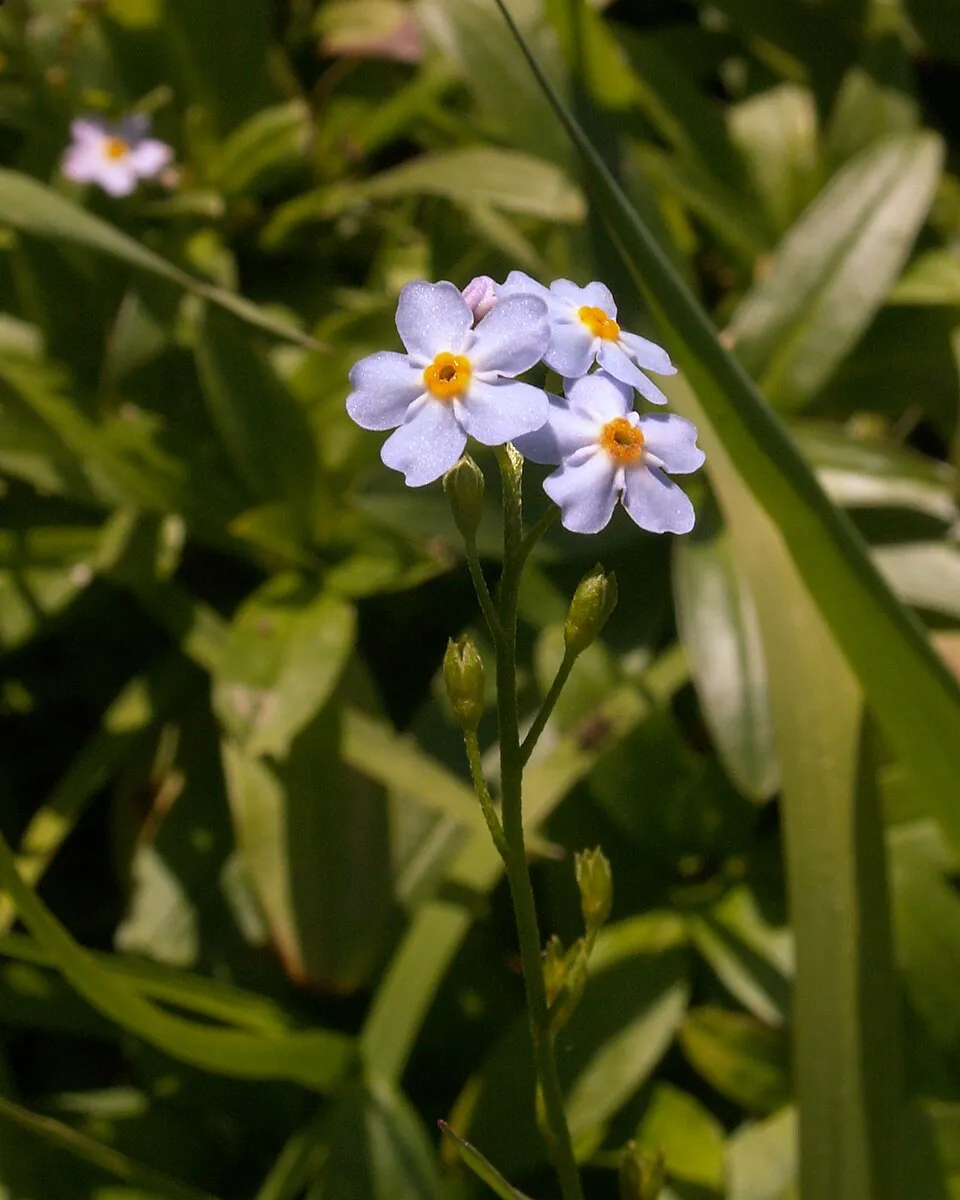
Myosotis scorpioides, commonly known as the True Forget-me-not or Water Forget-me-not, is an enchanting perennial herbaceous plant belonging to the Boraginaceae family. This species is indigenous to Europe and temperate regions of Asia, but its delicate beauty has led to its naturalization across many parts of the world, particularly in North America, where it flourishes in its preferred damp, cool environments. The plant typically grows to a height of 15-30 cm, occasionally reaching up to 60 cm, featuring slender, often subtly hairy stems.
Its leaves are ovate to lanceolate, with the larger basal leaves forming a distinct rosette and smaller alternate leaves along the stem. The hallmark of Myosotis scorpioides is its cluster of small, vibrant sky-blue flowers, each about 0.5 to 1 cm in diameter, uniquely marked with a bright yellow or white eye at its center. These blossoms are arranged in characteristic scorpioid cymes, an inflorescence type that coils like a scorpion's tail in bud, gradually unfurling as the flowers open—a feature that inspired its scientific epithet.
Myosotis scorpioides thrives in moist to wet soil conditions, making it a common sight along stream banks, pond edges, marshlands, and damp meadows. Its blooming period extends from late spring through summer, offering a continuous display of its iconic blue flowers. While widely cherished for its ornamental value and its powerful symbolic meaning of remembrance and enduring affection, the plant also holds a place in traditional folk medicine, albeit with limited modern scientific validation.
Trusted Scientific References
1. Authoritative external sources for Myosotis Scorpioides
1.1 Wikipedia — Myosotis Scorpioides
1.2 Kew POWO (Plants of the World Online)
1.3 PubMed — peer-reviewed research
1.4 NCBI Taxonomy Browser
1.5 GBIF — Global Biodiversity
1.6Myosotis Scorpioides should be interpreted through verified botanical identity, practical care, and responsible safety language. This recovery note adds the missing context needed for a complete profile: match light to the plant's habit, use well-drained soil, water according to season, and avoid unsupported medicinal or edible claims. For publishing, the plant can be presented as a source-backed garden plant with clear care guidance, common problem diagnosis, and conservative safety wording.
1.1.Myosotis Scorpioides — Notable Characteristics
- ✓Iconic 'forget — me-not' sky-blue flowers with a distinctive yellow or white eye.
- ✓Characterized by scorpioid — Characterized by scorpioid cymes, an inflorescence that coils like a scorpion's tail.
- ✓Prefers consistently moist — Prefers consistently moist to wet soil conditions and thrives in partial shade to full sun.
- ✓A herbaceous perennial plant, typically growing 15 — 30 cm tall with slender, hairy stems.
- ✓Widely cultivated for — Widely cultivated for its ornamental beauty and symbolic meaning of remembrance and enduring love.
- ✓Flowers are edible — Flowers are edible and frequently used as a decorative garnish in culinary applications.
- ✓Contains a range — Contains a range of phytochemicals, including flavonoids, phenolic acids, and anthocyanins.
- ✓Belongs to the — Belongs to the Boraginaceae family, which is known for containing pyrrolizidine alkaloids.
- ✓Relatively easy to — Relatively easy to cultivate through seeds or division in appropriate garden settings.
- ✓Has a history — Has a history of traditional folk medicine uses, primarily topical or for mild internal ailments.
1.2.Myosotis Scorpioides — Snapshot Summary
- ✓Iconic Myosotis scorpioides, the True Forget-me-not, is a perennial known for its delicate blue flowers with yellow eyes.
- ✓Native to Europe and Asia, it thrives in moist, cool environments and is widely naturalized.
- ✓Prized ornamentally, it also has traditional folk uses for minor skin issues and as a mild diuretic.
- ✓Contains beneficial flavonoids and phenolics, but also hepatotoxic pyrrolizidine alkaloids (PAs).
- ✓Edible flowers are used as a culinary garnish, but internal medicinal use is cautioned due to PA content.
- ✓Cultivation is straightforward in suitable wetland-like garden settings.
2.Myosotis Scorpioides — Scientific Identity
3.Myosotis Scorpioides — Key Data
4.Myosotis Scorpioides — Botanical Features
5.Myosotis Scorpioides — Native Range & Habitat
6.Myosotis Scorpioides — Folk Medicine Applications
7.Myosotis Scorpioides — Chemical Profile
- ✓Flavonoids — Key compounds include quercetin, rutin, and kaempferol glycosides, which contribute significantly to the plant's antioxidant and anti-inflammatory activities.
- ✓Phenolic Acids — Such as caffeic acid and rosmarinic acid, these compounds are potent antioxidants that help scavenge free radicals and protect cellular integrity.
- ✓Anthocyanins — These water-soluble pigments are responsible for the distinctive blue color of the flowers and possess strong antioxidant and anticarcinogenic properties.
- ✓Tannins — Present in the plant, tannins confer astringent properties, which can be useful in traditional remedies for toning tissues and reducing inflammation.
- ✓Pyrrolizidine Alkaloids (PAs) — Myosotis scorpioides, like many other species in the Boraginaceae family, contains trace amounts of PAs, which are hepatotoxic if consumed in significant quantities over time.
- ✓Saponins — These compounds contribute to the plant's potential expectorant and anti-inflammatory actions, though their specific role in Forget-me-not requires further study.
- ✓Polysaccharides — Complex carbohydrates that can have immunomodulatory effects, supporting the body's natural defense mechanisms.
- ✓Vitamins — Contains trace amounts of essential vitamins, including Vitamin C and K, contributing to its nutritional profile when consumed as an edible flower.
- ✓Minerals — The plant accumulates various essential minerals from its habitat, such as potassium, calcium, and magnesium, important for overall physiological functions.
- ✓Essential Oils — While not a primary constituent, minute quantities of volatile compounds may contribute to the plant's subtle aroma and potential antimicrobial properties.
- ✓Fatty Acids — Present in the seeds and plant tissues, contributing to cellular structure and overall plant metabolism.
- ✓Carotenoids — Pigments like beta-carotene, often found alongside anthocyanins, acting as antioxidants and precursors to Vitamin A.
8.Myosotis Scorpioides — Evidence-Based Benefits
- ✓Antioxidant Properties — The presence of flavonoids and phenolic acids in Myosotis scorpioides suggests potential for neutralizing free radicals and reducing oxidative stress within the body.
- ✓Anti-inflammatory Potential — Certain phytochemicals found in edible flowers, including those in the Boraginaceae family, may contribute to mitigating inflammatory responses.
- ✓Mild Diuretic Effects — Traditionally, some wetland plants like Forget-me-not have been employed as gentle diuretics, aiding in the body's fluid balance and potentially supporting kidney function.
- ✓Astringent Action — Tannins present in the plant can exert a mild astringent effect, which may be beneficial for toning tissues and reducing minor external bleeding or secretions.
- ✓Skin Soothing — Topically, a compress or poultice from Myosotis scorpioides has been used in folk medicine to soothe minor skin irritations, redness, and insect bites.
- ✓Respiratory Support — Traditional uses hint at the plant's application in easing mild coughs and respiratory discomfort, though specific mechanisms are not well-researched.
- ✓Nervous System Support — In some traditional systems, plants with delicate flowers like Forget-me-not are believed to have a subtle calming or nervine tonic effect, promoting emotional well-being.
- ✓Antimicrobial Activity — General studies on edible flowers indicate a broad spectrum of antimicrobial compounds, suggesting Myosotis scorpioides may possess some inhibitory effects against certain pathogens.
- ✓Nephroprotective Potential — Bioactive compounds found in various edible flowers have shown preliminary nephroprotective effects, hinting at a possible role in kidney health for Forget-me-not.
- ✓Antiulcerogenic Effects — Some phytochemicals are known to protect the gastric lining; this potential is generally attributed to edible flowers and may extend to Myosotis scorpioides.
- ✓Antihypertensive Properties — Certain plant compounds can influence blood pressure regulation, and this effect is a general finding in broader studies of edible flowers.
- ✓Potential Anticancer Activity — While highly preliminary, the diverse array of bioactive compounds in edible flowers is being explored for potential anticarcinogenic properties.
8.1.Myosotis Scorpioides — Reported Uses
9.Myosotis Scorpioides — Safety & Side Effects
9.1.Myosotis Scorpioides — Possible Adverse Reactions
- ✓Allergic Reactions — Sensitive individuals may experience contact dermatitis from handling the plant or allergic reactions if consumed, such as skin rashes or digestive upset.
- ✓Pyrrolizidine Alkaloid (PA) Toxicity — Prolonged or high-dose internal consumption of Myosotis scorpioides can lead to liver damage due to the presence of hepatotoxic PAs.
- ✓Digestive Upset — In some individuals, internal consumption may cause mild gastrointestinal discomfort, including nausea, vomiting, or diarrhea.
- ✓Drug Interactions — The plant's potential diuretic properties could interact with prescribed diuretic medications, altering their efficacy or electrolyte balance.
- ✓Skin Irritation — Direct contact with the plant's fine hairs can cause mild skin irritation or itching in sensitive individuals.
- ✓Pregnancy and Lactation — Due to the presence of PAs and insufficient safety data, internal use is strongly discouraged during pregnancy and breastfeeding.
- ✓Children — Internal administration to children is not recommended due to the risks associated with pyrrolizidine alkaloids.
9.2.Myosotis Scorpioides — Risk Assessment
- ✓Limited Internal Use — Due to the presence of pyrrolizidine alkaloids (PAs), internal consumption of Myosotis scorpioides for medicinal purposes is generally not recommended for prolonged periods or in large quantities.
- ✓Topical Application — External use as a poultice or compress is generally considered safer, but a patch test on a small skin area is advisable to check for sensitivity.
- ✓Consult Healthcare Professional — Always seek advice from a qualified medical herbalist or healthcare provider before using Myosotis scorpioides medicinally, especially for internal use or if you have pre-existing health conditions or are on medications.
- ✓Avoid During Pregnancy and Lactation — Pregnant and breastfeeding individuals should strictly avoid internal consumption due to the potential hepatotoxicity of PAs and lack of safety data.
- ✓Correct Identification is Crucial — Ensure accurate identification of Myosotis scorpioides to avoid confusion with other similar-looking plants that may have different or more severe toxic profiles.
- ✓Dosage Concerns — There is no established safe internal dosage for medicinal use of Myosotis scorpioides, further emphasizing caution.
- ✓Pyrrolizidine Alkaloid Awareness — Users should be fully aware of the risks associated with PAs, which can accumulate in the liver over time leading to serious health issues.
10.Myosotis Scorpioides — Usage Guide
- ✓Herbal Infusion (Tea) — Dried flowers and leaves can be steeped in hot water for a mild infusion, traditionally used for soothing coughs or as a gentle diuretic.
- ✓Tincture — A concentrated alcoholic extract of the aerial parts can be prepared for more potent internal use, though this requires careful consideration due to PA content.
- ✓Poultice or Compress — Fresh, crushed leaves and flowers can be applied topically as a poultice or infused into a cloth for a compress to soothe minor skin irritations, stings, or rashes.
- ✓Culinary Use (Edible Flowers) — The vibrant blue flowers are a popular edible garnish for salads, desserts, cakes, and beverages, adding visual appeal and a delicate, subtle flavor.
- ✓Herbal Bath — Infusions of the plant can be added to bathwater to provide a soothing and refreshing experience for the skin, particularly for those with mild dermatological discomfort.
- ✓Infused Oil — Dried flowers can be infused into a carrier oil (like olive or almond oil) for topical application, creating a soothing balm for external skin care.
- ✓Homeopathic Preparations — In homeopathy, Myosotis scorpioides is used in highly diluted forms for various constitutional remedies, often related to respiratory or lymphatic conditions.
- ✓Glycerite — A non-alcoholic extraction using glycerin can be made for a sweeter, milder preparation, suitable for children or those avoiding alcohol, again with PA content awareness.
11.Myosotis Scorpioides — Garden Cultivation
- ✓Site Selection — Choose a location with partial shade to full sun, ensuring consistently moist to wet soil conditions, ideal for its natural habitat.
- ✓Soil Requirements — Prefers rich, loamy soil with good drainage, but can tolerate heavier clays if kept moist. A pH between 6.0 and 7.0 is optimal.
- ✓Propagation — Easily propagated from seeds sown directly in late spring or early fall, or by division of established clumps in spring every 2-3 years.
- ✓Planting Time — Seeds can be broadcast in spring after the last frost or in late summer for fall germination. Potted plants are best transplanted in spring.
- ✓Watering — Requires consistent and ample watering, especially during dry spells, to mimic its natural wetland environment. Do not allow the soil to dry out.
- ✓Fertilization — Generally low-maintenance; a light application of balanced organic fertilizer in spring or a layer of compost is usually sufficient.
- ✓Pest and Disease Management — Myosotis scorpioides is relatively robust, but watch for powdery mildew in humid conditions and common garden pests like aphids.
- ✓Maintenance — Deadheading spent flowers encourages further blooming and prevents excessive self-seeding. Pruning back leggy growth can promote bushier plants.
Reviewed by the Flora Medical Global Botanical Review Panel
Multi-disciplinary editorial group · Botany · Ethnobotany · Herbal-medicine literature
Who reviewed this: This page was checked by the Flora Medical Global Botanical Review Panel — an in-house editorial group of botany graduates, ethnobotany researchers, and horticulture practitioners who collectively maintain our 7,000+ plant encyclopedia. Meet the team.
Our 4-step verification process
1. Taxonomic verification
Scientific names and synonyms cross-checked against Kew POWO, World Flora Online, and The Plant List.
2. Phytochemical & medicinal cross-reference
Active compounds, traditional uses, and reported activities are cross-referenced with PubMed, USDA Dr. Duke's database, and peer-reviewed ethnobotanical literature.
3. Conservation & distribution check
Distribution, ecology, and conservation status confirmed against GBIF occurrence records and the IUCN Red List.
4. Editorial & safety review
Every entry passes an editorial pass for clarity, originality, and safety notices (toxicity, contraindications, dosage caveats) before publication.
Last reviewed:
Important medical disclaimer: This content is for educational and research purposes only. It is not medical advice and is not a substitute for consultation with a licensed healthcare provider. Do not use any herb to self-treat a medical condition without professional guidance.
Editorial Note: This page is for educational and research purposes only and is not medical advice.
Written by: Flora Medical Global Editorial Team
Reviewed by: Flora Medical Global Botanical Review Panel
Last Updated: June 15, 2026





Myosotis Scorpioides — Comments & Community Reviews
Rate this plant