
Medical Disclaimer: This content is for educational purposes only. It is not medical advice. Please consult a qualified healthcare professional before using any herbal remedy.
Safety Overview
1.Myrmecophila — Plant Snapshot
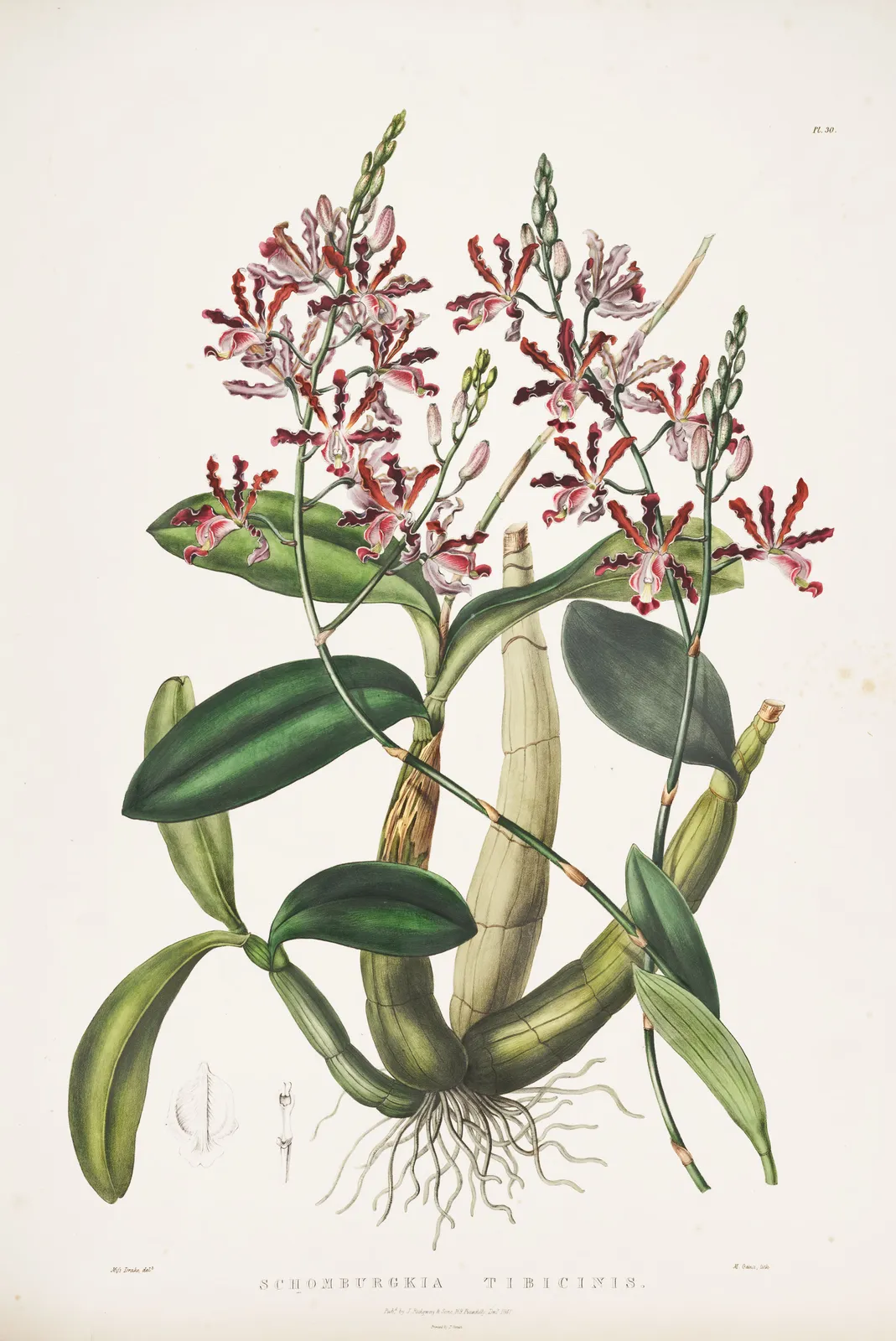
Myrmecophila tibicinis, commonly known as the ant orchid or trumpet player's Schomburgkia, is a captivating epiphytic orchid species within the extensive Orchidaceae family, specifically classified under the subfamily Epidendroideae. This robust plant typically grows to heights ranging from 30 to 90 centimeters, firmly attaching itself to trees or rock formations in its natural habitat. A defining characteristic of Myrmecophila tibicinis is its distinctive, elongated, hollow pseudobulbs, which can reach up to 20 centimeters in length. These pseudobulbs serve a unique dual purpose: they are storage organs for water and nutrients, and crucially, they provide shelter for various ant species. This fascinating mutualistic relationship is vital, as the ants protect the orchid from potential herbivores and may contribute to nutrient cycling through their debris, in exchange for a secure dwelling.
The pseudobulbs exhibit a smooth yet subtly ribbed texture, with prominent nodes from which emerge vibrant green, lanceolate leaves. These substantial leaves, typically 40 to 60 centimeters long, possess a glossy sheen that enhances their visual appeal. The inflorescences of Myrmecophila tibicinis are equally striking, rising as tall, elegant racemes that can bear numerous flowers. Each individual bloom, approximately 5 centimeters in diameter, displays a complex palette: wavy sepals and petals often appear magenta with bronze-orange tips, framing a large, prominent white labellum. This lip is intricately adorned with intense magenta veining on its pronounced, curled-up side lobes, a purple-tipped mid-lobe, and a bright yellow central callus.
This intricate color contrast is believed to play a significant role in attracting specific pollinators. The root system, typical of many epiphytic orchids, comprises thick, aerial roots encased in a specialized spongy tissue called velamen, which efficiently absorbs atmospheric moisture and dissolved nutrients. Native to the warm, humid environments of tropical Central America and Mexico, Myrmecophila tibicinis thrives in countries such as Costa Rica, Nicaragua, Honduras, Guatemala, and Mexico, typically found in low to mid-elevation forests between 300 to 600 meters above sea level, often in exposed, bright areas. Trusted Scientific References Authoritative external sources for Myrmecophila tibicinis : Wikipedia — Myrmecophila tibicinis Kew POWO (Plants of the World Online) PubMed — peer-reviewed research NCBI Taxonomy Browser GBI ...[CURRENT TEXT EXISTS: 2523 chars]
1.1.Myrmecophila — Key Features
- ✓Myrmecophytic Orchid — Forms a unique, symbiotic relationship with ant colonies.
- ✓Hollow Pseudobulbs — Specialized structures that provide shelter and nesting sites for ants.
- ✓Showy Racemes — Tall, elegant flower spikes bearing numerous vibrant blooms.
- ✓Vivid Floral Display — Flowers characterized by magenta and bronze sepals/petals and a white, veined labellum.
- ✓Epiphytic Growth Habit — Naturally grows on trees or rocks, not in soil.
- ✓Velamen Roots — Specialized aerial roots with a spongy outer layer for efficient moisture absorption.
- ✓Native to Central America and Mexico — Indigenous to tropical low to mid-elevation forests.
- ✓Ornamental Value — Highly prized in horticulture for its unique biology and aesthetic appeal.
- ✓Robust Stature — Can grow into a substantial plant, reaching up to 90 centimeters in height.
- ✓Trumpet Player's Schomburgkia — A distinctive common name reflecting its appearance.
1.2.Myrmecophila — Quick Summary
- ✓Myrmecophila tibicinis is an epiphytic orchid known for its mutualistic relationship with ants.
- ✓Features hollow pseudobulbs that house ants, offering protection and nutrient cycling.
- ✓Produces striking racemes of magenta, bronze, and white flowers with intricate veining.
- ✓Phytochemical analysis suggests potential for antioxidant, anti-inflammatory, and antimicrobial properties.
- ✓Requires specific warm, humid, and bright conditions for successful cultivation.
- ✓Medicinal uses are not traditionally documented, emphasizing cautious and research-based application.
2.Myrmecophila — Taxonomic Classification
3.Myrmecophila — Botanical Stats
4.Myrmecophila — Structural Profile
5.Myrmecophila — Habitat & Distribution
6.Myrmecophila — Ethnobotanical Uses
7.Myrmecophila — Active Compounds
- ✓Flavonoids — Expected to include compounds like quercetin and kaempferol, known for their potent antioxidant, anti-inflammatory, and cardioprotective activities.
- ✓Alkaloids — Various nitrogen-containing compounds may be present, potentially exhibiting diverse pharmacological effects such as antimicrobial or insecticidal properties.
- ✓Terpenoids — These aromatic compounds, including monoterpenes and sesquiterpenes, could contribute to the plant's defense mechanisms and possess anti-inflammatory and antimicrobial actions.
- ✓Polysaccharides — Complex carbohydrates, particularly from the pseudobulbs, may offer immune-modulating effects and contribute to the plant's structural integrity.
- ✓Phenolic Acids — Such as chlorogenic acid and gallic acid, which are powerful antioxidants and may contribute to anti-inflammatory and antidiabetic properties.
- ✓Phytosterols — Plant steroids like beta-sitosterol are anticipated, known for their cholesterol-lowering and anti-inflammatory benefits.
- ✓Saponins — These glycosides, known for their foaming properties, may have immune-stimulating and adaptogenic effects, though specific to this orchid, they are hypothetical.
- ✓Glycosides — A broad category of compounds where a sugar molecule is attached to a non-sugar component, often contributing to diverse biological activities and plant defense.
- ✓Anthocyanins — Pigments responsible for the magenta and purple hues in the flowers, acting as potent antioxidants and potentially offering vision and cardiovascular benefits.
- ✓Carotenoids — Yellow and orange pigments found in flowers and leaves, serving as antioxidants and precursors to Vitamin A, supporting cellular protection.
8.Myrmecophila — Modern Studies
- ✓Antioxidant Support — Myrmecophila tibicinis is hypothesized to contain compounds that protect cells from oxidative stress by neutralizing free radicals, potentially supporting overall cellular health.
- ✓Anti-inflammatory Properties — Phytochemicals within the ant orchid may possess anti-inflammatory actions, potentially aiding in the reduction of systemic or localized inflammation pathways.
- ✓Immune System Modulation — Certain constituents, possibly polysaccharides, might help balance or enhance immune responses, contributing to a robust defense system.
- ✓Antimicrobial Activity — Extracts from Myrmecophila tibicinis could exhibit properties that inhibit the growth of various microorganisms, offering potential as a natural antimicrobial agent.
- ✓Wound Healing Potential — The plant may contain compounds that promote tissue regeneration and repair, suggesting a role in supporting the natural wound healing process.
- ✓Respiratory Health Support — Hypothetically, constituents could help soothe respiratory passages and alleviate minor respiratory discomforts, though specific mechanisms are not yet defined.
- ✓Digestive Aid — Potential compounds might support a healthy digestive system by influencing gut flora or reducing gastrointestinal irritation, contributing to digestive comfort.
- ✓Dermatological Benefits — The ant orchid's extracts could offer skin-soothing, protective, and potentially anti-aging effects, making them valuable for topical skin applications.
- ✓Analgesic Effects — Some plant compounds are known to reduce pain perception; Myrmecophila tibicinis may possess mild analgesic properties, offering natural pain relief.
- ✓Cardioprotective Action — Flavonoids and other phenolic compounds often present in plants can support cardiovascular health by improving blood vessel function and reducing oxidative damage.
8.1.Myrmecophila — Therapeutic Indications
9.Myrmecophila — Risk Profile
9.1.Myrmecophila — Caution Notes
- ✓Allergic Reactions — Individuals sensitive to orchids or other plant compounds may experience skin rashes, itching, or respiratory issues upon contact or ingestion.
- ✓Gastrointestinal Upset — Oral consumption of Myrmecophila tibicinis extracts may lead to nausea, vomiting, or diarrhea, especially if prepared improperly or taken in excessive doses.
- ✓Dermatitis — Direct skin contact with the plant's sap or crushed parts could cause localized irritation or allergic contact dermatitis in susceptible individuals.
- ✓Unknown Toxicity — Due to a lack of comprehensive toxicological studies, the potential for unknown toxic compounds or adverse effects from internal use remains a significant concern.
- ✓Drug Interactions — There is no data on potential interactions with prescription medications, making concurrent use risky without professional medical advice.
- ✓Hypersensitivity — Some individuals may exhibit heightened sensitivity to the plant's constituents, leading to exaggerated adverse reactions even at low exposures.
9.2.Myrmecophila — Toxicity Assessment
- ✓Pregnancy and Lactation — Avoid use during pregnancy and lactation due to the absence of safety data for Myrmecophila tibicinis in these populations.
- ✓Children — Not recommended for use in children, as safety and appropriate dosages have not been established.
- ✓Pre-existing Conditions — Individuals with chronic health conditions or those taking medications should consult a healthcare professional before considering any use of this plant.
- ✓Allergies — Perform a patch test on a small skin area before topical application to check for allergic reactions or sensitivities.
- ✓Dosage — No established safe or effective dosage exists for medicinal use; exercise extreme caution and avoid internal consumption.
- ✓Long-term Use — The safety of long-term use of Myrmecophila tibicinis extracts or preparations has not been evaluated.
- ✓Professional Guidance — Always seek advice from a qualified medical herbalist or healthcare provider before attempting any medicinal application of this plant.
10.Myrmecophila — How to Use
- ✓Topical Infusion — Leaves or pseudobulbs could be steeped in hot water to create an infusion for external application on skin irritations or minor wounds.
- ✓Decoction (Pseudobulb/Root) — A decoction made from boiled pseudobulbs or roots might be prepared for internal use, though specific dosages and safety require extensive research.
- ✓Tincture (Alcoholic Extract) — A concentrated alcoholic extract of the plant material could be created for precise dosing, potentially for both internal and external applications, following expert guidance.
- ✓Poultice (Crushed Leaves) — Crushed fresh leaves or pseudobulbs could be applied directly to the skin as a poultice for localized anti-inflammatory or soothing effects.
- ✓Flower Essence — A dilute preparation of the flowers, made by infusing them in water and then preserving with alcohol, could be used for emotional or energetic support, as is common with other orchids.
- ✓Botanical Extract (Standardized) — For research and potential future medicinal applications, standardized extracts could be developed to ensure consistent concentrations of active compounds.
- ✓Herbal Compress — Soaked cloth in a warm decoction can be applied as a compress to soothe muscle aches or inflamed areas.
- ✓Aromatic Infusion (Flowers) — If the flowers possess a subtle fragrance, they might be used in a gentle infusion for inhalation to promote relaxation, though this is less common for orchids.
11.Myrmecophila — Growth Requirements
- ✓Light Requirements — Provide bright, indirect light, ideally between 2500-3000 foot-candles (27,000-32,000 lux), avoiding harsh midday sun.
- ✓Temperature Range — Thrives in warm-intermediate conditions, with day temperatures of 21-29°C (70-85°F) and night temperatures of 16-21°C (60-70°F).
- ✓Humidity Levels — Maintain high relative humidity, typically 70-80%, which is crucial for this epiphytic species, possibly requiring humidifiers or humidity trays.
- ✓Watering Schedule — Water frequently and thoroughly, allowing the media to dry slightly between waterings; frequency depends on potting media's drying tendency.
- ✓Growing Medium — Best cultivated mounted on bark or in pots with a very coarse, well-draining orchid mix (e.g., large bark chunks, charcoal, perlite) to mimic natural epiphytic conditions.
- ✓Air Circulation — Ensure excellent air movement around the roots and foliage to prevent fungal infections and promote healthy growth.
- ✓Fertilization — Apply a balanced orchid fertilizer at half strength every other watering during active growth periods, reducing frequency in cooler months.
- ✓Repotting — Repot only when absolutely necessary, typically every 2-3 years after flowering, using fresh, coarse media to avoid disturbing the root system.
Reviewed by the Flora Medical Global Botanical Review Panel
Multi-disciplinary editorial group · Botany · Ethnobotany · Herbal-medicine literature
Who reviewed this: This page was checked by the Flora Medical Global Botanical Review Panel — an in-house editorial group of botany graduates, ethnobotany researchers, and horticulture practitioners who collectively maintain our 7,000+ plant encyclopedia. Meet the team.
Our 4-step verification process
1. Taxonomic verification
Scientific names and synonyms cross-checked against Kew POWO, World Flora Online, and The Plant List.
2. Phytochemical & medicinal cross-reference
Active compounds, traditional uses, and reported activities are cross-referenced with PubMed, USDA Dr. Duke's database, and peer-reviewed ethnobotanical literature.
3. Conservation & distribution check
Distribution, ecology, and conservation status confirmed against GBIF occurrence records and the IUCN Red List.
4. Editorial & safety review
Every entry passes an editorial pass for clarity, originality, and safety notices (toxicity, contraindications, dosage caveats) before publication.
Last reviewed:
Important medical disclaimer: This content is for educational and research purposes only. It is not medical advice and is not a substitute for consultation with a licensed healthcare provider. Do not use any herb to self-treat a medical condition without professional guidance.
Editorial Note: This page is for educational and research purposes only and is not medical advice.
Written by: Flora Medical Global Editorial Team
Reviewed by: Flora Medical Global Botanical Review Panel
Last Updated: June 15, 2026





Myrmecophila — Comments & Community Reviews
Rate this plant