
Medical Disclaimer: This content is for educational purposes only. It is not medical advice. Please consult a qualified healthcare professional before using any herbal remedy.
Safety Overview
1.Sweet Cicely — Plant Snapshot
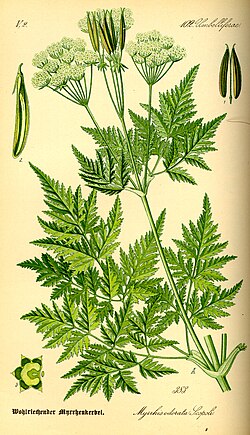
Sweet Cicely, scientifically known as Myrrhis odorata, is a captivating perennial herbaceous plant belonging to the Apiaceae family, renowned for its distinctive sweet, anise-like aroma. Typically reaching heights of 60 to 120 cm (24 to 48 inches), this plant forms a robust clump of finely divided, fern-like leaves that emerge from a creeping rootstock.
The leaves are tripinnate, glossy green, and basal, with lanceolate leaflets measuring approximately 10 to 20 cm (4 to 8 inches) in length, contributing to its overall feathery and elegant appearance. Its smooth, branched stems are hollow and glabrous, often marked with subtle ridges.
In late spring to early summer, Myrrhis odorata showcases clusters of small, delicate white flowers, each about 2-5 mm in diameter, arranged in flat-topped compound umbels that can feature up to 20 individual florets. These attractive blooms draw a variety of pollinators. By midsummer, the plant produces elegant, ribbed seed pods that curve slightly, ripening to a pale brown.
Sweet Cicely thrives in woodland clearings and shaded hedgerows across Europe and parts of Asia, demonstrating a strong preference for moist, well-drained soils rich in organic material. While it favors partial shade, it exhibits adaptability to full sun environments and a hardy tolerance to varying soil types, provided consistent moisture is maintained for optimal growth. As a close relative to culinary herbs like parsley and dill, its aromatic leaves, seeds, and thick, aromatic taproot are all utilized for their unique sweet, licorice-like flavor.
Trusted Scientific References
1. Authoritative external sources for Myrrhis odorata
1.1 Wikipedia — Myrrhis odorata
1.2 Kew POWO (Plants of the World Online)
1.3 PubMed — peer-reviewed research
1.4 NCBI Taxonomy Browser
1.5 GBIF — Global Biodiversity
1.6Sweet Cicely should be interpreted through verified botanical identity, practical care, and responsible safety language. This recovery note adds the missing context needed for a complete profile: match light to the plant's habit, use well-drained soil, water according to season, and avoid unsupported medicinal or edible claims. For publishing, the plant can be presented as a source-backed medicinal plant with clear care guidance, common problem diagnosis, and conservative safety wording.
1.1.Sweet Cicely — Defining Traits
- ✓Distinct Sweet Anise Flavor — Known for its unique, mild licorice-like taste and aroma, making it a culinary and medicinal delight.
- ✓Digestive Aid — Highly valued for its carminative properties, effectively soothing bloating, gas, and indigestion.
- ✓Expectorant Qualities — Contains compounds that help clear mucus, supporting respiratory comfort during colds and mild bronchitis.
- ✓Antioxidant Rich — Abundant in flavonoids, offering significant protection against oxidative stress.
- ✓European Traditional Herb — Deep roots in medieval European herbalism, used as a sweetener and digestive tonic.
- ✓Adaptable Growth — Thrives in temperate climates, preferring partial shade but showing adaptability to varying conditions.
- ✓Ornamental Value — Its fern-like foliage and delicate white flowers add aesthetic appeal to gardens.
- ✓Pest Resistant — A resilient plant, making it a good choice for organic and low-maintenance gardening.
- ✓Versatile Application — Leaves, seeds, and roots are all utilized for their therapeutic and flavor attributes.
- ✓Apiaceae Family Member — Related to other well-known herbs like parsley, dill, and fennel, sharing some botanical characteristics.
1.2.Sweet Cicely — At-a-Glance Summary
- ✓Aromatic perennial herb with sweet, anise-like flavor.
- ✓Traditionally used for digestive and respiratory support.
- ✓Rich in anethole, flavonoids, and monoterpenes.
- ✓Favors partial shade and moist, well-drained soil.
- ✓Culinary uses as a natural sweetener and flavoring.
- ✓Caution advised for pregnancy and liver conditions.
2.Sweet Cicely — Taxonomic Classification
3.Sweet Cicely — Botanical Stats
4.Sweet Cicely — Plant Morphology
5.Sweet Cicely — Where It Grows
6.Sweet Cicely — Historical Applications
7.Sweet Cicely — Secondary Metabolites
- ✓Anethole — Comprising 50–70% of the essential oil, anethole is responsible for Sweet Cicely’s signature sweet, licorice-like aroma and exhibits anti-inflammatory and antispasmodic effects on gastrointestinal smooth muscle.
- ✓Myrrhis Ketone — Unique to Myrrhis odorata within the Apiaceae family, this compound imparts an earthy, resinous facet to the plant’s profile and shows mild antimicrobial activity against certain bacterial and fungal strains in vitro.
- ✓Monoterpenes — Including fenchone, limonene, and alpha-pinene, these compounds contribute significantly to the plant's expectorant and carminative properties, assisting in mucous clearance and reducing gastrointestinal gas.
- ✓Flavonoids — Key flavonoids such as quercetin and kaempferol are present, providing potent antioxidant support by scavenging free radicals and protecting cell membranes from oxidative damage.
- ✓Coumarins — Detected in trace amounts, coumarins may contribute to mild anti-inflammatory effects and potentially enhance peripheral circulation, particularly when applied topically.
- ✓Fatty Acids — The seeds contain various fatty acids, which contribute to their nutritional value and potential emollient properties, though less studied for medicinal action.
- ✓Lignans — These phenolic compounds are present in minor quantities and are known for their antioxidant and potential phytoestrogenic activities.
- ✓Polysaccharides — Found in the plant matrix, these complex carbohydrates may offer demulcent properties, providing a soothing effect on mucous membranes.
8.Sweet Cicely — What Research Suggests
- ✓Digestive Relief — Myrrhis odorata is traditionally used to alleviate common digestive complaints such as bloating, gas, and indigestion, primarily due to its carminative properties that help expel intestinal gas.
- ✓Appetite Stimulation — Historical herbal texts recommend Sweet Cicely to bolster appetite, particularly in convalescents or those experiencing a temporary loss of desire for food.
- ✓Respiratory Support — The plant’s essential oil, rich in monoterpenes like fenchone and limonene, acts as a mild expectorant, aiding in mucous clearance and providing comfort for mild bronchitis and common colds.
- ✓Antioxidant Activity — Flavonoids such as quercetin and kaempferol present in Sweet Cicely offer significant antioxidant support, helping to neutralize free radicals and protect cellular integrity.
- ✓Skin Soothing — Folk remedies involve applying poultices of crushed leaves to insect bites to reduce inflammation and itching, attributed to the combined action of terpenes and flavonoids.
- ✓Menstrual Comfort — In European folk medicine, decoctions of Sweet Cicely seeds are employed to ease dysmenorrhea, with anethole’s smooth muscle relaxant properties likely contributing to this effect.
- ✓Natural Sweetener — Historically, its naturally sweet flavor profile made it a valuable sugar substitute, enhancing the palatability of porridges, fruit preserves, and herbal remedies.
- ✓Carminative Action — Its high anethole content contributes to its ability to soothe gastrointestinal smooth muscle spasms, effectively reducing discomfort associated with flatulence and colic.
8.1.Sweet Cicely — Health Applications
9.Sweet Cicely — Precautions & Warnings
9.1.Sweet Cicely — Warnings
- ✓Allergic Reactions — Sensitive individuals may experience skin irritation or gastrointestinal upset, especially if allergic to other Apiaceae family members.
- ✓Uterine Stimulation — High doses are theoretically noted to cause uterine stimulation, hence caution is advised for pregnant individuals.
- ✓Liver Metabolism — Anethole metabolites may burden hepatic pathways, suggesting prudence for individuals with pre-existing liver disorders.
- ✓Photosensitivity — While rare, some members of the Apiaceae family can induce photosensitivity; monitor for increased skin sensitivity to sunlight.
- ✓Drug Interactions — Potential for interaction with anticoagulant medications due to trace coumarins, though clinical significance is low at typical doses.
- ✓Hypoglycemia — In very high concentrations, some plant compounds could theoretically influence blood sugar, requiring caution for diabetics.
- ✓Gastric Irritation — Excessive consumption, particularly of concentrated extracts, might cause mild gastric irritation in sensitive stomachs.
9.2.Sweet Cicely — Safety Overview
- ✓Pregnancy and Breastfeeding — Avoid high doses during pregnancy and breastfeeding due to limited safety data and theoretical uterine stimulation; consult a healthcare professional.
- ✓Liver Conditions — Individuals with liver disorders should use Sweet Cicely cautiously and under professional guidance due to the metabolic processing of anethole in the liver.
- ✓Allergic History — Exercise caution if you have known allergies to plants in the Apiaceae family (e.g., celery, carrot, fennel, parsley).
- ✓Dosage Adherence — Always adhere to recommended dosages; excessive intake may increase the risk of potential side effects.
- ✓Professional Consultation — It is advisable to consult a qualified healthcare practitioner before incorporating Myrrhis odorata into your wellness routine, especially if you have chronic health conditions or are on medication.
- ✓Children and Infants — Use in children and infants should be under strict medical supervision due to insufficient safety data.
- ✓Topical Application — Perform a patch test before extensive topical application to check for skin sensitivity or allergic reactions.
10.Sweet Cicely — Application Forms
- ✓Herbal Infusion (Tea) — Steep 5–10 g of fresh leaves or 2–4 g of dried leaves in 200-250 ml hot water for 10–15 minutes; drink up to twice daily after meals for digestive comfort.
- ✓Seed Decoction — Pulverize 1–2 g of Sweet Cicely seeds and simmer in water or milk for 7–10 minutes; often consumed at bedtime for carminative and mild sedative benefits.
- ✓Tincture — Prepare a 1:5 ratio tincture with 45% alcohol; take 2–5 ml, three times daily, diluted in water, to extract both essential oils and flavonoids.
- ✓Glycerite — For alcohol-sensitive individuals, create a 1:2 ratio glycerite using vegetable glycerin; recommended dosage is 3–6 ml three times daily.
- ✓Culinary Use — Fresh leaves can be finely chopped and added to salads, fruit dishes, porridges, or used to sweeten desserts and chutneys, imparting a unique anise flavor.
- ✓Root Preparation — The aromatic taproot can be grated or sliced and used to flavor stews, soups, or even candied as a historical confection.
- ✓Topical Poultice — Crush fresh leaves and apply directly to insect bites or minor skin irritations to help reduce inflammation and itching.
- ✓Infused Oils — Infuse dried leaves or seeds in carrier oils for topical applications or as a base for culinary dressings, capturing the aromatic compounds.
11.Sweet Cicely — Growth Requirements
- ✓Site Selection — Prefers partial to full shade, thriving in dappled woodland areas or shaded borders in temperate climates.
- ✓Soil Requirements — Requires loamy, humus-rich soil that is consistently moist but well-drained, rich in organic material.
- ✓Planting — Can be grown from seed, which often benefits from a period of cold stratification, or by dividing established clumps in spring or autumn.
- ✓Watering — Needs consistent moisture; ensure the soil does not dry out, especially during warmer months, but avoid waterlogging.
- ✓Fertilization — Benefits from annual application of compost or well-rotted manure to maintain soil fertility and organic content.
- ✓Pest Resistance — Notably pest-resistant, making it an excellent choice for organic gardening and reducing the need for chemical interventions.
- ✓Self-Seeding — Tends to self-seed lightly, establishing itself naturally in favorable conditions, which can lead to a gradual spread.
- ✓Hardiness — Exhibits good hardiness in temperate zones, enduring cooler climates with minimal protection.
Reviewed by the Flora Medical Global Botanical Review Panel
Multi-disciplinary editorial group · Botany · Ethnobotany · Herbal-medicine literature
Who reviewed this: This page was checked by the Flora Medical Global Botanical Review Panel — an in-house editorial group of botany graduates, ethnobotany researchers, and horticulture practitioners who collectively maintain our 7,000+ plant encyclopedia. Meet the team.
Our 4-step verification process
1. Taxonomic verification
Scientific names and synonyms cross-checked against Kew POWO, World Flora Online, and The Plant List.
2. Phytochemical & medicinal cross-reference
Active compounds, traditional uses, and reported activities are cross-referenced with PubMed, USDA Dr. Duke's database, and peer-reviewed ethnobotanical literature.
3. Conservation & distribution check
Distribution, ecology, and conservation status confirmed against GBIF occurrence records and the IUCN Red List.
4. Editorial & safety review
Every entry passes an editorial pass for clarity, originality, and safety notices (toxicity, contraindications, dosage caveats) before publication.
Last reviewed:
Important medical disclaimer: This content is for educational and research purposes only. It is not medical advice and is not a substitute for consultation with a licensed healthcare provider. Do not use any herb to self-treat a medical condition without professional guidance.
Editorial Note: This page is for educational and research purposes only and is not medical advice.
Written by: Flora Medical Global Editorial Team
Reviewed by: Flora Medical Global Botanical Review Panel
Last Updated: June 15, 2026





Sweet Cicely — Comments & Community Reviews
Rate this plant