
Medical Disclaimer: This content is for educational purposes only. It is not medical advice. Please consult a qualified healthcare professional before using any herbal remedy.
Safety Overview
1.Nagbala — Overview
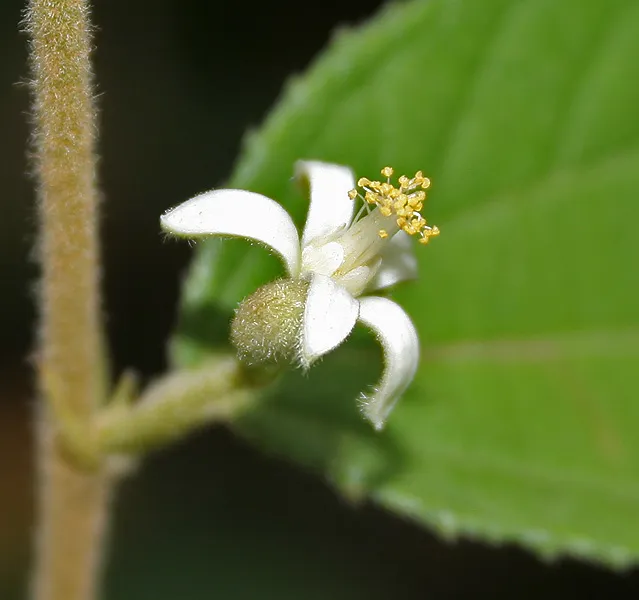
Grewia hirsuta, commonly known as Nagbala, is a resilient perennial shrub belonging to the Malvaceae family, previously classified under Tiliaceae. This hardy plant typically grows to a height of 1 to 3 meters, characterized by its erect stems and rough, greyish-brown bark often covered in numerous short, stiff hairs. Its leaves are arranged alternately, exhibiting an ovate to elliptic shape, measuring approximately 6 to 14 cm in length and 2 to 7 cm in width. They feature distinctly serrated margins and prominent venation, with a characteristic soft, hairy texture on both surfaces.
Nagbala flowers are small and visually appealing, appearing in axillary clusters or cymes, typically with 3 to 4 flowers per cyme. Each flower displays five petals, initially white, which gradually transition to pale yellow and eventually brown upon full maturity, surrounding a prominent bouquet of yellow stamens. The flowering period generally occurs from June to July, with globose buds preceding the blooms. Small, yellow, fibrous fruits develop after flowering, while the roots are cylindrical with a brown external surface.
Nagbala is primarily found across dry deciduous forests, scrublands, and grasslands in South and Southeast Asian regions, including India, Nepal, Pakistan, Sri Lanka, Thailand, Myanmar, and Vietnam. It thrives particularly well in sandy or loamy soils and is well-adapted to a broad range of environmental conditions, tolerating temperatures between 5°C and 45°C and demonstrating significant drought resilience, making it a crucial component of its native ecosystems.
Trusted Scientific References
1. Authoritative external sources for Grewia hirsuta
1.1 Wikipedia — Grewia hirsuta
1.2 Kew POWO (Plants of the World Online)
1.3 PubMed — peer-reviewed research
1.4 NCBI Taxonomy Browser
1.5 GBIF — Global Biodiversity
1.6Nagbala should be interpreted through verified botanical identity, practical care, and responsible safety language. This recovery note adds the missing context needed for a complete profile: match light to the plant's habit, use well-drained soil, water according to season, and avoid unsupported medicinal or edible claims. For publishing, the plant can be presented as a source-backed medicinal plant with clear care guidance, common problem diagnosis, and conservative safety wording.
1.1.Nagbala — Key Features
- ✓Perennial shrub growing 1 — 3 meters tall with hairy stems and leaves.
- ✓Leaves are ovate — Leaves are ovate to elliptic with serrated margins and prominent venation.
- ✓Features small, white — Features small, white to pale yellow flowers in axillary clusters.
- ✓Indigenous to South — Indigenous to South and Southeast Asian regions, including India, Nepal, and Pakistan.
- ✓Rich phytochemical profile — Rich phytochemical profile including antioxidants like flavonoids and phenolics.
- ✓Recognized in Ayurveda — Recognized in Ayurveda as a Rasayana (rejuvenative) and Vata-Pitta shamak.
- ✓Traditional uses include — Traditional uses include supporting vitality, digestion, skin healing, and lactation.
- ✓Highly resilient plant, — Highly resilient plant, adapted to dry deciduous forests and drought conditions.
- ✓All parts, including — All parts, including roots, leaves, fruits, and bark, hold medicinal value.
- ✓Known for its astringent, anti — inflammatory, and adaptogenic qualities.
1.2.Nagbala — Quick Summary
- ✓Nagbala (Grewia hirsuta) is a resilient perennial shrub from the Malvaceae family.
- ✓It is highly valued in traditional medicine for its adaptogenic, digestive, and antioxidant properties.
- ✓Rich in beneficial phytochemicals including flavonoids, tannins, triterpenoids, and essential amino acids.
- ✓In Ayurveda, it is revered as a Rasayana and is known for balancing Vata and Pitta doshas.
- ✓Traditionally used to combat physical debility, support digestion, promote wound healing, and aid lactation.
- ✓Requires professional guidance for safe and effective therapeutic application.
2.Nagbala — Systematic Position
3.Nagbala — Reference Facts
4.Nagbala — Morphological Account
5.Nagbala — Habitat & Distribution
6.Nagbala — Cultural & Traditional Roles
7.Nagbala — Bioactive Constituents
- ✓Flavonoids — A diverse group of polyphenolic compounds, including various glycosides, which are potent antioxidants that protect cells from oxidative damage and exhibit anti-inflammatory effects.
- ✓Phenolic Compounds — A broad category of secondary metabolites, such as phenolic acids, contributing significantly to the plant's overall antioxidant capacity and free radical scavenging activities.
- ✓Tannins — Astringent compounds, primarily hydrolyzable and condensed tannins, responsible for the plant's efficacy in wound healing, anti-diarrheal actions, and protective effects by binding to proteins.
- ✓Triterpenoids — Key compounds include α-amyrin, β-amyrin, and foradol, identified in the stem powder, known for their significant anti-inflammatory, analgesic, and potential hepatoprotective properties.
- ✓Phytosterols — Specifically β-sitosterol, also found in the stem, which contributes to anti-inflammatory responses, immune-modulating effects, and may play a role in cholesterol management.
- ✓Amino Acids — The aqueous extract of Nagbala contains essential building blocks such as Serine, Proline, Phenylalanine, Isoleucine, Glutamic acid, and Lysine, vital for protein synthesis and various metabolic functions.
- ✓Polysaccharides — Contribute to the plant's mucilaginous and demulcent properties, which help in soothing irritated mucous membranes, particularly in the gastrointestinal and respiratory tracts.
- ✓Alkaloids — While not extensively detailed, the presence of certain nitrogen-containing compounds may contribute to the plant's diverse pharmacological activities, common in many medicinal plants.
8.Nagbala — Modern Studies
- ✓Adaptogenic Support — Helps the body combat physical debility and fatigue, acting as a tonic for overall vitality and resilience, particularly noted in Ayurvedic traditions.
- ✓Digestive Aid — Traditionally used to soothe gastrointestinal discomfort, effectively managing conditions like dysentery and diarrhea due to its natural astringent properties.
- ✓Antioxidant Protection — Rich in flavonoids, phenolic compounds, and tannins, it actively neutralizes free radicals, thereby reducing oxidative stress and protecting cells from damage.
- ✓Anti-inflammatory Action — May help reduce systemic inflammation throughout the body, contributing to pain relief and supporting the body's natural healing processes.
- ✓Wound Healing — Bark extracts and topical applications exhibit astringent and antiseptic qualities, promoting faster healing of minor cuts, wounds, and skin abrasions.
- ✓Lactogenic Properties — Believed in traditional medicine to enhance milk production in nursing mothers, supporting postpartum recovery and infant nutrition.
- ✓Reproductive Health — The roots are traditionally utilized to address seminal debility and support male reproductive vitality and strength.
- ✓Skin Health — Topical application of a root paste can accelerate the ripening and subsequent healing of boils and abscesses, drawing out impurities.
- ✓Rejuvenative (Rasayana) — In Ayurveda, it is revered as a Rasayana, promoting cell and tissue regeneration and contributing to overall anti-aging effects and longevity.
- ✓Balances Doshas — Acts as a Vata-Pitta Shamak, helping to harmonize these two essential Ayurvedic energies, which promotes overall physiological and mental balance.
- ✓Immunomodulatory Potential — Supports the body's natural defense mechanisms, potentially enhancing immune response and resilience against pathogens.
8.1.Nagbala — Health Applications
9.Nagbala — Precautions & Warnings
9.1.Nagbala — Side Effects & Warnings
- ✓Allergic Reactions — Some individuals may experience skin rashes, itching, or other allergic responses, particularly with topical application or high internal doses.
- ✓Digestive Upset — Excessive oral intake of Nagbala preparations might lead to mild gastrointestinal discomfort, such as nausea or loose stools.
- ✓Medication Interactions — Potential to interact with certain medications, including blood thinners, antidiabetics, or drugs metabolized by the liver, requiring caution.
- ✓Hormonal Effects — Due to its traditional use in promoting lactation, individuals not nursing should exercise caution, as it may influence hormonal balance.
- ✓Blood Sugar Levels — May potentially affect blood glucose levels; individuals with diabetes or on antidiabetic medication should monitor their levels closely.
- ✓Hypotensive Effects — In very high doses, it might contribute to a mild reduction in blood pressure, necessitating caution for those with hypotension or on antihypertensive drugs.
9.2.Nagbala — Safety Overview
- ✓Professional Consultation — Always consult a qualified healthcare professional or medical herbalist before initiating any Nagbala regimen, especially for chronic conditions.
- ✓Pregnancy and Breastfeeding — Avoid use during pregnancy, and for breastfeeding, use only under strict medical guidance, particularly for non-lactation-specific purposes.
- ✓Pediatric Use — Not recommended for infants and young children without explicit guidance and supervision from a pediatric healthcare provider.
- ✓Allergy Awareness — Individuals with known allergies to plants in the Malvaceae family or with sensitive skin should exercise extreme caution.
- ✓Dosage Adherence — Strictly adhere to recommended dosages; exceeding them may increase the risk of adverse effects.
- ✓Quality Sourcing — Ensure that Nagbala products are sourced from reputable suppliers to guarantee purity, potency, and freedom from contaminants.
- ✓Monitoring — Discontinue use and seek medical advice if any adverse reactions or unusual symptoms occur during treatment.
10.Nagbala — Preparation & Dosage
- ✓Decoction — Prepare a decoction by boiling dried roots or bark in water, often used for internal conditions like digestive disorders or as a general tonic.
- ✓Powdered Form — Dried roots and leaves are finely powdered and typically mixed with warm water, milk, or honey for oral consumption to combat debility and promote vitality.
- ✓Topical Paste — A paste made from fresh or dried roots, ground with water, is applied externally to boils, abscesses, or wounds to accelerate healing and reduce inflammation.
- ✓Infusion — Leaves can be steeped in hot water to create an herbal infusion, which may be consumed for mild digestive support or as a general health drink.
- ✓Ayurvedic Formulations — Incorporated into complex polyherbal Ayurvedic medicines, often alongside other synergistic herbs, for targeted therapeutic effects.
- ✓Fruit Consumption — The small, yellow fruits are edible and can be consumed fresh, offering nutritional and mild medicinal benefits.
- ✓Standardized Extracts — Modern applications may involve standardized extracts of specific plant parts, providing concentrated doses of active compounds for precise therapeutic use.
11.Nagbala — Growing Guide
- ✓Soil Preference — Thrives best in well-drained sandy or loamy soils, adaptable to various soil types but prefers good aeration.
- ✓Climate Requirements — Prefers hot climates and is highly resilient to high temperatures, tolerating a wide range from 5°C to 45°C.
- ✓Water Management — Exhibits significant drought tolerance, requiring minimal irrigation once established, though moderate watering supports optimal growth.
- ✓Propagation — Can be propagated effectively from seeds, which should be sown in a nursery, or through stem cuttings for faster establishment.
- ✓Sunlight Exposure — Requires full sun exposure to flourish, as it naturally grows in open scrublands and forest edges.
- ✓Fertilization — Generally low maintenance, but light organic fertilization during the growing season can enhance vigor and yield.
- ✓Pests and Diseases — Relatively hardy with good natural resistance to common pests and diseases, minimizing the need for chemical interventions.
- ✓Harvesting — Roots are typically harvested in the dry season, while leaves and fruits can be collected as needed during their respective maturity phases.
Reviewed by the Flora Medical Global Botanical Review Panel
Multi-disciplinary editorial group · Botany · Ethnobotany · Herbal-medicine literature
Who reviewed this: This page was checked by the Flora Medical Global Botanical Review Panel — an in-house editorial group of botany graduates, ethnobotany researchers, and horticulture practitioners who collectively maintain our 7,000+ plant encyclopedia. Meet the team.
Our 4-step verification process
1. Taxonomic verification
Scientific names and synonyms cross-checked against Kew POWO, World Flora Online, and The Plant List.
2. Phytochemical & medicinal cross-reference
Active compounds, traditional uses, and reported activities are cross-referenced with PubMed, USDA Dr. Duke's database, and peer-reviewed ethnobotanical literature.
3. Conservation & distribution check
Distribution, ecology, and conservation status confirmed against GBIF occurrence records and the IUCN Red List.
4. Editorial & safety review
Every entry passes an editorial pass for clarity, originality, and safety notices (toxicity, contraindications, dosage caveats) before publication.
Last reviewed:
Important medical disclaimer: This content is for educational and research purposes only. It is not medical advice and is not a substitute for consultation with a licensed healthcare provider. Do not use any herb to self-treat a medical condition without professional guidance.
Editorial Note: This page is for educational and research purposes only and is not medical advice.
Written by: Flora Medical Global Editorial Team
Reviewed by: Flora Medical Global Botanical Review Panel
Last Updated: June 15, 2026





Nagbala — Comments & Community Reviews
Rate this plant