
Medical Disclaimer: This content is for educational purposes only. It is not medical advice. Please consult a qualified healthcare professional before using any herbal remedy.
Safety Overview
1.Nandina — Plant Snapshot
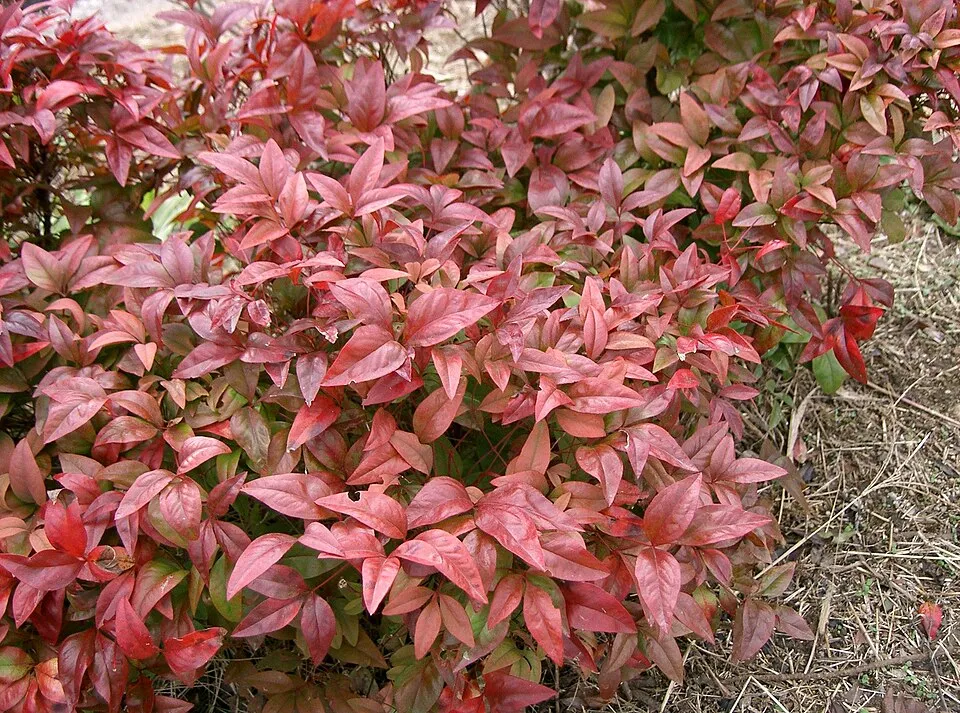
Nandina domestica, commonly known as Heavenly Bamboo or Sacred Bamboo, is an elegant evergreen shrub native to the temperate regions of eastern Asia, particularly China and Japan. Despite its common nomenclature, it is not a true bamboo but belongs to the diverse Berberidaceae family, which also includes barberry and Oregon grape.
This species is highly prized in horticulture for its year-round visual appeal, showcasing delicate, compound, fern-like foliage that transitions through a stunning spectrum of colors—from vibrant bronze and coppery new growth in spring to deep crimson and burgundy hues in the cooler autumn and winter months. The leaves are persistent, providing consistent texture and color throughout the year.
In summer, Nandina produces airy panicles of small, star-shaped white flowers, which can sometimes emit a subtle fragrance. These blossoms are succeeded by striking clusters of bright red, spherical berries that often remain on the plant through winter, adding a vivid splash of color to the dormant landscape and serving as a food source for some bird species, though with noted toxicity concerns. The plant typically exhibits a graceful, upright, yet slightly spreading growth habit, generally reaching heights and spreads of 4 to 8 feet, with cultivar variations.
Its robust adaptability to a broad range of environmental conditions, including both full sun and partial shade, along with established drought tolerance, makes it a favored choice for diverse landscaping applications such as specimen planting, hedges, borders, and container gardens. Beyond its significant ornamental value, Nandina domestica holds a documented history of use in traditional East Asian medicine, where various parts were employed for their perceived therapeutic properties. However, it is paramount to emphasize that all parts of Nandina domestica, especially the berries, are toxic if ingested in substantial quantities due to the presence of cyanogenic glycosides, necessitating extreme caution around humans and animals.
Trusted Scientific References
1. Authoritative external sources for Nandina domestica
1.1 Wikipedia — Nandina domestica
1.2 Kew POWO (Plants of the World Online)
1.3 PubMed — peer-reviewed research
1.4 NCBI Taxonomy Browser
1.5 GBIF — Global Biodiversity
1.1.Nandina — Defining Traits
- ✓Botanical Name — Nandina domestica
- ✓Common Names — Heavenly Bamboo, Sacred Bamboo, Nandina
- ✓Family — Berberidaceae
- ✓Native Region — East Asia (China, Japan)
- ✓Key Constituent — Berberine (alkaloid), Cyanogenic glycosides (toxic)
- ✓Traditional Uses — Antimicrobial, anti-inflammatory, digestive aid (historically, with extreme caution)
- ✓Toxicity — All parts are toxic, with berries being particularly poisonous, due to cyanogenic glycosides.
- ✓Ornamental Value — Prized for evergreen foliage that changes color, white flowers, and persistent red berries.
- ✓Growth Habit — Upright, graceful, slightly spreading shrub, typically 4-8 feet tall and wide.
- ✓Invasive Potential — Classified as invasive in some temperate and subtropical regions due to bird-dispersed seeds.
1.2.Nandina — At-a-Glance Summary
- ✓Nandina domestica, or Heavenly Bamboo, is an ornamental evergreen shrub native to East Asia.
- ✓All parts of the plant, especially the berries, are highly toxic due to cyanogenic glycosides.
- ✓It contains beneficial alkaloids like berberine, traditionally used for antimicrobial and anti-inflammatory purposes, but the whole plant is unsafe for consumption.
- ✓Known to be toxic to many bird species and can be an invasive plant in various environments.
- ✓Its primary value is ornamental; medicinal use should only be considered in highly controlled research settings for isolated compounds.
- ✓Extreme caution is required around children and pets due to the plant's toxicity.
2.Nandina — Taxonomic Classification
3.Nandina — Reference Facts
4.Nandina — Morphological Account
5.Nandina — Habitat & Distribution
6.Nandina — Historical Applications
7.Nandina — Active Compounds
- ✓Isoquinoline Alkaloids — This class includes potent compounds like berberine, nandinine, domesticine, and isocorydine. Berberine is particularly noted for its extensive antimicrobial, anti-inflammatory, and metabolic regulatory activities, while nandinine contributes to the plant's toxicity.
- ✓Cyanogenic Glycosides — Primarily nandinin, these compounds are responsible for the plant's toxicity. Upon enzymatic hydrolysis, they release hydrogen cyanide, a highly poisonous substance.
- ✓Flavonoids — A diverse group of polyphenolic compounds contributing to the plant's vibrant coloration and offering antioxidant and anti-inflammatory properties.
- ✓Saponins — These glycosides are known for their surfactant properties and can have various biological effects, including potential hemolytic activity.
- ✓Phenolic Acids — Such as gallic acid and caffeic acid, these compounds act as antioxidants and play roles in plant defense mechanisms.
- ✓Tannins — Astringent compounds found in various plant parts, traditionally used for their anti-diarrheal and wound-healing properties due to their ability to bind proteins.
- ✓Terpenoids — A broad class of organic compounds contributing to the plant's aroma and possessing diverse pharmacological activities, though less studied in Nandina than alkaloids.
- ✓Lignans — Phytoestrogenic and antioxidant compounds that can be found in some plant tissues, offering potential health benefits.
8.Nandina — What Research Suggests
- ✓Antimicrobial Properties — The plant's roots and lower stems contain berberine, an isoquinoline alkaloid recognized for its broad-spectrum activity against various bacteria, fungi, viruses, and protozoa.
- ✓Anti-inflammatory Effects — Traditional applications cite Nandina's use in reducing inflammation, a benefit largely attributed to berberine's ability to modulate inflammatory pathways and cytokine production.
- ✓Antioxidant Support — Certain compounds within Nandina domestica may exhibit antioxidant capabilities, helping to neutralize harmful free radicals and protect cellular integrity.
- ✓Gastrointestinal Health (Traditional) — Historically, preparations from Nandina were employed in East Asian medicine to address digestive disturbances, possibly due to berberine's influence on gut microbiota and its astringent properties.
- ✓Cardiovascular Support (Constituent-based) — Research on isolated berberine suggests potential benefits for cardiovascular health, including supporting healthy cholesterol and blood sugar levels, though this is not a direct application of the whole Nandina plant.
- ✓Hepato-protective Actions (Traditional) — Some traditional systems utilized Nandina for its perceived ability to support liver function and protect against hepatic damage.
- ✓Analgesic Properties (Traditional) — In traditional contexts, Nandina was applied to alleviate pain, suggesting a historical recognition of its analgesic potential.
- ✓Immunomodulatory Effects — Components within Nandina, particularly berberine, may influence immune responses, potentially enhancing or regulating the body's defense mechanisms.
- ✓Antipyretic Use (Traditional) — Traditional texts describe the use of Nandina preparations to help reduce fever.
- ✓Dermatological Applications (Traditional) — Topically, certain Nandina preparations were used for various skin conditions, leveraging its traditional antimicrobial and anti-inflammatory attributes.
8.1.Nandina — Reported Uses
9.Nandina — Risk Profile
9.1.Nandina — Possible Adverse Reactions
- ✓Cyanide Poisoning — Ingestion of any plant part, especially berries, can release hydrogen cyanide, leading to severe symptoms including nausea, vomiting, dizziness, and potentially fatal respiratory failure.
- ✓Gastrointestinal Distress — Common initial reactions to ingestion include severe stomach pain, diarrhea, and vomiting.
- ✓Respiratory Depression — High doses of toxins can lead to labored breathing, respiratory arrest, and a significant drop in blood oxygen levels.
- ✓Cardiac Irregularities — Poisoning can affect heart rhythm and function, potentially leading to cardiovascular collapse.
- ✓Neurological Symptoms — Severe cases may involve disorientation, seizures, coma, and central nervous system depression.
- ✓Liver and Kidney Damage — Chronic or acute exposure to Nandina toxins could potentially result in damage to vital organs like the liver and kidneys.
- ✓Avian Toxicity — Nandina berries are highly toxic to many bird species, notably cedar waxwings, causing hemorrhagic lesions and often death.
9.2.Nandina — Safety Overview
- ✓HIGH TOXICITY — All parts of Nandina domestica, particularly the bright red berries, contain potent cyanogenic glycosides and are considered highly toxic to humans and animals.
- ✓NOT FOR INTERNAL CONSUMPTION — Self-medication or unsupervised internal use of Nandina preparations is strictly contraindicated due to the severe risk of cyanide poisoning.
- ✓KEEP AWAY FROM CHILDREN AND PETS — Due to its appealing berries and foliage, ensure Nandina plants are inaccessible to young children and household pets, who are highly vulnerable.
- ✓PREGNANCY AND LACTATION — Nandina domestica is absolutely contraindicated during pregnancy and breastfeeding due to potential toxicity to the fetus or infant.
- ✓DRUG INTERACTIONS — While not for internal use, in research contexts, compounds like berberine can interact with numerous medications, including those affecting blood sugar, blood pressure, or liver enzymes.
- ✓PROFESSIONAL GUIDANCE ESSENTIAL — Any consideration of medicinal use, even traditional external applications, must be under the strict supervision of a qualified medical herbalist or healthcare professional.
- ✓ENVIRONMENTAL IMPACT — Be aware of its invasive potential in certain regions and the toxicity of berries to local wildlife; consider sterile cultivars or berry removal.
10.Nandina — How to Use
- ✓Decoction (Traditional, Extreme Caution) — Historically, roots and lower stems were boiled to create decoctions for internal use in traditional East Asian medicine, strictly under expert supervision due to toxicity.
- ✓Tincture (Traditional, Extreme Caution) — Alcoholic extracts of the root bark or stems were prepared and used in very small, carefully measured doses by traditional practitioners.
- ✓Poultice (External, Traditional) — Crushed leaves or roots were occasionally applied topically as a poultice for localized inflammation or minor skin issues, ensuring no application to broken skin.
- ✓Herbal Bath (Traditional, Caution) — Infusions of Nandina leaves were sometimes added to bathwater for various skin conditions or for their general soothing properties, always with awareness of potential skin sensitivity.
- ✓Standardized Extracts (Research Focus) — Modern research primarily focuses on isolating and standardizing compounds like berberine for controlled pharmaceutical applications, rather than using the whole plant.
- ✓Controlled Topical Applications — In highly supervised settings, very dilute extracts might be considered for specific dermatological conditions, but this is rare and requires stringent safety protocols.
- ✓Ornamental Use Only — For general home use, Nandina domestica should be considered an ornamental plant only, with no attempt at self-medication due to its inherent toxicity.
11.Nandina — Propagation & Care
- ✓Site Selection — Choose a location with full sun to partial shade; full sun enhances the vibrant leaf coloration, while partial shade is tolerated.
- ✓Soil Requirements — Prefers well-drained, fertile soil but is highly adaptable to various soil types, including sandy or clayey, provided drainage is adequate.
- ✓Watering — Requires regular watering until established; once mature, it demonstrates significant drought tolerance.
- ✓Propagation — Can be propagated from seeds, which may require cold stratification, or more commonly from semi-hardwood cuttings taken in summer.
- ✓Pruning — Generally low-maintenance; prune in late winter or early spring to remove old, woody canes at the base to encourage new growth, or to shape the plant.
- ✓Fertilization — Has low fertilizer requirements; a balanced, slow-release granular fertilizer can be applied in spring if soil fertility is poor.
- ✓Pest and Disease Resistance — Nandina is generally robust and resistant to most common pests and diseases, though occasional issues with scale insects or spider mites may occur.
- ✓Invasive Potential — Be mindful of its invasive characteristics in certain climates; consider sterile cultivars or remove berries to prevent seed dispersal and spread.
Reviewed by the Flora Medical Global Botanical Review Panel
Multi-disciplinary editorial group · Botany · Ethnobotany · Herbal-medicine literature
Who reviewed this: This page was checked by the Flora Medical Global Botanical Review Panel — an in-house editorial group of botany graduates, ethnobotany researchers, and horticulture practitioners who collectively maintain our 7,000+ plant encyclopedia. Meet the team.
Our 4-step verification process
1. Taxonomic verification
Scientific names and synonyms cross-checked against Kew POWO, World Flora Online, and The Plant List.
2. Phytochemical & medicinal cross-reference
Active compounds, traditional uses, and reported activities are cross-referenced with PubMed, USDA Dr. Duke's database, and peer-reviewed ethnobotanical literature.
3. Conservation & distribution check
Distribution, ecology, and conservation status confirmed against GBIF occurrence records and the IUCN Red List.
4. Editorial & safety review
Every entry passes an editorial pass for clarity, originality, and safety notices (toxicity, contraindications, dosage caveats) before publication.
Last reviewed:
Important medical disclaimer: This content is for educational and research purposes only. It is not medical advice and is not a substitute for consultation with a licensed healthcare provider. Do not use any herb to self-treat a medical condition without professional guidance.
Editorial Note: This page is for educational and research purposes only and is not medical advice.
Written by: Flora Medical Global Editorial Team
Reviewed by: Flora Medical Global Botanical Review Panel
Last Updated: June 15, 2026





Nandina — Comments & Community Reviews
Rate this plant