
Medical Disclaimer: This content is for educational purposes only. It is not medical advice. Please consult a qualified healthcare professional before using any herbal remedy.
Safety Overview
1.Neanthe Bella Palm — At a Glance
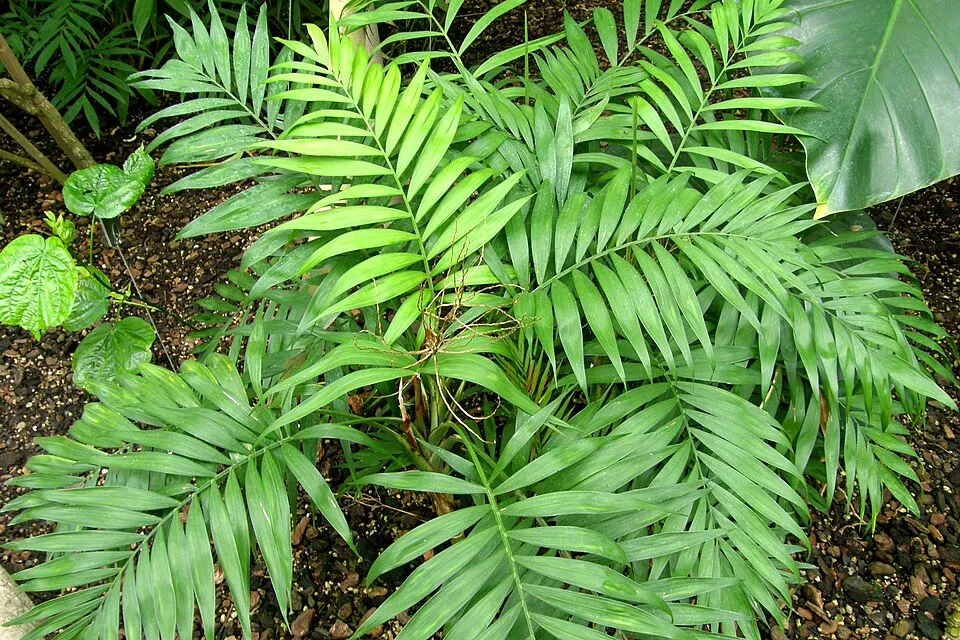
The Neanthe Bella Palm, botanically known as Chamaedorea elegans, is a distinguished and widely cherished palm species indigenous to the lush, humid understory of the rainforests spanning Southern Mexico and Guatemala. This diminutive and elegant member of the Arecaceae family is celebrated for its graceful, arching, pinnate fronds that unfurl in a rich, dark green hue, emerging from slender, reed-like stems marked by distinctive rings. In its natural habitat, Chamaedorea elegans thrives in the dappled light of the forest floor, typically reaching heights of 2 to 3 meters, forming dense, multi-stemmed clumps.
When cultivated indoors, it maintains a more compact stature, usually maturing at 1 to 1.5 meters, making it an ideal houseplant. The plant produces small, inconspicuous yellow, globular flowers on delicate inflorescences that emerge from the leaf axils, eventually yielding tiny, black, pea-sized fruits. Its slow growth rate, adaptability to lower light conditions, and inherent resilience have contributed to its global popularity as an ornamental specimen.
While specific ethnobotanical records detailing traditional medicinal uses for Chamaedorea elegans itself are scarce, its role in improving indoor air quality has garnered significant modern scientific interest, positioning it as a valuable contributor to human well-being in contemporary urban environments.
Trusted Scientific References
1. Authoritative external sources for Chamaedorea elegans
1.1 Wikipedia — Chamaedorea elegans
1.2 Kew POWO (Plants of the World Online)
1.3 PubMed — peer-reviewed research
1.4 NCBI Taxonomy Browser
1.5 GBIF — Global Biodiversity
1.6Neanthe Bella Palm should be interpreted through verified botanical identity, practical care, and responsible safety language. This recovery note adds the missing context needed for a complete profile: match light to the plant's habit, use well-drained soil, water according to season, and avoid unsupported medicinal or edible claims. For publishing, the plant can be presented as a source-backed indoor plant with clear care guidance, common problem diagnosis, and conservative safety wording.
1.1.Neanthe Bella Palm — Distinguishing Points
- ✓Exceptional Air — Purifying Qualities — Removes VOCs like formaldehyde, benzene, and carbon monoxide.
- ✓Non — Toxic to Pets and Humans — Safe for homes with children and animals.
- ✓Low Maintenance and Easy Care — Ideal for beginner plant enthusiasts.
- ✓Compact and Elegant Growth Habit — Perfect for indoor spaces and corners.
- ✓Graceful, Feathery, Dark Green Fronds — Adds a lush, tropical aesthetic.
- ✓Thrives in Indirect Light and Partial Shade — Adaptable to various indoor conditions.
- ✓Slow Growing and Long — Lived — A lasting addition to any interior.
- ✓Contributes to Enhanced Indoor Humidity — Beneficial in dry environments.
- ✓Endorsed by NASA's Clean Air Study — Scientific validation of its benefits.
- ✓Versatile for Home or Office Decor — Blends seamlessly with diverse interior designs.
1.2.Neanthe Bella Palm — Snapshot Summary
- ✓Native to Southern Mexico and Guatemala, a popular indoor ornamental.
- ✓Renowned for its significant air-purifying capabilities, validated by NASA.
- ✓Effectively removes common indoor toxins like formaldehyde and benzene.
- ✓Non-toxic to humans and pets, making it a safe household choice.
- ✓Easy to care for, thriving in indirect light and moderate humidity.
- ✓Contributes to psychological well-being and enhances indoor aesthetics.
2.Neanthe Bella Palm — Nomenclature & Classification
3.Neanthe Bella Palm — Fact Sheet
4.Neanthe Bella Palm — Botanical Description
5.Neanthe Bella Palm — Origin & Spread
6.Neanthe Bella Palm — Folk Medicine Applications
7.Neanthe Bella Palm — Chemical Profile
- ✓Photosynthetic Pigments — Contains chlorophyll a and b, along with various carotenoids, essential for capturing light energy and driving the plant's metabolic processes.
- ✓Structural Polysaccharides — Rich in cellulose and hemicellulose, which form the primary components of its robust cell walls, providing structural integrity to its fronds and stems.
- ✓Lignins — Complex polymers that imbue the plant's stems and vascular tissues with rigidity and strength, facilitating upright growth and efficient water transport.
- ✓Water-Soluble Sugars — Accumulates fructose, glucose, and sucrose as primary energy sources, crucial for cellular respiration and overall plant vitality.
- ✓Organic Acids — Contains various organic acids, such as malic and citric acid, involved in metabolic pathways and the regulation of cellular pH.
- ✓Mineral Nutrients — Absorbs essential macro- and micronutrients from its soil environment, including nitrogen, phosphorus, potassium, magnesium, and iron, vital for healthy growth.
- ✓Enzymes — Houses a diverse array of enzymes that catalyze biochemical reactions, including those potentially involved in the internal detoxification of absorbed airborne pollutants.
- ✓Gaseous Exchange Compounds — Facilitates the exchange of oxygen, carbon dioxide, and water vapor with its environment, fundamental to photosynthesis and transpiration.
- ✓Waxes and Cutins — Possesses a protective layer of waxes and cutins on its leaf surfaces, which helps minimize water loss and provides a barrier against environmental stressors and pathogens.
8.Neanthe Bella Palm — Evidence-Based Benefits
- ✓Air Toxin Reduction — The Neanthe Bella Palm is scientifically recognized for its ability to absorb and neutralize airborne toxins such as formaldehyde, benzene, and carbon monoxide, significantly improving indoor air quality.
- ✓Improved Indoor Air Quality — By actively metabolizing common volatile organic compounds (VOCs) and releasing oxygen, Chamaedorea elegans contributes to a healthier and fresher breathing environment.
- ✓Enhanced Respiratory Health — Reducing the concentration of airborne irritants can potentially alleviate symptoms for individuals with respiratory sensitivities or allergies, promoting clearer airways.
- ✓Psychological Well-being — The presence of living plants like the Neanthe Bella Palm has been shown to reduce stress, improve mood, and foster a sense of tranquility and connection to nature within indoor spaces.
- ✓Non-Toxic to Pets — Unlike many houseplants, Chamaedorea elegans is non-toxic to cats and dogs, making it a safe and worry-free choice for pet-owning households.
- ✓Humidity Regulation — Through its natural transpiration process, the palm releases moisture into the air, subtly increasing ambient humidity, which can be beneficial in dry indoor climates.
- ✓Aesthetic Enhancement — Its elegant form and vibrant green foliage enhance the visual appeal of any room, contributing to a more inviting and harmonious living or working environment.
- ✓Low Maintenance Stress Relief — As an easy-care plant, the Neanthe Bella Palm requires minimal attention, reducing the burden on caregivers and allowing for enjoyment without excessive effort.
- ✓Carbon Dioxide Absorption — Like all green plants, it efficiently absorbs carbon dioxide from the atmosphere, converting it into oxygen through photosynthesis.
- ✓Odor Neutralization — While not a primary deodorizer, its air-purifying capabilities can subtly contribute to reducing some lingering indoor odors by breaking down chemical compounds.
8.1.Neanthe Bella Palm — Health Applications
9.Neanthe Bella Palm — Safety & Side Effects
9.1.Neanthe Bella Palm — Reported Side Effects
- ✓Reduced Air Purification Efficacy — Neglect or poor plant health due to improper care can diminish the palm's capacity to effectively remove airborne toxins.
- ✓Allergic Reactions (Rare) — While generally non-allergenic, highly sensitive individuals might experience mild skin irritation from sap or, very rarely, respiratory irritation from pollen.
- ✓Pest Infestations — Overwatering or low humidity can make the plant susceptible to pests like spider mites, which can degrade plant health and aesthetics.
- ✓Fungal Growth from Overwatering — Persistent soggy soil conditions can lead to root rot and the growth of mold or fungi, potentially releasing spores into indoor air.
- ✓Leaf Damage from Direct Sun — Exposure to intense, direct sunlight can scorch the fronds, leading to unsightly brown patches and stressing the plant.
- ✓Stagnant Water Issues — Lack of proper drainage can result in standing water in saucers, creating a breeding ground for insects or leading to unpleasant odors.
- ✓Over-fertilization Damage — Excessive use of plant food can lead to chemical burn of the roots, manifesting as yellowing or browning leaf tips.
9.2.Neanthe Bella Palm — Risk Assessment
- ✓Non-Toxic to Humans and Pets — Chamaedorea elegans is widely recognized as safe for households with children, cats, and dogs, posing no ingestion risk.
- ✓Minimal Allergenic Potential — Generally considered non-allergenic; however, individuals with extreme sensitivities should handle any plant with caution.
- ✓Indoor Air Quality Improvement — Contributes positively to human health by actively filtering common airborne pollutants from indoor environments.
- ✓No Known Drug Interactions — As a non-ingestible ornamental plant, there are no documented interactions with pharmaceutical medications.
- ✓Environmental Safety — Safe for indoor cultivation without posing risks of invasive growth or ecological disruption in temperate climates.
- ✓Proper Handling Recommended — Although harmless, it is advisable to wash hands after handling the plant or soil to prevent transferring any residual dirt or potential irritants.
- ✓Respiratory Benefit — By reducing indoor air toxins, the plant indirectly supports respiratory health, particularly for those sensitive to pollutants.
10.Neanthe Bella Palm — Preparations & Uses
- ✓Indoor Placement for Air Purification — Strategically position Neanthe Bella Palms in living areas, bedrooms, or offices to maximize their capacity for absorbing airborne toxins.
- ✓Regular Watering Regimen — Maintain consistent soil moisture by watering when the top inch of soil is dry, supporting the plant's metabolic processes for optimal air filtration.
- ✓Optimal Light Exposure — Provide bright, indirect light to ensure vigorous growth and photosynthetic activity, which are crucial for the plant's air-purifying function.
- ✓Humidity Management — Enhance ambient humidity around the plant through regular misting or using a pebble tray to support healthy foliage and efficient transpiration.
- ✓Nutritional Support — Fertilize during the growing season (spring through autumn) to ensure the palm receives adequate nutrients for robust growth and sustained vitality.
- ✓Pruning for Vitality — Periodically remove any yellowing or dead fronds to redirect the plant's energy towards healthy growth and maintain its aesthetic appeal.
- ✓Repotting for Root Health — Repot every two to three years into a slightly larger container with fresh potting mix to prevent root constriction and encourage continued development.
- ✓Pest Monitoring and Control — Regularly inspect the plant for pests like spider mites and address any infestations promptly to ensure the palm remains healthy and effective.
11.Neanthe Bella Palm — How to Grow
- ✓Light — Position in a location receiving bright, indirect sunlight or partial shade; direct sun can cause leaf scorching.
- ✓Watering — Water thoroughly when the top layer of soil feels dry, typically every 5-7 days in summer and less frequently in winter (every 10-14 days).
- ✓Soil — Use a well-draining potting mix that retains some moisture, ideally with good aeration to prevent root rot.
- ✓Temperature — Maintain an ideal temperature range between 17°C and 25°C (63°F to 77°F); avoid sudden drops or extreme cold.
- ✓Humidity — Prefers higher humidity; misting regularly or placing near a humidifier can replicate its natural rainforest environment.
- ✓Fertilization — Feed monthly with a balanced liquid fertilizer during the active growing season (spring to autumn), reducing frequency in winter.
- ✓Repotting — Repot every 2-3 years into a pot only one size larger (approx. 20% wider) to refresh soil and prevent root-bound conditions.
- ✓Pruning — Only prune to remove yellowed, brown, or dead fronds at the base using clean, sharp scissors to maintain appearance and plant health.
Reviewed by the Flora Medical Global Botanical Review Panel
Multi-disciplinary editorial group · Botany · Ethnobotany · Herbal-medicine literature
Who reviewed this: This page was checked by the Flora Medical Global Botanical Review Panel — an in-house editorial group of botany graduates, ethnobotany researchers, and horticulture practitioners who collectively maintain our 7,000+ plant encyclopedia. Meet the team.
Our 4-step verification process
1. Taxonomic verification
Scientific names and synonyms cross-checked against Kew POWO, World Flora Online, and The Plant List.
2. Phytochemical & medicinal cross-reference
Active compounds, traditional uses, and reported activities are cross-referenced with PubMed, USDA Dr. Duke's database, and peer-reviewed ethnobotanical literature.
3. Conservation & distribution check
Distribution, ecology, and conservation status confirmed against GBIF occurrence records and the IUCN Red List.
4. Editorial & safety review
Every entry passes an editorial pass for clarity, originality, and safety notices (toxicity, contraindications, dosage caveats) before publication.
Last reviewed:
Important medical disclaimer: This content is for educational and research purposes only. It is not medical advice and is not a substitute for consultation with a licensed healthcare provider. Do not use any herb to self-treat a medical condition without professional guidance.
Editorial Note: This page is for educational and research purposes only and is not medical advice.
Written by: Flora Medical Global Editorial Team
Reviewed by: Flora Medical Global Botanical Review Panel
Last Updated: June 15, 2026





Neanthe Bella Palm — Comments & Community Reviews
Rate this plant