
Medical Disclaimer: This content is for educational purposes only. It is not medical advice. Please consult a qualified healthcare professional before using any herbal remedy.
Safety Overview
1.Neomarica Gracilis — Botanical Snapshot
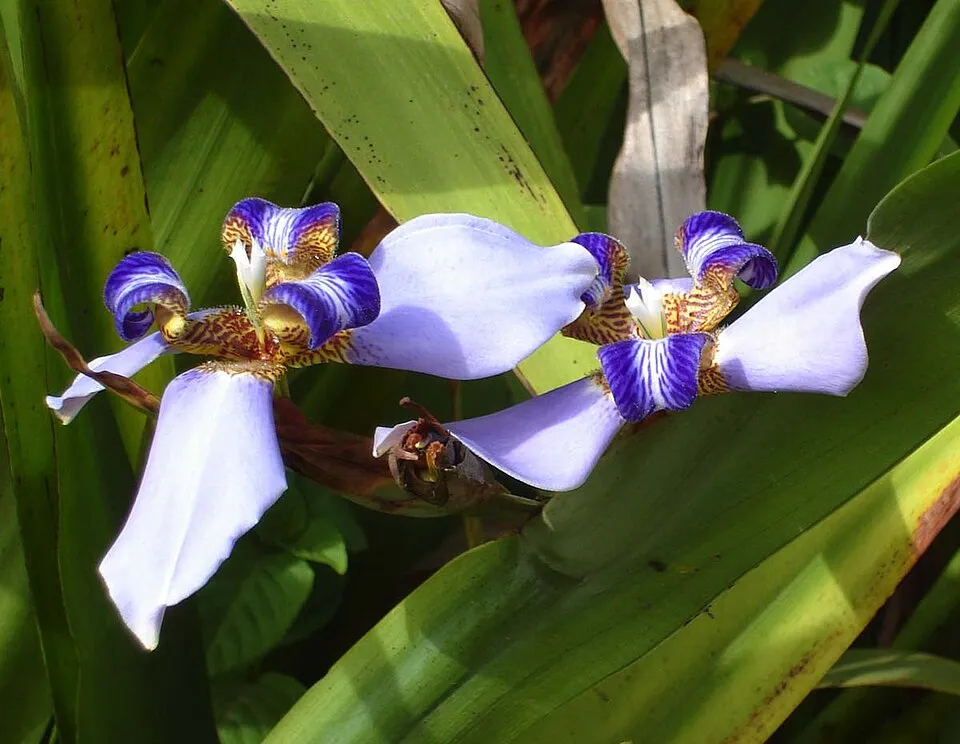
Neomarica gracilis, widely recognized as the Walking Iris or Apostle Plant, is a captivating herbaceous perennial belonging to the Iridaceae family, commonly known as the Iris family. Native to the tropical and subtropical regions of Central and South America, including Brazil and Mexico, this plant thrives in warm, humid environments. Its distinctive morphology includes flattened, sword-shaped leaves, botanically termed 'scapes,' which emerge in a fan-like arrangement from a central rhizome, typically reaching heights of 16 to 36 inches.
The plant produces exquisite, short-lived flowers that resemble miniature orchids, featuring three prominent outer tepals and three smaller, often recurved inner tepals, typically white with intricate brown, purple, or blue markings. Each delicate bloom lasts only a single day, but a succession of flowers ensures a prolonged display throughout the growing season. The most intriguing aspect of Neomarica gracilis is its unique reproductive strategy: after the flower fades, a new plantlet develops at the tip of the spent flower stalk.
This stalk gradually bends towards the ground, allowing the plantlet to root upon contact with the soil, thus giving the plant its common name, 'Walking Iris,' as it appears to slowly 'walk' or spread across the landscape. This natural propagation method makes Neomarica gracilis a fascinating botanical specimen and a popular, low-maintenance choice for ornamental gardening.
Trusted Scientific References
1. Authoritative external sources for Neomarica Gracilis
1.1 Wikipedia — Neomarica Gracilis
1.2 Kew POWO (Plants of the World Online)
1.3 PubMed — peer-reviewed research
1.4 NCBI Taxonomy Browser
1.5 GBIF — Global Biodiversity
1.6Neomarica Gracilis should be interpreted through verified botanical identity, practical care, and responsible safety language. This recovery note adds the missing context needed for a complete profile: match light to the plant's habit, use well-drained soil, water according to season, and avoid unsupported medicinal or edible claims. For publishing, the plant can be presented as a source-backed garden plant with clear care guidance, common problem diagnosis, and conservative safety wording.
1.1.Neomarica Gracilis — Distinguishing Points
- ✓Common Names — Walking Iris, Apostle Plant, Fan Iris, Poor Man's Orchid.
- ✓Botanical Family — Iridaceae (Iris Family).
- ✓Native Range — Central America, South America (Brazil), Mexico.
- ✓Unique Propagation — 'Walking' habit where plantlets form on spent flower stalks.
- ✓Floral Characteristics — Delicate, tri-petaled, white flowers with brown/purple/blue markings, lasting one day.
- ✓Foliage — Flattened, sword-shaped leaves (scapes) forming a fan-like clump.
- ✓Growth Habit — Clumping herbaceous perennial, growing 2-5 feet tall.
- ✓Ornamental Value — Highly prized for aesthetic appeal in shade gardens and indoors.
- ✓Toxicity — Contains oxalates and iridals, making it toxic if ingested.
- ✓Cultivation — Low-maintenance, prefers partial shade and moist, well-draining soil.
1.2.Neomarica Gracilis — Concise Overview
- ✓Neomarica gracilis is a striking ornamental perennial known as Walking Iris or Apostle Plant.
- ✓Features elegant, short-lived, orchid-like flowers and unique 'walking' propagation via plantlets.
- ✓Primarily valued for its aesthetic appeal in gardens and as a houseplant.
- ✓Contains compounds like oxalates and iridals, which are considered toxic if ingested.
- ✓Requires partial shade, moist well-draining soil, and protection from frost.
- ✓Lacks documented traditional or modern medicinal uses.
2.Neomarica Gracilis — Botanical Identity
3.Neomarica Gracilis — Fact Sheet
4.Neomarica Gracilis — Physical Description
5.Neomarica Gracilis — Origin & Spread
6.Neomarica Gracilis — Heritage Uses
7.Neomarica Gracilis — Phytochemistry
- ✓Flavonoids — A diverse group of polyphenolic compounds, often responsible for plant pigments, with general antioxidant and anti-inflammatory properties; specific types in Neomarica gracilis would require detailed analysis.
- ✓Quinones — Organic compounds with a cyclic diketone structure, sometimes exhibiting antimicrobial or cytotoxic activities; their specific roles in N. gracilis are not fully elucidated.
- ✓Triterpenoids — A large class of natural products derived from six isoprene units, often contributing to plant defense mechanisms and possessing a wide range of biological activities; their presence in N. gracilis suggests potential for further study.
- ✓Iridals (Iridoid Glycosides) — A characteristic class of secondary metabolites found in the Iridaceae family, some of which are known for their bitter taste and defense against herbivores; in N. gracilis, these are noted as potential toxic components.
- ✓Oxalates — Salts of oxalic acid, present in many plants and considered a toxic component in Neomarica gracilis, which can cause irritation or adverse effects if ingested in significant quantities.
- ✓Fatty Acids — Essential components of plant cell membranes and energy storage, present in varying compositions across plant tissues.
- ✓Amino Acids — Building blocks of proteins, crucial for plant growth and metabolic processes.
- ✓Carbohydrates — Primary energy source and structural components, including various sugars and starches.
8.Neomarica Gracilis — Scientific Evidence
- ✓Ornamental Value — Highly prized for its unique aesthetic appeal and ease of cultivation, making it a popular choice for decorative gardens and indoor spaces.
- ✓Ecological Contribution — As a perennial, it contributes to local biodiversity and provides ground cover, supporting soil health and microhabitats in its native range.
- ✓Horticultural Propagation — Its 'walking' characteristic offers an engaging method for natural garden spread and easy propagation by gardeners.
- ✓Educational Interest — Serves as an excellent botanical specimen for demonstrating unique reproductive strategies in the plant kingdom.
- ✓Air Purification (General Plant Benefit) — Like many houseplants, it contributes to improving indoor air quality through photosynthesis and transpiration.
- ✓Landscape Enhancement — Used extensively in shaded garden areas for its consistent green foliage and sequential, striking blooms.
- ✓Potential for Phytochemical Research — While not medicinally used, its family (Iridaceae) is known for compounds like iridals and flavonoids, warranting further scientific investigation into its specific phytochemistry.
- ✓Absence of Documented Traditional Medicinal Use — It is important to note that Neomarica gracilis lacks established traditional or modern medicinal applications, distinguishing it from many other botanicals.
8.1.Neomarica Gracilis — Conditions Traditionally Used For
9.Neomarica Gracilis — Cautions & Contraindications
9.1.Neomarica Gracilis — Warnings
- ✓Gastrointestinal Irritation — Ingestion of plant parts, particularly in large quantities, may cause irritation of the mouth, throat, and digestive tract due to oxalates.
- ✓Skin Irritation — Direct contact with plant sap may cause mild skin irritation or dermatitis in sensitive individuals.
- ✓Nausea and Vomiting — Consumption of toxic components like oxalates and iridals can lead to symptoms such as nausea, vomiting, and abdominal discomfort.
- ✓Oral Discomfort — Chewing on plant material can cause burning or swelling in the mouth and throat due to calcium oxalate crystals.
- ✓Potential Kidney Effects — Very high doses of oxalates, though unlikely from casual ingestion of Neomarica gracilis, can theoretically contribute to kidney stone formation or damage over time.
- ✓Pet Toxicity — Keep away from pets, as ingestion can cause similar symptoms of irritation and gastrointestinal upset in animals.
9.2.Neomarica Gracilis — Clinical Safety Notes
- ✓Not for Internal Consumption — Neomarica gracilis is considered ornamental and contains potentially irritating compounds; it should never be ingested by humans or animals.
- ✓Handle with Care — Wear gloves when handling the plant if you have sensitive skin to avoid potential contact dermatitis from plant sap.
- ✓Keep Away from Children and Pets — Ensure the plant is placed in areas inaccessible to young children and pets to prevent accidental ingestion.
- ✓Ornamental Use Only — Its primary and recommended use is purely for decorative purposes in gardens or as a houseplant.
- ✓Seek Medical Attention if Ingested — In case of accidental ingestion, especially if symptoms develop, consult a healthcare professional or poison control immediately.
- ✓Awareness of Oxalate Content — Be mindful that like many plants in the Iridaceae family, it contains oxalates, which are known irritants.
10.Neomarica Gracilis — Preparations & Uses
- ✓Landscape Ornamental — Planted en masse in shaded garden beds or as borders to create lush, tropical-like ground cover with sequential blooms.
- ✓Container Specimen — Ideal for pots and containers on patios or indoors, allowing for easy relocation to protect from frost or optimize light exposure.
- ✓Hanging Basket Display — Its arching flower stalks and subsequent plantlets make it an excellent choice for hanging baskets, showcasing its unique 'walking' habit.
- ✓Houseplant Cultivation — Grown indoors near a bright window (avoiding direct sun) to enjoy its evergreen foliage and delicate blooms, requiring consistent watering.
- ✓Division for Expansion — Mature clumps can be divided every few years in spring to rejuvenate plants and expand garden plantings or share with others.
- ✓Plantlet Propagation — New plantlets forming on spent flower stalks can be detached and rooted directly into soil or water to create new plants.
- ✓Aesthetic Groupings — Combines well with other shade-loving plants such as ferns, hostas, and impatiens to create diverse and attractive garden compositions.
11.Neomarica Gracilis — How to Grow
- ✓Light Requirements — Thrives in partial shade to bright indirect light; can tolerate some full sun if moisture is adequate, but prefers protection from intense midday sun.
- ✓Soil Preferences — Prefers moist, rich, and well-draining soil; amend heavy soils with organic matter to improve drainage and aeration.
- ✓Watering Schedule — Requires regular watering, ensuring the soil remains consistently moist but not waterlogged; allow the topsoil to dry slightly between waterings.
- ✓Temperature and Frost Protection — Hardy in USDA Zones 8B-11; protect from frost in cooler climates, as it can freeze to the ground but often returns from roots.
- ✓Propagation Techniques — Easily propagated by dividing mature clumps or by rooting the plantlets that form on spent flower stalks, giving it its 'walking' name.
- ✓Container vs. Ground Planting — Suitable for both in-ground planting in garden beds or as an attractive container plant, including hanging baskets where its arching stems can be showcased.
- ✓Fertilization — Benefits from a balanced, slow-release fertilizer applied during the active growing season (spring and summer) to support robust foliage and flowering.
Reviewed by the Flora Medical Global Botanical Review Panel
Multi-disciplinary editorial group · Botany · Ethnobotany · Herbal-medicine literature
Who reviewed this: This page was checked by the Flora Medical Global Botanical Review Panel — an in-house editorial group of botany graduates, ethnobotany researchers, and horticulture practitioners who collectively maintain our 7,000+ plant encyclopedia. Meet the team.
Our 4-step verification process
1. Taxonomic verification
Scientific names and synonyms cross-checked against Kew POWO, World Flora Online, and The Plant List.
2. Phytochemical & medicinal cross-reference
Active compounds, traditional uses, and reported activities are cross-referenced with PubMed, USDA Dr. Duke's database, and peer-reviewed ethnobotanical literature.
3. Conservation & distribution check
Distribution, ecology, and conservation status confirmed against GBIF occurrence records and the IUCN Red List.
4. Editorial & safety review
Every entry passes an editorial pass for clarity, originality, and safety notices (toxicity, contraindications, dosage caveats) before publication.
Last reviewed:
Important medical disclaimer: This content is for educational and research purposes only. It is not medical advice and is not a substitute for consultation with a licensed healthcare provider. Do not use any herb to self-treat a medical condition without professional guidance.
Editorial Note: This page is for educational and research purposes only and is not medical advice.
Written by: Flora Medical Global Editorial Team
Reviewed by: Flora Medical Global Botanical Review Panel
Last Updated: June 15, 2026





Neomarica Gracilis — Comments & Community Reviews
Rate this plant