
Medical Disclaimer: This content is for educational purposes only. It is not medical advice. Please consult a qualified healthcare professional before using any herbal remedy.
Safety Overview
1.Nepenthes Alata — Introduction & Highlights
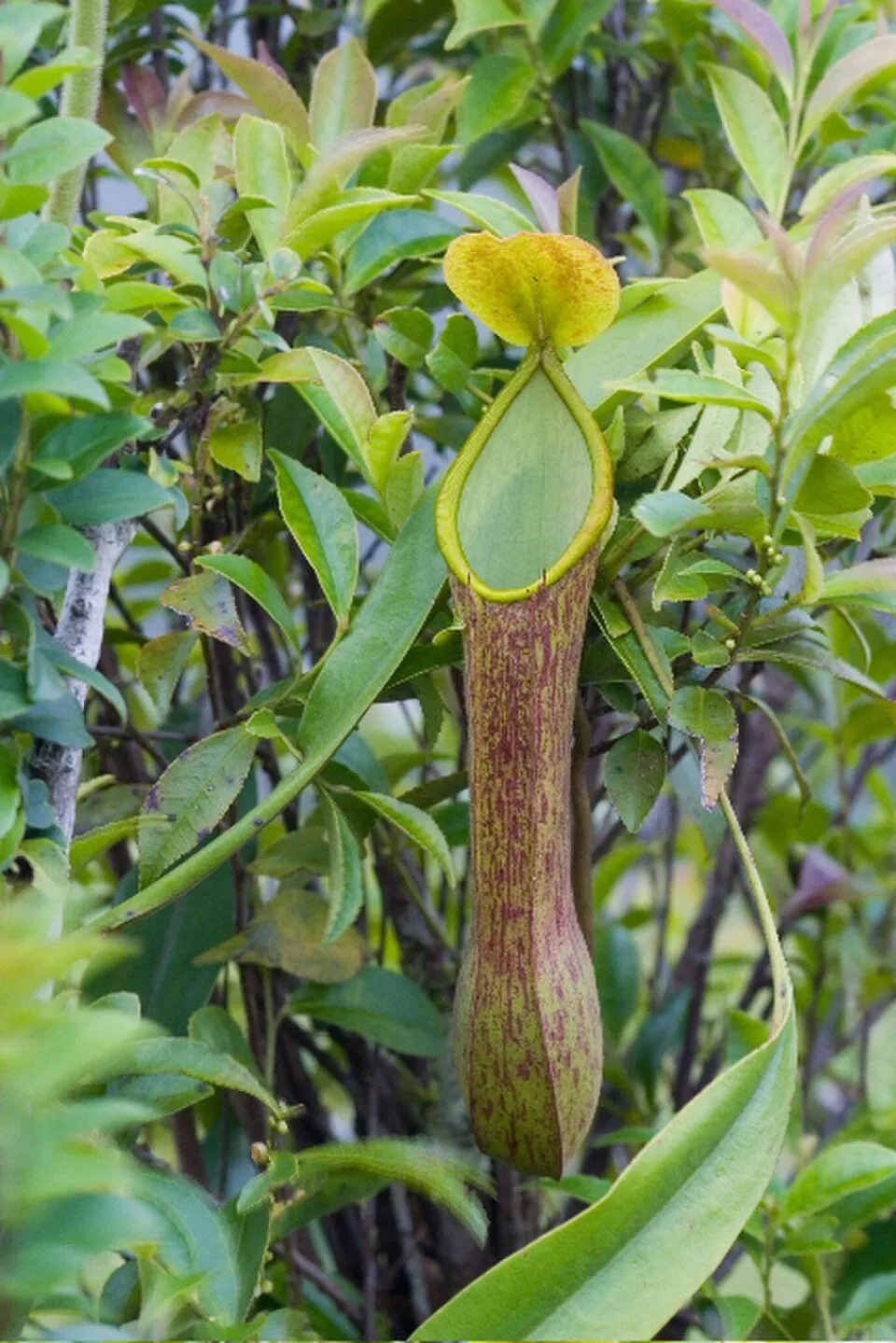
Nepenthes alata, commonly known as the winged pitcher plant, is an enchanting tropical carnivorous plant indigenous to the Philippines, primarily thriving across Luzon, Mindanao, and other associated islands. This species is characterized by its scandent or climbing stems, which can extend up to several meters in length, allowing it to ascend surrounding vegetation in its native rainforest habitats, though some forms exhibit a more compact, rosette-like growth. Its foliage consists of elongated, lanceolate leaves, typically 20-30 centimeters long, tapering to an acuminate point, often displaying subtly undulated margins. The most distinctive feature is its specialized pitcher traps, which are modified leaf structures.
These tubular vessels, reaching up to 15 centimeters in height, are typically a vibrant greenish-yellow, frequently adorned with striking red or burgundy speckles, particularly on the peristome (the ribbed rim) and the operculum (lid). The pitcher's interior is coated with a waxy layer to prevent prey escape and features glands that secrete potent digestive enzymes. The lid protects the digestive fluid from rain dilution and often bears nectar glands on its underside to attract insects. Nepenthes alata anchors itself with a fibrous root system.
Its flowers are dioecious, meaning male and female reproductive structures are on separate plants, and are generally inconspicuous, appearing on racemose inflorescences with small, greenish-brown to reddish petals, emphasizing their role in insect attraction rather than showy display. This species typically flourishes in warm, humid environments, often found in open, disturbed areas or along forest margins.
Trusted Scientific References
1. Authoritative external sources for Nepenthes alata
1.1 Wikipedia — Nepenthes alata
1.2 Kew POWO (Plants of the World Online)
1.3 PubMed — peer-reviewed research
1.4 NCBI Taxonomy Browser
1.5 GBIF — Global Biodiversity
1.6Nepenthes Alata should be interpreted through verified botanical identity, practical care, and responsible safety language. This recovery note adds the missing context needed for a complete profile: match light to the plant's habit, use well-drained soil, water according to season, and avoid unsupported medicinal or edible claims. For publishing, the plant can be presented as a source-backed indoor plant with clear care guidance, common problem diagnosis, and conservative safety wording.
1.1.Nepenthes Alata — Defining Traits
- ✓Carnivorous Plant — Possesses unique modified leaves forming pitcher traps to capture and digest insects.
- ✓Distinctive Pitcher Traps — Elongated, tubular vessels with a waxy interior, digestive glands, and an attractive lid/peristome.
- ✓Tropical Rainforest Native — Thrives in warm, humid conditions mimicking its natural habitat in the Philippines.
- ✓Scandent Growth Habit — Stems can climb or trail, using tendrils to anchor themselves to supports.
- ✓Dioecious Flowers — Male and female flowers are borne on separate plants, requiring both for seed production.
- ✓Digestive Enzyme Secretion — Produces proteases, chitinases, and phosphatases to break down prey nutrients.
- ✓Ornamental Value — Highly prized for its exotic appearance and fascinating carnivorous nature in cultivation.
- ✓High Humidity Requirement — Essential for the proper development and function of its pitcher traps.
- ✓Sensitive to Water Quality — Requires distilled, rainwater, or reverse osmosis water to prevent mineral buildup.
- ✓Nectar Glands — Specialized glands on the pitcher lid and peristome attract insect prey.
1.2.Nepenthes Alata — Snapshot Summary
- ✓Nepenthes alata is a carnivorous tropical pitcher plant from the Philippines.
- ✓It captures insects in specialized pitcher traps containing digestive enzymes.
- ✓Primarily valued as an ornamental plant, with limited traditional medicinal uses for other Nepenthes species.
- ✓Requires specific care — bright indirect light, high humidity, warm temperatures, and pure water.
- ✓Contains naphthoquinones, proteolytic enzymes, and flavonoids among other compounds.
- ✓Not recommended for internal consumption due to lack of safety data and potential toxicity.
2.Nepenthes Alata — Taxonomic Classification
3.Nepenthes Alata — Reference Facts
4.Nepenthes Alata — Plant Morphology
5.Nepenthes Alata — Geographic Distribution
6.Nepenthes Alata — Historical Applications
7.Nepenthes Alata — Bioactive Constituents
- ✓Naphthoquinones — Key compounds like plumbagin, found in Nepenthes species, are known for their antimicrobial, anti-inflammatory, and insecticidal actions.
- ✓Proteolytic Enzymes — Nepenthesin I and II, aspartic proteases, are abundant in the pitcher fluid, facilitating the digestion of captured insects by breaking down proteins.
- ✓Chitinases — These hydrolytic enzymes are secreted into the pitcher fluid to break down chitin, a primary component of insect exoskeletons.
- ✓Phosphatases — Enzymes present in the digestive fluid that aid in the breakdown of phosphate-containing compounds, making nutrients available to the plant.
- ✓Flavonoids — A diverse group of polyphenolic compounds found in plant tissues, contributing to antioxidant activity and plant defense mechanisms.
- ✓Phenolic Acids — Such as gallic acid and caffeic acid derivatives, which are potent antioxidants and play roles in plant protection against pathogens and herbivores.
- ✓Tannins — Astringent compounds present in the plant, known for their antimicrobial, antioxidant, and anti-inflammatory properties, often contributing to defense.
- ✓Volatile Organic Compounds (VOCs) — Released by nectar glands on the pitcher lid and peristome to attract insect prey, often complex mixtures of terpenes and aromatics.
8.Nepenthes Alata — Modern Studies
- ✓Digestive Support — The pitcher fluid of Nepenthes alata contains proteolytic enzymes that mimic digestive processes, theoretically aiding in the breakdown of proteins, though direct human consumption is not advised or studied for this purpose.
- ✓Antimicrobial Properties — Research on various Nepenthes species indicates the presence of compounds like naphthoquinones, which may possess antimicrobial activity, potentially inhibiting bacterial and fungal growth.
- ✓Anti-inflammatory Potential — Certain secondary metabolites found in Nepenthes, such as plumbagin, have demonstrated anti-inflammatory effects in in vitro studies, suggesting a possible role in modulating inflammatory responses.
- ✓Antioxidant Activity — Flavonoids and phenolic compounds, commonly found in plants including Nepenthes, contribute to antioxidant defense, helping to neutralize free radicals and reduce oxidative stress.
- ✓Traditional Remedy for Dysentery — In some Southeast Asian folk medicine, decoctions from the pitchers of certain Nepenthes species (not specifically N. alata) have been traditionally used to alleviate symptoms of dysentery and other gastrointestinal disturbances.
- ✓Fever Reduction — Traditionally, preparations from specific Nepenthes plants have been employed to help reduce fevers, though scientific validation for N. alata is lacking.
- ✓Urinary Tract Support — Folk medicine practices in certain regions have utilized Nepenthes species for their purported diuretic properties, aiding in the management of urinary tract issues, without specific N. alata evidence.
- ✓Wound Healing — Topical applications of poultices or extracts from some Nepenthes species have been traditionally used to promote wound healing, possibly due to their antimicrobial and anti-inflammatory constituents.
8.1.Nepenthes Alata — Health Applications
9.Nepenthes Alata — Adverse Effects
9.1.Nepenthes Alata — Caution Notes
- ✓Skin Irritation — Direct contact with pitcher fluid or plant sap may cause mild skin irritation or allergic reactions in sensitive individuals.
- ✓Gastrointestinal Upset — Ingestion of plant material or pitcher fluid is not recommended and could potentially cause digestive discomfort due to enzymes or secondary metabolites.
- ✓Allergic Reactions — As with any plant, individuals may experience allergic responses, such as rashes or respiratory issues, upon exposure to Nepenthes alata.
- ✓Toxicity Concerns — Some naphthoquinones found in Nepenthes species can be toxic in high concentrations, making internal consumption ill-advised.
- ✓Environmental Impact — Improper disposal or release into non-native environments could lead to invasive species concerns, although N. alata is typically cultivated indoors.
- ✓Root Rot — Overwatering or unsuitable potting media can lead to root rot, which is detrimental to the plant's health and can manifest as wilting or discoloration.
9.2.Nepenthes Alata — Safety Overview
- ✓Not for Internal Consumption — Nepenthes alata is primarily an ornamental plant; its internal consumption by humans is not recommended or supported by scientific evidence.
- ✓Keep Out of Reach — Keep away from children and pets, as ingestion of any plant material can cause adverse effects.
- ✓Handle with Care — While not overtly toxic to touch, handling should be done carefully to avoid potential minor skin irritation, especially for sensitive individuals.
- ✓Pregnancy and Lactation — Due to a lack of safety data, pregnant and lactating individuals should avoid any form of exposure or use beyond ornamental viewing.
- ✓Drug Interactions — There is no known information regarding drug interactions; therefore, caution is advised, and consultation with a healthcare professional is recommended for any medicinal claims.
- ✓Allergic Sensitivity — Individuals with known plant allergies should exercise caution when handling Nepenthes alata.
- ✓Environmental Responsibility — Ensure proper cultivation and disposal to prevent any potential ecological impact if grown outdoors in suitable climates.
10.Nepenthes Alata — Application Forms
- ✓Ornamental Cultivation — Primarily grown as an ornamental houseplant or greenhouse specimen, valued for its unique carnivorous pitchers and tropical aesthetic.
- ✓Botanical Study — Utilized in scientific research to study carnivorous plant mechanisms, enzyme activity, and ecological interactions.
- ✓Traditional External Poultices — In some folk medicine practices (not specifically for N. alata), crushed leaves or pitchers of certain Nepenthes species have been applied topically to soothe skin irritations or minor wounds.
- ✓Traditional Decoctions — For other Nepenthes species in Southeast Asian traditional medicine, the pitchers or whole plants were sometimes boiled to create decoctions for internal use against ailments like dysentery, though this is not recommended for N. alata without specific guidance.
- ✓Infused Oils — Experimentally, some botanical enthusiasts might infuse plant parts into carrier oils for topical applications, though no established medicinal use exists for N. alata in this form.
- ✓Educational Displays — Featured in botanical gardens and educational institutions to demonstrate carnivorous adaptations and tropical plant diversity.
- ✓Insect Control (Limited) — While carnivorous, it's not typically used for significant pest control in homes, rather for its aesthetic and biological interest.
11.Nepenthes Alata — Growing Guide
- ✓Light — Provide bright, indirect light; filtered sunlight or dappled shade is ideal, as prolonged direct sun can cause leaf burn.
- ✓Temperature — Maintain warm tropical conditions with daytime temperatures between 24-29°C (75-85°F) and nighttime temperatures not dropping below 13°C (55°F).
- ✓Humidity — Crucial for pitcher development, aim for high humidity levels between 50% and 60%, potentially using a humidifier or pebble tray.
- ✓Watering — Use only distilled water, rainwater, or reverse osmosis water; keep the soil consistently moist but never waterlogged, watering when the top inch feels slightly dry.
- ✓Soil and Potting Mix — Utilize a well-draining, acidic mix such as long-fibered sphagnum moss blended with perlite or orchid bark, avoiding conventional potting soil.
- ✓Feeding — Supplement with small insects or a highly diluted, nutrient-poor liquid fertilizer at half-strength during the active growing season, as it obtains nutrients from captured prey.
- ✓Pruning — Trim dead or dried leaves and pitchers to maintain plant health and aesthetic appearance, being careful not to damage growing tips.
- ✓Support — Provide stakes or a trellis for the climbing vines to encourage a desired growth pattern and prevent sprawling.
Reviewed by the Flora Medical Global Botanical Review Panel
Multi-disciplinary editorial group · Botany · Ethnobotany · Herbal-medicine literature
Who reviewed this: This page was checked by the Flora Medical Global Botanical Review Panel — an in-house editorial group of botany graduates, ethnobotany researchers, and horticulture practitioners who collectively maintain our 7,000+ plant encyclopedia. Meet the team.
Our 4-step verification process
1. Taxonomic verification
Scientific names and synonyms cross-checked against Kew POWO, World Flora Online, and The Plant List.
2. Phytochemical & medicinal cross-reference
Active compounds, traditional uses, and reported activities are cross-referenced with PubMed, USDA Dr. Duke's database, and peer-reviewed ethnobotanical literature.
3. Conservation & distribution check
Distribution, ecology, and conservation status confirmed against GBIF occurrence records and the IUCN Red List.
4. Editorial & safety review
Every entry passes an editorial pass for clarity, originality, and safety notices (toxicity, contraindications, dosage caveats) before publication.
Last reviewed:
Important medical disclaimer: This content is for educational and research purposes only. It is not medical advice and is not a substitute for consultation with a licensed healthcare provider. Do not use any herb to self-treat a medical condition without professional guidance.
Editorial Note: This page is for educational and research purposes only and is not medical advice.
Written by: Flora Medical Global Editorial Team
Reviewed by: Flora Medical Global Botanical Review Panel
Last Updated: June 15, 2026





Nepenthes Alata — Comments & Community Reviews
Rate this plant