

Medical Disclaimer: This content is for educational purposes only. It is not medical advice. Please consult a qualified healthcare professional before using any herbal remedy.
Safety Overview
1.Nepenthes Ampullaria — Overview
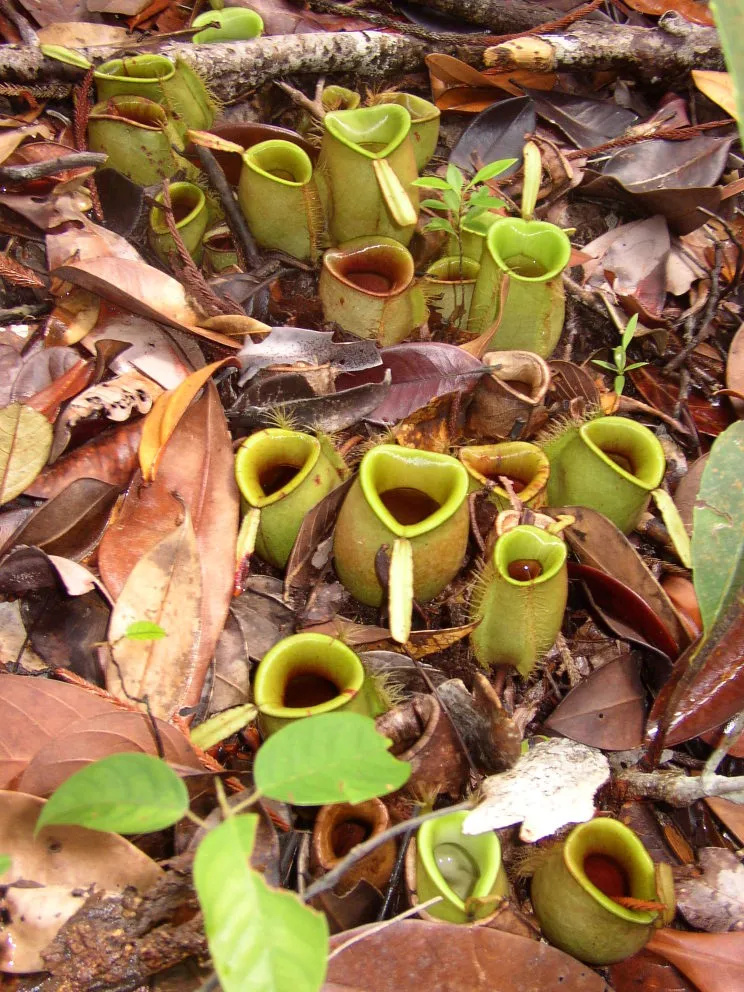
Nepenthes ampullaria, commonly known as the hollow-leafed pitcher plant, is a fascinating and highly specialized carnivorous plant belonging to the family Nepenthaceae. This species exhibits a unique growth habit, often sprawling or climbing as a liana through the undergrowth of its native tropical rainforests, though it can also form impressive rosettes in open areas. Under optimal conditions, its stems can extend significantly, supporting an array of its distinctive leaves.
The foliage of N. ampullaria is dimorphic; the lower pitchers are typically globose to ovoid, often resting on the ground, while the upper pitchers, if produced, are generally smaller, more funnel-shaped, and hang freely. The leaves are uniquely adapted, featuring a flat, ribbon-like lamina that terminates in an inverted, urn-shaped pitcher.
These pitchers, which can reach up to 20 centimeters (about 8 inches) in length, are highly variable in color, ranging from vibrant greens to deep reds, often adorned with intricate patterns or speckles that enhance their visual appeal. The pitcher's interior is smooth and waxy, designed to minimize moisture loss and facilitate the trapping and digestion of insects, a crucial adaptation for nutrient acquisition in its poor soil habitats.
Originating from the humid, lowland rainforests of Southeast Asia, Nepenthes ampullaria is particularly abundant in regions such as Borneo, Sumatra, and the Malay Peninsula, where it thrives in warm, consistently moist environments. It is often found in peat swamps, disturbed forest areas, and along riverbanks, preferring acidic, nutrient-deficient soils. Its root system is typically shallow and fibrous, primarily serving as an anchor, as the plant derives most of its essential nutrients, particularly nitrogen and phosphorus, from the insects it captures.
The flowers of N. ampullaria are dioecious, meaning male and female flowers are borne on separate plants, and are relatively inconspicuous, typically yellowish-green to brownish.
Trusted Scientific References
1. Authoritative external sources for Nepenthes ampullaria
1.1 Wikipedia — Nepenthes ampullaria
1.2 Kew POWO (Plants of the World Online)
1.3 PubMed — peer-reviewed research
1.4 NCBI Taxonomy Browser
1.5 GBIF — Global Biodiversity
1.1.Nepenthes Ampullaria — Standout Qualities
- ✓Carnivorous Nature — Possesses specialized pitchers to trap and digest insects for nutrient acquisition.
- ✓Dimorphic Pitchers — Exhibits distinct ground-level (globose) and aerial (funnel-shaped) pitchers.
- ✓Tropical Lowland Habitat — Native to warm, humid, nutrient-poor lowland rainforests of Southeast Asia.
- ✓Vining/Rosette Growth — Can grow as a scrambling vine or form impressive rosettes.
- ✓Unique Leaf Adaptation — Lamina terminates in an inverted, urn-shaped pitcher.
- ✓Acidic Soil Preference — Thrives in highly acidic, peat-rich soils.
- ✓Dioecious Flowers — Male and female flowers are borne on separate plants.
- ✓High Humidity Requirement — Essential for proper pitcher development and overall plant health.
- ✓Ornamental Appeal — Highly valued by plant enthusiasts for its striking appearance and unique biology.
1.2.Nepenthes Ampullaria — Quick Summary
- ✓Nepenthes ampullaria is a unique carnivorous pitcher plant from Southeast Asia.
- ✓Known for its distinctive urn-shaped pitchers that trap insects for nutrients.
- ✓Thrives in humid, lowland rainforests with specific light and temperature needs.
- ✓Traditional uses are limited, often focusing on digestive aid or topical wound care.
- ✓Contains proteolytic enzymes, flavonoids, and other compounds.
- ✓Not recommended for internal consumption; primarily a botanical curiosity and ornamental.
2.Nepenthes Ampullaria — Systematic Position
3.Nepenthes Ampullaria — Quick Facts
4.Nepenthes Ampullaria — Plant Morphology
5.Nepenthes Ampullaria — Geographic Distribution
6.Nepenthes Ampullaria — Ethnobotanical Uses
7.Nepenthes Ampullaria — Secondary Metabolites
- ✓Proteolytic Enzymes — Nepenthesin I and Nepenthesin II are abundant in the pitcher fluid, responsible for breaking down proteins from captured insects, facilitating nutrient absorption.
- ✓Amylases — Present in the digestive fluid, these enzymes assist in the breakdown of carbohydrates, contributing to the plant's nutrient acquisition.
- ✓Lipases — These enzymes are also found in the pitcher fluid, aiding in the digestion of lipids from prey, further diversifying the plant's nutrient sources.
- ✓Flavonoids — Compounds like quercetin and kaempferol derivatives are found in leaves and stems, known for their antioxidant and anti-inflammatory properties.
- ✓Tannins — Polyphenolic compounds present in plant tissues, contributing to astringent properties and offering potential antioxidant benefits.
- ✓Phenolic Acids — Such as gallic acid and caffeic acid, contributing to the plant's antioxidant defense mechanisms.
- ✓Organic Acids — Malic acid, citric acid, and succinic acid are found in the pitcher fluid, contributing to its acidic pH, which is crucial for enzyme activity and digestion.
- ✓Naphthoquinones — Some Nepenthes species contain these compounds, which can have antimicrobial and insecticidal properties.
- ✓Alkaloids — While less prominent than in some other plant families, certain alkaloids may be present in trace amounts, warranting further investigation into their biological activities.
8.Nepenthes Ampullaria — What Research Suggests
- ✓Digestive Support — Traditional folk medicine suggests that the pitcher fluid, rich in proteolytic enzymes like nepenthesin, may aid in protein digestion, though internal consumption is not a common or recommended practice.
- ✓Antimicrobial Potential — Preliminary in vitro studies on general Nepenthes pitcher fluid indicate potential antimicrobial properties against certain bacteria and fungi, possibly due to enzymatic activity and other secondary metabolites.
- ✓Wound Healing (Traditional) — In some traditional Southeast Asian practices, extracts or poultices from Nepenthes species have been topically applied to minor cuts and abrasions to support healing.
- ✓Anti-inflammatory Properties — Phytochemical analysis of related Nepenthes species suggests the presence of flavonoids and other phenolic compounds that may offer anti-inflammatory effects.
- ✓Antioxidant Activity — Certain compounds identified in Nepenthes plants, such as flavonoids, are known for their antioxidant capabilities, potentially helping to neutralize free radicals.
- ✓Immune Modulatory Effects — Some traditional systems associate Nepenthes with general health support, implying potential immune-modulating benefits, though specific research is limited.
- ✓Respiratory Relief (Traditional) — Historically, some indigenous communities have used decoctions from Nepenthes species to address symptoms of coughs and respiratory discomfort.
- ✓Fever Reduction (Folk Use) — In folk medicine, certain Nepenthes preparations have been anecdotally used to help alleviate fever symptoms.
- ✓Insecticidal Properties (External) — While not a direct internal medicinal benefit, the plant's inherent insecticidal compounds from its carnivorous mechanism could hypothetically be explored for external pest repellent applications.
8.1.Nepenthes Ampullaria — Health Applications
9.Nepenthes Ampullaria — Risk Profile
9.1.Nepenthes Ampullaria — Side Effects & Warnings
- ✓Skin Irritation — Direct contact with certain plant parts or pitcher fluid might cause mild skin irritation in sensitive individuals.
- ✓Allergic Reactions — As with any plant, allergic reactions such as dermatitis or respiratory issues can occur in susceptible individuals.
- ✓Digestive Upset (Ingestion) — Internal consumption of Nepenthes ampullaria is not recommended and could lead to gastrointestinal distress due to its unique chemistry and enzymes.
- ✓Toxicity Concerns — The presence of various secondary metabolites, while potentially beneficial, could pose toxicity risks if ingested in unmeasured quantities.
- ✓Contamination Risk — If used traditionally, improper preparation or collection could introduce contaminants or pathogens.
- ✓Interactions with Medications — Potential interactions with pharmaceutical drugs are unknown and should be considered if any form of the plant is consumed.
9.2.Nepenthes Ampullaria — Clinical Safety Notes
- ✓Not for Internal Consumption — Nepenthes ampullaria is generally not recommended for internal medicinal use due to lack of scientific validation and potential unknown toxicities.
- ✓Pregnancy and Lactation — Avoid use during pregnancy and lactation due to insufficient safety data.
- ✓Children — Not recommended for use in children due to lack of safety studies.
- ✓Allergic Individuals — Individuals with known plant allergies should exercise caution or avoid contact.
- ✓Topical Use Caution — Conduct a patch test before extensive topical application to check for skin sensitivity or allergic reactions.
- ✓Consult a Professional — Always consult a qualified healthcare professional before using any herbal remedy, especially if you have underlying health conditions or are on medication.
10.Nepenthes Ampullaria — Application Forms
- ✓Traditional Topical Application — In folk medicine, crushed leaves or extracts from Nepenthes species are sometimes applied as poultices to minor skin irritations or wounds.
- ✓Decoction (External) — A decoction made from the plant material might be used as a wash for skin conditions, following traditional practices, though scientific validation is lacking.
- ✓Infusion (Topical) — A milder infusion could be prepared for gentle topical application or as a compress, as per traditional herbalism principles.
- ✓Direct Pitcher Fluid Collection — Historically, the fluid from the pitchers might have been collected for very specific, localized traditional uses, often related to digestive aid or external application.
- ✓Research Extraction — For scientific study, various solvents are used to extract specific phytochemicals from leaves, stems, or pitcher fluid for analysis of their bioactivity.
- ✓Homeopathic Preparations — Some homeopathic remedies might incorporate Nepenthes, prepared through specific dilution processes, for various ailments.
- ✓Culinary (Extremely Limited) — While not a widespread practice, some indigenous cultures might have very specific, localized, and rare culinary uses for parts of the plant, often for survival or ceremonial purposes, though this is not general advice.
11.Nepenthes Ampullaria — Growth Requirements
- ✓Light — Provide very bright, diffused light; avoid intense, direct sunlight which can burn leaves. East or west-facing windows or shade cloth in greenhouses are ideal.
- ✓Temperature — As a lowlander, Nepenthes ampullaria prefers hot days (around 30°C/86°F) and warm nights (around 20°C/68°F); cold snaps can be lethal.
- ✓Humidity — Maintain high relative humidity, ideally above 50% during the day and higher at night, to encourage pitcher formation. Misting or keeping soil moist can help.
- ✓Soil — Use an acidic, nutrient-poor, well-draining substrate like a mix of long-fiber sphagnum moss, perlite, and orchid bark, avoiding traditional potting soil.
- ✓Watering — Water frequently with distilled, rainwater, or reverse osmosis water to keep the media consistently moist; never let the plant sit in standing water for prolonged periods.
- ✓Feeding — Supplement with small insects (e.g., crickets, mealworms) dropped into pitchers every few weeks; do not overfeed, as the plant gets most nutrients from its traps.
- ✓Space — Be aware that Nepenthes ampullaria is a vining plant that can grow quite large, requiring ample space or regular pruning to manage its size.
Reviewed by the Flora Medical Global Botanical Review Panel
Multi-disciplinary editorial group · Botany · Ethnobotany · Herbal-medicine literature
Who reviewed this: This page was checked by the Flora Medical Global Botanical Review Panel — an in-house editorial group of botany graduates, ethnobotany researchers, and horticulture practitioners who collectively maintain our 7,000+ plant encyclopedia. Meet the team.
Our 4-step verification process
1. Taxonomic verification
Scientific names and synonyms cross-checked against Kew POWO, World Flora Online, and The Plant List.
2. Phytochemical & medicinal cross-reference
Active compounds, traditional uses, and reported activities are cross-referenced with PubMed, USDA Dr. Duke's database, and peer-reviewed ethnobotanical literature.
3. Conservation & distribution check
Distribution, ecology, and conservation status confirmed against GBIF occurrence records and the IUCN Red List.
4. Editorial & safety review
Every entry passes an editorial pass for clarity, originality, and safety notices (toxicity, contraindications, dosage caveats) before publication.
Last reviewed:
Important medical disclaimer: This content is for educational and research purposes only. It is not medical advice and is not a substitute for consultation with a licensed healthcare provider. Do not use any herb to self-treat a medical condition without professional guidance.
Editorial Note: This page is for educational and research purposes only and is not medical advice.
Written by: Flora Medical Global Editorial Team
Reviewed by: Flora Medical Global Botanical Review Panel
Last Updated: June 15, 2026





Nepenthes Ampullaria — Comments & Community Reviews
Rate this plant