
Medical Disclaimer: This content is for educational purposes only. It is not medical advice. Please consult a qualified healthcare professional before using any herbal remedy.
Safety Overview
1.Nepenthes Ventricosa — Introduction & Highlights
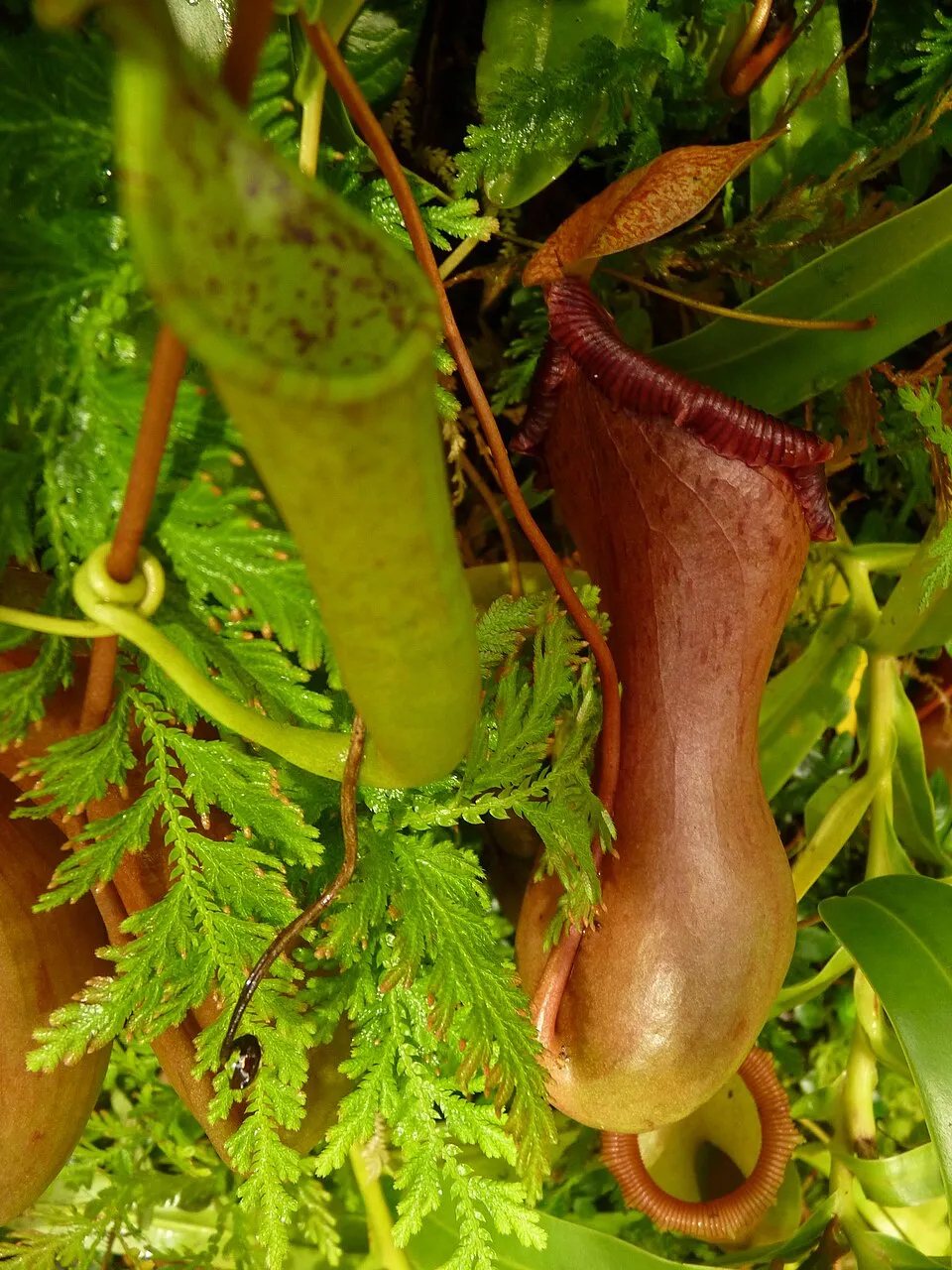
Nepenthes ventricosa, commonly known as the trumpet pitcher plant, is a remarkable and resilient species within the diverse genus Nepenthes, celebrated for its unique morphology and highly specialized carnivorous adaptations. This perennial, often epiphytic or lithophytic vine, typically exhibits a scrambling or climbing growth habit, with stems that can initially be short, but mature specimens often develop woody bases and extend significantly, reaching lengths of several meters in ideal conditions.
Its elongated, lanceolate leaves can grow up to 25 centimeters, featuring a distinct midrib that extends into a tendril. These tendrils are vital for the plant's structural support, coiling around adjacent vegetation or substrates, and critically, culminating in the formation of its iconic pitcher traps.
Each pitcher of Nepenthes ventricosa is a masterpiece of natural engineering, typically reaching up to 15 centimeters in height, though larger specimens are known. These traps display a captivating vibrant green, often beautifully mottled or streaked with shades of reddish-purple, particularly pronounced around the peristome (the ribbed rim of the pitcher mouth) and the lid. This striking coloration, alongside the secretion of sweet nectar and volatile organic compounds, acts as an irresistible lure, attracting a wide array of insect prey.
The slender stems may present a slightly pubescent texture, offering a wiry feel that aids its climbing. The root system is generally shallow and fibrous, perfectly adapted to the nutrient-poor, acidic substrates characteristic of its native highland environments. Nepenthes ventricosa is endemic to the Philippines, predominantly thriving in the cool, moist conditions of tropical mossy forests in the mountainous regions of Luzon and Mindanao.
It typically flourishes at elevations ranging from 1,000 to 2,000 meters above sea level, preferring humid environments with dappled sunlight and often growing amongst mosses and other epiphytes. Taxonomically, it belongs to the family Nepenthaceae, which is part of the order Caryophyllales, a diverse group of flowering plants known for their unique adaptations.
Trusted Scientific References
1. Authoritative external sources for Nepenthes ventricosa
1.1 Wikipedia — Nepenthes ventricosa
1.2 Kew POWO (Plants of the World Online)
1.3 PubMed — peer-reviewed research
1.4 NCBI Taxonomy Browser
1.5 GBIF — Global Biodiversity
1.1.Nepenthes Ventricosa — Key Features
- ✓Carnivorous Pitcher Traps — Distinctive, colorful pitchers capture and digest insects.
- ✓Endemic to the Philippines — Naturally found in specific mountainous regions.
- ✓Highlander Species — Thrives in cool day/night temperature differentials.
- ✓Epiphytic/Lithophytic Growth — Often grows on trees or rocks, not just in soil.
- ✓Proteolytic Enzymes — Pitcher fluid contains enzymes for nutrient acquisition.
- ✓Striking Aesthetics — Vibrant green and reddish-purple mottled pitchers.
- ✓Climbing Vine Habit — Develops long stems that require support.
- ✓Adaptable for Cultivation — Popular with carnivorous plant enthusiasts.
- ✓Ecological Importance — Plays a role in nutrient cycling in its native habitat.
- ✓Unique Tendril Morphology — Tendrils form into pitchers, a key adaptation.
1.2.Nepenthes Ventricosa — In Brief
- ✓Nepenthes ventricosa is a striking carnivorous pitcher plant from the Philippines.
- ✓Renowned for its unique, colorful insect-trapping pitchers.
- ✓Primarily an ornamental species, not widely recognized for medicinal use.
- ✓Contains proteolytic enzymes in its pitcher fluid, like nepenthesin.
- ✓Requires specific highland conditions — bright, diffused light, cool nights, high humidity.
- ✓Ecologically significant as an indicator species for tropical mossy forests.
2.Nepenthes Ventricosa — Systematic Position
3.Nepenthes Ventricosa — Reference Facts
4.Nepenthes Ventricosa — Structural Profile
5.Nepenthes Ventricosa — Where It Grows
6.Nepenthes Ventricosa — Historical Applications
7.Nepenthes Ventricosa — Bioactive Constituents
- ✓Proteolytic Enzymes — Nepenthes ventricosa pitcher fluid is rich in nepenthesin I and II, aspartic proteases crucial for breaking down insect proteins.
- ✓Organic Acids — Malic acid, citric acid, and succinic acid are present, contributing to the acidic environment within the pitcher that aids digestion.
- ✓Nectar Sugars — Glucose, fructose, and sucrose are secreted by glands on the peristome and lid, acting as primary attractants for insect prey.
- ✓Volatile Organic Compounds (VOCs) — A complex mixture of compounds, including terpenes and aldehydes, are emitted to attract insects over a distance.
- ✓Flavonoids — Plant tissues contain various flavonoids, which are known for their antioxidant and potential protective roles against UV radiation.
- ✓Anthocyanins — Pigments responsible for the reddish-purple coloration on pitchers, offering photoprotection and visual appeal to attract prey.
- ✓Lignans — These phenolic compounds may be present in the structural tissues, contributing to the plant's defense mechanisms.
- ✓Alkaloids — While not extensively studied in N. ventricosa, some Nepenthes species contain trace amounts of alkaloids, which can have diverse biological activities.
- ✓Waxes and Cuticular Lipids — Present on the waxy zone of the pitcher inner surface, these compounds create a slippery surface that prevents insects from escaping.
- ✓Phenolic Compounds — General phenolic compounds are present throughout the plant, contributing to its structural integrity and defense against pathogens.
8.Nepenthes Ventricosa — What Research Suggests
- ✓Digestive Enzyme Source — Pitcher fluid of Nepenthes ventricosa contains proteolytic enzymes like nepenthesin, which could be investigated for digestive aid formulations or biotechnological applications.
- ✓Potential Antimicrobial Properties — Extracts from Nepenthes species, including possibly N. ventricosa, may exhibit antimicrobial activity against certain bacteria and fungi, warranting further research for natural antiseptic development.
- ✓Anti-inflammatory Investigations — Some plant secondary metabolites found in related carnivorous plants have shown anti-inflammatory potential in preliminary studies, suggesting a possible area of research for N. ventricosa.
- ✓Antioxidant Research — The unique compounds produced by N. ventricosa to cope with environmental stress might possess antioxidant properties, which could be relevant for cellular protection studies.
- ✓Wound Healing Potential — Historically, pitcher fluid from some Nepenthes species has been anecdotally used externally for minor cuts and abrasions in traditional local practices, though scientific validation for N. ventricosa is lacking.
- ✓Insect Repellent Exploration — The plant’s ability to attract insects for consumption might also yield insights into compounds that could be modified or utilized as insect deterrents.
- ✓Biotechnological Enzyme Production — The specialized enzymes in N. ventricosa pitchers offer a unique biological model for industrial enzyme production, potentially superior to microbial sources in certain applications.
- ✓Ecological Indicator Species — While not a direct medicinal benefit, its sensitivity to environmental changes makes Nepenthes ventricosa a crucial indicator for ecosystem health, indirectly supporting the availability of other medicinal plants.
- ✓Novel Compound Discovery — The extreme environment adaptation of N. ventricosa suggests it may produce novel secondary metabolites with as-yet undiscovered pharmacological activities.
- ✓Traditional Eye Ailment Remedy (Generalized Nepenthes) — Certain Nepenthes species have been used in some local traditional systems for eye ailments, though specific evidence for N. ventricosa is absent and caution is advised.
8.1.Nepenthes Ventricosa — Conditions Traditionally Used For
9.Nepenthes Ventricosa — Risk Profile
9.1.Nepenthes Ventricosa — Caution Notes
- ✓Allergic Reactions — Direct contact with plant sap or pitcher fluid could potentially cause skin irritation or allergic reactions in sensitive individuals.
- ✓Digestive Upset — Ingesting any part of Nepenthes ventricosa, including pitcher fluid, is not recommended and could lead to gastrointestinal discomfort.
- ✓Mechanical Injury — The tendrils and pitchers, while not sharp, could cause minor mechanical irritation if handled roughly.
- ✓Insect Bites — Attracting insects means there's a higher chance of insect presence, which could lead to bites from the plant's prey if not handled carefully.
- ✓Cross-Contamination — If used in traditional remedies without proper sterilization, there's a risk of introducing contaminants.
9.2.Nepenthes Ventricosa — Safety Profile
- ✓Not for Internal Consumption — Nepenthes ventricosa is not intended for human consumption; internal use is strongly discouraged due to lack of safety data.
- ✓Handle with Care — Avoid direct contact with plant sap or pitcher fluid, especially if you have sensitive skin or known plant allergies.
- ✓Keep Out of Reach of Children and Pets — While not known to be highly toxic, curious children or pets might ingest parts, leading to mild discomfort.
- ✓Environmental Sensitivity — The plant is sensitive to environmental changes; ensure proper care to maintain its health and avoid stress.
- ✓Proper Disposal — If pruning or disposing of plant material, do so responsibly to avoid introducing non-native species to local ecosystems.
- ✓Limited Traditional Use — While some related Nepenthes species have very limited traditional external uses, N. ventricosa lacks extensive ethnobotanical safety records.
10.Nepenthes Ventricosa — Application Forms
- ✓Ornamental Cultivation — Primarily grown as a captivating ornamental plant for its unique carnivorous pitchers, popular in terrariums and greenhouses.
- ✓Research Specimen — Utilized in botanical and ecological studies to understand carnivorous plant adaptations, nutrient acquisition, and enzyme biochemistry.
- ✓Enzyme Extraction — The proteolytic enzymes from pitcher fluid can be extracted for biochemical research or potential industrial applications.
- ✓Ethnobotanical Study — While not widely medicinal, local communities in its native range may have traditional, localized, and often anecdotal uses for the plant or its parts.
- ✓Educational Display — Featured in botanical gardens and educational institutions to demonstrate plant diversity and carnivorous strategies.
- ✓Habitat Restoration — Used in conservation efforts within its native range to restore and maintain natural ecosystems, highlighting its ecological importance.
11.Nepenthes Ventricosa — Propagation & Care
- ✓Light — Provide very bright, diffused light; avoid harsh direct sun to prevent leaf burn. East or west-facing windows or grow lights work well.
- ✓Temperature — As a highlander, Nepenthes ventricosa prefers warm days (20-25°C / 68-77°F) and cool nights (10-15°C / 50-59°F), requiring a distinct day-night temperature drop.
- ✓Humidity — Maintain high relative humidity, ideally above 50% during the day and higher at night, to encourage pitcher formation. Frequent watering helps.
- ✓Watering — Use distilled water, rainwater, or reverse osmosis water. Keep the growing medium consistently moist but not waterlogged. Avoid allowing pitchers to dry out.
- ✓Soil — Use a well-draining, acidic, nutrient-poor substrate. Common mixes include sphagnum moss, perlite, orchid bark, and pumice.
- ✓Feeding — While carnivorous, Nepenthes ventricosa primarily captures its own food. Supplemental feeding (e.g., a few small insects) is only needed if the plant isn't catching any prey.
- ✓Space — Account for its climbing vine habit; mature plants can grow significantly and may require pruning or support structures like trellises.
- ✓Airflow — Good air circulation is important to prevent fungal issues, especially in high humidity environments.
Reviewed by the Flora Medical Global Botanical Review Panel
Multi-disciplinary editorial group · Botany · Ethnobotany · Herbal-medicine literature
Who reviewed this: This page was checked by the Flora Medical Global Botanical Review Panel — an in-house editorial group of botany graduates, ethnobotany researchers, and horticulture practitioners who collectively maintain our 7,000+ plant encyclopedia. Meet the team.
Our 4-step verification process
1. Taxonomic verification
Scientific names and synonyms cross-checked against Kew POWO, World Flora Online, and The Plant List.
2. Phytochemical & medicinal cross-reference
Active compounds, traditional uses, and reported activities are cross-referenced with PubMed, USDA Dr. Duke's database, and peer-reviewed ethnobotanical literature.
3. Conservation & distribution check
Distribution, ecology, and conservation status confirmed against GBIF occurrence records and the IUCN Red List.
4. Editorial & safety review
Every entry passes an editorial pass for clarity, originality, and safety notices (toxicity, contraindications, dosage caveats) before publication.
Last reviewed:
Important medical disclaimer: This content is for educational and research purposes only. It is not medical advice and is not a substitute for consultation with a licensed healthcare provider. Do not use any herb to self-treat a medical condition without professional guidance.
Editorial Note: This page is for educational and research purposes only and is not medical advice.
Written by: Flora Medical Global Editorial Team
Reviewed by: Flora Medical Global Botanical Review Panel
Last Updated: June 15, 2026





Nepenthes Ventricosa — Comments & Community Reviews
Rate this plant