
Medical Disclaimer: This content is for educational purposes only. It is not medical advice. Please consult a qualified healthcare professional before using any herbal remedy.
Safety Overview
1.Nepeta Faassenii — Introduction & Highlights
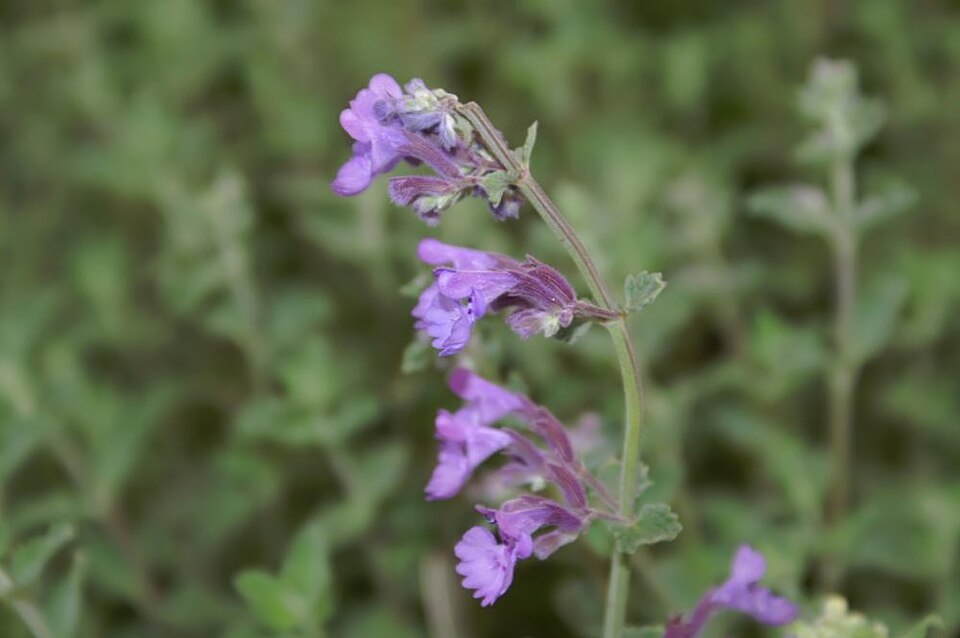
Nepeta faassenii, commonly known as Catmint or Faassen's Catmint, is a widely cherished herbaceous perennial belonging to the Lamiaceae family, which also includes familiar herbs like mint and lavender. This particular cultivar is a sterile hybrid, believed to be a cross between Nepeta nepetella and Nepeta mussinii, though sometimes attributed to Nepeta racemosa. Originating from European cultivation, it has become a staple in gardens worldwide for its ornamental appeal and ease of care.
The plant forms a beautiful, mounding, and spreading habit, typically reaching heights of 30 to 90 cm (1 to 3 feet) with a similar spread. Its taxonomic classification places it firmly within the mint family, characterized by square stems, opposite leaves, and distinctive flower structures.
The foliage of Nepeta faassenii is a key feature, comprising ovate to heart-shaped leaves with finely toothed margins. These leaves are covered in fine, downy hairs, imparting a soft, grayish-green appearance and a slightly fuzzy texture that aids in drought tolerance.
When bruised or crushed, the leaves release a robust, pleasant, minty aroma, a characteristic shared with its relatives, and notably irresistible to many felines due to the presence of nepetalactones.
Flowering is prolific and extended, typically from late spring through fall. The plant produces delicate, whorled flowers arranged in tiered rings along slender, upright stems that rise above the foliage. The blossoms are predominantly a charming lavender-blue to violet-blue, creating a spectacular and long-lasting display.
This continuous bloom makes Nepeta faassenii an exceptional choice for attracting a diverse array of pollinators, including bees, butterflies, and hoverflies, thereby enhancing garden biodiversity. Its adaptability to various conditions and minimal care requirements further solidify its status as a popular garden plant, often used in borders, rock gardens, and as a groundcover.
Trusted Scientific References
1. Authoritative external sources for Nepeta faassenii
1.1 Wikipedia — Nepeta faassenii
1.2 Kew POWO (Plants of the World Online)
1.3 PubMed — peer-reviewed research
1.4 NCBI Taxonomy Browser
1.5 GBIF — Global Biodiversity
1.1.Nepeta Faassenii — Key Features
- ✓Botanical Name — Nepeta faassenii
- ✓Common Names — Catmint, Faassen's Catmint, Blue Catmint
- ✓Plant Family — Lamiaceae (Mint Family)
- ✓Growth Habit — Mounding, spreading herbaceous perennial, typically 1 to 3 feet tall and wide.
- ✓Foliage — Aromatic, ovate to heart-shaped, grayish-green, finely toothed, with a downy texture.
- ✓Flowers — Abundant, small, lavender-blue to violet-blue, arranged in whorled spikes, blooming from late spring through fall.
- ✓Pollinator Attraction — Highly attractive to a wide range of pollinators including bees, butterflies, and hoverflies.
- ✓Feline Attraction — Contains nepetalactones, which elicit a playful and euphoric response in many domestic cats.
- ✓Drought Tolerance — Extremely resilient and low-water once established, suitable for xeriscaping and dry garden conditions.
- ✓Landscape Use — Excellent for borders, rock gardens, mass plantings, groundcover, and sensory gardens.
1.2.Nepeta Faassenii — Snapshot Summary
- ✓Nepeta faassenii is a sterile hybrid catmint, highly valued for its ornamental beauty and ease of cultivation.
- ✓Features soft, grayish-green, aromatic foliage and profuse, long-blooming lavender-blue flowers.
- ✓Famously attracts many cats due to nepetalactones and is a significant draw for beneficial pollinators.
- ✓Exceptionally drought-tolerant and low-maintenance, making it ideal for diverse garden landscapes.
- ✓Offers a mild, calming aroma and possesses subtle traditional uses for relaxation and digestive comfort.
2.Nepeta Faassenii — Systematic Position
3.Nepeta Faassenii — Reference Facts
4.Nepeta Faassenii — Plant Morphology
5.Nepeta Faassenii — Geographic Distribution
6.Nepeta Faassenii — Historical Applications
7.Nepeta Faassenii — Active Compounds
- ✓Nepetalactones — These iridoid monoterpenoids, particularly (Z,E)-nepetalactone and (E,Z)-nepetalactone, are responsible for the distinctive aroma and the famed attraction to cats; they also contribute to mild sedative and insect repellent properties.
- ✓Volatile Oils (Essential Oils) — Comprised of a complex mixture of monoterpenes (e.g., limonene, pulegone) and sesquiterpenes (e.g., caryophyllene), these oils impart the plant's characteristic fragrance and possess potential antimicrobial and anti-inflammatory activities.
- ✓Flavonoids — Compounds such as apigenin and luteolin are present, contributing antioxidant and anti-inflammatory benefits, common across the Lamiaceae family.
- ✓Phenolic Acids — Including rosmarinic acid and caffeic acid, these compounds exhibit strong antioxidant capabilities and contribute to the plant's defense mechanisms and potential health benefits.
- ✓Tannins — These astringent compounds are found in the plant, potentially offering mild antiseptic and wound-healing properties, as well as contributing to a bitter taste.
- ✓Triterpenes — Various triterpenoid compounds may be present, which can contribute to anti-inflammatory and adaptogenic effects, though specific research on Nepeta faassenii is limited.
- ✓Glycosides — A diverse group of compounds, including cardiac glycosides and phenolic glycosides, which can have various biological activities depending on their structure.
8.Nepeta Faassenii — Modern Studies
- ✓Relaxing Aroma — The volatile oils released by Nepeta faassenii, particularly nepetalactones, contribute to a soothing and calming atmospheric scent, potentially aiding in stress reduction.
- ✓Mild Sedative Properties — While less potent than Nepeta cataria, the aromatic compounds may offer subtle anxiolytic effects, promoting relaxation and mild sleep induction in sensitive individuals.
- ✓Digestive Aid — Traditional use of mint family plants suggests that the volatile oils can help soothe mild digestive discomfort, such as indigestion or bloating, by relaxing gastrointestinal muscles.
- ✓Anti-inflammatory Potential — As a member of the Lamiaceae family, Nepeta species often contain flavonoids and phenolic acids that may exert mild anti-inflammatory effects.
- ✓Insect Repellent — The presence of nepetalactones makes Nepeta faassenii a natural deterrent for certain insects, including mosquitoes, although it is not typically applied directly to human skin.
- ✓Pollinator Attractant — Ecologically, its abundant and long-lasting blooms provide a vital nectar source, attracting and supporting diverse populations of bees, butterflies, and other beneficial pollinators.
- ✓Antispasmodic Effects — The volatile compounds may possess mild antispasmodic qualities, traditionally used to alleviate minor muscle cramps or nervous spasms.
- ✓Anxiolytic Effects — Inhalation of the plant's pleasant aroma may contribute to a sense of well-being, potentially easing mild anxiety and promoting mental tranquility.
8.1.Nepeta Faassenii — Indications & Uses
9.Nepeta Faassenii — Adverse Effects
9.1.Nepeta Faassenii — Warnings
- ✓Gastrointestinal Upset — Excessive ingestion of Nepeta faassenii, particularly in concentrated forms, may lead to mild stomach discomfort, nausea, or loose stools in sensitive individuals.
- ✓Allergic Reactions — Rare instances of contact dermatitis or skin irritation may occur in individuals sensitive to plants in the Lamiaceae family upon direct skin contact with the sap.
- ✓Drowsiness — While generally mild, large quantities consumed internally could potentially induce slight drowsiness, especially when combined with other sedatives.
- ✓Uterine Contractions — Traditional herbal lore suggests caution for pregnant women due to potential emmenagogue effects, though specific data for Nepeta faassenii is lacking.
- ✓Drug Interactions — Theoretical risk of enhanced sedative effects if consumed alongside pharmaceutical sedatives, anxiolytics, or other herbs with calming properties.
9.2.Nepeta Faassenii — Safety Profile
- ✓Pregnancy and Lactation — Due to insufficient scientific data regarding its safety, it is generally advised to avoid the internal use of Nepeta faassenii during pregnancy and breastfeeding.
- ✓Children — Internal consumption by young children should be avoided or limited to very small, supervised amounts. External use, such as in cat toys, is generally considered safe.
- ✓Drug Interactions — Individuals taking sedative medications, anxiolytics, or antidepressants should consult a healthcare professional before using Nepeta faassenii internally due to potential additive effects.
- ✓Dosage — Adhere strictly to recommended dosages for any internal preparations, as excessive intake may lead to mild gastrointestinal discomfort or other adverse reactions.
- ✓Allergic Sensitivity — Individuals with known allergies to plants in the Lamiaceae family (e.g., mint, oregano, thyme) should exercise caution and perform a patch test before topical use.
- ✓External Use — Generally safe for external applications, such as in aromatherapy or pet enrichment, but discontinue use if any skin irritation or allergic reaction occurs.
10.Nepeta Faassenii — How to Use
- ✓Aromatic Infusion (Tea) — Dried leaves and flowers can be steeped in hot water for 5-10 minutes to create a mild, pleasant-tasting herbal tea, traditionally used for relaxation.
- ✓Culinary Garnish — Fresh, finely chopped leaves can be used sparingly as an aromatic garnish in salads, fruit dishes, or beverages, offering a subtle minty flavor.
- ✓Potpourri and Sachets — The dried foliage and flowers retain their appealing aroma, making them excellent for creating homemade potpourri, scented sachets, or herbal pillows.
- ✓Pet Toys and Scratching Posts — Dried Nepeta faassenii can be incorporated into cat toys or rubbed onto scratching posts to attract and stimulate felines, providing enrichment.
- ✓Essential Oil Distillation — For specialized applications, the volatile oils can be extracted through steam distillation, yielding an essential oil used in aromatherapy for its calming properties.
- ✓Tincture Preparation — Fresh or dried plant material can be macerated in a food-grade alcohol solution to create a tincture, a concentrated herbal extract traditionally used for nervous tension.
- ✓Garden Companion Planting — Utilize Nepeta faassenii as a border plant or groundcover to naturally deter deer and rabbits from other garden plants, while attracting beneficial pollinators.
11.Nepeta Faassenii — Growth Requirements
- ✓Site Selection — Plant Nepeta faassenii in full sun to partial shade; full sun promotes the most abundant flowering and robust growth, especially in cooler climates.
- ✓Soil Requirements — Prefers well-drained soil and is highly adaptable to various soil types, including sandy, loamy, or rocky; avoid heavy, waterlogged conditions to prevent root rot.
- ✓Watering — Once established, this catmint is remarkably drought-tolerant, requiring infrequent watering. Water deeply during prolonged dry spells, but allow the soil to dry out between waterings.
- ✓Pruning and Shearing — Shear back spent flower spikes after the initial bloom flush in late spring or early summer to encourage continuous reblooming throughout the season and maintain a tidy form.
- ✓Propagation — Primarily propagated by division of established clumps in spring or early fall, as Nepeta faassenii is a sterile hybrid and does not produce viable seeds.
- ✓Fertilization — Generally a low-maintenance plant that does not require heavy feeding. A light application of a balanced, slow-release granular fertilizer in early spring is sufficient if soil fertility is poor.
- ✓Pest and Disease Management — Highly resistant to most common pests and diseases. Ensure good air circulation and well-drained soil to minimize any potential fungal issues like root rot.
Reviewed by the Flora Medical Global Botanical Review Panel
Multi-disciplinary editorial group · Botany · Ethnobotany · Herbal-medicine literature
Who reviewed this: This page was checked by the Flora Medical Global Botanical Review Panel — an in-house editorial group of botany graduates, ethnobotany researchers, and horticulture practitioners who collectively maintain our 7,000+ plant encyclopedia. Meet the team.
Our 4-step verification process
1. Taxonomic verification
Scientific names and synonyms cross-checked against Kew POWO, World Flora Online, and The Plant List.
2. Phytochemical & medicinal cross-reference
Active compounds, traditional uses, and reported activities are cross-referenced with PubMed, USDA Dr. Duke's database, and peer-reviewed ethnobotanical literature.
3. Conservation & distribution check
Distribution, ecology, and conservation status confirmed against GBIF occurrence records and the IUCN Red List.
4. Editorial & safety review
Every entry passes an editorial pass for clarity, originality, and safety notices (toxicity, contraindications, dosage caveats) before publication.
Last reviewed:
Important medical disclaimer: This content is for educational and research purposes only. It is not medical advice and is not a substitute for consultation with a licensed healthcare provider. Do not use any herb to self-treat a medical condition without professional guidance.
Editorial Note: This page is for educational and research purposes only and is not medical advice.
Written by: Flora Medical Global Editorial Team
Reviewed by: Flora Medical Global Botanical Review Panel
Last Updated: June 15, 2026





Nepeta Faassenii — Comments & Community Reviews
Rate this plant