


Medical Disclaimer: This content is for educational purposes only. It is not medical advice. Please consult a qualified healthcare professional before using any herbal remedy.
Safety Overview
1.Nerium Oleander — Essential Profile
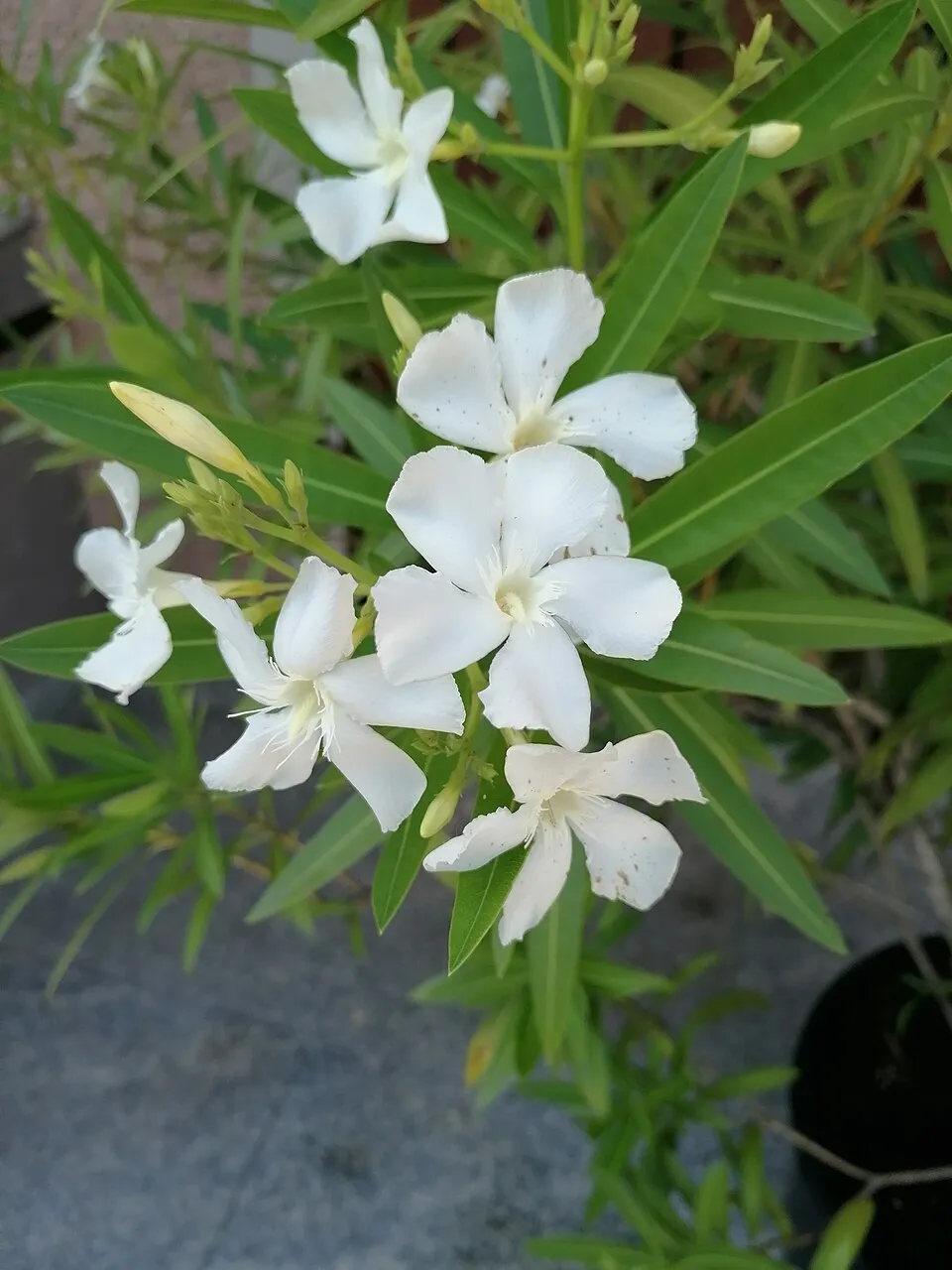
Nerium oleander, commonly known as Oleander or Rosebay, is a highly adaptable and visually striking evergreen shrub or small tree belonging to the Apocynaceae family, often referred to as the dogbane family. This resilient plant is indigenous to a broad geographical expanse, stretching from the arid and semi-arid regions of Morocco and Portugal across the Mediterranean basin, eastward through southern Asia, and reaching as far as Yunnan in China. It thrives in challenging environments, frequently found colonizing dry stream beds, river courses, and coastal areas where other vegetation struggles.
Morphologically, Nerium oleander is characterized by its dense, leathery, lance-shaped leaves, typically arranged in whorls of two or three, presenting a dark green, glossy appearance. From spring through late summer, it produces an abundance of showy, funnel-shaped flowers in terminal clusters. These blossoms exhibit a diverse palette of colors, including pristine white, soft pink, vivid red, and sunny yellow, and can feature either single or double petals, often exuding a delicate fragrance.
The fruit develops as a pair of long, narrow follicles that split open to release numerous seeds, each equipped with a tuft of hairs for wind dispersal. Despite its undeniable aesthetic appeal, ease of cultivation, and suitability for landscaping in warm climates, particularly along roadsides and in municipal plantings, it is paramount to understand that every part of the Nerium oleander plant is profoundly toxic if ingested, posing severe health risks to humans and animals alike. Its toxicity is a defining characteristic that dictates careful handling and placement.
Trusted Scientific References
1. Authoritative external sources for Nerium Oleander
1.1 Wikipedia — Nerium Oleander
1.2 Kew POWO (Plants of the World Online)
1.3 PubMed — peer-reviewed research
1.4 NCBI Taxonomy Browser
1.5 GBIF — Global Biodiversity
1.6Nerium Oleander should be interpreted through verified botanical identity, practical care, and responsible safety language. This recovery note adds the missing context needed for a complete profile: match light to the plant's habit, use well-drained soil, water according to season, and avoid unsupported medicinal or edible claims. For publishing, the plant can be presented as a source-backed garden plant with clear care guidance, common problem diagnosis, and conservative safety wording.
1.1.Nerium Oleander — Notable Characteristics
- ✓Evergreen Shrub/Small Tree — Maintains foliage year-round, providing continuous greenery.
- ✓Showy, Fragrant Flowers — Produces abundant, colorful, funnel-shaped flowers from spring to late summer.
- ✓Extreme Toxicity — All plant parts contain potent cardiac glycosides, making it highly poisonous if ingested.
- ✓Drought Tolerant — Exceptionally resilient to dry conditions once established, requiring minimal water.
- ✓Salt Tolerant — Thrives in coastal environments and tolerates salt spray, ideal for seaside plantings.
- ✓Deer Resistant — Generally unpalatable to deer due to its toxic compounds.
- ✓Fast Growing — Grows rapidly, making it suitable for quick screening or hedging.
- ✓Native to Mediterranean/Asia — Indigenous to a wide range of warm, arid to semi-arid regions.
- ✓Adaptable to Poor Soils — Tolerates various soil types, including infertile and sandy conditions.
- ✓Ornamental Landscape Plant — Widely cultivated for its aesthetic appeal in warm climates.
1.2.Nerium Oleander — At-a-Glance Summary
- ✓Highly ornamental yet extremely toxic evergreen shrub.
- ✓Contains potent cardiac glycosides like oleandrin, causing severe poisoning.
- ✓Historically used in traditional medicine with extreme caution, but modern medicine strongly advises against internal use.
- ✓Valued for its drought tolerance, salt tolerance, and resilience in landscaping.
- ✓All parts of the plant are poisonous; ingestion can be fatal to humans and animals.
- ✓Research on isolated compounds shows potential for pharmaceutical development, but not for whole-plant use.
2.Nerium Oleander — Scientific Identity
3.Nerium Oleander — Vital Statistics
4.Nerium Oleander — Physical Description
5.Nerium Oleander — Native Range & Habitat
6.Nerium Oleander — Folk Medicine Applications
7.Nerium Oleander — Phytochemistry
- ✓Cardiac Glycosides — Key compounds include oleandrin, neriin, digitoxigenin, and oleandrigenin. These potent compounds exert cardiotonic effects by inhibiting the Na+/K+-ATPase pump, leading to increased intracellular calcium and myocardial contractility, but are extremely toxic in higher doses.
- ✓Saponins — These glycosides contribute to the plant's defense mechanisms and can cause irritation. They are found in various plant parts and contribute to the overall toxicity.
- ✓Flavonoids — Compounds like rutin and quercetin derivatives are present, acting as antioxidants and contributing to the plant's color and UV protection.
- ✓Triterpenes — Pentacyclic triterpenes are found, which can have diverse biological activities, though their specific roles in Nerium oleander's toxicity or medicinal properties are less prominent than cardiac glycosides.
- ✓Steroids — Beyond the cardiac glycosides, other steroidal compounds are present, contributing to the plant's complex phytochemistry.
- ✓Tannins — These polyphenolic compounds are present, contributing to the plant's astringent properties and defense against herbivores.
- ✓Volatile Oils — Trace amounts of volatile organic compounds may contribute to the plant's characteristic fragrance, particularly in its flowers.
- ✓Lignans — Certain lignan compounds have been identified, which are known for their diverse biological activities including antioxidant and anti-inflammatory potential.
8.Nerium Oleander — Pharmacological Findings
- ✓Cardiotonic Effects — Historically, highly diluted extracts were used in some traditional systems for heart conditions due to the presence of cardiac glycosides like oleandrin, which can increase myocardial contractility. However, this application is extremely perilous due to a very narrow therapeutic window and high toxicity.
- ✓Anticancer Research — Isolated compounds, particularly oleandrin, have shown cytotoxic activity against various cancer cell lines in preclinical laboratory studies, indicating potential for future pharmaceutical development under strict control.
- ✓Antimicrobial Properties — Extracts have demonstrated in vitro antimicrobial activity against certain bacteria and fungi, suggesting a defensive role for the plant's compounds.
- ✓Anti-inflammatory Action — Some research indicates that specific constituents might possess anti-inflammatory properties, though these findings are primarily from in vitro or animal models and require significant caution.
- ✓Dermatological Use (Historical) — In ancient practices, highly diluted topical preparations were occasionally applied externally for certain skin ailments or parasitic conditions like scabies, albeit with considerable risk of systemic absorption and irritation.
- ✓Immunomodulatory Potential — Early research has explored the potential of oleander extracts to modulate immune responses, primarily in the context of cancer research.
- ✓Insecticidal Activity — The plant's compounds act as natural insecticides, deterring pests and contributing to the plant's hardiness in the landscape. This is an external, non-medicinal application.
- ✓Diuretic Properties (Historical) — Some historical accounts mention the use of extremely diluted preparations as diuretics, though this practice is unsupported by modern safety standards due to severe renal and cardiac toxicity.
8.1.Nerium Oleander — Health Applications
9.Nerium Oleander — Cautions & Contraindications
9.1.Nerium Oleander — Warnings
- ✓Severe Cardiac Toxicity — Ingestion causes rapid and irregular heartbeat, bradycardia, and potentially fatal cardiac arrest due to its potent cardiac glycosides.
- ✓Gastrointestinal Distress — Common symptoms include nausea, vomiting, abdominal pain, diarrhea, and excessive salivation.
- ✓Neurological Symptoms — Can lead to lethargy, dizziness, tremors, seizures, and coma in severe poisoning cases.
- ✓Dermatitis and Skin Irritation — Direct contact with the sap can cause skin irritation, redness, and allergic reactions in sensitive individuals.
- ✓Respiratory Issues — Inhaling smoke from burning oleander can cause severe respiratory distress and irritation.
- ✓Fatalities — Even small amounts, particularly of leaves or flowers, can be lethal to humans and animals, making it one of the most dangerous common garden plants.
- ✓Electrolyte Imbalance — Disrupts potassium levels, leading to hyperkalemia, which further exacerbates cardiac symptoms.
9.2.Nerium Oleander — Risk Assessment
- ✓Extreme Toxicity — All parts of the Nerium oleander plant are highly poisonous and ingestion can be fatal for humans and animals.
- ✓No Internal Use — Absolutely no part of this plant should ever be ingested or used internally for any purpose, medicinal or otherwise.
- ✓Contact Caution — Wear gloves when handling the plant, especially when pruning, to avoid skin irritation from the sap.
- ✓Keep Away from Children and Pets — Plant in areas inaccessible to curious children and pets, as accidental ingestion is a significant risk.
- ✓Avoid Burning — Do not burn any part of the plant, as the smoke contains toxic compounds that can be inhaled and cause severe harm.
- ✓Proper Disposal — Dispose of cuttings and plant debris carefully, ensuring they are not accessible to livestock or composted where they could contaminate food crops.
- ✓Medical Emergency — In case of suspected ingestion, seek immediate emergency medical attention; do not induce vomiting unless advised by poison control.
10.Nerium Oleander — Usage Guide
- ✓Zero Internal Consumption — Emphatically, no part of Nerium oleander should ever be consumed internally by humans or animals due to its extreme toxicity, which can be fatal.
- ✓Historical Topical Use (Extreme Caution) — Historically, highly diluted extracts were sometimes applied externally for skin conditions or parasitic infestations in traditional medicine, but this practice is extremely dangerous due to the risk of systemic absorption and severe poisoning.
- ✓Controlled Research Extracts — Modern scientific investigations involve the extraction and isolation of specific compounds, like oleandrin, for preclinical research under strict laboratory conditions, primarily exploring potential cytotoxic or cardiotonic effects.
- ✓Ornamental Landscaping — The primary contemporary use is as an ornamental shrub or small tree in warm climates, valued for its beauty, drought tolerance, and resilience in challenging environments.
- ✓Container Plant Cultivation — In colder climates, Nerium oleander can be successfully grown in containers and moved indoors during winter months to protect it from frost.
- ✓Avoid Burning Plant Material — Burning oleander wood or leaves can release toxic fumes and smoke, which can be injurious if inhaled, necessitating safe disposal practices.
- ✓Educational Awareness — Emphasizing public education about the plant's toxicity is a crucial 'usage method' to prevent accidental poisoning, especially in areas where it is commonly grown.
11.Nerium Oleander — Cultivation & Care
- ✓Sun Exposure — Requires full sun to partial shade for optimal growth and flowering, thriving in bright conditions.
- ✓Soil Requirements — Prefers well-drained, fertile soil but is highly adaptable to a wide range of soil types, including poor and sandy soils.
- ✓Temperature Tolerance — Intolerant of temperatures at or below 0°C (32°F); susceptible to frost damage, requiring indoor overwintering in cold climates.
- ✓Watering — Drought-tolerant once established, requiring minimal irrigation; regular watering benefits young plants and those in containers.
- ✓Pruning — Benefits from light pruning after flowering to maintain shape and remove dead or frost-damaged branches; avoid heavy pruning in late fall to preserve next year's flower buds.
- ✓Propagation — Easily propagated by semi-hardwood stem cuttings taken in summer or by seed, though seed propagation can result in variable traits.
- ✓Pest and Disease Management — Generally robust, but can occasionally be affected by oleander aphids, mealybugs, scale insects, and sooty mold.
- ✓Salt and Urban Tolerance — Highly tolerant of salt spray, urban pollution, and poor conditions, making it ideal for coastal and roadside plantings.
Reviewed by the Flora Medical Global Botanical Review Panel
Multi-disciplinary editorial group · Botany · Ethnobotany · Herbal-medicine literature
Who reviewed this: This page was checked by the Flora Medical Global Botanical Review Panel — an in-house editorial group of botany graduates, ethnobotany researchers, and horticulture practitioners who collectively maintain our 7,000+ plant encyclopedia. Meet the team.
Our 4-step verification process
1. Taxonomic verification
Scientific names and synonyms cross-checked against Kew POWO, World Flora Online, and The Plant List.
2. Phytochemical & medicinal cross-reference
Active compounds, traditional uses, and reported activities are cross-referenced with PubMed, USDA Dr. Duke's database, and peer-reviewed ethnobotanical literature.
3. Conservation & distribution check
Distribution, ecology, and conservation status confirmed against GBIF occurrence records and the IUCN Red List.
4. Editorial & safety review
Every entry passes an editorial pass for clarity, originality, and safety notices (toxicity, contraindications, dosage caveats) before publication.
Last reviewed:
Important medical disclaimer: This content is for educational and research purposes only. It is not medical advice and is not a substitute for consultation with a licensed healthcare provider. Do not use any herb to self-treat a medical condition without professional guidance.
Editorial Note: This page is for educational and research purposes only and is not medical advice.
Written by: Flora Medical Global Editorial Team
Reviewed by: Flora Medical Global Botanical Review Panel
Last Updated: June 15, 2026





Nerium Oleander — Comments & Community Reviews
Rate this plant