
Medical Disclaimer: This content is for educational purposes only. It is not medical advice. Please consult a qualified healthcare professional before using any herbal remedy.
Safety Overview
1.Night Blooming Cereus — Overview
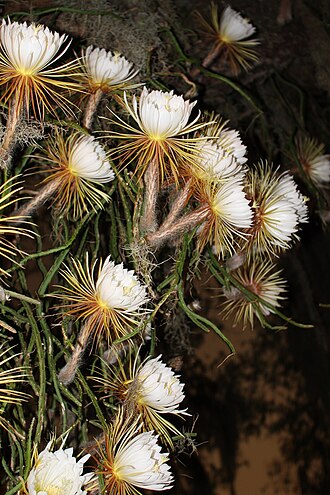
Night Blooming Cereus, scientifically known as Selenicereus grandiflorus, is a captivating perennial member of the Cactaceae family, renowned for its dramatic nocturnal blooms. This unique cactus typically exhibits a climbing or trailing growth habit, extending from 5 to 10 meters in length. Its stems are distinctly flat and segmented, presenting a glossy, vibrant green surface that can measure up to 5 centimeters in width.
Unlike many cacti, Selenicereus grandiflorus is notably unarmed, lacking the characteristic spines, with its stems often supported by a smooth, lightly textured bark. The plant's most celebrated feature is its magnificent, large white flowers, which can reach an impressive diameter of 30 centimeters. These spectacular blooms unfurl exclusively after sunset, releasing a sweet, jasmine-like fragrance to attract nocturnal pollinators, and remarkably, they wilt by dawn, lasting only a single night.
Native to the warm, humid climates of the Caribbean and parts of Central America, this species thrives in well-drained soils and requires full sunlight. Its indeterminate growth makes it a prized specimen for botanical enthusiasts, frequently cultivated in gardens and as a striking potted plant, especially for its unique reproductive cycle during the summer months.
Trusted Scientific References
1. Authoritative external sources for Selenicereus grandiflorus
1.1 Wikipedia — Selenicereus grandiflorus
1.2 Kew POWO (Plants of the World Online)
1.3 PubMed — peer-reviewed research
1.4 NCBI Taxonomy Browser
1.5 GBIF — Global Biodiversity
1.6Night Blooming Cereus should be interpreted through verified botanical identity, practical care, and responsible safety language. This recovery note adds the missing context needed for a complete profile: match light to the plant's habit, use well-drained soil, water according to season, and avoid unsupported medicinal or edible claims. For publishing, the plant can be presented as a source-backed medicinal plant with clear care guidance, common problem diagnosis, and conservative safety wording.
1.1.Night Blooming Cereus — Key Features
- ✓Nocturnal Flowering — Produces spectacular, jasmine-scented white flowers that open only at night.
- ✓Climbing/Trailing Habit — A unique growth form for a cactus, often sprawling over surfaces or climbing.
- ✓Unarmed Stems — Lacks the typical spines found on most cacti, with flat, segmented green stems.
- ✓Cardiotonic Properties — Contains compounds like tyramine known to stimulate and strengthen the heart.
- ✓Traditional Medicinal Value — Long history of use in folk medicine for heart conditions, menstrual issues, and more.
- ✓Native to Caribbean — Thrives in tropical and subtropical environments of its natural habitat.
- ✓Antioxidant Rich — Presence of flavonoids and betacyanins contributes to its protective properties.
- ✓Unique Reproductive Cycle — Flowers bloom for a single night during summer months.
- ✓Distinctive Fragrance — Its large flowers emit a powerful, sweet aroma.
- ✓Botanical Specimen — Highly valued by collectors for its ornamental and medicinal appeal.
1.2.Night Blooming Cereus — At-a-Glance Summary
- ✓Nocturnal Beauty — Famous for its large, fragrant flowers that bloom only at night.
- ✓Traditional Heart Tonic — Historically used to support weak, irregular heart action and relieve angina.
- ✓Rich in Phytochemicals — Contains cardiotonic amines like tyramine, plus flavonoids and betacyanins.
- ✓Caution with Heart Conditions — Self-medication for cardiac issues is unsafe and requires professional oversight.
- ✓Drug Interactions — Potentially interacts with digoxin and MAOIs, increasing health risks.
- ✓Diverse Traditional Uses — Also employed for menstrual health, urinary problems, and joint pain.
2.Night Blooming Cereus — Scientific Profile
3.Night Blooming Cereus — Quick Facts
4.Night Blooming Cereus — Morphological Account
5.Night Blooming Cereus — Geographic Distribution
6.Night Blooming Cereus — Historical Applications
7.Night Blooming Cereus — Secondary Metabolites
- ✓Alkaloids — Includes hordenine and other nitrogenous compounds that can exert various physiological effects, including sympathomimetic actions.
- ✓Biogenic Amines — Notably tyramine, which is credited with positive ionotropic action on the heart, stimulating and strengthening cardiac contractions.
- ✓Flavonoids — A diverse group of polyphenolic compounds such as flavonol glycosides, known for their antioxidant, anti-inflammatory, and cardioprotective properties.
- ✓Betacyanins — Water-soluble pigments found in the flowers, recognized for their potent antioxidant capabilities.
- ✓Phenolic Acids — Compounds like caffeic acid or ferulic acid derivatives, contributing to the plant's antioxidant and potentially anti-inflammatory profile.
- ✓Terpenoids — A broad class of organic compounds that may contribute to the plant's fragrance and possess various pharmacological activities.
- ✓Sterols — Plant sterols are compounds that can influence cellular membrane stability and may have anti-inflammatory or cholesterol-lowering potential.
- ✓Polysaccharides — Complex carbohydrates that can offer immune-modulating and prebiotic effects, supporting digestive and immune health.
- ✓Glycosides — Various glycosides that could contribute to the plant's overall therapeutic actions, often affecting cardiac function or acting as antioxidants.
- ✓Organic Acids — May include malic or citric acids, which play roles in plant metabolism and could offer mild therapeutic benefits.
8.Night Blooming Cereus — What Research Suggests
- ✓Cardiovascular Support — Traditionally recognized as a heart tonic, it is believed to strengthen heart function and regulate irregular heart actions, attributed to its cardiotonic compounds.
- ✓Angina Relief — Used to alleviate chest pain associated with angina, potentially by improving coronary blood flow and reducing cardiac strain.
- ✓Diuretic Action — May help in managing fluid retention, particularly when associated with conditions like weak heart function or congestive heart failure.
- ✓Menstrual Health — Employed in traditional medicine to address painful and heavy menstrual periods, offering a natural approach to women's health.
- ✓Urinary Tract Wellness — Historically utilized for bladder infections and other urinary tract problems, suggesting potential antiseptic or soothing properties.
- ✓Hemostatic Properties — Applied in traditional contexts to help manage various forms of bleeding, although modern evidence is limited.
- ✓Respiratory Aid — Used to relieve shortness of breath, possibly by supporting cardiovascular efficiency or having bronchodilatory effects.
- ✓Anti-inflammatory Effects — Contains flavonoids and phenolic acids which may contribute to reducing inflammation throughout the body.
- ✓Antioxidant Protection — Phytochemicals like betacyanins and flavonoids provide antioxidant activity, combating oxidative stress and cellular damage.
- ✓Joint Pain Management — When applied topically, it has been traditionally used to soothe joint pain and discomfort, potentially due to localized anti-inflammatory actions.
- ✓Digestive Health — Some traditional uses suggest benefits for overall digestive wellness, though specific mechanisms require further investigation.
- ✓General Tonic — Considered a restorative remedy in early American folklore, believed to improve overall vitality and systemic function through nutritional and tonic effects.
8.1.Night Blooming Cereus — Indications & Uses
9.Night Blooming Cereus — Risk Profile
9.1.Night Blooming Cereus — Warnings
- ✓Cardiac Effects — Unsafe for self-medication in heart conditions; its potent cardiac effects should only be monitored by a healthcare professional.
- ✓Gastrointestinal Upset — Ingesting fresh juice may cause burning sensations in the mouth, nausea, vomiting, and diarrhea.
- ✓Skin Irritation — Direct topical application of the plant's fresh juice or crushed material can lead to itching and the formation of skin blisters.
- ✓Blood Pressure Fluctuations — The tyramine content, especially when interacting with MAOIs, can potentially lead to dangerously high blood pressure.
- ✓Increased Digoxin Effects — Can amplify the effects of digoxin, increasing the risk of adverse cardiac side effects if taken concurrently.
- ✓Allergic Reactions — As with any plant, individuals may experience allergic reactions, though specific allergens are not widely documented.
9.2.Night Blooming Cereus — Toxicity Assessment
- ✓Professional Supervision — Essential for individuals with existing heart conditions, as self-medication can be unsafe due to its potent cardiac effects.
- ✓Pregnancy & Breast-feeding — Insufficient reliable information available; it is strongly advised to avoid use during pregnancy and lactation.
- ✓Digoxin Interaction — Contraindicated for individuals taking digoxin (Lanoxin) without strict medical supervision, due to increased risk of side effects.
- ✓MAOI Interaction — Caution advised for those on MAO inhibitor antidepressants (MAOIs) due to the plant's tyramine content, which can cause hypertensive crisis.
- ✓Dosage Sensitivity — While traditionally considered safe in small doses, an appropriate and safe dosage range lacks sufficient scientific information.
- ✓Topical Use Caution — Avoid applying fresh juice to open wounds or sensitive skin areas due to potential for irritation and blistering.
- ✓Children & Elderly — Use in these populations should be approached with extreme caution and under expert medical guidance due to potential sensitivities.
10.Night Blooming Cereus — Preparation & Dosage
- ✓Tincture — The fresh or dried plant material, particularly the stem and flowers, can be macerated in alcohol to create a potent liquid extract.
- ✓Infusion — Dried flowers or young shoots can be steeped in hot water to prepare a tea, often used for general tonic effects.
- ✓Decoction — For tougher parts like stems, a decoction can be made by simmering the plant material in water for a longer period.
- ✓Capsules/Tablets — Standardized extracts or powdered plant material can be encapsulated for convenient oral administration, often in doses of 10-100 mg once or twice daily.
- ✓Topical Poultice — Fresh juice or crushed plant parts can be applied directly to the skin as a poultice for localized relief of joint pain.
- ✓Fluid Extract — A concentrated liquid preparation, often used where precise dosing is required, following professional guidance.
- ✓Homeopathic Preparations — Available in highly diluted forms, used in homeopathic practice for specific cardiac and nervous system indications.
- ✓Culinary Use — Young shoots, while not primary for consumption, may be incorporated into regional dishes in some traditional practices.
11.Night Blooming Cereus — Growing Guide
- ✓Climate Preference — Thrives best in tropical and subtropical regions, requiring warm temperatures and high humidity.
- ✓Light Requirements — Prefers full sunlight for optimal growth and flowering, though it can tolerate partial shade.
- ✓Soil Type — Demands well-drained soil, ideally a sandy or loamy mixture with good aeration to prevent root rot, common for cacti.
- ✓Watering — Requires moderate watering during its active growing season, allowing the soil to dry out between waterings; reduce significantly in dormancy.
- ✓Support Structure — Given its climbing and trailing nature, provide a trellis, fence, or other support for its stems to cling to.
- ✓Propagation — Easily propagated from stem cuttings, which should be allowed to callus for a few days before planting in moist soil.
- ✓Fertilization — Benefits from a balanced, diluted liquid fertilizer during the growing season to support its vigorous growth and flowering.
- ✓Container Growing — Suitable for cultivation in large pots or hanging baskets where its trailing stems can cascade, ensuring proper drainage.
Reviewed by the Flora Medical Global Botanical Review Panel
Multi-disciplinary editorial group · Botany · Ethnobotany · Herbal-medicine literature
Who reviewed this: This page was checked by the Flora Medical Global Botanical Review Panel — an in-house editorial group of botany graduates, ethnobotany researchers, and horticulture practitioners who collectively maintain our 7,000+ plant encyclopedia. Meet the team.
Our 4-step verification process
1. Taxonomic verification
Scientific names and synonyms cross-checked against Kew POWO, World Flora Online, and The Plant List.
2. Phytochemical & medicinal cross-reference
Active compounds, traditional uses, and reported activities are cross-referenced with PubMed, USDA Dr. Duke's database, and peer-reviewed ethnobotanical literature.
3. Conservation & distribution check
Distribution, ecology, and conservation status confirmed against GBIF occurrence records and the IUCN Red List.
4. Editorial & safety review
Every entry passes an editorial pass for clarity, originality, and safety notices (toxicity, contraindications, dosage caveats) before publication.
Last reviewed:
Important medical disclaimer: This content is for educational and research purposes only. It is not medical advice and is not a substitute for consultation with a licensed healthcare provider. Do not use any herb to self-treat a medical condition without professional guidance.
Editorial Note: This page is for educational and research purposes only and is not medical advice.
Written by: Flora Medical Global Editorial Team
Reviewed by: Flora Medical Global Botanical Review Panel
Last Updated: June 15, 2026






Night Blooming Cereus — Comments & Community Reviews
Rate this plant