


Medical Disclaimer: This content is for educational purposes only. It is not medical advice. Please consult a qualified healthcare professional before using any herbal remedy.
Safety Overview
1.Nolina Microcarpa — Essential Profile
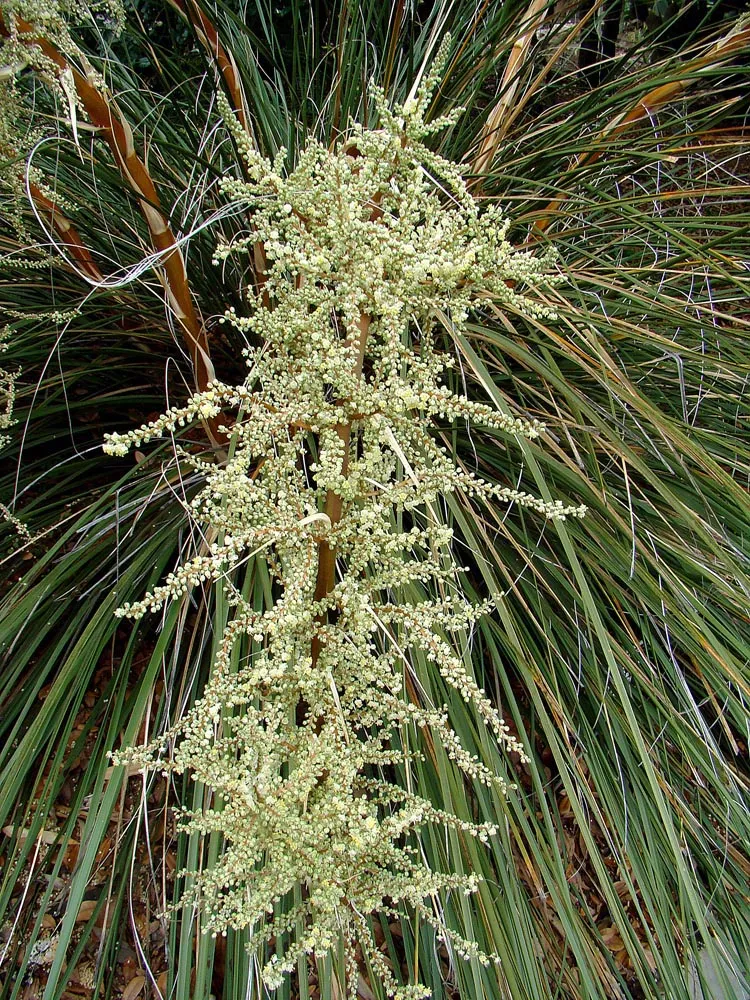
Nolina microcarpa, commonly known as Sacahuista or Southwestern Beargrass, is a remarkably resilient and visually distinctive evergreen perennial belonging to the Asparagaceae family, which also includes agaves and yuccas. Native to the arid and semi-arid regions of the southwestern United States, specifically Arizona, New Mexico, Utah, and potentially western Texas, extending into northern Mexico, this plant is not a true grass despite its common name. It forms dense, architectural clumps up to 6.6 feet (2 meters) in diameter, characterized by numerous long, narrow, fibrous, and often finely serrated leaves that can reach 3 to 4 feet in length and width.
These tough leaves emerge from a substantial woody caudex. In late spring to early summer, Nolina microcarpa produces a striking, erect flower stalk that can soar several feet above the foliage, adorned with a multitude of small, creamy white to yellowish flowers. These blossoms eventually give way to small, papery seed capsules.
Highly adapted to its native environment, Sacahuista thrives in full sun and requires well-drained, often rocky or sandy soils, making it an excellent choice for xeriscaping and sustainable landscape design. Historically, indigenous peoples utilized its robust foliage for crafting durable baskets, mats, and other woven goods, underscoring its cultural and practical significance beyond its aesthetic appeal.
Trusted Scientific References
1. Authoritative external sources for Nolina Microcarpa
1.1 Wikipedia — Nolina Microcarpa
1.2 Kew POWO (Plants of the World Online)
1.3 PubMed — peer-reviewed research
1.4 NCBI Taxonomy Browser
1.5 GBIF — Global Biodiversity
1.6Nolina Microcarpa should be interpreted through verified botanical identity, practical care, and responsible safety language. This recovery note adds the missing context needed for a complete profile: match light to the plant's habit, use well-drained soil, water according to season, and avoid unsupported medicinal or edible claims. For publishing, the plant can be presented as a source-backed garden plant with clear care guidance, common problem diagnosis, and conservative safety wording.
1.1.Nolina Microcarpa — Notable Characteristics
- ✓Resilient Evergreen Perennial — Adapts to harsh desert conditions.
- ✓Native to Southwestern US and Northern Mexico — Thrives in arid and semi-arid climates.
- ✓Forms Dense Clumps — Characterized by a distinctive architectural growth habit.
- ✓Tough, Fibrous, Grass — like Leaves — Providing structural interest and drought resistance.
- ✓Produces Tall, Creamy White Flower Stalks — A spectacular display in late spring to early summer.
- ✓Highly Drought — Tolerant — Requires minimal water once established.
- ✓Low Maintenance Plant — Ideal for sustainable landscaping and xeriscaping.
- ✓Historically Used for Weaving — Significant cultural importance for indigenous peoples.
- ✓No Documented Medicinal Uses — Primarily valued for its ornamental and utilitarian properties.
- ✓Contains Inferred Phytochemicals — Saponins and phenolics are expected based on related species.
1.2.Nolina Microcarpa — Snapshot Summary
- ✓Nolina microcarpa is an evergreen perennial native to the arid Southwestern US and Northern Mexico.
- ✓Known as Sacahuista or Beargrass, it is a resilient, drought-tolerant member of the Asparagaceae family.
- ✓Historically, its fibrous leaves were used by indigenous cultures for weaving baskets and mats.
- ✓It is highly valued in modern xeriscaping for its architectural form and low maintenance.
- ✓There are no documented traditional or modern medicinal uses for Nolina microcarpa.
- ✓Phytochemicals like saponins and phenolics are inferred based on related species, warranting further research.
2.Nolina Microcarpa — Nomenclature & Classification
3.Nolina Microcarpa — Vital Statistics
4.Nolina Microcarpa — Physical Description
5.Nolina Microcarpa — Ecological Habitat
6.Nolina Microcarpa — Folk Medicine Applications
7.Nolina Microcarpa — Key Phytochemicals
- ✓Saponins — Steroidal saponins are known to be present in other Nolina species and related Asparagaceae, potentially conferring properties such as anti-inflammatory or cholesterol-modulating effects, though specific types and concentrations in Nolina microcarpa are largely uncharacterized.
- ✓Steroidal Compounds — Including sapogenins, which are precursors to various steroid hormones, these compounds are anticipated in Nolina microcarpa based on its family, but their precise profile requires dedicated research.
- ✓Phenolic Acids — Common plant secondary metabolites like gallic acid, caffeic acid, and ferulic acid may be present, typically contributing antioxidant and anti-inflammatory activities.
- ✓Flavonoids — Compounds such as quercetin and kaempferol, often found as glycosides, are expected to be present, offering potential antioxidant and photoprotective roles, though specific identification in Nolina microcarpa is pending.
- ✓Tannins — Astringent polyphenols that can exhibit antioxidant and antimicrobial properties, and may contribute to the plant's structural integrity and defense mechanisms.
- ✓Polysaccharides — Complex carbohydrates that form part of the plant's structural components and may have immunomodulatory or prebiotic potential, though not specifically studied in Nolina microcarpa.
- ✓Fatty Acids — While not a primary medicinal constituent, various fatty acids would be present in the plant's tissues, particularly in seeds, contributing to its fundamental biology.
- ✓Lignans — These phenolic compounds are sometimes found in fibrous plants and can have antioxidant properties, representing another potential area for phytochemical investigation in Nolina microcarpa.
- ✓Waxes and Cuticular Lipids — Present on the tough leaves, these provide a protective barrier against water loss and UV radiation, essential for its survival in arid environments.
8.Nolina Microcarpa — Pharmacological Findings
- ✓No Documented Medicinal Benefits for Nolina microcarpa — Currently, there is no widely documented traditional or modern medicinal use specifically for Nolina microcarpa, and direct scientific evidence supporting such applications is sparse.
- ✓Potential Anti-inflammatory Properties (Inferred) — Based on the presence of saponins and phenolic compounds in related Asparagaceae species, Nolina microcarpa may theoretically possess anti-inflammatory actions, although this remains unconfirmed by direct research.
- ✓Antioxidant Activity (Hypothetical) — If phenolic compounds like flavonoids are present in Nolina microcarpa, they could confer antioxidant benefits, helping to neutralize free radicals, but this is speculative without specific studies.
- ✓Antimicrobial Potential (Research Area) — Some plant saponins and phenolics exhibit antimicrobial effects; further research on Nolina microcarpa's phytochemicals is needed to assess any such activity.
- ✓Cholesterol-Modulating Effects (Speculative) — Steroidal saponins found in other Nolina species have been associated with cholesterol-lowering properties, suggesting a possible area for future investigation in Nolina microcarpa.
- ✓Digestive Health Support (Unproven) — Polysaccharides and fiber in plants can aid digestive function; however, this is not a documented medicinal use for Nolina microcarpa.
- ✓Traditional Fiber Source (Non-Medicinal) — Historically, indigenous communities used the plant's tough leaves for weaving, a significant cultural and practical benefit, but not a medicinal one.
- ✓Ecological Value — Nolina microcarpa contributes to ecosystem health in arid regions, providing habitat and erosion control, which is an indirect benefit to human well-being through environmental stability.
8.1.Nolina Microcarpa — Indications & Uses
9.Nolina Microcarpa — Safety & Side Effects
9.1.Nolina Microcarpa — Side Effects & Warnings
- ✓Skin Irritation from Fibers — The tough, finely serrated leaf margins can cause minor skin abrasions or irritation if handled without protection, especially during harvesting or pruning.
- ✓Gastrointestinal Discomfort (Hypothetical) — While not documented for Nolina microcarpa, high concentrations of saponins in some related plants can cause mild gastrointestinal upset if accidentally ingested.
- ✓Allergic Reactions (Rare) — As with any plant, sensitive individuals might experience contact dermatitis or respiratory irritation from pollen or plant sap, though specific allergens are not identified.
- ✓Undocumented Internal Effects — Since Nolina microcarpa has no established medicinal uses, internal consumption is not recommended, and its effects on human physiology are unknown.
- ✓Livestock Toxicity (Limited Information) — While generally not considered highly toxic, large quantities of some Nolina species can be problematic for livestock; specific data for Nolina microcarpa is limited.
9.2.Nolina Microcarpa — Risk Assessment
- ✓Not for Internal Medicinal Use — Nolina microcarpa is not recognized as a medicinal plant, and internal consumption is strongly discouraged due to a lack of safety and efficacy data.
- ✓External Handling Caution — Always wear gloves when handling Nolina microcarpa to prevent skin irritation or abrasions from its tough, serrated leaves.
- ✓Keep Out of Reach of Children and Pets — As a general safety precaution, ensure all parts of the plant are kept away from young children and domestic animals.
- ✓Allergic Sensitivity — Individuals with known plant sensitivities or allergies should exercise caution when in contact with the plant, although specific allergens are not identified.
- ✓Research Deficit — Comprehensive toxicological studies on Nolina microcarpa are lacking, underscoring the need for a precautionary approach.
- ✓Environmental Interactions — While safe in its native habitat, ensure proper disposal of plant material to prevent unintended ecological impacts in non-native areas.
- ✓Horticultural Use Only — Its primary and safest application is as an ornamental landscape plant, not for any therapeutic purposes.
10.Nolina Microcarpa — Usage Guide
- ✓Fiber Harvesting for Weaving — Historically, the tough, fibrous leaves of Nolina microcarpa were harvested by indigenous peoples, processed, and utilized for weaving durable baskets, mats, and cordage, a non-medicinal traditional use.
- ✓Ornamental Landscaping — Primarily used as an architectural and drought-tolerant ornamental plant in xeriscaping, rock gardens, and native plant landscapes to add texture and form.
- ✓Ecological Restoration Projects — Employed in arid land restoration for erosion control and revegetation due to its robust nature and deep root system.
- ✓Bio-prospecting for Research — Plant material may be collected for phytochemical screening to identify novel compounds like saponins or phenolics, as a basis for future pharmaceutical research.
- ✓Seed Collection for Propagation — Seeds are gathered from mature plants to propagate new specimens for horticultural purposes or conservation efforts.
- ✓Educational Display — Used in botanical gardens and arid plant collections to educate the public about native Southwestern flora and xeriscape principles.
- ✓Traditional Construction Material — In some instances, the tough leaves were incorporated into roofing or other utilitarian structures in traditional contexts, though less common than weaving.
- ✓Wildlife Habitat — Provides cover and shelter for small wildlife in its native habitat, contributing to biodiversity, rather than direct human use.
11.Nolina Microcarpa — Garden Cultivation
- ✓Site Selection — Choose a location with full sun exposure and excellent drainage, mimicking its native arid habitat conditions.
- ✓Soil Requirements — Nolina microcarpa thrives in sandy, gravelly, or rocky soils; avoid heavy clay or consistently moist substrates.
- ✓Watering — Once established, the plant is highly drought-tolerant and requires minimal supplemental water, typically only during prolonged dry spells.
- ✓Propagation — Can be propagated from fresh seeds, which germinate best after stratification, or by carefully dividing mature clumps to separate offsets.
- ✓Hardiness Zones — Best suited for USDA hardiness zones 7-10, tolerating cold down to approximately 0°F (-18°C).
- ✓Maintenance — Requires very low maintenance; prune only to remove dead or damaged leaves or spent flower stalks, which can be cut at the base.
- ✓Landscape Use — Ideal for xeriscaping, rock gardens, desert gardens, and as an architectural accent plant in water-wise landscapes.
- ✓Pest and Disease Resistance — Generally resistant to most common pests and diseases due to its tough nature and arid adaptations.
Reviewed by the Flora Medical Global Botanical Review Panel
Multi-disciplinary editorial group · Botany · Ethnobotany · Herbal-medicine literature
Who reviewed this: This page was checked by the Flora Medical Global Botanical Review Panel — an in-house editorial group of botany graduates, ethnobotany researchers, and horticulture practitioners who collectively maintain our 7,000+ plant encyclopedia. Meet the team.
Our 4-step verification process
1. Taxonomic verification
Scientific names and synonyms cross-checked against Kew POWO, World Flora Online, and The Plant List.
2. Phytochemical & medicinal cross-reference
Active compounds, traditional uses, and reported activities are cross-referenced with PubMed, USDA Dr. Duke's database, and peer-reviewed ethnobotanical literature.
3. Conservation & distribution check
Distribution, ecology, and conservation status confirmed against GBIF occurrence records and the IUCN Red List.
4. Editorial & safety review
Every entry passes an editorial pass for clarity, originality, and safety notices (toxicity, contraindications, dosage caveats) before publication.
Last reviewed:
Important medical disclaimer: This content is for educational and research purposes only. It is not medical advice and is not a substitute for consultation with a licensed healthcare provider. Do not use any herb to self-treat a medical condition without professional guidance.
Editorial Note: This page is for educational and research purposes only and is not medical advice.
Written by: Flora Medical Global Editorial Team
Reviewed by: Flora Medical Global Botanical Review Panel
Last Updated: June 15, 2026





Nolina Microcarpa — Comments & Community Reviews
Rate this plant