

Medical Disclaimer: This content is for educational purposes only. It is not medical advice. Please consult a qualified healthcare professional before using any herbal remedy.
Safety Overview
1.Ochrosia — Botanical Snapshot
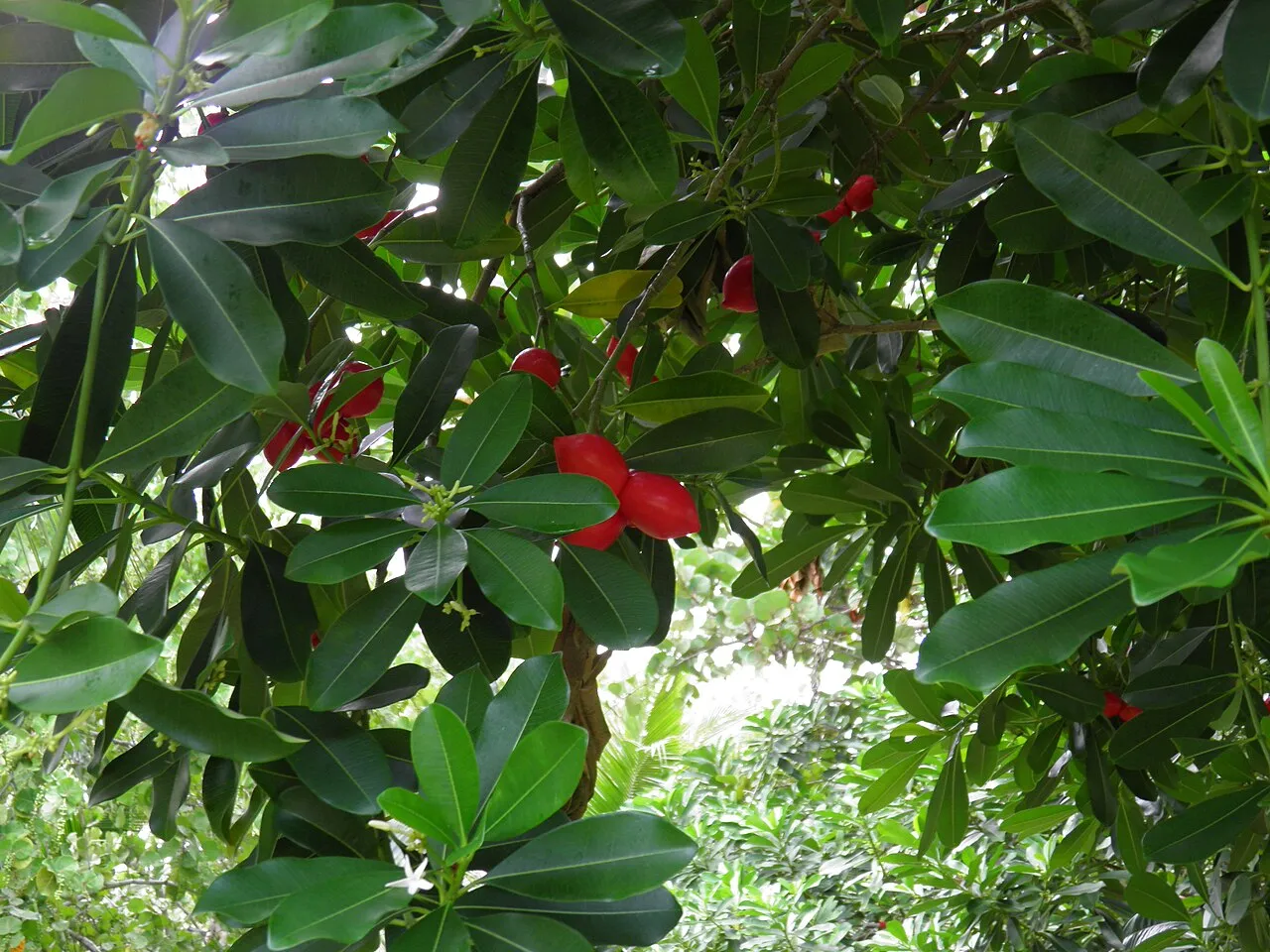
Ochrosia elliptica, commonly known as Ochrosia, is a captivating evergreen shrub or small tree belonging to the Apocynaceae family, typically reaching heights of 4 to 6 meters, though some specimens can grow up to 12 meters. Its trunk is characterized by smooth, pale gray bark that gradually develops a slightly flaky texture with maturity. The foliage consists of glossy, deep green leaves, which are elliptical to oblong in shape and measure between 7 to 15 centimeters in length, contributing to its appealing aesthetic.
Throughout the year, but particularly from October to March, Ochrosia elliptica produces clusters of tubular, fragrant, yellowish-white flowers, each adorned with five delicate lobes. A striking feature of this plant is its fruit—a narrow, cylindrical capsule, approximately 5 to 10 centimeters long, which ripens to a vibrant red color and contains distinctive twinned seeds often valued for ornamental purposes. Native to the tropical Pacific Islands, including Queensland in Australia, New Caledonia, and Vanuatu, Ochrosia elliptica thrives in moist, well-drained soils found in coastal areas, coral outcrops, sandy habitats, and forest margins.
Taxonomically, there has been some debate regarding its relationship with the genus Neisosperma, but current treatments often classify them as sections within the genus Ochrosia, underscoring its close botanical ties within the Apocynaceae family.
Trusted Scientific References
1. Authoritative external sources for Ochrosia elliptica
1.1 Wikipedia — Ochrosia elliptica
1.2 Kew POWO (Plants of the World Online)
1.3 PubMed — peer-reviewed research
1.4 NCBI Taxonomy Browser
1.5 GBIF — Global Biodiversity
1.6Ochrosia should be interpreted through verified botanical identity, practical care, and responsible safety language. This recovery note adds the missing context needed for a complete profile: match light to the plant's habit, use well-drained soil, water according to season, and avoid unsupported medicinal or edible claims. For publishing, the plant can be presented as a source-backed medicinal plant with clear care guidance, common problem diagnosis, and conservative safety wording.
1.1.Ochrosia — Highlights
- ✓Native to the — Native to the tropical Pacific Islands, thriving in coastal and forest habitats.
- ✓Member of the — Member of the Apocynaceae family, known for its diverse medicinal plants.
- ✓Features distinctive bright — Features distinctive bright red, cylindrical fruits containing twinned seeds.
- ✓Historically revered in — Historically revered in traditional medicine for its febrifuge and anti-inflammatory properties.
- ✓Rich in powerful — Rich in powerful indole alkaloids, including ellipticine, a compound with significant anticancer potential.
- ✓Exhibits potent cytotoxic and broad — spectrum antimicrobial activities against various pathogens.
- ✓Valued in traditional — Valued in traditional practices for addressing respiratory issues and promoting wound healing.
- ✓Often cultivated as — Often cultivated as an ornamental plant due to its striking foliage and attractive fruiting display.
- ✓Contains poisonous sap, — Contains poisonous sap, necessitating careful handling and strict professional supervision for any internal application.
- ✓Subject to ongoing — Subject to ongoing pharmacological research, particularly for its promising anticancer and antimicrobial applications.
1.2.Ochrosia — Quick Summary
- ✓Ochrosia elliptica is a tropical Pacific native, known for its vibrant red fruits.
- ✓Traditionally used for fevers, coughs, and wound healing in Pacific Island cultures.
- ✓Contains potent indole alkaloids, notably ellipticine, with recognized anticancer properties.
- ✓The plant's sap is poisonous, requiring extreme caution and expert guidance for any medicinal use.
- ✓It also exhibits significant antimicrobial activity against bacterial and fungal infections.
- ✓Cultivated as an ornamental plant due to its attractive foliage and distinct fruits.
2.Ochrosia — Nomenclature & Classification
3.Ochrosia — Vital Statistics
4.Ochrosia — Physical Description
5.Ochrosia — Origin & Spread
6.Ochrosia — Heritage Uses
7.Ochrosia — Chemical Profile
- ✓Indole Alkaloids — Key compounds include ellipticine, elliptinine, 9-methoxy-ellipticine, and isoreserpiline, which are largely responsible for the plant's significant anticancer and cytotoxic activities.
- ✓Pavine Alkaloids — Specifically, 19-O-acetylpavine has been isolated and shown to possess notable antimicrobial properties against various pathogens.
- ✓Echitamidine — An indole alkaloid also present in Ochrosia elliptica, contributing to its observed antimicrobial efficacy.
- ✓Flavonoids — A diverse group of plant pigments and antioxidants, often associated with anti-inflammatory and free radical scavenging capabilities, supporting overall cellular health.
- ✓Triterpenoids — These compounds are widely distributed in plants and can exhibit a range of biological activities, including anti-inflammatory, antiviral, and hepatoprotective effects.
- ✓Saponins — Known for their surfactant properties, saponins can contribute to expectorant actions and have also been implicated in anti-inflammatory and immune-modulating responses.
- ✓Phenolic Compounds — Including phenolic acids and tannins, these constituents are powerful antioxidants that protect cells from oxidative damage and exhibit astringent properties.
- ✓Steroidal Glycosides — These plant steroids can have various pharmacological impacts, potentially influencing hormonal pathways or exhibiting cardiotonic effects.
- ✓Coumarins — A class of organic compounds known for their anticoagulant, anti-inflammatory, and antimicrobial properties.
8.Ochrosia — Evidence-Based Benefits
- ✓Febrifuge Properties — Traditionally, an infusion made from the bark of Ochrosia elliptica has been utilized as a potent febrifuge, effectively reducing fever and historically even used in the 19th century as a treatment for malaria.
- ✓Respiratory Support — Leaves of Ochrosia elliptica are commonly brewed into a tea, which is believed to alleviate symptoms of coughs and other respiratory issues.
- ✓Wound Healing — The bark, when prepared as a poultice, has been traditionally applied to wounds and areas of inflammation to promote healing and reduce swelling.
- ✓Anti-inflammatory Action — Both the bark poultices and direct application of the plant's latex to bruises and cuts are thought to harness its natural anti-inflammatory compounds.
- ✓Antimicrobial Activity — Research has identified specific alkaloids like 19-O-acetylpavine and echitamidine in Ochrosia elliptica, demonstrating potency against various bacterial and fungal infections.
- ✓Diuretic Effects — The plant, though specific parts are not always detailed in traditional accounts, is recognized for its diuretic properties, aiding in the excretion of excess fluids.
- ✓Purgative Action — Ochrosia elliptica has also been noted for its purgative qualities, potentially assisting with digestive regularity.
- ✓Anticancer Potential — Major alkaloids such as ellipticine and its derivatives have shown promising cytotoxic properties against several experimental neoplasms and human cancer cell lines in scientific studies.
- ✓Analgesic Relief — While not explicitly stated, its traditional use for pain associated with inflammation and injuries suggests a potential analgesic effect.
- ✓Immune System Modulation — General traditional use for various ailments implies a broader capacity to support the body's natural defense mechanisms.
8.1.Ochrosia — Therapeutic Indications
9.Ochrosia — Cautions & Contraindications
9.1.Ochrosia — Side Effects & Warnings
- ✓Gastrointestinal Upset — Inappropriate internal consumption can lead to symptoms such as nausea, vomiting, stomach cramps, and diarrhea due to its potent constituents.
- ✓Allergic Reactions — Topical application of plant material, especially the sap, may cause skin irritation, dermatitis, or other allergic responses in sensitive individuals.
- ✓Hepatic and Renal Toxicity — High doses or prolonged use, particularly of the alkaloid-rich extracts, may pose a risk of liver and kidney damage.
- ✓Cardiovascular Effects — Certain alkaloids found in Ochrosia elliptica have the potential to affect heart rhythm or blood pressure, necessitating caution.
- ✓Neurological Symptoms — Overconsumption could potentially induce central nervous system effects, including dizziness, confusion, or other adverse neurological reactions.
- ✓Photosensitivity — Some plant compounds can increase skin sensitivity to sunlight, potentially leading to sunburn or rashes.
- ✓Drug Interactions — The potent alkaloids may interact adversely with conventional medications, particularly chemotherapy drugs, anticoagulants, or cardiovascular medications.
9.2.Ochrosia — Toxicity Assessment
- ✓Professional Supervision — Internal use of Ochrosia elliptica is strongly discouraged without the direct guidance and supervision of a qualified medical herbalist or healthcare professional due to its known toxicity.
- ✓Pregnancy and Lactation — The plant is strictly contraindicated for use by pregnant or breastfeeding individuals due to the lack of safety data and the potential for adverse effects on fetal development or infant health.
- ✓Pediatric Use — Not recommended for use in children, as their systems are more sensitive to potent plant compounds and toxicity risks are higher.
- ✓Pre-existing Conditions — Individuals with liver disease, kidney impairment, heart conditions, or gastrointestinal disorders should avoid using this plant.
- ✓Avoid Raw Consumption — The sap and fruits are known to be poisonous; direct ingestion of raw plant parts must be strictly avoided.
- ✓Dosage Adherence — If prescribed by an expert, strict adherence to recommended dosages is critical to minimize the risk of adverse effects.
- ✓External Use Caution — While traditionally used topically, a patch test is recommended before widespread application to check for skin sensitivities or allergic reactions.
10.Ochrosia — Preparation Methods
- ✓Leaf Tea for Respiratory Issues — Dried leaves are steeped in hot water to create an herbal tea, traditionally consumed to soothe coughs and alleviate other respiratory discomforts.
- ✓Bark Decoction for Fevers — The bark is boiled in water to prepare a decoction, used as a febrifuge to reduce high body temperatures and historically against malaria.
- ✓Topical Bark Poultice — Crushed or powdered bark mixed with a small amount of water is applied directly to wounds, bruises, and inflamed areas to aid healing and reduce swelling.
- ✓Direct Latex Application — The milky sap (latex) collected from the plant is traditionally applied topically to minor cuts and bruises for its purported healing properties.
- ✓Standardized Extracts — For modern therapeutic applications, extracts and tinctures can be prepared, though these require precise formulation and professional guidance due to the plant's potent compounds.
- ✓Traditional Infusions for General Wellness — Various plant parts may be infused in water for general health maintenance in traditional Pacific Island practices, often with specific ceremonial or cultural significance.
- ✓Dosage Control — Due to the presence of potent alkaloids, any internal use must be strictly controlled and administered under the supervision of a qualified medical herbalist or healthcare professional.
- ✓External Application Precaution — Always perform a patch test when applying any part of the plant topically to check for potential skin sensitivities or allergic reactions.
11.Ochrosia — Cultivation & Care
- ✓Propagation — Ochrosia elliptica can be propagated effectively from seeds or by using ripe wood cuttings, with cuttings often rooted in moist sand under controlled conditions.
- ✓Climate Requirements — Thrives in tropical and subtropical climates, preferring warm temperatures and high humidity, though it can be cultivated in temperate glasshouses.
- ✓Light Exposure — Grows best in an open, sunny position to partial shade, indicating adaptability to varying light intensities but favoring brighter conditions for optimal growth.
- ✓Soil Preference — Requires fertile, moist, but well-drained loam soil that is rich in organic matter or humus to support its vigorous growth.
- ✓Watering Regimen — Consistent moisture is crucial, especially during dry periods, without allowing the soil to become waterlogged, which can lead to root issues.
- ✓Nutrient Needs — Benefits from regular fertilization with a balanced, slow-release fertilizer to ensure adequate nutrient supply, particularly in less fertile soils.
- ✓Pruning — Light pruning can be performed to maintain desired shape, encourage bushier growth, and remove any dead or diseased branches, promoting overall plant health.
- ✓Pest and Disease Management — Generally robust, but monitoring for common tropical pests and fungal diseases is advisable, especially in humid conditions.
Reviewed by the Flora Medical Global Botanical Review Panel
Multi-disciplinary editorial group · Botany · Ethnobotany · Herbal-medicine literature
Who reviewed this: This page was checked by the Flora Medical Global Botanical Review Panel — an in-house editorial group of botany graduates, ethnobotany researchers, and horticulture practitioners who collectively maintain our 7,000+ plant encyclopedia. Meet the team.
Our 4-step verification process
1. Taxonomic verification
Scientific names and synonyms cross-checked against Kew POWO, World Flora Online, and The Plant List.
2. Phytochemical & medicinal cross-reference
Active compounds, traditional uses, and reported activities are cross-referenced with PubMed, USDA Dr. Duke's database, and peer-reviewed ethnobotanical literature.
3. Conservation & distribution check
Distribution, ecology, and conservation status confirmed against GBIF occurrence records and the IUCN Red List.
4. Editorial & safety review
Every entry passes an editorial pass for clarity, originality, and safety notices (toxicity, contraindications, dosage caveats) before publication.
Last reviewed:
Important medical disclaimer: This content is for educational and research purposes only. It is not medical advice and is not a substitute for consultation with a licensed healthcare provider. Do not use any herb to self-treat a medical condition without professional guidance.
Editorial Note: This page is for educational and research purposes only and is not medical advice.
Written by: Flora Medical Global Editorial Team
Reviewed by: Flora Medical Global Botanical Review Panel
Last Updated: June 15, 2026





Ochrosia — Comments & Community Reviews
Rate this plant