
Medical Disclaimer: This content is for educational purposes only. It is not medical advice. Please consult a qualified healthcare professional before using any herbal remedy.
Safety Overview
1.Odontonema Cuspidatum — Plant Snapshot
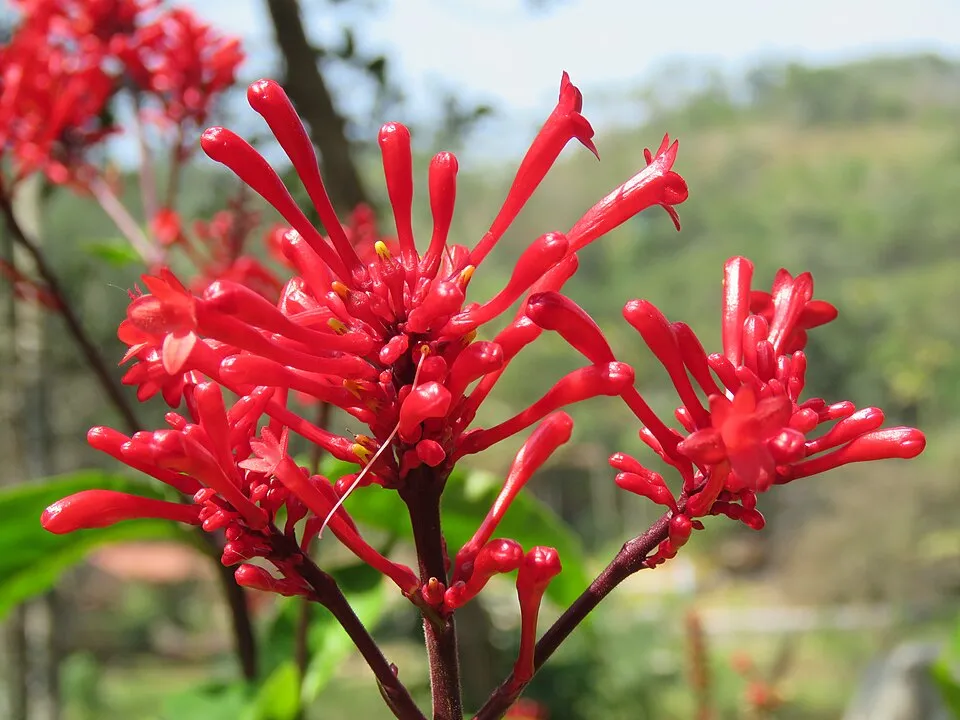
Odontonema cuspidatum, widely recognized by its common names Firespike, Cardinal's Guard, or Toothed Lance, is a visually striking perennial shrub belonging to the Acanthaceae family. Native to the warm, humid regions of Central America and Mexico, it has become a popular ornamental plant cultivated across tropical and subtropical zones globally.
This fast-growing species typically forms an upright, bushy habit, reaching heights of 3 to 10 feet with sparse, stiff branches. Its foliage consists of glossy, dark green, ovate leaves, often 4-6 inches long, characterized by wavy margins and distinct pointed tips, arranged oppositely along the stem.
The true spectacle of Firespike lies in its inflorescence. From late summer through fall, and frequently extending into winter in frost-free environments, the plant produces numerous slender, erect racemes. These spikes are densely adorned with brilliant, tubular, crimson-red flowers that evoke the appearance of miniature fireworks, making it an irresistible magnet for hummingbirds, butterflies, and other pollinators.
While primarily celebrated for its aesthetic appeal, Odontonema cuspidatum is highly adaptable, demonstrating resilience in various environments. It thrives best in moist, shady locations with fertile to moderately fertile, neutral pH soils, exhibiting good shade tolerance but a notable intolerance to freezing conditions and salty soils. Its ability to reproduce vegetatively through stem segments and root suckers, alongside seed production (though often sparse viable seeds), contributes to its adaptability, occasionally leading to its categorization as invasive in certain non-native understory habitats.
Trusted Scientific References
1. Authoritative external sources for Odontonema Cuspidatum
1.1 Wikipedia — Odontonema Cuspidatum
1.2 Kew POWO (Plants of the World Online)
1.3 PubMed — peer-reviewed research
1.4 NCBI Taxonomy Browser
1.5 GBIF — Global Biodiversity
1.6Odontonema Cuspidatum should be interpreted through verified botanical identity, practical care, and responsible safety language. This recovery note adds the missing context needed for a complete profile: match light to the plant's habit, use well-drained soil, water according to season, and avoid unsupported medicinal or edible claims. For publishing, the plant can be presented as a source-backed garden plant with clear care guidance, common problem diagnosis, and conservative safety wording.
1.1.Odontonema Cuspidatum — Key Features
- ✓Botanical Name — Odontonema cuspidatum (Nees) Kuntze.
- ✓Common Names — Firespike, Cardinal's Guard, Toothed Lance, Scarlet Fire-spike.
- ✓Plant Family — Acanthaceae.
- ✓Geographic Origin — Central America and Mexico (Neotropics).
- ✓Striking Flowers — Produces brilliant, tubular, crimson-red flower spikes.
- ✓Growth Habit — Upright, bushy perennial shrub, typically 3-10 feet tall.
- ✓Pollinator Magnet — Highly attractive to hummingbirds, butterflies, and bees.
- ✓Ornamental Value — Prized for its showy, late-season blooms and glossy foliage.
- ✓Shade Tolerance — Adaptable and thrives in semi-shady to full sun conditions.
- ✓Invasive Potential — Can exhibit invasive tendencies in certain non-native, humid understory environments.
1.2.Odontonema Cuspidatum — Concise Overview
- ✓Firespike is a vibrant ornamental shrub, native to Central America and Mexico.
- ✓Known for its striking crimson-red flower spikes that attract pollinators.
- ✓Scientific research on its medicinal properties is extremely limited.
- ✓Contains common plant compounds like flavonoids and phenolic acids.
- ✓Not recommended for internal medicinal use due to lack of safety data.
- ✓Primarily valued for its aesthetic appeal and ecological role in gardens.
2.Odontonema Cuspidatum — Taxonomic Classification
3.Odontonema Cuspidatum — Botanical Stats
4.Odontonema Cuspidatum — Plant Morphology
5.Odontonema Cuspidatum — Where It Grows
6.Odontonema Cuspidatum — Ethnobotanical Uses
7.Odontonema Cuspidatum — Bioactive Constituents
- ✓Flavonoids — Expected to include compounds like quercetin and kaempferol derivatives, offering potential antioxidant and anti-inflammatory activities, typical of many plant species.
- ✓Phenolic Acids — Likely contains caffeic acid, ferulic acid, and similar compounds, contributing to general antioxidant and possibly antimicrobial defense mechanisms within the plant.
- ✓Tannins — Both condensed and hydrolyzable tannins may be present, imparting astringent properties and potentially contributing to the plant's defense against herbivores and pathogens.
- ✓Alkaloids — While specific types are not documented, the family Acanthaceae often contains various nitrogen-containing alkaloids, which can have diverse and potent pharmacological effects.
- ✓Terpenoids — A broad category including monoterpenes, diterpenes, and triterpenes, which could contribute to the plant's aroma, and possess potential anti-inflammatory or antimicrobial properties.
- ✓Glycosides — Various glycosides, where a sugar molecule is linked to a non-sugar component, are likely present and often responsible for specific biological activities in plants.
- ✓Saponins — These soap-like glycosides may be found, potentially exhibiting immune-modulating or cholesterol-lowering effects in other plants, though unstudied here.
- ✓Chlorophylls and Carotenoids — Primary photosynthetic pigments responsible for the plant's green foliage and contributing to its overall health and resilience.
- ✓Volatile Organic Compounds — Complex mixtures that contribute to the plant's scent profile and may possess insect-repelling or attracting properties.
8.Odontonema Cuspidatum — Modern Studies
- ✓Lack of Documented Efficacy — It is crucial to note that Odontonema cuspidatum is not widely recognized in mainstream herbal medicine, and scientific validation for specific medicinal benefits is generally lacking.
- ✓Potential Antioxidant Properties (Hypothesized) — Like many plants in the Acanthaceae family, it may contain flavonoids and phenolic acids, which are known for their antioxidant capabilities, potentially protecting cells from oxidative stress.
- ✓Possible Anti-inflammatory Effects (Unverified) — The presence of certain plant secondary metabolites could theoretically confer mild anti-inflammatory properties, a common attribute of many botanical compounds.
- ✓Hypothetical Antimicrobial Activity — Tannins and some alkaloids, often found in flowering plants, might possess antimicrobial actions, though this is unresearched for Firespike.
- ✓Traditional External Application (Unconfirmed) — While not scientifically validated, some traditional folk practices might have hypothetically used crushed leaves for external applications, possibly for skin irritation, but this remains unconfirmed.
- ✓Ecological Support — Its primary benefit is ecological, providing a vital nectar source for pollinators, particularly hummingbirds and butterflies, during late seasons when other flowers are scarce.
- ✓Ornamental and Aesthetic Value — Cultivating Firespike contributes to mental well-being and stress reduction through gardening and enjoying its vibrant beauty, acting as a non-pharmacological benefit.
- ✓Biodiversity Enhancement — By attracting pollinators, Odontonema cuspidatum supports local biodiversity and ecosystem health in cultivated landscapes.
- ✓Shade Garden Enhancement — Its ability to thrive in partial shade makes it beneficial for enriching garden areas where many other flowering plants struggle.
8.1.Odontonema Cuspidatum — Reported Uses
9.Odontonema Cuspidatum — Precautions & Warnings
9.1.Odontonema Cuspidatum — Reported Side Effects
- ✓Lack of Safety Data — The most significant concern is the severe absence of scientific research on the safety of Odontonema cuspidatum for internal consumption.
- ✓Allergic Contact Dermatitis — Although generally considered non-allergenic, sensitive individuals might experience mild skin irritation or contact dermatitis from direct contact with the sap or foliage.
- ✓Gastrointestinal Discomfort — Ingesting any unresearched plant material can potentially lead to non-specific gastrointestinal symptoms such as nausea, vomiting, or diarrhea.
- ✓Unknown Drug Interactions — Due to its uncharacterized phytochemical profile, there is a theoretical risk of adverse interactions with pharmaceutical medications or other herbal supplements.
- ✓Pregnancy and Lactation Risks — Internal use is strongly contraindicated during pregnancy and lactation due to the complete lack of safety studies for both mother and infant.
- ✓Pediatric Safety — Not recommended for internal use in children, as no dosage guidelines or safety data are available for young populations.
9.2.Odontonema Cuspidatum — Clinical Safety Notes
- ✓Strictly for Ornamental Use — Odontonema cuspidatum is primarily an ornamental plant; internal consumption is strongly discouraged due to insufficient research.
- ✓Professional Consultation Essential — Always consult a qualified healthcare professional, medical herbalist, or ethnobotanical expert before considering any medicinal application.
- ✓Avoid Self-Medication — Due to the absence of comprehensive efficacy, dosage, and safety data, self-medication with this plant is not recommended.
- ✓Patch Test for External Use — If considering any hypothetical external application, perform a patch test on a small, inconspicuous skin area to check for adverse reactions.
- ✓Keep Out of Reach of Children and Pets — Ensure plant material is stored securely to prevent accidental ingestion by vulnerable individuals.
- ✓No Established Dosage — There are no scientifically established safe or effective dosages for any purported medicinal uses.
- ✓Monitor for Allergic Reactions — While generally benign, be vigilant for any signs of allergic reaction, especially in individuals with known plant sensitivities.
10.Odontonema Cuspidatum — Preparation & Dosage
- ✓Ornamental Landscaping — Primarily cultivated for its striking visual appeal, used as an accent plant, in borders, or as a vibrant hedge in tropical and subtropical gardens.
- ✓Pollinator Garden Enhancement — Planted specifically to attract and support local wildlife, including hummingbirds, butterflies, and bees, due to its abundant nectar-rich flowers.
- ✓Container Planting — Suitable for growing in large containers on patios or balconies, allowing for relocation in colder climates.
- ✓Specimen Plant — Utilized as a standalone specimen to highlight its dramatic flower spikes and glossy foliage.
- ✓Cut Flower Displays — Its long-lasting crimson racemes can be harvested for vibrant indoor floral arrangements, though this is less common.
- ✓Ethnobotanical Display — May be featured in botanical gardens to showcase its ecological role and ornamental characteristics.
- ✓Traditional External Poultice (Unverified) — While unproven, any hypothetical traditional external use would involve crushing leaves for a poultice, strictly for topical application and with extreme caution.
- ✓Infusion for Aromatic Ambience (Non-medicinal) — A very mild, non-ingestible infusion might be used for its subtle plant aroma in a non-medicinal context, purely for sensory enjoyment.
11.Odontonema Cuspidatum — Growing Guide
- ✓Soil Preference — Thrives best in fertile to moderately fertile soils with a neutral pH, ensuring good drainage to prevent root rot.
- ✓Light Requirements — Prefers semi-shady locations but can tolerate full sun, especially in cooler climates or when provided with consistent moisture.
- ✓Water Needs — Requires moderate and consistent watering, maintaining soil moisture without allowing it to become waterlogged.
- ✓Temperature & Climate — Optimal growth occurs in tropical and subtropical climates; it is highly sensitive to freezing temperatures and will not tolerate frost.
- ✓Propagation — Easily propagated vegetatively using stem cuttings or root suckers; seed propagation is also possible but often yields fewer viable seeds.
- ✓Pruning & Maintenance — Benefits from minimal pruning to maintain its desired upright, bushy form and encourage prolific flowering.
- ✓Fertilization — Apply a balanced, slow-release fertilizer during the active growing season to support robust growth and vibrant blooms.
- ✓Pest & Disease Management — Generally robust, but monitor for common garden pests like aphids or whiteflies in humid conditions, treating organically if necessary.
Reviewed by the Flora Medical Global Botanical Review Panel
Multi-disciplinary editorial group · Botany · Ethnobotany · Herbal-medicine literature
Who reviewed this: This page was checked by the Flora Medical Global Botanical Review Panel — an in-house editorial group of botany graduates, ethnobotany researchers, and horticulture practitioners who collectively maintain our 7,000+ plant encyclopedia. Meet the team.
Our 4-step verification process
1. Taxonomic verification
Scientific names and synonyms cross-checked against Kew POWO, World Flora Online, and The Plant List.
2. Phytochemical & medicinal cross-reference
Active compounds, traditional uses, and reported activities are cross-referenced with PubMed, USDA Dr. Duke's database, and peer-reviewed ethnobotanical literature.
3. Conservation & distribution check
Distribution, ecology, and conservation status confirmed against GBIF occurrence records and the IUCN Red List.
4. Editorial & safety review
Every entry passes an editorial pass for clarity, originality, and safety notices (toxicity, contraindications, dosage caveats) before publication.
Last reviewed:
Important medical disclaimer: This content is for educational and research purposes only. It is not medical advice and is not a substitute for consultation with a licensed healthcare provider. Do not use any herb to self-treat a medical condition without professional guidance.
Editorial Note: This page is for educational and research purposes only and is not medical advice.
Written by: Flora Medical Global Editorial Team
Reviewed by: Flora Medical Global Botanical Review Panel
Last Updated: June 15, 2026





Odontonema Cuspidatum — Comments & Community Reviews
Rate this plant