
Medical Disclaimer: This content is for educational purposes only. It is not medical advice. Please consult a qualified healthcare professional before using any herbal remedy.
Safety Overview
1.Oenothera Speciosa — Introduction & Highlights
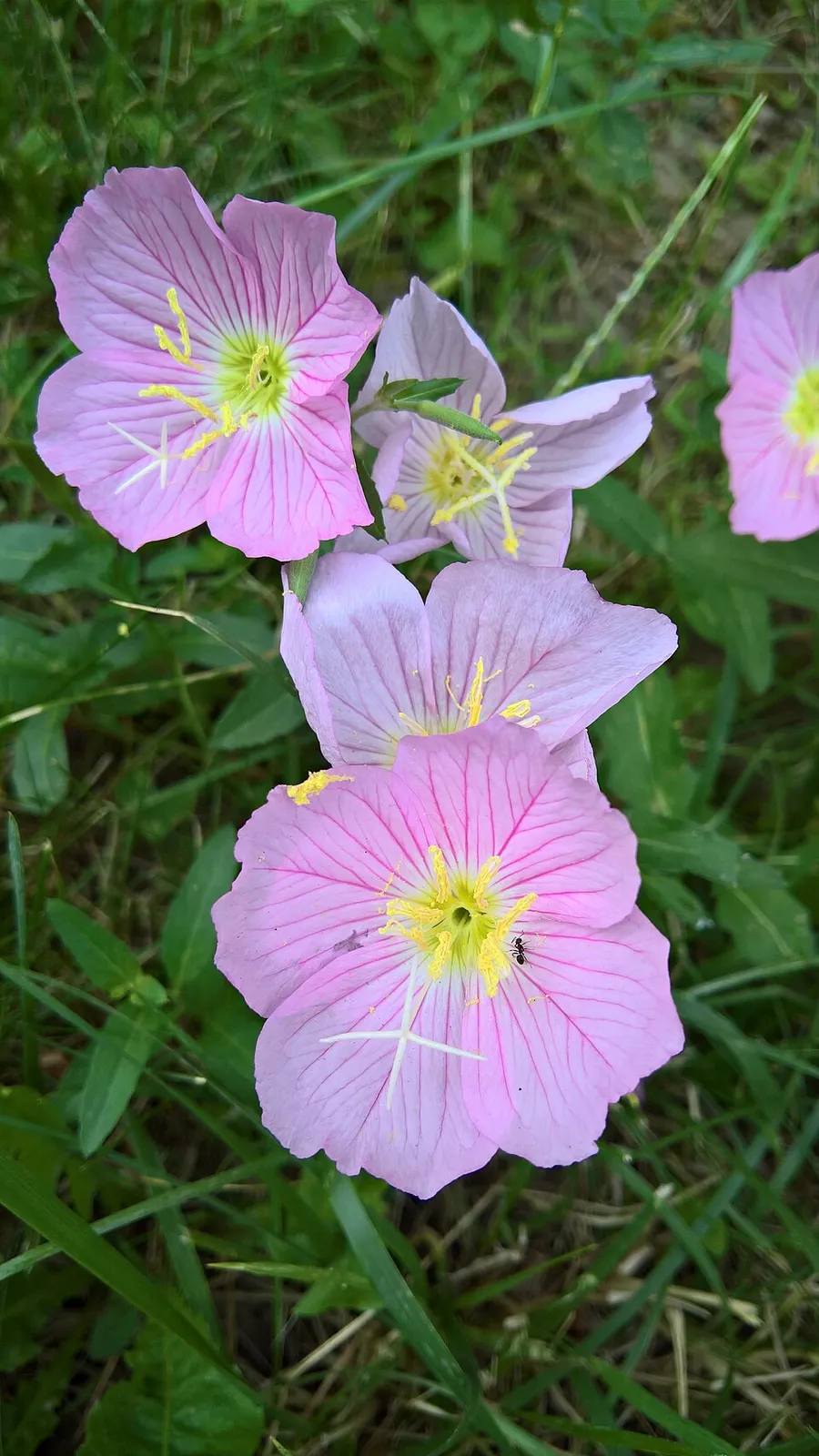
Oenothera speciosa, commonly known as Pink Evening Primrose, Showy Evening Primrose, or Pinkladies, is an enchanting and robust herbaceous perennial belonging to the Onagraceae family. Native to the southern and central United States, extending into Mexico, this species thrives across a wide range of challenging environments. Its morphology is characterized by lanceolate to oblanceolate leaves, which may be lobed or toothed, forming dense, spreading mats.
The plant typically reaches heights of 1 to 2 feet and spreads widely, making it an excellent groundcover. Its most striking feature is the delicate, cup-shaped flowers, which typically display hues from white to light pink, often accented with a yellow throat, with color intensity varying based on environmental factors like temperature and light. Uniquely, while many Oenothera species open their flowers in the evening, some populations of Oenothera speciosa, particularly in its southern range, open their blossoms in the morning, closing them by evening, adding to its whimsical charm.
This highly adaptable plant demonstrates remarkable resilience to drought and poor soil conditions, making it a favored choice for xeriscaping, rock gardens, and naturalized landscapes. Despite its delicate appearance, Oenothera speciosa is a vigorous grower and can form extensive colonies, sometimes requiring management to prevent overspreading. Its aesthetic appeal, hardiness, and role in attracting vital pollinators like bees and butterflies underscore its ecological and horticultural value.
Trusted Scientific References
1. Authoritative external sources for Oenothera speciosa
1.1 Wikipedia — Oenothera speciosa
1.2 Kew POWO (Plants of the World Online)
1.3 PubMed — peer-reviewed research
1.4 NCBI Taxonomy Browser
1.5 GBIF — Global Biodiversity
1.6Oenothera Speciosa should be interpreted through verified botanical identity, practical care, and responsible safety language. This recovery note adds the missing context needed for a complete profile: match light to the plant's habit, use well-drained soil, water according to season, and avoid unsupported medicinal or edible claims. For publishing, the plant can be presented as a source-backed garden plant with clear care guidance, common problem diagnosis, and conservative safety wording.
1.1.Oenothera Speciosa — Defining Traits
- ✓Botanical Name — Oenothera speciosa, commonly known as Pink Ladies or Showy Evening Primrose.
- ✓Family Affiliation — Belongs to the Onagraceae family (Evening Primrose family).
- ✓Native Range — Indigenous to the southern and central United States and Mexico.
- ✓Flower Characteristics — Produces charming, cup-shaped flowers, typically white to pink, sometimes opening in the morning.
- ✓Growth Habit — A spreading herbaceous perennial forming dense mats, capable of aggressive colonization.
- ✓Ecological Role — Attracts essential pollinators such as bees and butterflies, enhancing garden biodiversity.
- ✓Hardiness — Highly drought-tolerant and adaptable to various soil conditions, including poor and rocky soils.
- ✓Medicinal Distinction — While containing GLA, it is less studied and not commercially harvested for medicinal purposes compared to Oenenothera biennis.
- ✓Ornamental Value — Widely cultivated for its aesthetic appeal in xeriscapes, rock gardens, and naturalized landscapes.
- ✓Resilient Nature — Known for its robustness and ability to thrive in challenging environments.
1.2.Oenothera Speciosa — Snapshot Summary
- ✓Showy Evening Primrose is a hardy, ornamental perennial native to the central and southern US.
- ✓Valued for its delicate pink-to-white flowers and vigorous groundcover habit, attracting pollinators.
- ✓Contains Gamma-linolenic Acid (GLA) in its seeds, similar to Oenothera biennis.
- ✓Not typically harvested or marketed for medicinal properties; less studied than other Evening Primrose species.
- ✓Potential health benefits are largely extrapolated from GLA research on O. biennis, including anti-inflammatory and skin support.
- ✓Primarily used in landscaping for its beauty, adaptability, and ecological benefits.
2.Oenothera Speciosa — Systematic Position
3.Oenothera Speciosa — Botanical Stats
4.Oenothera Speciosa — Morphological Account
5.Oenothera Speciosa — Geographic Distribution
6.Oenothera Speciosa — Ethnobotanical Uses
While not as culturally significant as some other plants, Evening Primrose species in general have historically symbolized inconstancy or silence due to their ephemeral bloom. In some Native American traditions, various Oenothera species were used medicinally.
7.Oenothera Speciosa — Active Compounds
- ✓Gamma-linolenic Acid (GLA) — A key omega-6 essential fatty acid found in the seeds, crucial for prostaglandin synthesis and known for its anti-inflammatory properties, though less quantified in Oenothera speciosa than in O. biennis.
- ✓Linoleic Acid (LA) — Another essential omega-6 fatty acid, abundant in the seeds, serving as a precursor to GLA and vital for skin barrier function and overall health.
- ✓Oleic Acid — A monounsaturated omega-9 fatty acid present in the seed oil, contributing to its nutritional profile and stability.
- ✓Palmitic Acid — A saturated fatty acid commonly found in plant oils, providing structural components.
- ✓Stearic Acid — Another saturated fatty acid present in the seed oil, contributing to its overall fatty acid composition.
- ✓Flavonoids — A diverse group of polyphenolic compounds found in various plant parts, offering antioxidant and potential anti-inflammatory effects.
- ✓Phenolic Acids — Including compounds like gallic acid and caffeic acid derivatives, which contribute to the plant's antioxidant capacity and defense mechanisms.
- ✓Triterpenes — Natural compounds that may possess anti-inflammatory and adaptogenic properties, though their specific roles in O. speciosa require further investigation.
- ✓Phytosterols — Plant sterols such as beta-sitosterol, which can help support healthy cholesterol levels and contribute to the plant's overall bioactivity.
- ✓Carbohydrates — Sugars and starches present in the plant, providing energy and structural support.
- ✓Proteins — Essential amino acids found in the seeds and vegetative parts, vital for plant growth and potential nutritional value.
- ✓Minerals — Various trace elements and macronutrients absorbed from the soil, contributing to the plant's biochemical processes.
8.Oenothera Speciosa — What Research Suggests
- ✓Potential Anti-inflammatory Action — While specific research on Oenothera speciosa is limited compared to Oenothera biennis, its Gamma-linolenic Acid (GLA) content suggests a potential to modulate inflammatory responses by influencing prostaglandin synthesis, which is a key mechanism observed in other Evening Primrose species.
- ✓Supports Skin Health — The GLA found in Oenothera speciosa seeds, if extracted, could hypothetically contribute to maintaining skin barrier function and reducing dryness and irritation, similar to the well-documented effects of Evening Primrose Oil (EPO) from O. biennis.
- ✓Hormonal Balance Support — Extrapolating from the properties of GLA-rich oils, Oenothera speciosa could potentially offer support for symptoms associated with hormonal fluctuations, such as premenstrual syndrome (PMS) and menopausal discomfort, by assisting in the regulation of hormone-like substances.
- ✓Cardiovascular Well-being — The presence of essential fatty acids like GLA in Oenothera speciosa may contribute to cardiovascular health by supporting healthy cholesterol levels and maintaining arterial flexibility, though this specific species has not been clinically studied for these effects.
- ✓Nerve Function Support — Some research on GLA indicates a role in supporting healthy nerve function, which might suggest a potential, albeit unproven for O. speciosa, in addressing conditions like diabetic neuropathy.
- ✓Joint Comfort — Due to its potential anti-inflammatory properties from GLA, there is an extrapolated possibility that Oenothera speciosa could offer some relief for joint discomfort and stiffness, particularly in inflammatory conditions like rheumatoid arthritis.
- ✓Bone Density Maintenance — Preliminary studies on GLA suggest it may play a role in calcium absorption and bone health, providing a theoretical, unverified benefit for Oenothera speciosa in supporting bone density.
- ✓Immune System Modulation — Fatty acids, including GLA, are known to influence immune responses; therefore, Oenothera speciosa could theoretically contribute to modulating the immune system, though direct evidence for this species is lacking.
- ✓Antioxidant Activity — Like many plants, Oenothera speciosa likely contains phenolic compounds and other constituents that offer general antioxidant protection, helping to combat oxidative stress in the body.
- ✓Digestive Health — While not a primary use, some traditional uses of various Oenothera species have pointed towards mild digestive support, possibly due to fiber content or soothing compounds, though specific to O. speciosa this remains unexplored.
8.1.Oenothera Speciosa — Conditions Traditionally Used For
9.Oenothera Speciosa — Precautions & Warnings
9.1.Oenothera Speciosa — Possible Adverse Reactions
- ✓Digestive Upset — Ingestion of large quantities of seed oil, if extracted, may lead to mild gastrointestinal issues such as nausea, indigestion, or loose stools, similar to other Evening Primrose Oil products.
- ✓Headache — Some individuals may experience headaches as a side effect, particularly when first starting consumption of GLA-rich oils.
- ✓Allergic Reactions — Although rare, allergic reactions such as skin rashes, itching, or hives could occur in sensitive individuals.
- ✓Increased Bleeding Risk — Hypothetically, due to its fatty acid profile, Oenothera speciosa products could interfere with blood clotting, especially if taken with anticoagulant medications, similar to O. biennis.
- ✓Low Blood Pressure — There is a theoretical possibility of mild hypotension in some individuals, particularly those on blood pressure-lowering medications.
- ✓Seizure Risk — Individuals with a history of seizure disorders, especially those taking phenothiazines, should exercise caution as GLA might interact, though this is primarily observed with O. biennis.
9.2.Oenothera Speciosa — Toxicity Assessment
- ✓Pregnancy and Lactation — Due to insufficient specific data for Oenothera speciosa, its use is generally not recommended during pregnancy or breastfeeding, mirroring precautions for O. biennis.
- ✓Bleeding Disorders — Individuals with bleeding disorders or those undergoing surgery should avoid consuming products from Oenothera speciosa due to potential anticoagulant effects.
- ✓Drug Interactions — May interact with anticoagulant medications (e.g., warfarin, aspirin) and NSAIDs, potentially increasing the risk of bleeding.
- ✓Epilepsy/Seizure Disorders — Caution is advised for individuals with epilepsy or seizure disorders, particularly if taking phenothiazines, as GLA from O. biennis has shown potential interactions.
- ✓Allergic Sensitivity — Discontinue use if signs of an allergic reaction (e.g., rash, itching, swelling) occur.
- ✓Children — Lack of specific safety data for children; therefore, use in pediatric populations should be avoided or approached with extreme caution and medical guidance.
- ✓General Consumption — As Oenothera speciosa is not typically consumed medicinally, any internal use should be approached with caution and ideally under professional guidance.
10.Oenothera Speciosa — Preparation & Dosage
- ✓Ornamental Landscaping — Primarily valued for its aesthetic appeal, Oenothera speciosa is extensively used in gardens, xeriscapes, rock gardens, and naturalized areas for its beautiful flowers and groundcover capabilities.
- ✓Pollinator Attractor — Planted to attract and support local pollinator populations, including various species of bees and butterflies, contributing to biodiversity.
- ✓Erosion Control — Its vigorous, spreading root system makes it an effective plant for stabilizing soil and preventing erosion on slopes or disturbed lands.
- ✓Hypothetical Seed Oil Extraction — If Oenothera speciosa seeds were to be processed for their oil, similar to Oenothera biennis, the extracted oil, rich in GLA, could theoretically be used in dietary supplements, though this is not a commercial practice for this species.
- ✓Traditional Food Source (Limited) — While not a widespread practice for O. speciosa, young leaves and roots of some Oenothera species have historically been consumed as vegetables, though caution is advised due to lack of specific data for this species.
- ✓Herbal Infusions (Exploratory) — Infusions of the leaves or flowers, if prepared, might offer mild effects based on general plant constituents, but there is no established medicinal use or traditional knowledge for O. speciosa in this form.
- ✓Topical Applications (Potential) — Theoretically, an oil infused with Oenothera speciosa could be applied topically for skin soothing benefits, drawing parallels to O. biennis oil, but this lacks specific evidence.
11.Oenothera Speciosa — Propagation & Care
- ✓Sunlight — Prefers full sun to partial shade; ample sunlight encourages more profuse blooming.
- ✓Soil Type — Highly adaptable to various soil types, thriving in well-drained, sandy, or even poor, rocky soils; avoid heavy, waterlogged conditions.
- ✓Watering — Drought-tolerant once established, requiring minimal supplemental irrigation; overwatering can lead to root rot.
- ✓Propagation — Primarily propagates from seeds, which can be sown directly in fall or spring, or through division of established clumps in early spring or fall.
- ✓Spacing — Plant individuals 12-24 inches apart, as the plant spreads vigorously via rhizomes to form colonies.
- ✓Pruning — Deadhead spent flowers to encourage continuous blooming and prevent excessive self-seeding; cut back foliage in late fall or early spring for tidiness.
- ✓Pest and Disease Resistance — Generally robust and resistant to most common pests and diseases, making it a low-maintenance garden choice.
- ✓Management of Spread — Due to its aggressive spreading habit in ideal conditions, consider planting in areas where spread is acceptable or use root barriers to contain its growth.
Reviewed by the Flora Medical Global Botanical Review Panel
Multi-disciplinary editorial group · Botany · Ethnobotany · Herbal-medicine literature
Who reviewed this: This page was checked by the Flora Medical Global Botanical Review Panel — an in-house editorial group of botany graduates, ethnobotany researchers, and horticulture practitioners who collectively maintain our 7,000+ plant encyclopedia. Meet the team.
Our 4-step verification process
1. Taxonomic verification
Scientific names and synonyms cross-checked against Kew POWO, World Flora Online, and The Plant List.
2. Phytochemical & medicinal cross-reference
Active compounds, traditional uses, and reported activities are cross-referenced with PubMed, USDA Dr. Duke's database, and peer-reviewed ethnobotanical literature.
3. Conservation & distribution check
Distribution, ecology, and conservation status confirmed against GBIF occurrence records and the IUCN Red List.
4. Editorial & safety review
Every entry passes an editorial pass for clarity, originality, and safety notices (toxicity, contraindications, dosage caveats) before publication.
Last reviewed:
Important medical disclaimer: This content is for educational and research purposes only. It is not medical advice and is not a substitute for consultation with a licensed healthcare provider. Do not use any herb to self-treat a medical condition without professional guidance.
Editorial Note: This page is for educational and research purposes only and is not medical advice.
Written by: Flora Medical Global Editorial Team
Reviewed by: Flora Medical Global Botanical Review Panel
Last Updated: June 15, 2026





Oenothera Speciosa — Comments & Community Reviews
Rate this plant