
Medical Disclaimer: This content is for educational purposes only. It is not medical advice. Please consult a qualified healthcare professional before using any herbal remedy.
Safety Overview
1.Oncidium Orchid — Overview
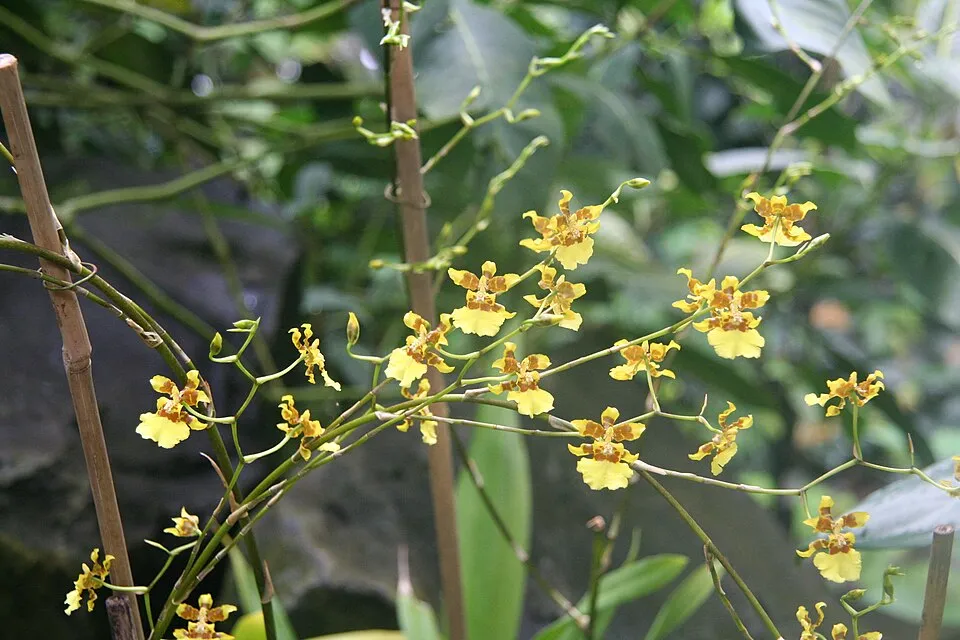
Oncidium sphacelatum, widely recognized as the Dancing Lady Orchid, is a captivating epiphytic orchid species celebrated for its vibrant and intricate floral displays. This perennial plant develops robust, ovoid to somewhat compressed pseudobulbs, typically light green to yellowish-green, which are crucial for storing water and nutrients.
From the apex of these pseudobulbs, a cluster of elongated, lanceolate to strap-shaped leaves emerges, showcasing a glossy, smooth texture and a rich green hue. These leaves can reach lengths of up to 30 cm (12 inches), forming a lush backdrop for the spectacular inflorescences.
The most striking feature is its impressive, branched flower spike, often extending 60 to 150 cm (2 to 5 feet) or more, capable of producing hundreds of small, bright yellow blooms simultaneously. Each flower, typically 2-3 cm across, features intricate reddish-brown to chestnut markings on its sepals and petals, and a prominent, often bilobed, bright yellow labellum (lip) that strikingly resembles a dancing figure, hence its common name.
The column, a fused reproductive structure, is also distinctly marked. Its root system is characteristic of epiphytic orchids, comprising thick, succulent aerial roots covered by a spongy layer called velamen, which efficiently absorbs moisture and nutrients from the air and rain.
Oncidium sphacelatum is native to the tropical and subtropical regions spanning from Mexico through Central America, including Guatemala, Honduras, El Salvador, and extending into southeastern Venezuela. It thrives in humid environments, typically growing on trees in open forests, where it receives filtered light and good air circulation.
As a member of the vast Orchidaceae family, it belongs to the Oncidiinae subtribe, a diverse group known for its complex taxonomy and significant ornamental appeal. While primarily valued for its aesthetic beauty, its botanical characteristics contribute to its ecological role in its native habitats.
Trusted Scientific References
1. Authoritative external sources for Oncidium sphacelatum
1.1 Wikipedia — Oncidium sphacelatum
1.2 Kew POWO (Plants of the World Online)
1.3 PubMed — peer-reviewed research
1.4 NCBI Taxonomy Browser
1.5 GBIF — Global Biodiversity
1.1.Oncidium Orchid — Key Features
- ✓Common Name — Dancing Lady Orchid.
- ✓Scientific Name — Oncidium sphacelatum.
- ✓Family — Orchidaceae.
- ✓Growth Habit — Epiphytic perennial with pseudobulbs.
- ✓Pseudobulbs — Ovoid to compressed, light green, for water/nutrient storage.
- ✓Leaves — Elongated, lanceolate to strap-shaped, glossy green.
- ✓Inflorescence — Tall, branched spikes, often exceeding 1.5 meters with numerous flowers.
- ✓Flowers — Bright yellow with reddish-brown markings, prominent bilobed labellum resembling a dancing figure.
- ✓Native Range — Mexico to Central America, extending to southeastern Venezuela.
- ✓Cultivation — Medium difficulty, preferring high humidity and indirect bright light.
1.2.Oncidium Orchid — Snapshot Summary
- ✓Oncidium sphacelatum, or Dancing Lady Orchid, is a stunning epiphytic orchid.
- ✓Native to Central America, it produces impressive, branched flower spikes with hundreds of yellow blooms.
- ✓Primarily valued globally for its exceptional ornamental beauty and intricate flowers.
- ✓Requires specific care regarding light, watering, temperature, and high humidity for optimal growth.
- ✓While orchids generally hold cultural significance, this species has limited documented traditional medicinal uses.
2.Oncidium Orchid — Taxonomic Classification
3.Oncidium Orchid — Quick Facts
4.Oncidium Orchid — Morphological Account
5.Oncidium Orchid — Geographic Distribution
6.Oncidium Orchid — Historical Applications
7.Oncidium Orchid — Bioactive Constituents
- ✓Flavonoids — A class of polyphenolic compounds, often found in the leaves and flowers of orchids, known for their antioxidant, anti-inflammatory, and potentially protective cellular activities.
- ✓Phenanthrenes — A group of unique secondary metabolites characteristic of the Orchidaceae family, some of which have demonstrated cytotoxic, anti-inflammatory, and neuroprotective properties in various orchid species.
- ✓Alkaloids — Nitrogen-containing organic compounds, present in trace amounts in many orchids, with diverse pharmacological activities such as analgesic or neuroactive effects, though specific to O. sphacelatum are not well-documented.
- ✓Terpenoids — A broad class of organic chemicals derived from isoprene units, contributing to the fragrance of orchid flowers and potentially acting as defense compounds against herbivores and pathogens.
- ✓Polysaccharides — Complex carbohydrates found in various plant parts, including pseudobulbs and roots, which can play roles in energy storage, structural support, and have been studied for potential immunomodulatory effects in other plant species.
- ✓Phytosterols — Plant sterols structurally similar to cholesterol, found in many plants, which may contribute to cell membrane stability and exhibit anti-inflammatory properties.
- ✓Lignans — Phenolic compounds that act as antioxidants and have been investigated for various biological activities, potentially present in the structural components of the plant.
- ✓Volatile Organic Compounds (VOCs) — Responsible for the characteristic scent of flowers, these compounds attract pollinators and may have minor antimicrobial or insect-repellent properties.
8.Oncidium Orchid — Modern Studies
- ✓Ornamental and Horticultural Therapy — Engaging with the cultivation and appreciation of Oncidium sphacelatum can promote mental well-being, reduce stress, and foster a sense of accomplishment through horticultural therapy.
- ✓Air Quality Enhancement — As a living plant, Oncidium sphacelatum contributes to indoor air purification by absorbing carbon dioxide and releasing oxygen, potentially improving ambient air quality in homes or offices.
- ✓Biophilic Connection — The presence of beautiful plants like the Dancing Lady Orchid can enhance human connection to nature, promoting psychological comfort and aesthetic pleasure, which are indirect health benefits.
- ✓Potential Antioxidant Activity (General Orchids) — While specific to Oncidium sphacelatum, research on other orchid species suggests the presence of flavonoids and phenanthrenes, which exhibit antioxidant properties that protect cells from oxidative stress.
- ✓Anti-inflammatory Potential (Orchid Family) — Certain compounds isolated from various orchids have demonstrated anti-inflammatory effects in vitro, suggesting a broader potential for the Orchidaceae family that warrants investigation in O. sphacelatum.
- ✓Immunomodulatory Interest (Orchid Polysaccharides) — Polysaccharides found in some orchid species are being explored for their potential to modulate immune responses, an area for future research regarding Oncidium sphacelatum.
- ✓Traditional Symbolism — Historically, orchids symbolize luxury, love, and strength in various cultures, offering cultural and spiritual benefits, though not directly medicinal for this specific species.
- ✓Educational Value — Cultivating and studying Oncidium sphacelatum provides educational benefits in botany, horticulture, and ecological understanding.
8.1.Oncidium Orchid — Health Applications
9.Oncidium Orchid — Adverse Effects
9.1.Oncidium Orchid — Caution Notes
- ✓Allergic Reactions — Contact with plant sap or pollen may cause mild skin irritation or allergic reactions in sensitive individuals.
- ✓Ingestion Risk — While not known to be toxic, ingestion of any non-food plant is generally not recommended and could lead to mild gastrointestinal upset.
- ✓Environmental Impact (Wild Collection) — Over-collection from natural habitats poses a significant threat to wild populations and ecosystem balance, though O. sphacelatum is primarily cultivated.
- ✓Pesticide Exposure — Commercially grown plants may have pesticide residues, necessitating careful handling, especially if not organically cultivated.
- ✓Respiratory Allergies — Airborne pollen, though less common with orchids than some other plants, could potentially trigger respiratory allergies in highly susceptible individuals.
- ✓Misidentification — Accidental misidentification with other orchid species could lead to unintended consequences if medicinal claims were erroneously applied.
9.2.Oncidium Orchid — Risk Assessment
- ✓Non-toxic for Ornamental Use — Generally regarded as safe for ornamental purposes, with no reported severe toxicity to humans or pets through casual contact.
- ✓Handle with Care — Individuals with sensitive skin should wear gloves when handling the plant, especially during repotting, to avoid potential minor irritation from sap.
- ✓Keep Out of Reach — Advised to keep away from small children and pets to prevent accidental ingestion, despite the lack of specific known toxicity for this species.
- ✓Sustainable Sourcing — Ensure plants are acquired from reputable growers who practice sustainable cultivation methods rather than supporting wild harvesting.
- ✓Consult Experts — For any consideration of medicinal application, which is not traditionally attributed to this species, consult a qualified medical herbalist or healthcare professional.
- ✓Environmental Conditions — Proper ventilation and humidity control are important for plant health, which indirectly contributes to a healthy indoor environment for humans.
10.Oncidium Orchid — How to Use
- ✓Ornamental Display — Primarily cultivated as an exquisite indoor or greenhouse ornamental plant due to its striking and long-lasting floral displays.
- ✓Cut Flower Arrangements — The impressive, tall inflorescences can be cut and used in floral arrangements, where they provide vibrant color and unique form for extended periods.
- ✓Botanical Collection — Valued by botanical gardens and private collectors for its beauty, species diversity, and educational potential as a representative of the Orchidaceae family.
- ✓Hybridization Programs — May be utilized in orchid breeding programs to introduce desirable traits such as flower size, color patterns, or vigor into new hybrid varieties.
- ✓Epiphytic Mounting — Can be grown mounted on bark or cork slabs, mimicking its natural epiphytic habit, which enhances aesthetic appeal and provides excellent air circulation for roots.
- ✓Educational Tool — Serves as an excellent subject for studying orchid biology, plant physiology, and horticultural practices due to its distinct morphological features and care requirements.
- ✓Therapeutic Horticulture — Cultivating and nurturing this orchid can contribute to therapeutic gardening practices, offering stress relief and a connection to nature.
11.Oncidium Orchid — Growing Guide
- ✓Watering — Allow the roots to dry out almost completely between watering sessions; thin-leaved varieties may require slightly more frequent watering to prevent dehydration.
- ✓Fertilization — Apply a balanced orchid fertilizer (e.g., 30-10-10 for bark media, 20-20-20 for other media) twice a month during active growth, reducing to monthly during cloudy periods.
- ✓Lighting — Provide ample indirect light, ideally between 2000-4000 footcandles; east-, west-, or south-facing windows with filtered light are suitable for indoor cultivation.
- ✓Potting Medium — Use a loose, well-draining, medium-grade mix, such as an equal blend of bark and sphagnum moss, or osmunda fern fiber, to accommodate its relatively fine roots.
- ✓Temperature — Maintain warm temperatures, ideally around 24-27°C (75-80°F) during the day, consistent with its tropical native habitat.
- ✓Humidity — Requires high humidity, which can be achieved through humidifiers, humidity trays, or grouping plants in a suitable environment.
- ✓Container — Select pots with multiple drainage holes and good airflow, such as net pots or clear plastic orchid pots, to prevent root rot.
- ✓Hardiness Zone — Best suited for USDA hardiness zones 11.
Reviewed by the Flora Medical Global Botanical Review Panel
Multi-disciplinary editorial group · Botany · Ethnobotany · Herbal-medicine literature
Who reviewed this: This page was checked by the Flora Medical Global Botanical Review Panel — an in-house editorial group of botany graduates, ethnobotany researchers, and horticulture practitioners who collectively maintain our 7,000+ plant encyclopedia. Meet the team.
Our 4-step verification process
1. Taxonomic verification
Scientific names and synonyms cross-checked against Kew POWO, World Flora Online, and The Plant List.
2. Phytochemical & medicinal cross-reference
Active compounds, traditional uses, and reported activities are cross-referenced with PubMed, USDA Dr. Duke's database, and peer-reviewed ethnobotanical literature.
3. Conservation & distribution check
Distribution, ecology, and conservation status confirmed against GBIF occurrence records and the IUCN Red List.
4. Editorial & safety review
Every entry passes an editorial pass for clarity, originality, and safety notices (toxicity, contraindications, dosage caveats) before publication.
Last reviewed:
Important medical disclaimer: This content is for educational and research purposes only. It is not medical advice and is not a substitute for consultation with a licensed healthcare provider. Do not use any herb to self-treat a medical condition without professional guidance.
Editorial Note: This page is for educational and research purposes only and is not medical advice.
Written by: Flora Medical Global Editorial Team
Reviewed by: Flora Medical Global Botanical Review Panel
Last Updated: June 15, 2026





Oncidium Orchid — Comments & Community Reviews
Rate this plant