
Medical Disclaimer: This content is for educational purposes only. It is not medical advice. Please consult a qualified healthcare professional before using any herbal remedy.
Safety Overview
1.Oncidium Twinkle — Botanical Snapshot
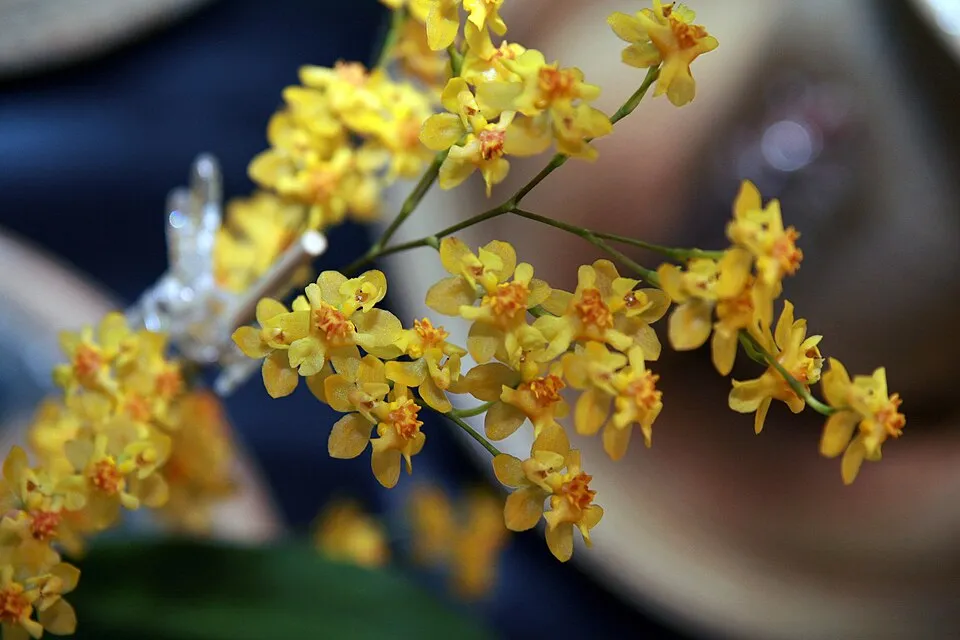
Oncidium Twinkle, commonly celebrated as the Dancing Lady Orchid, is a captivating and compact hybrid within the expansive Orchidaceae family. This epiphytic orchid typically achieves a modest height of 30 to 45 centimeters, presenting slender, elongated leaves that can extend up to 30 centimeters in length. The foliage is a vibrant green, strap-like, and forms an elegant backdrop for its prolific floral display. The plant generates gracefully arching spikes adorned with numerous small flowers, clustered densely.
Individual blossoms measure approximately 2 to 3 centimeters across, characterized by a striking yellow base often accentuated with maroon markings. A distinctive feature of Oncidium Twinkle is its sweet, pervasive vanilla-like fragrance, which significantly enhances its appeal, particularly in indoor environments. This orchid traces its lineage to the tropical and subtropical regions of Central and South America, where its parent species thrive in warm, humid conditions. In its natural setting, Oncidium Twinkle, like many epiphytes, gracefully attaches itself to trees, absorbing essential moisture and nutrients from the ambient air and accumulated organic detritus.
Its stems are characteristically slender and pseudobulbous, contributing to the plant's overall elegant and delicate stature. Taxonomically, Oncidium belongs to a vast and highly diverse genus renowned for its extensive hybridization, making Oncidium Twinkle a successful horticultural hybrid specifically bred for its aesthetic qualities and manageable size.
Trusted Scientific References
1. Authoritative external sources for Oncidium Twinkle
1.1 Wikipedia — Oncidium Twinkle
1.2 Kew POWO (Plants of the World Online)
1.3 PubMed — peer-reviewed research
1.4 NCBI Taxonomy Browser
1.5 GBIF — Global Biodiversity
1.6Oncidium Twinkle should be interpreted through verified botanical identity, practical care, and responsible safety language. This recovery note adds the missing context needed for a complete profile: match light to the plant's habit, use well-drained soil, water according to season, and avoid unsupported medicinal or edible claims. For publishing, the plant can be presented as a source-backed indoor plant with clear care guidance, common problem diagnosis, and conservative safety wording.
1.1.Oncidium Twinkle — Highlights
- ✓Scientific Name — Oncidium Twinkle
- ✓Common Name — Dancing Lady Orchid
- ✓Family — Orchidaceae
- ✓Distinctive Fragrance — Sweet vanilla or sugar cookie scent
- ✓Flower Colors — Varieties include red, pink, white, yellow, and cinnamon hues
- ✓Bloom Season — Primarily winter, but can be free-flowering with new growth maturation
- ✓Growth Habit — Compact, epiphytic hybrid with pseudobulbs
- ✓Native Region — Tropical and subtropical Central and South America (parent species)
- ✓Care Level — Relatively low maintenance, considered easy to grow indoors
- ✓Aesthetic Value — Highly prized for its beautiful, abundant floral displays and pleasant aroma
1.2.Oncidium Twinkle — In Brief
- ✓Oncidium Twinkle is a compact, fragrant orchid known for its vanilla-scented blooms.
- ✓Primarily an ornamental plant, highly valued for its aesthetic appeal and mood-enhancing qualities.
- ✓An easy-going hybrid, making it suitable for indoor cultivation by both novice and experienced growers.
- ✓Thrives in bright, indirect light, consistent moisture, and moderate to high humidity.
- ✓While not specifically researched, general orchids are referenced in traditional medicine for respiratory and immune support.
- ✓Lacks specific scientific or clinical research to support direct medicinal applications for human consumption.
2.Oncidium Twinkle — Scientific Identity
3.Oncidium Twinkle — Vital Statistics
4.Oncidium Twinkle — Botanical Description
5.Oncidium Twinkle — Ecological Habitat
6.Oncidium Twinkle — Folk Medicine Applications
7.Oncidium Twinkle — Chemical Profile
- ✓Flavonoids — These are potent antioxidants and anti-inflammatory compounds, commonly found in many plants, including orchids, contributing to cellular protection and potentially reducing oxidative stress.
- ✓Terpenoids — Responsible for the characteristic sweet vanilla fragrance of Oncidium Twinkle, these volatile organic compounds can also exhibit various biological activities, including anti-inflammatory and antimicrobial properties in other plant species.
- ✓Alkaloids — While typically present in trace amounts, various alkaloids are found across the Orchidaceae family, known for their diverse pharmacological effects, from analgesic to antimalarial, though specific roles in Oncidium Twinkle are not defined.
- ✓Polysaccharides — Complex carbohydrates, often found in the pseudobulbs of medicinal orchids, are recognized for their immunomodulatory and adaptogenic properties, supporting the body's natural defenses.
- ✓Phenolic Acids — These compounds, including derivatives of cinnamic and benzoic acids, are strong antioxidants and contribute to the plant's defense mechanisms, potentially offering health benefits.
- ✓Glycosides — A broad group of compounds where a sugar molecule is attached to a non-sugar component, often contributing to the plant's color, defense, and potentially various biological activities.
- ✓Volatile Organic Compounds (VOCs) — Beyond terpenoids, other VOCs contribute to the complex aroma profile of Oncidium Twinkle, playing a role in attracting pollinators and potentially influencing human mood and well-being.
- ✓Phytosterols — Plant sterols are structurally similar to cholesterol and are known for potential anti-inflammatory effects and their role in plant membrane stability, found in various plant tissues.
- ✓Anthocyanins — These pigments are responsible for the maroon markings on the yellow base of the flowers, acting as antioxidants and playing a role in attracting pollinators.
8.Oncidium Twinkle — Evidence-Based Benefits
- ✓Mood Enhancement — The delicate beauty and sweet vanilla fragrance of Oncidium Twinkle are known to positively influence mood and create a calming ambiance, contributing to psychological well-being.
- ✓Stress Reduction — The aesthetic pleasure derived from observing its beautiful blooms and enjoying its pleasant scent can act as a natural stress reliever, promoting relaxation.
- ✓Air Purification (General Plant Property) — Like many houseplants, Oncidium Twinkle can contribute to improved indoor air quality by absorbing certain common airborne toxins, though specific studies on this orchid are limited.
- ✓Respiratory Support (Traditional Orchid Use) — In Traditional Chinese Medicine (TCM), certain orchids within the Orchidaceae family are traditionally associated with properties that may support lung function and overall respiratory health, though specific to Oncidium Twinkle is not documented.
- ✓Immune Modulation (Traditional Orchid Use) — Some orchid species are historically believed to possess compounds that could help modulate the immune system, a general attribution within traditional systems that may extend to the broader family.
- ✓Anti-inflammatory Potential (General Orchidaceae) — Phytochemicals found in various orchid species, such as flavonoids and phenolics, suggest a potential for anti-inflammatory effects, though direct evidence for Oncidium Twinkle is lacking.
- ✓Cognitive Well-being — Engaging with plants, including ornamental orchids, has been linked to improved concentration, reduced mental fatigue, and an overall boost in cognitive function through a connection with nature.
- ✓Aesthetic Therapy — The presence of living, blooming plants like Oncidium Twinkle in living or working spaces is recognized to enhance environments, fostering a sense of peace and natural beauty that can be therapeutically beneficial.
- ✓Antioxidant Activity (Hypothetical) — Based on the common presence of phenolic compounds in plants, Oncidium Twinkle may contain antioxidants, which are beneficial for cellular health, though this is not specifically researched for this hybrid.
8.1.Oncidium Twinkle — Health Applications
9.Oncidium Twinkle — Safety Considerations
9.1.Oncidium Twinkle — Caution Notes
- ✓Allergic Reactions — Individuals sensitive to plant fragrances or pollen may experience respiratory irritation or allergic responses from the strong vanilla scent.
- ✓Contact Dermatitis — Direct contact with the plant's sap or leaves could potentially cause mild skin irritation or allergic reactions in sensitive individuals.
- ✓Ingestion Toxicity (Unknown) — The safety of ingesting any part of Oncidium Twinkle is unknown and not recommended due to a lack of research.
- ✓Gastrointestinal Upset (Hypothetical) — Accidental ingestion could lead to digestive discomfort, nausea, or vomiting, as with many ornamental plants.
- ✓Drug Interactions (Unstudied) — Given the lack of research on its chemical constituents and internal use, potential interactions with medications are unknown and should be considered.
- ✓Environmental Stress — Improper care (e.g., overwatering, insufficient light) can lead to plant decline, fungal spots on leaves, or dry tips, which are aesthetic issues for the plant itself.
9.2.Oncidium Twinkle — Safety Overview
- ✓Ornamental Use Only — Oncidium Twinkle is primarily an ornamental plant; its internal medicinal use is not supported by scientific research and is not recommended.
- ✓Keep Out of Reach — To prevent accidental ingestion, ensure the plant is kept away from children and pets.
- ✓Consult Healthcare Professional — If considering any traditional or unresearched internal use, consult a qualified medical herbalist or healthcare provider.
- ✓Patch Test for Topical Use — If any topical application is considered (even for other orchid species), perform a patch test to check for skin sensitivity.
- ✓Pregnancy and Lactation — Avoid all internal use during pregnancy and lactation due to insufficient safety data.
- ✓Allergy Awareness — Individuals with known plant allergies or sensitivities to fragrances should exercise caution when around blooming Oncidium Twinkle plants.
- ✓Proper Handling — Wear gloves if sensitive to plant sap to prevent potential skin irritation, though this is rare for Oncidium Twinkle.
10.Oncidium Twinkle — Preparation Methods
- ✓Aromatic Diffusion — Place blooming Oncidium Twinkle plants in living spaces to naturally diffuse their sweet vanilla fragrance, enhancing mood and promoting relaxation through passive aromatherapy.
- ✓Environmental Enrichment — Utilize the plant's aesthetic appeal as a focal point in indoor decor to create a calming and visually appealing environment, contributing to overall well-being.
- ✓Traditional Orchid Decoction (Hypothetical) — Following traditional practices for other medicinal orchids, a decoction of dried pseudobulbs might be prepared for internal use, though specific efficacy for Oncidium Twinkle is unresearched.
- ✓Topical Poultice (Traditional Orchid Use) — In some traditional systems, crushed pseudobulbs of certain orchids are applied topically as a poultice for localized discomfort or skin issues, a practice not verified for Oncidium Twinkle.
- ✓Botanical Display — Incorporate Oncidium Twinkle into botanical gardens or educational displays to showcase its unique morphology, floral characteristics, and the diversity of the Orchidaceae family.
- ✓Plant-based Art/Design — Use the plant's graceful form and vibrant flowers as inspiration or elements in floral arrangements and botanical art, leveraging its natural beauty.
11.Oncidium Twinkle — Garden Cultivation
- ✓Light — Provide bright, indirect light; east or west-facing windows are ideal. Leaves should be light green; yellowing indicates too much light, dark green suggests insufficient light for optimal blooming.
- ✓Temperature — Maintain indoor temperatures between 55-85°F (13-29°C), with a slight diurnal drop to encourage flowering.
- ✓Humidity — Prefers moderate to high humidity, around 40-60%. Can tolerate temporary dips, but consistent low humidity may cause dry leaf tips.
- ✓Watering — Oncidium Twinkle is a thirsty orchid, especially during active growth. Water frequently, allowing the media to dry slightly between waterings. Reduce frequency during its winter rest period.
- ✓Potting Media — Use a well-draining yet moisture-retentive mix such as small bark, sphagnum moss, or a blend of inorganic components like kanama, akadama, and perlite.
- ✓Repotting — Repot when new root growth emerges from new pseudobulbs or when the plant outgrows its pot, typically every 1-2 years. Be gentle with the fine root system to avoid setting the plant back.
- ✓Fertilization — Fertilize regularly during active growth with a balanced orchid fertilizer (e.g., MSU formula at 100 ppm), adjusting water pH to around 6.5. Flush the media monthly with plain water to prevent salt buildup.
- ✓Blooming — Spikes can take 3-6 months to develop into flowers. Blooms typically appear in winter and last about a month, emitting a strong vanilla scent. Cooler temperatures can enhance flower vibrancy and longevity.
Reviewed by the Flora Medical Global Botanical Review Panel
Multi-disciplinary editorial group · Botany · Ethnobotany · Herbal-medicine literature
Who reviewed this: This page was checked by the Flora Medical Global Botanical Review Panel — an in-house editorial group of botany graduates, ethnobotany researchers, and horticulture practitioners who collectively maintain our 7,000+ plant encyclopedia. Meet the team.
Our 4-step verification process
1. Taxonomic verification
Scientific names and synonyms cross-checked against Kew POWO, World Flora Online, and The Plant List.
2. Phytochemical & medicinal cross-reference
Active compounds, traditional uses, and reported activities are cross-referenced with PubMed, USDA Dr. Duke's database, and peer-reviewed ethnobotanical literature.
3. Conservation & distribution check
Distribution, ecology, and conservation status confirmed against GBIF occurrence records and the IUCN Red List.
4. Editorial & safety review
Every entry passes an editorial pass for clarity, originality, and safety notices (toxicity, contraindications, dosage caveats) before publication.
Last reviewed:
Important medical disclaimer: This content is for educational and research purposes only. It is not medical advice and is not a substitute for consultation with a licensed healthcare provider. Do not use any herb to self-treat a medical condition without professional guidance.
Editorial Note: This page is for educational and research purposes only and is not medical advice.
Written by: Flora Medical Global Editorial Team
Reviewed by: Flora Medical Global Botanical Review Panel
Last Updated: June 15, 2026





Oncidium Twinkle — Comments & Community Reviews
Rate this plant