
Medical Disclaimer: This content is for educational purposes only. It is not medical advice. Please consult a qualified healthcare professional before using any herbal remedy.
Safety Overview
1.Devils Club — Plant Snapshot
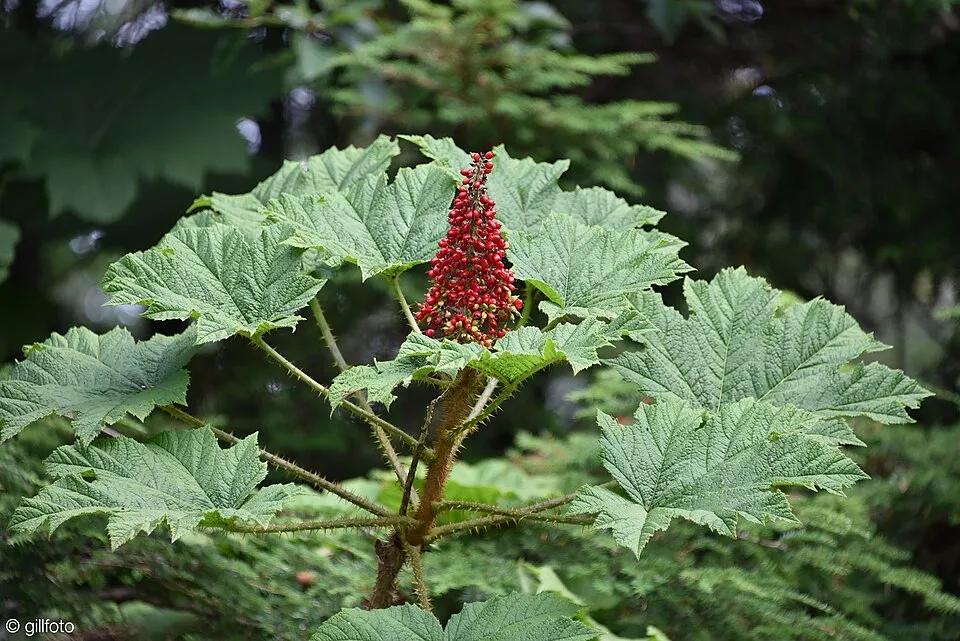
Devils Club (Oplopanax horridus) is a strikingly unique deciduous shrub native to the dense, moist understory of temperate rainforests across the Pacific Northwest of North America, ranging from Alaska through British Columbia, Washington, Oregon, and extending into parts of Idaho and Montana. This member of the Araliaceae family, a close botanical relative to the esteemed ginseng (Panax species), typically grows to heights of 1.5 to 3 meters, though it can occasionally reach up to 5 meters. Its most distinguishing feature is its formidable armature: the stems are densely covered with sharp, yellowish spines, giving the plant its 'horridus' epithet and common name.
The large, palmate leaves can span up to 30 centimeters in width, deeply lobed with serrated margins, and also bear spines on their undersides and petioles. In late spring to early summer, Oplopanax horridus produces terminal clusters of small, greenish-white flowers arranged in dense, rounded inflorescences, which later mature into bright red, inedible berries in late summer or early autumn. The bark is generally light brown and relatively smooth when young, becoming more fibrous and textured with age.
It thrives in shaded, damp environments, often found along stream banks, in boggy areas, and within old-growth forests, where it frequently forms dense, clonal thickets through layering.
Trusted Scientific References
1. Authoritative external sources for Oplopanax horridus
1.1 Wikipedia — Oplopanax horridus
1.2 Kew POWO (Plants of the World Online)
1.3 PubMed — peer-reviewed research
1.4 NCBI Taxonomy Browser
1.5 GBIF — Global Biodiversity
1.6Devils Club should be interpreted through verified botanical identity, practical care, and responsible safety language. This recovery note adds the missing context needed for a complete profile: match light to the plant's habit, use well-drained soil, water according to season, and avoid unsupported medicinal or edible claims. For publishing, the plant can be presented as a source-backed medicinal plant with clear care guidance, common problem diagnosis, and conservative safety wording.
1.1.Devils Club — Key Features
- ✓Distinctive Spiny Morphology — Covered in prominent, sharp spines on stems, leaves, and petioles.
- ✓Araliaceae Family Member — Botanical relative of ginseng, often called 'Alaskan ginseng'.
- ✓Pacific Northwest Endemic — Native to the temperate rainforests of western North America.
- ✓Ethnobotanical Significance — Deeply valued in traditional Native American medicine for diverse ailments.
- ✓Rich Phytochemistry — Contains unique polyynes, saponins, lignans, and other bioactive compounds.
- ✓Blood Sugar Modulator — Traditional use and research point to its role in glucose regulation.
- ✓Anti — inflammatory Powerhouse — Potent compounds target inflammatory pathways.
- ✓Antimicrobial Activity — Exhibits properties against certain bacteria and microbes.
- ✓Adaptogenic Potential — May help the body adapt to stress, similar to other Araliaceae species.
- ✓Caution Required — Potent plant with specific contraindications and side effects.
1.2.Devils Club — At-a-Glance Summary
- ✓Pacific Northwest native shrub known for its spiny stems and medicinal uses.
- ✓Closely related to ginseng, sharing some adaptogenic qualities.
- ✓Traditionally used by Native Americans for diabetes, inflammation, and infections.
- ✓Rich in polyynes and saponins, contributing to its diverse bioactivities.
- ✓Current research explores its anti-inflammatory, antimicrobial, and anticancer potential.
- ✓Requires careful preparation and dosage due to potential side effects and contraindications.
2.Devils Club — Scientific Profile
3.Devils Club — Reference Facts
4.Devils Club — Plant Morphology
5.Devils Club — Geographic Distribution
6.Devils Club — Ethnobotanical Uses
7.Devils Club — Bioactive Constituents
- ✓Polyynes — These acetylenic compounds, such as oplopantriol A and B, are considered key bioactive components of Oplopanax horridus. They are primarily responsible for the plant's noted antibacterial and potential anticancer activities, exhibiting cytotoxic effects against various cell lines.
- ✓Saponins — Triterpenoid saponins are abundant, particularly in the root and bark. These compounds are extensively studied for their adaptogenic properties and are believed to contribute to the plant's traditional use in blood sugar regulation by mimicking insulin or enhancing insulin sensitivity.
- ✓Lignans — Present in the extracts, lignans are phenolic compounds known for their antioxidant and anti-inflammatory properties. They may contribute to the overall therapeutic profile of Devils Club.
- ✓Glycosides — Various glycosides are isolated from Oplopanax horridus, playing roles in diverse biological activities. These compounds typically consist of a sugar molecule attached to a non-sugar component, influencing solubility and bioavailability.
- ✓Polyenes — Similar to polyynes, polyenes are unsaturated organic compounds that contribute to the plant's phytochemical complexity and potential bioactivity, although they are less studied than the polyynes.
- ✓Volatile Compounds — The essential oil of Devils Club contains a range of volatile compounds, including terpenes and other aromatic constituents, which may contribute to its antimicrobial properties and characteristic aroma.
- ✓Flavonoids — These widely distributed plant pigments possess significant antioxidant, anti-inflammatory, and cardioprotective effects, supporting the plant's overall health benefits.
- ✓Phenolic Acids — Derivatives like caffeic acid and chlorogenic acid are found, contributing to the plant's antioxidant capacity and potentially its anti-inflammatory actions.
8.Devils Club — Modern Studies
- ✓Blood Sugar Regulation — Devils Club has been traditionally utilized to help stabilize blood glucose levels, with modern research investigating its potential insulin-mimetic properties due to certain saponins.
- ✓Anti-inflammatory Action — Its bioactive compounds, particularly polyynes, contribute to significant anti-inflammatory effects, making it a traditional remedy for conditions like arthritis and general joint pain.
- ✓Antimicrobial Properties — Extracts from Oplopanax horridus have demonstrated antibacterial activity, which historically supported its use in treating infections and for wound care.
- ✓Respiratory Support — Indigenous peoples traditionally employed Devils Club decoctions for alleviating symptoms of respiratory ailments such as coughs and pneumonia.
- ✓Gastrointestinal Health — Historically, it was used to address various digestive issues, including as a laxative or emetic, and for managing diarrhea, though careful preparation was crucial.
- ✓Potential Anticancer Effects — Recent pharmacological studies have begun to explore the anticancer properties of Devils Club, focusing on specific mechanisms of action exhibited by its polyynes.
- ✓Cardiovascular Support — Traditional applications included its use in managing certain cardiovascular concerns, though further scientific validation is required.
- ✓General Tonic and Adaptogen — Often considered an adaptogenic herb, similar to ginseng, it was used to enhance overall vitality, energy, and resilience to stress.
- ✓Skin Conditions Treatment — Applied topically as poultices, the plant's bark was used to treat various skin issues, rashes, and localized infections.
- ✓Pain Management — Its anti-inflammatory and potentially analgesic properties made it a valuable botanical for alleviating various types of pain.
- ✓Immunomodulation — Some traditional uses suggest a role in strengthening the immune system, particularly against colds and fevers.
8.1.Devils Club — Therapeutic Indications
9.Devils Club — Risk Profile
9.1.Devils Club — Possible Adverse Reactions
- ✓Gastrointestinal Upset — May cause nausea, vomiting, or diarrhea in sensitive individuals or with excessive doses.
- ✓Skin Irritation — Direct contact with the plant's spines can cause painful punctures and localized skin irritation.
- ✓Allergic Reactions — Potential for allergic responses, including skin rashes or respiratory symptoms, in susceptible individuals.
- ✓Hypoglycemia — Individuals on antidiabetic medications should use with caution due to potential additive blood sugar-lowering effects.
- ✓Hypotension — May lower blood pressure, interacting with antihypertensive medications.
- ✓Uterine Stimulation — Traditionally used as an abortifacient, thus contraindicated in pregnancy.
- ✓Drug Interactions — Potential to interact with medications metabolized by the liver or affecting blood clotting.
9.2.Devils Club — Safety Overview
- ✓Pregnancy and Lactation — Contraindicated during pregnancy due to potential uterine stimulating effects; avoid during lactation due to insufficient safety data.
- ✓Diabetes Management — Use with extreme caution by individuals with diabetes, especially those on medication, due to potential for hypoglycemia; monitor blood sugar closely.
- ✓Blood Pressure Issues — Individuals with low blood pressure or on antihypertensive drugs should exercise caution due to possible hypotensive effects.
- ✓Children — Not recommended for use in children due to lack of safety data and potential for adverse effects.
- ✓Surgery — Discontinue use at least two weeks prior to any scheduled surgery due to potential effects on blood clotting.
- ✓Gastrointestinal Sensitivity — Start with low doses to assess tolerance, particularly for individuals prone to stomach upset.
- ✓Allergic History — Individuals with known allergies to plants in the Araliaceae family should avoid Devils Club.
10.Devils Club — Application Forms
- ✓Decoction — The inner bark or roots are simmered in water for an extended period to extract therapeutic compounds, commonly used for internal ailments like diabetes or inflammation.
- ✓Tincture — Plant material (inner bark or root) is macerated in alcohol and water, producing a concentrated liquid extract for convenient dosing.
- ✓Infusion — Dried leaves or inner bark are steeped in hot water, similar to tea, often used for respiratory conditions or as a general tonic.
- ✓Poultice — Freshly crushed or ground bark and leaves are applied directly to the skin for localized treatment of wounds, skin infections, or arthritic pain.
- ✓Topical Oil/Salve — Infused oils or salves made from the bark can be used for external application to soothe skin irritations or joint discomfort.
- ✓Chewing — Traditionally, small pieces of inner bark were sometimes chewed for immediate effects or as a preventive measure.
- ✓Ceremonial Use — Employed by indigenous cultures in spiritual practices for cleansing and protection, often involving smoke or washes.
11.Devils Club — Growing Guide
- ✓Site Selection — Prefers cool, moist, shaded locations, mimicking its natural understory habitat; avoid direct sunlight.
- ✓Soil Requirements — Thrives in rich, well-drained, acidic to neutral soil with high organic matter content.
- ✓Propagation — Primarily propagated by seed or vegetatively through root cuttings or layering, which is common in its natural clonal growth.
- ✓Water Needs — Requires consistent moisture; supplemental watering is crucial during dry periods, especially for young plants.
- ✓Pests and Diseases — Generally robust, but monitor for common forest pests and fungal issues in overly damp conditions.
- ✓Harvest — Bark and roots are typically harvested in spring or fall, ensuring sustainable practices to allow for regrowth.
- ✓Climate — Best suited for USDA Hardiness Zones 4-8, tolerating cold winters and cool summers.
Reviewed by the Flora Medical Global Botanical Review Panel
Multi-disciplinary editorial group · Botany · Ethnobotany · Herbal-medicine literature
Who reviewed this: This page was checked by the Flora Medical Global Botanical Review Panel — an in-house editorial group of botany graduates, ethnobotany researchers, and horticulture practitioners who collectively maintain our 7,000+ plant encyclopedia. Meet the team.
Our 4-step verification process
1. Taxonomic verification
Scientific names and synonyms cross-checked against Kew POWO, World Flora Online, and The Plant List.
2. Phytochemical & medicinal cross-reference
Active compounds, traditional uses, and reported activities are cross-referenced with PubMed, USDA Dr. Duke's database, and peer-reviewed ethnobotanical literature.
3. Conservation & distribution check
Distribution, ecology, and conservation status confirmed against GBIF occurrence records and the IUCN Red List.
4. Editorial & safety review
Every entry passes an editorial pass for clarity, originality, and safety notices (toxicity, contraindications, dosage caveats) before publication.
Last reviewed:
Important medical disclaimer: This content is for educational and research purposes only. It is not medical advice and is not a substitute for consultation with a licensed healthcare provider. Do not use any herb to self-treat a medical condition without professional guidance.
Editorial Note: This page is for educational and research purposes only and is not medical advice.
Written by: Flora Medical Global Editorial Team
Reviewed by: Flora Medical Global Botanical Review Panel
Last Updated: June 15, 2026





Devils Club — Comments & Community Reviews
Rate this plant