

Medical Disclaimer: This content is for educational purposes only. It is not medical advice. Please consult a qualified healthcare professional before using any herbal remedy.
Safety Overview
1.Orbea — Plant Snapshot
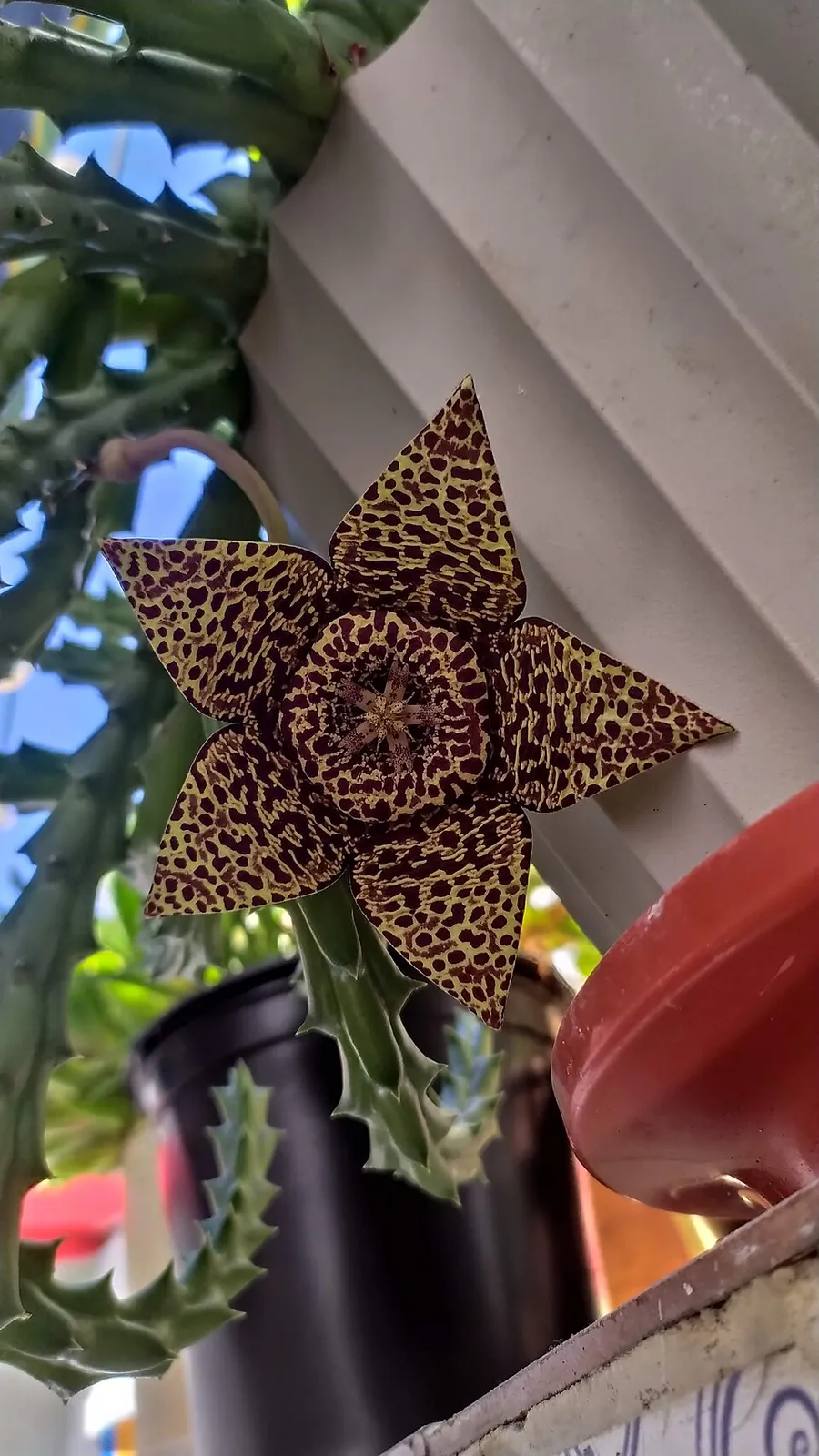
Orbea variegata, commonly known as the starfish flower or carrion flower, is a captivating succulent perennial native to the arid and semi-arid regions of South Africa. This intriguing member of the Apocynaceae family, specifically within the subfamily Asclepiadoideae and tribe Ceropegieae, showcases a remarkable morphology perfectly adapted to its dry native habitat. The plant typically forms low-growing, clumping mats, with its fleshy, four-angled stems usually reaching heights of 4 to 8 inches (10 to 20 cm) and spreading up to 20 inches (50 cm) wide.
These green to grayish-green stems are often mottled with purple or reddish hues when exposed to ample sunlight, and are adorned with soft, tooth-like protuberances along their edges, representing highly reduced, vestigial leaves. The root system is typically shallow and fibrous, optimized for efficient absorption of infrequent surface moisture.
The most striking feature of Orbea variegata is its intricate flowers, which typically emerge in late summer and autumn. These star-shaped blossoms, measuring approximately 2 to 3 inches (5 to 8 cm) in diameter, display a mesmerizing pattern of deep maroon or purple blotches and speckles on a pale yellow or creamy-white background. The flower surface often has a velvety or papillose texture, and while visually appealing, they are infamous for emitting a faint, carrion-like scent.
This unique aroma is a clever evolutionary strategy to attract flies, which serve as its primary pollinators. When successfully pollinated, the plant produces twin follicles, which are horn-like pods containing numerous seeds, each equipped with a tuft of silky hairs for efficient wind dispersal. Taxonomically, Orbea variegata is closely related to genera like Stapelia and Huernia, sharing similar growth habits and distinctive floral characteristics.
Its natural distribution spans the coastal belt of the Western Cape, Eastern Cape, and Northern Cape provinces of South Africa, where it thrives in rocky outcrops and dry grasslands.
Trusted Scientific References
1. Authoritative external sources for Orbea variegata
1.1 Wikipedia — Orbea variegata
1.2 Kew POWO (Plants of the World Online)
1.3 PubMed — peer-reviewed research
1.4 NCBI Taxonomy Browser
1.5 GBIF — Global Biodiversity
1.1.Orbea — Key Features
- ✓Common Names — Starfish Flower, Carrion Flower, Toad Cactus, Starfish Cactus.
- ✓Scientific Name — Orbea variegata.
- ✓Family — Apocynaceae (Subfamily Asclepiadoideae, Tribe Ceropegieae).
- ✓Native Region — Western Cape, Eastern Cape, and Northern Cape provinces of South Africa.
- ✓Growth Habit — Low-growing, clumping succulent perennial with fleshy, four-angled stems.
- ✓Flowers — Star-shaped, intricate patterns of maroon on pale yellow/white, emitting a carrion-like scent.
- ✓Pollination — Specialized fly pollination mechanism, mimicking decaying flesh.
- ✓Cultivation — Easy to care for, highly drought-tolerant, prefers bright, filtered sunlight.
- ✓Ornamental Value — Highly prized in horticulture for its unique aesthetic appeal and ease of growth.
- ✓Adaptations — Succulent stems and CAM photosynthesis for survival in arid environments.
1.2.Orbea — Concise Overview
- ✓Striking succulent with star-shaped, carrion-scented flowers, native to South Africa.
- ✓Primarily cultivated as an ornamental plant; no established medicinal uses or traditional applications.
- ✓Requires well-draining soil, bright indirect light, and minimal watering, especially in winter.
- ✓Known for its exceptional drought tolerance and unique fly-pollination strategy.
- ✓Keep away from children and pets; ingestion is not recommended due to unknown toxicity.
2.Orbea — Taxonomic Classification
3.Orbea — Botanical Stats
4.Orbea — Structural Profile
5.Orbea — Where It Grows
6.Orbea — Ethnobotanical Uses
7.Orbea — Active Compounds
- ✓Cardiac Glycosides (Potential) — Many members of the Apocynaceae family are known to contain cardiac glycosides, potent compounds that influence heart function; however, their specific presence, type, and concentration in Orbea variegata are not well-characterized and require dedicated phytochemical investigation.
- ✓Flavonoids (General Plant Metabolites) — Flavonoids are widespread plant pigments and antioxidants that are likely present in Orbea variegata, contributing to cellular protection against oxidative stress and potentially influencing flower and stem coloration.
- ✓Triterpenes and Sterols (Common in Succulents) — These lipid-soluble compounds are commonly found in succulent plants, playing crucial roles in membrane structure, plant defense mechanisms, and hormone regulation, and are expected components of Orbea variegata tissues.
- ✓Volatile Organic Compounds (Flower Scent) — The characteristic carrion-like scent of Orbea variegata flowers is attributed to specific volatile organic compounds, including various sulfur-containing compounds, which are key attractants for its fly pollinators.
- ✓Mucilage (Succulent Adaptation) — Succulent plants typically accumulate mucilaginous polysaccharides within their tissues, which are vital for efficient water storage and retention, enabling survival in extremely arid conditions.
- ✓Alkaloids (Apocynaceae Characteristic) — Alkaloids are nitrogen-containing secondary metabolites frequently encountered in the Apocynaceae family, often exhibiting diverse pharmacological activities, though specific alkaloids in Orbea variegata remain largely unstudied.
- ✓Phenolic Acids (Antioxidant Potential) — Simple phenolic acids, common products of plant secondary metabolism, may be present in Orbea variegata and contribute to the plant's natural defense against environmental stressors and oxidative damage.
- ✓Carotenoids (Pigmentation) — These accessory pigments are involved in light harvesting for photosynthesis and contribute to the yellow, orange, and reddish hues observed in the flowers and stems, also providing photoprotection.
8.Orbea — Research Insights
- ✓Ornamental Value — Orbea variegata is primarily cultivated for its unique, star-shaped flowers and distinctive succulent form, making it a highly popular choice for xeriscaping, rock gardens, and indoor plant collections due to its aesthetic appeal.
- ✓Ecological Significance — As a native South African succulent, it plays a role in local biodiversity, providing habitat and acting as a specialized attractant for specific insect pollinators, particularly various fly species.
- ✓Biocultural Importance — While not traditionally used medicinally, its unusual appearance and specialized pollination mechanism offer valuable insights into plant adaptation and evolutionary biology, holding significant interest for botanical education and study.
- ✓Potential for Horticultural Research — Its exceptional drought tolerance and captivating floral displays make Orbea variegata a subject of interest for developing new ornamental cultivars suitable for sustainable, water-wise gardening practices.
- ✓Air Purification Potential — Like many plants, Orbea variegata may contribute to improving indoor air quality by absorbing certain volatile organic compounds, although the effect from a single plant is generally modest.
- ✓Aesthetic and Mental Well-being — The act of cultivating and observing unique plants such as Orbea variegata can provide aesthetic pleasure, reduce stress, and foster a deeper connection with nature, thereby contributing to mental well-being.
- ✓Drought Adaptation Model — Serves as an excellent botanical model for studying Crassulacean Acid Metabolism (CAM) photosynthesis and other physiological adaptations that enable plants to thrive in arid environments.
- ✓Conservation Interest — Its unique adaptations and regional endemism highlight its importance for conservation efforts aimed at preserving South Africa's rich succulent flora.
8.1.Orbea — Health Applications
9.Orbea — Precautions & Warnings
9.1.Orbea — Caution Notes
- ✓Skin Irritation — Direct contact with the sap of Orbea variegata may cause mild skin irritation or dermatitis in sensitive individuals, though it is generally considered low risk.
- ✓Ingestion Toxicity (Potential) — Ingesting any part of Orbea variegata is not recommended due to the lack of research on its chemical constituents and potential presence of toxic compounds common in the Apocynaceae family, which could lead to gastrointestinal upset or more severe systemic effects.
- ✓Allergic Reactions — Rare instances of allergic reactions to pollen or plant tissues may occur in highly sensitive individuals, potentially manifesting as respiratory or dermatological symptoms.
- ✓Pet and Livestock Safety — Keep Orbea variegata out of reach of pets and grazing animals, as accidental ingestion could cause digestive disturbances, vomiting, or other adverse health effects.
- ✓Unpleasant Odor — The characteristic carrion-like scent of the flowers, while vital for pollination, can be considered an undesirable side effect for indoor cultivation if one is sensitive to strong odors, necessitating good ventilation.
9.2.Orbea — Toxicity Assessment
- ✓Avoid Ingestion — Absolutely do not ingest any part of Orbea variegata, as its chemical constituents are not fully characterized and may include toxic compounds common in the Apocynaceae family.
- ✓Keep Away from Children and Pets — Ensure the plant is placed in an area inaccessible to small children and household pets to prevent accidental ingestion, which could lead to adverse health effects.
- ✓Handling Precautions — Wear gloves when handling the plant, especially when taking cuttings or repotting, if you have sensitive skin or are prone to contact dermatitis.
- ✓Ventilate Indoor Spaces — If grown indoors, ensure good air circulation, particularly when flowers are blooming, to disperse the faint carrion scent and prevent discomfort.
- ✓External Use Caution — Given the lack of research, any external application of plant material should be approached with extreme caution, preferably avoided, as dermal reactions are possible.
- ✓Consult a Professional — For any suspected adverse reactions, ingestion, or concerns regarding toxicity, consult a medical professional or veterinarian immediately.
10.Orbea — How to Use
- ✓Ornamental Display — Primarily cultivated as a striking ornamental plant, ideal for succulent gardens, rockeries, xeriscapes, or as an indoor potted specimen to showcase its unique flowers.
- ✓Propagation by Cuttings — Easily propagated from stem cuttings; allow the cut ends to callus for several days in a dry, shaded area before planting them in a well-draining succulent mix.
- ✓Seed Propagation — Seeds can be sown in a sandy, well-draining substrate; maintain warmth and consistent, but light, moisture until germination, though this method is slower than cuttings.
- ✓Xeriscaping Element — Integrate Orbea variegata into water-wise landscape designs due to its exceptional drought tolerance, fitting seamlessly into arid and semi-arid garden themes.
- ✓Indoor Cultivation — Grow indoors in a bright location with indirect light, particularly in regions with cold winters, ensuring good air circulation to prevent moisture-related problems.
- ✓Educational Specimen — Utilize as a fascinating botanical example in educational settings to illustrate succulent adaptations, unique pollination strategies, and intricate floral morphology.
- ✓Container Gardening — Excellent for container gardening, allowing for easy relocation to protect from extreme weather and to manage its distinct flower scent when blooming indoors.
11.Orbea — Growth Requirements
- ✓Sunlight — Provide bright, indirect sunlight; while it tolerates some direct morning sun, protect Orbea variegata from intense afternoon sun to prevent scorching.
- ✓Watering — Water sparingly, allowing the soil to dry out completely between waterings; reduce watering significantly during winter dormancy to prevent root rot.
- ✓Soil — Use a well-draining cactus or succulent potting mix; avoid heavy, compacted soils that retain too much moisture, as this can lead to fungal issues.
- ✓Temperature — Thrives in temperatures between 20°C and 35°C (68°F-95°F); it can tolerate minimum winter temperatures around -6.7°C (20°F) in well-drained conditions.
- ✓Humidity — Prefers dry atmospheric conditions, typical of its native arid habitat; high humidity can encourage fungal diseases, especially if air circulation is poor.
- ✓Fertilizer — Fertilize sparingly with a balanced, diluted succulent fertilizer once or twice during the active growing season (spring to early autumn).
- ✓Pruning — Prune only to remove old, shriveled, or errant stems to maintain an attractive shape and encourage bushier growth, using clean, sharp shears.
- ✓Container — Choose a pot with excellent drainage, preferably ceramic or terracotta, that is 1 to 2 inches (2.5-5 cm) larger than the plant's current root ball.
Reviewed by the Flora Medical Global Botanical Review Panel
Multi-disciplinary editorial group · Botany · Ethnobotany · Herbal-medicine literature
Who reviewed this: This page was checked by the Flora Medical Global Botanical Review Panel — an in-house editorial group of botany graduates, ethnobotany researchers, and horticulture practitioners who collectively maintain our 7,000+ plant encyclopedia. Meet the team.
Our 4-step verification process
1. Taxonomic verification
Scientific names and synonyms cross-checked against Kew POWO, World Flora Online, and The Plant List.
2. Phytochemical & medicinal cross-reference
Active compounds, traditional uses, and reported activities are cross-referenced with PubMed, USDA Dr. Duke's database, and peer-reviewed ethnobotanical literature.
3. Conservation & distribution check
Distribution, ecology, and conservation status confirmed against GBIF occurrence records and the IUCN Red List.
4. Editorial & safety review
Every entry passes an editorial pass for clarity, originality, and safety notices (toxicity, contraindications, dosage caveats) before publication.
Last reviewed:
Important medical disclaimer: This content is for educational and research purposes only. It is not medical advice and is not a substitute for consultation with a licensed healthcare provider. Do not use any herb to self-treat a medical condition without professional guidance.
Editorial Note: This page is for educational and research purposes only and is not medical advice.
Written by: Flora Medical Global Editorial Team
Reviewed by: Flora Medical Global Botanical Review Panel
Last Updated: June 15, 2026





Orbea — Comments & Community Reviews
Rate this plant