
Medical Disclaimer: This content is for educational purposes only. It is not medical advice. Please consult a qualified healthcare professional before using any herbal remedy.
Safety Overview
1.Orchid Aerangis — Botanical Snapshot
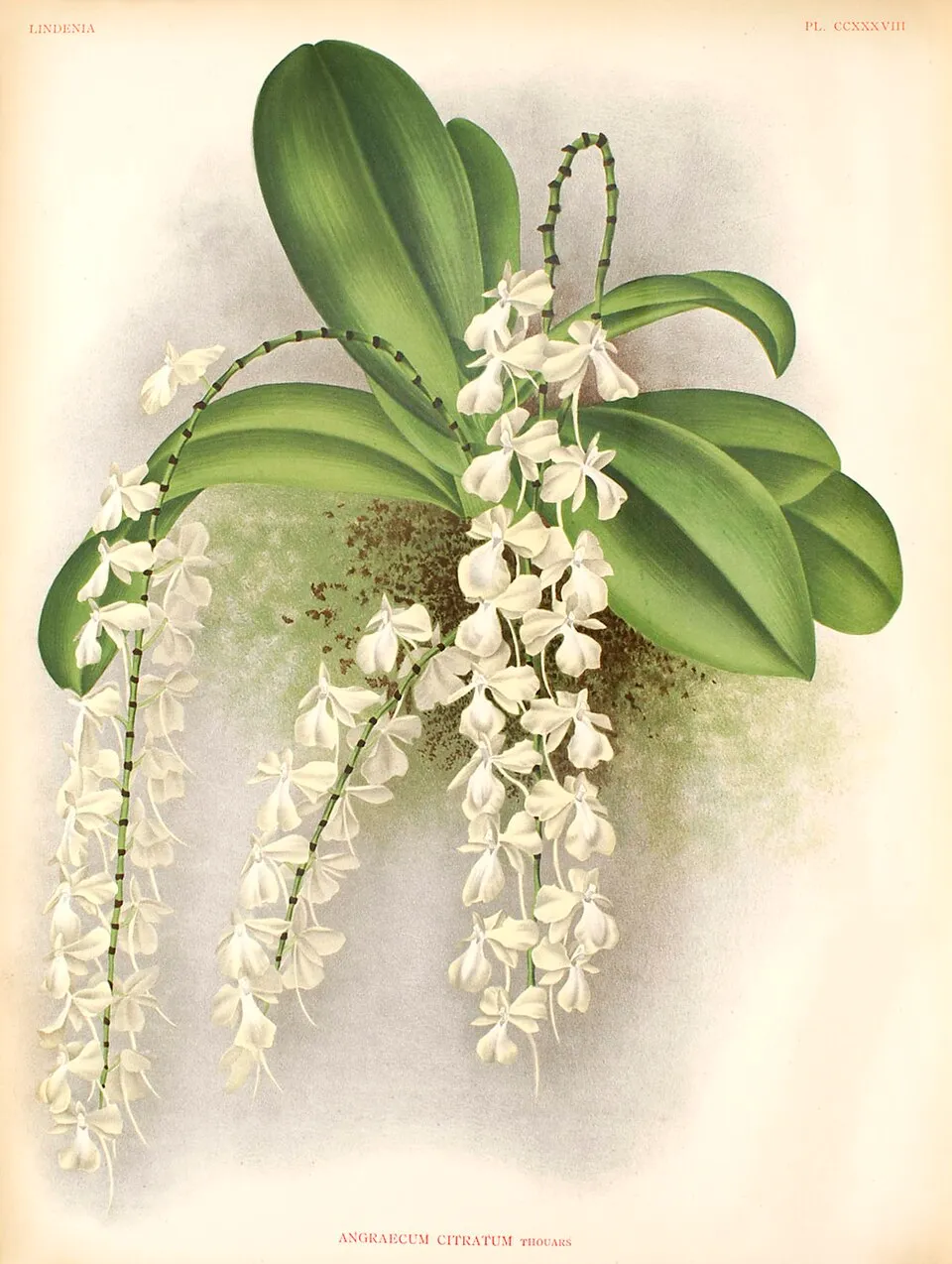
Orchid Aerangis, scientifically designated as Aerangis citrata, is an exquisite miniature epiphytic orchid indigenous to the lush, evergreen forests of Madagascar. This species typically thrives in humid, tropical environments, often found growing on the trunks and branches of trees from sea level up to 1,500 meters, particularly in areas near water sources, benefiting from dappled sunlight and robust air circulation. Morphologically, Aerangis citrata is recognized for its compact size, with mature plants typically bearing about nine lanceolate leaves, each measuring approximately 7 cm (2.8 inches) in length, arranged in a graceful rosette. The leaves are smooth, possess a subtle sheen, and display a vibrant leaf-green hue.
The plant produces delicate racemes adorned with numerous small, star-shaped flowers, each about 2 cm (0.7 inches) in diameter. These blooms, which emerge from late spring to early summer, are typically creamy white to pure white, though they may appear pale lemon when first opening, a characteristic to which its specific epithet 'citrata' (referring to lemon-like color) alludes. A distinctive feature is the lemon-yellow pollen cap on newly opened flowers, which fades to a golden-brownish tone as the bloom ages. The flowers also feature a prominent nectar spur measuring around 3 cm (1.2 inches).
As an epiphyte, Aerangis citrata does not parasitize its host but uses it for elevation to access optimal light and air movement within the forest canopy. Its elegant form and adaptability make it a favored ornamental plant for indoor cultivation.
Trusted Scientific References
1. Authoritative external sources for Aerangis citrata
1.1 Wikipedia — Aerangis citrata
1.2 Kew POWO (Plants of the World Online)
1.3 PubMed — peer-reviewed research
1.4 NCBI Taxonomy Browser
1.5 GBIF — Global Biodiversity
1.6Orchid Aerangis should be interpreted through verified botanical identity, practical care, and responsible safety language. This recovery note adds the missing context needed for a complete profile: match light to the plant's habit, use well-drained soil, water according to season, and avoid unsupported medicinal or edible claims. For publishing, the plant can be presented as a source-backed indoor plant with clear care guidance, common problem diagnosis, and conservative safety wording.
1.1.Orchid Aerangis — Distinguishing Points
- ✓Epiphytic Growth — Naturally grows on trees without being parasitic.
- ✓Native to Madagascar — Endemic to the island's eastern evergreen forests.
- ✓Miniature Size — Classified as a miniature orchid, suitable for small spaces and terrariums.
- ✓Fragrant Flowers — Produces delicate, star-shaped white to creamy flowers with a pleasant scent.
- ✓Distinctive Pollen Cap — Newly opened blooms feature a lemon-yellow pollen cap.
- ✓Nectar Spur — Flowers possess a prominent nectary or spur, characteristic of Aerangis species.
- ✓High Humidity Requirement — Thrives in environments with 75% RH or higher.
- ✓Prefers Filtered Light — Requires soft, diffused light, avoiding harsh direct sun.
- ✓Ornamental Value — Highly valued for its aesthetic contribution to indoor environments.
- ✓Air Purification — Contributes to indoor air quality as a living plant.
1.2.Orchid Aerangis — Concise Overview
- ✓Elegant miniature epiphytic orchid native to Madagascar.
- ✓Prized for its fragrant, star-shaped white flowers and aesthetic appeal.
- ✓Primarily ornamental; limited specific medicinal documentation for Aerangis citrata.
- ✓Requires high humidity, diffused light, and good air circulation for optimal growth.
- ✓Generally considered non-toxic for ornamental use.
- ✓Contributes to indoor air quality and psychological well-being.
2.Orchid Aerangis — Botanical Identity
3.Orchid Aerangis — Vital Statistics
4.Orchid Aerangis — Physical Description
5.Orchid Aerangis — Native Range & Habitat
6.Orchid Aerangis — Traditional Uses
7.Orchid Aerangis — Phytochemistry
- ✓Alkaloids — While not extensively documented for Aerangis citrata specifically, various orchid species contain diverse alkaloids, which are nitrogen-containing organic compounds often associated with pharmacological activities such as analgesic or stimulant effects.
- ✓Flavonoids — These are a broad group of plant pigments and secondary metabolites found in many orchids, including potentially Aerangis citrata, known for their antioxidant, anti-inflammatory, and neuroprotective properties.
- ✓Phenolic Compounds — Common throughout the plant kingdom, including orchids, phenolic compounds such as phenolic acids and tannins contribute to antioxidant capacity and may play roles in plant defense mechanisms and human health.
- ✓Terpenoids — Some orchids are known to produce terpenoids, which are a large and diverse class of organic chemicals derived from five-carbon isoprene units, often responsible for plant fragrances and having potential anti-inflammatory or antimicrobial effects.
- ✓Glycosides — Various glycosides, compounds where a sugar is bound to a non-sugar moiety, are found in orchids and can exhibit a range of biological activities, including cardiotonic or anti-cancer properties in other plant species.
- ✓Polysaccharides — Complex carbohydrates like polysaccharides are present in many plants and can contribute to immune-modulating or anti-tumor activities, though specific studies on Aerangis citrata are lacking.
- ✓Volatile Organic Compounds (VOCs) — Responsible for the delicate fragrance of Aerangis citrata flowers, these compounds are typically monoterpenes and sesquiterpenes, which can have various biological effects, including attracting pollinators or antimicrobial actions.
- ✓Nectar Sugars — The nectar found in the spur of Aerangis citrata flowers primarily consists of various sugars, serving as a vital energy source for pollinators.
8.Orchid Aerangis — Scientific Evidence
- ✓Air Purification — As an ornamental plant, Aerangis citrata contributes to indoor air quality by absorbing common volatile organic compounds and releasing oxygen through photosynthesis, enhancing the living environment.
- ✓Psychological Well-being — The presence of beautiful plants like Aerangis citrata has been shown to reduce stress, improve mood, and increase feelings of tranquility, contributing to mental health and cognitive function.
- ✓Humidification — Growing Aerangis citrata, especially in terrariums, can slightly increase local humidity levels, which may offer minor benefits for respiratory comfort in dry indoor climates.
- ✓Aesthetic Appeal — While not directly medicinal, the visual beauty and fragrant blooms of Aerangis citrata significantly enhance the aesthetic value of indoor spaces, indirectly promoting a sense of calm and well-being.
- ✓Potential Antimicrobial Properties (General Orchid Research) — Some studies on various orchid species suggest the presence of compounds with mild antimicrobial activity, though specific documentation for Aerangis citrata is limited and not clinically established.
- ✓Antioxidant Activity (General Orchid Research) — Certain orchids contain flavonoids and phenolic compounds known for their antioxidant properties, which hypothetically could contribute to cellular protection, although this is not confirmed for Aerangis citrata.
- ✓Anti-inflammatory Potential (General Orchid Research) — General research on the Orchidaceae family indicates some species possess anti-inflammatory compounds, which may offer therapeutic potential, but specific to Aerangis citrata, this remains speculative.
- ✓Traditional Use as Ornament (Global) — Historically, orchids, including Aerangis citrata in modern contexts, are valued for their beauty and used to adorn living spaces, contributing to cultural and personal enjoyment rather than direct medicinal application.
8.1.Orchid Aerangis — Reported Uses
9.Orchid Aerangis — Cautions & Contraindications
9.1.Orchid Aerangis — Side Effects & Warnings
- ✓None Documented for Direct Ingestion — As Aerangis citrata is not typically consumed, no direct side effects from ingestion are documented.
- ✓Allergic Reactions (Rare) — Like any plant, individuals sensitive to plant pollen or sap may experience mild allergic reactions upon direct contact.
- ✓Skin Irritation (Extremely Rare) — Handling the plant or its sap might cause minor skin irritation in highly sensitive individuals, though this is not commonly reported.
- ✓Toxicity (Not Established) — There is no established toxicity for Aerangis citrata, as it is not used in traditional medicine or consumed.
- ✓Environmental Impact (Incorrect Disposal) — Improper disposal of plant material could potentially introduce non-native species into local ecosystems, though this is a general horticultural concern.
9.2.Orchid Aerangis — Safety Profile
- ✓Non-toxic (Ornamental Use) — Aerangis citrata is generally considered non-toxic when used for ornamental purposes and is safe for display in homes with pets and children, though ingestion should be discouraged.
- ✓External Contact Only — Primarily for aesthetic enjoyment; direct medicinal application or internal consumption is not advised due to lack of research.
- ✓No Known Drug Interactions — Due to its non-medicinal status, there are no documented drug interactions for Aerangis citrata.
- ✓Pregnancy and Lactation — No safety information exists for use during pregnancy or lactation; therefore, caution is advised, though its ornamental nature poses minimal risk.
- ✓Allergy Caution — Individuals with known plant allergies should handle with care, although severe allergic reactions are extremely rare.
- ✓Horticultural Safety — Standard horticultural practices should be followed when handling, including wearing gloves if skin sensitivity is a concern.
10.Orchid Aerangis — Preparation Methods
- ✓Ornamental Display — Primarily used as an indoor ornamental plant to enhance aesthetic appeal in homes, offices, and botanical collections due to its elegant flowers and foliage.
- ✓Terrarium Cultivation — Ideal for enclosed terrarium environments where precise humidity and temperature can be maintained, showcasing its miniature beauty.
- ✓Mounted Specimen — Cultivated by mounting on cork bark or other suitable materials to replicate its natural epiphytic growth habit, allowing aerial roots to thrive.
- ✓Fragrance Enjoyment — The delicate, star-shaped flowers emit a pleasant fragrance, making it a desirable plant for sensory gardens or living spaces.
- ✓Environmental Enrichment — Contributes to a calming and natural indoor environment, promoting psychological well-being and visual interest.
- ✓Educational Tool — Used in botanical studies and horticulture education to demonstrate epiphytic growth and orchid diversity.
- ✓Air Quality Enhancement — While primarily ornamental, its photosynthetic activity contributes to oxygen production and minor air purification in indoor settings.
11.Orchid Aerangis — Cultivation & Care
- ✓Humidity — Maintain high humidity levels, ideally 75% RH or higher, often achieved in terrariums or humidifiers.
- ✓Air Circulation — Ensure continuous air movement around the plant and its roots to prevent fungal issues and mimic its natural epiphytic habitat.
- ✓Watering/Misting — Mist plants early in the morning daily (5-7 times a week) with rainwater, deionized, or reverse osmosis water, allowing roots to dry before nightfall.
- ✓Light — Provide soft, filtered, or diffused light; avoid direct, harsh sunlight. An intensity of around 3,000 lux (like an overcast day) is suitable.
- ✓Temperature — Cultivate in cool to warm conditions, with night temperatures between 10-17°C (50-62°F) and daytime temperatures between 20-28°C (68-82°F).
- ✓Growing Medium — Can be mounted on cork bark, tree branches, or slabs of wood to mimic its epiphytic nature, or grown in pots with a very well-draining orchid mix.
- ✓Fertilization — Apply a diluted orchid-specific fertilizer regularly during the growing season, reducing frequency during dormancy.
- ✓Potting — Repot only when necessary, typically when the medium breaks down or the plant outgrows its mount, preferably after flowering.
Reviewed by the Flora Medical Global Botanical Review Panel
Multi-disciplinary editorial group · Botany · Ethnobotany · Herbal-medicine literature
Who reviewed this: This page was checked by the Flora Medical Global Botanical Review Panel — an in-house editorial group of botany graduates, ethnobotany researchers, and horticulture practitioners who collectively maintain our 7,000+ plant encyclopedia. Meet the team.
Our 4-step verification process
1. Taxonomic verification
Scientific names and synonyms cross-checked against Kew POWO, World Flora Online, and The Plant List.
2. Phytochemical & medicinal cross-reference
Active compounds, traditional uses, and reported activities are cross-referenced with PubMed, USDA Dr. Duke's database, and peer-reviewed ethnobotanical literature.
3. Conservation & distribution check
Distribution, ecology, and conservation status confirmed against GBIF occurrence records and the IUCN Red List.
4. Editorial & safety review
Every entry passes an editorial pass for clarity, originality, and safety notices (toxicity, contraindications, dosage caveats) before publication.
Last reviewed:
Important medical disclaimer: This content is for educational and research purposes only. It is not medical advice and is not a substitute for consultation with a licensed healthcare provider. Do not use any herb to self-treat a medical condition without professional guidance.
Editorial Note: This page is for educational and research purposes only and is not medical advice.
Written by: Flora Medical Global Editorial Team
Reviewed by: Flora Medical Global Botanical Review Panel
Last Updated: June 15, 2026





Orchid Aerangis — Comments & Community Reviews
Rate this plant