
Medical Disclaimer: This content is for educational purposes only. It is not medical advice. Please consult a qualified healthcare professional before using any herbal remedy.
Safety Overview
1.Orchid Brassia — Plant Snapshot
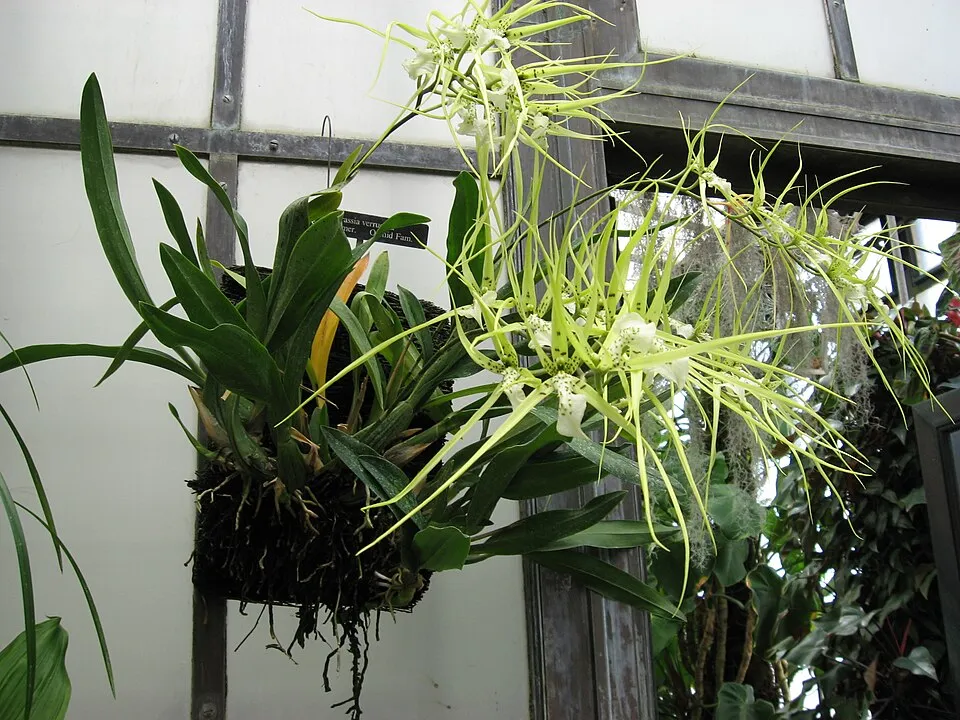
Orchid Brassia, scientifically designated as Brassia verrucosa and commonly known as the spider orchid due to its strikingly unique floral morphology, is a captivating epiphytic species within the expansive Orchidaceae family. This elegant plant typically achieves a mature height of approximately 60 to 75 centimeters, presenting an upright, graceful growth habit. Its foliage consists of elongated, arching leaves that can extend up to 30 centimeters in length, displaying a lustrous, vibrant green hue that enhances any botanical collection. The most distinctive feature of Brassia verrucosa is its intricate, star-shaped flowers, which typically range in color from a soft yellow to a greenish-yellow.
These remarkable blooms measure between 5 to 10 centimeters across and are characterized by their exceptionally long, slender, spidery lateral sepals, which can reach an impressive length of up to 12 centimeters, creating a mesmerizing visual spectacle reminiscent of a spider. The plant's pseudobulbs, essential for storing moisture and vital nutrients, are smooth-textured, offering a tactile contrast to the finely ribbed margins of its leaves. These pseudobulbs develop sequentially along a creeping rhizome, forming a robust and stable base for the plant's sustained growth. The root system, characteristic of epiphytic orchids, is composed of thick, aerial roots covered in a spongy layer of velamen, which efficiently absorbs atmospheric moisture and dissolved nutrients.
Taxonomically, Brassia verrucosa is classified under the subfamily Epidendroideae and the tribe Oncidiinae, reflecting its close evolutionary kinship with other popular genera such as Oncidium and Odontoglossum. Native to the humid, tropical forests spanning Central and South America, its natural distribution ranges from Honduras southwards to Ecuador. In these native habitats, it thrives as an epiphyte, anchoring itself securely to tree branches, benefiting from dappled sunlight and consistent atmospheric moisture. Its adaptability and unique beauty have made it a favored species for indoor cultivation, where it flourishes in well-drained, aerated media.
Trusted Scientific References
1. Authoritative external sources for Brassia verrucosa
1.1 Wikipedia — Brassia verrucosa
1.2 Kew POWO (Plants of the World Online)
1.3 PubMed — peer-reviewed research
1.4 NCBI Taxonomy Browser
1.5 GBIF — Global Biodiversity
1.1.Orchid Brassia — Key Features
- ✓Distinctive Spider — like Flowers — Characterized by exceptionally long, slender lateral sepals that resemble spider legs.
- ✓Epiphytic Growth Habit — Naturally grows on tree branches, absorbing moisture and nutrients from the air and rain.
- ✓Pseudobulb Storage — Features smooth pseudobulbs that store water and nutrients, crucial for survival during dry periods.
- ✓Velamen Roots — Possesses thick, aerial roots covered in a spongy velamen layer for efficient moisture absorption.
- ✓Vibrant Green Foliage — Displays elongated, arching leaves with a lustrous, vibrant green hue.
- ✓Tropical Forest Native — Indigenous to the humid, tropical regions of Central and South America.
- ✓Moderate Size — Reaches a mature height of 60-75 cm, making it suitable for indoor cultivation.
- ✓Yellow to Greenish — Yellow Blooms — Flowers typically range in color from soft yellow to greenish-yellow, often with spotting.
- ✓Oncidiinae Tribe Member — Closely related to Oncidium and Odontoglossum orchids, sharing some taxonomic characteristics.
- ✓Adaptable for Cultivation — Popular among orchid enthusiasts for its relatively straightforward care requirements when conditions are met.
1.2.Orchid Brassia — Quick Summary
- ✓Brassia verrucosa is an exquisite epiphytic orchid, known as the spider orchid for its unique, elongated floral sepals.
- ✓Native to Central and South American tropical forests, it thrives in humid, dappled light conditions.
- ✓Primarily an ornamental plant, it offers significant aesthetic and well-being benefits.
- ✓Requires specific care regarding temperature, light, humidity, and watering for optimal growth.
- ✓While not traditionally used medicinally, the Orchidaceae family contains diverse phytochemicals.
- ✓General safety precautions apply, including avoiding ingestion and mindful handling for sensitive individuals.
2.Orchid Brassia — Scientific Profile
3.Orchid Brassia — Reference Facts
4.Orchid Brassia — Structural Profile
5.Orchid Brassia — Geographic Distribution
6.Orchid Brassia — Cultural & Traditional Roles
7.Orchid Brassia — Secondary Metabolites
- ✓Alkaloids — Various alkaloid types, though not extensively characterized in Brassia verrucosa, are common in the Orchidaceae family and may contribute to biological activities such as neuroprotection or antimicrobial effects.
- ✓Flavonoids — Found broadly across plants, including orchids, flavonoids like quercetin and kaempferol derivatives are potent antioxidants and may possess anti-inflammatory and antiallergic properties.
- ✓Phenanthrenes — A class of compounds characteristic of orchids, phenanthrenes exhibit diverse pharmacological activities including anti-cancer, anti-inflammatory, and antimicrobial effects, warranting specific investigation in Brassia verrucosa.
- ✓Terpenoids — Including mono-, sesqui-, and diterpenoids, these compounds contribute to the plant's aroma and defense mechanisms, with some known for anti-inflammatory and cytotoxic potential.
- ✓Polysaccharides — Complex sugars are often present in plant tissues and can have immunomodulatory, antioxidant, and prebiotic effects, supporting overall health.
- ✓Phytosterols — Plant sterols like beta-sitosterol are known for their cholesterol-lowering properties and anti-inflammatory actions, commonly found in many plant species.
- ✓Lignans — These phenolic compounds possess antioxidant and phytoestrogenic activities, contributing to potential health benefits.
- ✓Caffeic Acid Derivatives — Phenolic acids, such as caffeic acid, are strong antioxidants and anti-inflammatory agents, widely distributed in the plant kingdom.
- ✓Volatile Organic Compounds (VOCs) — Responsible for the orchid's fragrance, these compounds can include esters, alcohols, and aldehydes, which may have minor antimicrobial or insect-repellent properties.
8.Orchid Brassia — Research Insights
- ✓Aesthetic Well-being — Cultivating and observing the beautiful Brassia verrucosa can significantly contribute to mental well-being, reducing stress and promoting a sense of calm through horticultural engagement.
- ✓Air Purification Potential — Like many green plants, Brassia verrucosa may contribute to indoor air quality by absorbing common volatile organic compounds and releasing oxygen, though specific studies on this species are limited.
- ✓Antioxidant Support — While not directly studied for Brassia verrucosa, many orchids contain flavonoids and phenanthrenes, which exhibit antioxidant properties that could theoretically protect cells from oxidative damage.
- ✓Anti-inflammatory Properties (Theoretical) — Some compounds found in the broader Orchidaceae family have shown in vitro anti-inflammatory effects, suggesting a potential area for future research in Brassia verrucosa extracts.
- ✓Immunomodulatory Effects (Hypothetical) — Polysaccharides and other complex carbohydrates present in certain orchids are known to influence immune responses, a property that could be explored in this species.
- ✓Antimicrobial Activity (Exploratory) — Extracts from various orchid species have demonstrated antimicrobial activity against certain pathogens; this remains an uninvestigated potential for Brassia verrucosa.
- ✓Traditional Wound Healing (General Orchid Use) — In some traditional medicine systems, orchid extracts have been used topically for minor wounds; this is a general reference and not specific to Brassia verrucosa.
- ✓Cognitive Enhancement (Indirect) — The presence of plants in living spaces, including orchids, has been linked to improved concentration and mood, indirectly benefiting cognitive function.
- ✓Digestive Aid (Rare Traditional Use) — A few orchid species have historical uses for digestive complaints, often related to mucilage content, though this is not documented for Brassia verrucosa.
- ✓Skin Health (Cosmetic Interest) — Orchid extracts are sometimes used in cosmetics for their moisturizing and protective properties, suggesting a potential, though unproven, benefit for Brassia verrucosa extracts in skincare.
8.1.Orchid Brassia — Health Applications
9.Orchid Brassia — Precautions & Warnings
9.1.Orchid Brassia — Reported Side Effects
- ✓Allergic Reactions — Direct contact with plant sap or pollen may cause mild skin irritation or allergic reactions in sensitive individuals.
- ✓Ingestion Toxicity (Unknown) — While not known to be toxic, ingestion of any part of Brassia verrucosa is not recommended without specific scientific validation.
- ✓Contact Dermatitis — Handling the plant without gloves might lead to minor skin rashes or irritation for some people, particularly those with existing sensitivities.
- ✓Respiratory Irritation — Inhalation of pollen or fine plant particles, though rare, could potentially cause mild respiratory irritation in highly sensitive individuals.
- ✓Gastrointestinal Upset — If ingested, even non-toxic plant material can sometimes cause mild gastrointestinal discomfort, such as nausea or indigestion, in sensitive stomachs.
- ✓Cross-Contamination — Care should be taken to avoid cross-contamination if other medicinal plants are being handled simultaneously, to prevent misidentification or unintended ingestion.
9.2.Orchid Brassia — Toxicity Assessment
- ✓Non-Toxic Classification — Brassia verrucosa is generally considered non-toxic to humans and pets when handled appropriately, primarily valued for its ornamental appeal.
- ✓Handling Precautions — It is advisable to wear gloves when handling the plant, especially during repotting or division, to prevent potential skin irritation.
- ✓Keep Out of Reach — As with all ornamental plants, keep Brassia verrucosa out of reach of small children and pets to prevent accidental ingestion.
- ✓No Documented Medicinal Use — There are no established traditional or modern medicinal uses for Brassia verrucosa, therefore, it should not be consumed or used for therapeutic purposes.
- ✓Allergen Awareness — Individuals with known plant allergies or sensitivities should exercise caution and observe for any adverse reactions upon contact.
- ✓Horticultural Safety — Ensure proper ventilation when using potting mixes and fertilizers to avoid inhaling fine particles or chemical fumes.
- ✓Environmental Considerations — Dispose of plant waste responsibly and avoid releasing cultivated plants into non-native environments where they could become invasive.
10.Orchid Brassia — How to Use
- ✓Ornamental Display — Primarily cultivated for its exquisite, spider-like flowers, Brassia verrucosa serves as a stunning decorative plant in homes, conservatories, and botanical gardens.
- ✓Horticultural Propagation — Plants can be propagated through division of mature pseudobulbs, particularly during repotting, to expand collections or share with others.
- ✓Aesthetic Therapy — Engaging in the care and cultivation of Brassia verrucosa can be a form of horticultural therapy, promoting relaxation and mindfulness.
- ✓Botanical Research — Extracts or plant parts could be utilized in scientific studies to investigate potential phytochemicals and their biological activities, though currently, such research is limited for this specific species.
- ✓Environmental Enrichment — Placing Brassia verrucosa in indoor environments contributes to green spaces, enhancing aesthetic appeal and potentially improving air quality.
- ✓Hybridization Programs — The unique genetics of Brassia verrucosa may be used in orchid breeding programs to develop new hybrid varieties with desirable traits.
11.Orchid Brassia — Growing Guide
- ✓Temperature Management — Maintain night temperatures around 13°C minimum and daytime temperatures between 18°C and 29°C for optimal growth.
- ✓Light Requirements — Provide bright, indirect sunlight; an east or west-facing window is ideal, or a shaded south-facing window. Avoid direct, harsh sun.
- ✓Watering Protocol — Use rainwater and water frequently during warm periods (every 3-4 days), ensuring the plant never completely dries out. Reduce watering significantly in cooler, lower-light conditions (fortnightly or every three weeks).
- ✓Feeding Schedule — Apply a specialized orchid fertilizer in three out of four waterings, following product instructions for dilution.
- ✓Humidity Control — High humidity is crucial. Mist lightly in the mornings during summer and consider placing the pot on a moist gravel tray to create a beneficial microclimate.
- ✓Potting Medium — Use a well-aerated, free-draining epiphytic orchid compost, typically bark-based or a mixture including coconut shell, ensuring excellent drainage.
- ✓Repotting Timing — Repot every two to three years in the spring when new growth emerges, preferably before new shoots fully develop, using damp, pre-soaked compost.
Reviewed by the Flora Medical Global Botanical Review Panel
Multi-disciplinary editorial group · Botany · Ethnobotany · Herbal-medicine literature
Who reviewed this: This page was checked by the Flora Medical Global Botanical Review Panel — an in-house editorial group of botany graduates, ethnobotany researchers, and horticulture practitioners who collectively maintain our 7,000+ plant encyclopedia. Meet the team.
Our 4-step verification process
1. Taxonomic verification
Scientific names and synonyms cross-checked against Kew POWO, World Flora Online, and The Plant List.
2. Phytochemical & medicinal cross-reference
Active compounds, traditional uses, and reported activities are cross-referenced with PubMed, USDA Dr. Duke's database, and peer-reviewed ethnobotanical literature.
3. Conservation & distribution check
Distribution, ecology, and conservation status confirmed against GBIF occurrence records and the IUCN Red List.
4. Editorial & safety review
Every entry passes an editorial pass for clarity, originality, and safety notices (toxicity, contraindications, dosage caveats) before publication.
Last reviewed:
Important medical disclaimer: This content is for educational and research purposes only. It is not medical advice and is not a substitute for consultation with a licensed healthcare provider. Do not use any herb to self-treat a medical condition without professional guidance.
Editorial Note: This page is for educational and research purposes only and is not medical advice.
Written by: Flora Medical Global Editorial Team
Reviewed by: Flora Medical Global Botanical Review Panel
Last Updated: June 15, 2026





Orchid Brassia — Comments & Community Reviews
Rate this plant