

Medical Disclaimer: This content is for educational purposes only. It is not medical advice. Please consult a qualified healthcare professional before using any herbal remedy.
Safety Overview
1.Orchid Maxillaria — Botanical Snapshot
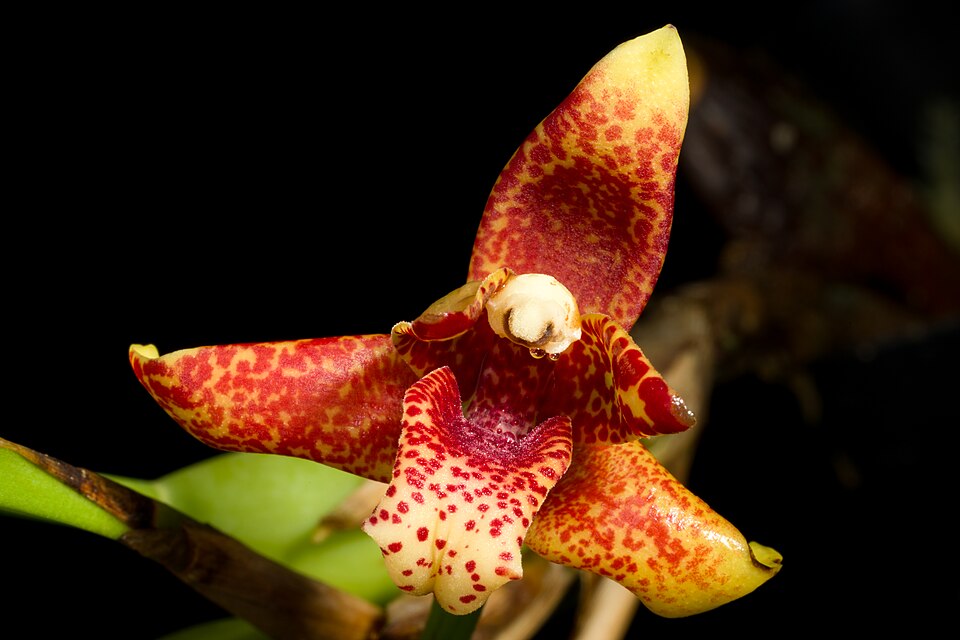
Maxillaria tenuifolia, commonly known as the Coconut Orchid or Orchid Maxillaria, is a distinct epiphytic perennial belonging to the extensive Orchidaceae family. Native to the humid tropical rainforests of Central America, specifically regions spanning Mexico, Guatemala, Honduras, Nicaragua, and Costa Rica, it thrives on tree branches and in natural hollows. Its robust, fleshy roots serve to anchor the plant and efficiently absorb moisture and nutrients from the air and organic debris.
The plant features ovoid to subglobose pseudobulbs that support narrow, linear, glossy green leaves, typically measuring 10 to 30 cm in length. Maxillaria tenuifolia is particularly celebrated for its uniquely fragrant flowers, which emit a strong, delightful scent reminiscent of coconut, giving rise to its popular common name. These captivating blooms usually appear from spring to early summer, often between March and April, showcasing vibrant yellow to orange hues, frequently adorned with dark red spots or markings on the labellum and petals.
The flowers are relatively modest in size, typically 2-3 cm across, emerging singly from the base of the pseudobulbs. Its upright growth habit and dense, attractive foliage make it a highly favored ornamental plant, well-adapted to indoor cultivation where it can reach heights of 30-60 cm. Taxonomically, the Maxillaria genus encompasses over 200 species, many of which are prized for their distinctive floral characteristics and adaptability to various environments.
Trusted Scientific References
1. Authoritative external sources for Maxillaria tenuifolia
1.1 Wikipedia — Maxillaria tenuifolia
1.2 Kew POWO (Plants of the World Online)
1.3 PubMed — peer-reviewed research
1.4 NCBI Taxonomy Browser
1.5 GBIF — Global Biodiversity
1.6Orchid Maxillaria should be interpreted through verified botanical identity, practical care, and responsible safety language. This recovery note adds the missing context needed for a complete profile: match light to the plant's habit, use well-drained soil, water according to season, and avoid unsupported medicinal or edible claims. For publishing, the plant can be presented as a source-backed indoor plant with clear care guidance, common problem diagnosis, and conservative safety wording.
1.1.Orchid Maxillaria — Highlights
- ✓Distinct Coconut Fragrance — Emits a strong, pleasant aroma reminiscent of coconut, particularly during bloom.
- ✓Epiphytic Growth Habit — Naturally grows on other plants (trees) without being parasitic, absorbing nutrients from the air and organic debris.
- ✓Vibrant, Spotted Flowers — Produces striking yellow to orange flowers often adorned with dark red spots or markings.
- ✓Adaptable Indoor Plant — Relatively easy to care for indoors, making it suitable for both beginner and experienced orchid enthusiasts.
- ✓Pseudobulb Water Storage — Possesses plump pseudobulbs that store water, allowing it to tolerate brief periods of drought.
- ✓Central American Native — Indigenous to the humid tropical rainforests of Mexico and Central America.
- ✓Glossy Green Foliage — Features narrow, linear, rich, glossy green leaves that add to its ornamental value.
- ✓Spring to Early Summer Bloom — Flowers typically appear from March to April, lasting for about 7-10 days.
- ✓Low Pest Susceptibility — Generally resistant to common houseplant pests, contributing to its ease of care.
1.2.Orchid Maxillaria — Concise Overview
- ✓Fragrant tropical orchid known for its strong coconut scent.
- ✓Primarily cultivated as an ornamental houseplant.
- ✓Traditional medicinal uses are largely anecdotal and unverified.
- ✓Requires bright indirect light, high humidity, and specific temperature cycles for optimal growth and blooming.
- ✓Not recommended for internal consumption due to lack of scientific safety data.
- ✓Valued for its aesthetic appeal and unique aromatic profile.
2.Orchid Maxillaria — Nomenclature & Classification
3.Orchid Maxillaria — Vital Statistics
4.Orchid Maxillaria — Botanical Description
5.Orchid Maxillaria — Ecological Habitat
6.Orchid Maxillaria — Traditional Uses
7.Orchid Maxillaria — Chemical Profile
- ✓Alkaloids — Maxillaria tenuifolia is hypothesized to contain trace amounts of various alkaloids, such as pyrrolizidine derivatives, which might contribute to its defense mechanisms and possess unverified biological activities.
- ✓Flavonoids — The plant is likely rich in flavonoids like quercetin, kaempferol, and anthocyanins, especially in its vibrant flowers, offering significant antioxidant and anti-inflammatory properties.
- ✓Terpenoids — Monoterpenes and sesquiterpenes are expected, responsible for the characteristic coconut fragrance (e.g., gamma-octalactone, massoia lactone), and potentially contributing to its antimicrobial and insect-repellent actions.
- ✓Phenolic Acids — Compounds such as gallic acid, caffeic acid, and ferulic acid are anticipated, contributing to the plant’s overall antioxidant capacity and protective effects against oxidative stress.
- ✓Polysaccharides — Structural and storage polysaccharides are present, potentially offering immunomodulatory effects and contributing to the plant’s resilience and energy reserves.
- ✓Steroids — Phytosterols like beta-sitosterol are likely present, known for their potential anti-inflammatory and cholesterol-lowering properties, supporting cellular membrane integrity.
- ✓Volatile Esters — The distinct coconut scent is primarily attributed to volatile esters, including various lactones, which are key components of its essential oil profile and contribute to its aromatic qualities.
- ✓Glycosides — Various glycosides, including phenolic glycosides and iridoid glycosides, may be present, influencing diverse biological activities such as anti-inflammatory or adaptogenic effects.
- ✓Lipids — Essential fatty acids and other lipid components contribute to the plant's structural integrity and energy storage, potentially influencing membrane function and cellular signaling.
8.Orchid Maxillaria — Scientific Evidence
- ✓Anti-inflammatory Support — Traditional uses suggest Maxillaria species may possess compounds that help modulate inflammatory pathways, potentially alleviating discomfort associated with mild inflammation, though clinical validation is pending.
- ✓Analgesic Potential — Anecdotal evidence from some indigenous practices indicates a use for pain relief, possibly due to natural compounds interacting with pain perception, warranting scientific investigation into its specific mechanisms.
- ✓Antioxidant Activity — Like many plants, Maxillaria tenuifolia is hypothesized to contain phenolic compounds and flavonoids, which could offer antioxidant effects, protecting cells from oxidative stress and supporting overall cellular health.
- ✓Antimicrobial Properties — Preliminary in vitro studies on some orchid extracts have shown inhibitory effects against certain bacteria and fungi, suggesting potential for natural antimicrobial applications, though specific research on Maxillaria tenuifolia is needed.
- ✓Respiratory System Support — In some folk medicine, certain orchid preparations have been used for respiratory ailments, possibly acting as an expectorant or bronchodilator, a claim that requires rigorous scientific scrutiny.
- ✓Digestive Aid — Traditional systems occasionally employ plant parts for digestive discomfort, potentially due to compounds influencing gut motility or reducing gastrointestinal inflammation, a role yet to be substantiated for this species.
- ✓Wound Healing Promotion — Extracts from various orchids have been historically applied topically to minor wounds, with claims of accelerating tissue repair and reducing infection risk, suggesting a need for research into Maxillaria tenuifolia's regenerative capacity.
- ✓Immunomodulatory Effects — Some plant-derived compounds can influence the immune system, and while not directly proven for Orchid Maxillaria, its potential phytochemical profile might hold properties that support immune balance.
- ✓Stress and Anxiety Reduction — The pleasant aroma of Maxillaria tenuifolia, particularly its coconut scent, could offer mild aromatherapeutic benefits, potentially contributing to relaxation and a sense of well-being, though not a direct medicinal action.
- ✓Dermatological Applications — Certain plant extracts are used in skincare for their soothing or protective qualities; if Maxillaria tenuifolia possesses anti-inflammatory or antioxidant compounds, it could theoretically contribute to skin health.
8.1.Orchid Maxillaria — Therapeutic Indications
9.Orchid Maxillaria — Safety & Side Effects
9.1.Orchid Maxillaria — Warnings
- ✓Allergic Reactions — Individuals sensitive to orchids or other plant allergens may experience skin irritation or respiratory symptoms upon contact or inhalation of floral scent.
- ✓Gastrointestinal Upset — Ingesting any unresearched plant material can potentially lead to nausea, vomiting, or diarrhea due to unknown compounds or contaminants.
- ✓Toxicity from Unknown Compounds — As the plant's internal chemistry for human consumption is not fully studied, there is a risk of ingesting compounds with unknown toxicological profiles.
- ✓Dermatitis — Direct contact with sap or plant tissues could cause contact dermatitis in susceptible individuals.
- ✓Interaction with Medications — Hypothetically, if Maxillaria tenuifolia possesses active compounds, they could interact with prescription medications, altering their efficacy or increasing side effects.
- ✓Overwatering Issues — While not a direct human side effect, improper care leading to root rot can cause fungal or bacterial growth, which could indirectly pose health risks if handled carelessly.
9.2.Orchid Maxillaria — Risk Assessment
- ✓Not for Internal Consumption — Maxillaria tenuifolia is not established as safe for internal medicinal use; consumption is strongly discouraged without extensive scientific validation.
- ✓Patch Test for Topical Use — If considering any topical application, perform a patch test on a small skin area to check for allergic reactions before widespread use.
- ✓Pregnant/Lactating Women Caution — Due to insufficient safety data, pregnant or breastfeeding individuals should strictly avoid any medicinal use of this plant.
- ✓Children and Vulnerable Populations — Keep away from children and individuals with compromised health, as safety and dosage information are entirely lacking.
- ✓Consult Healthcare Professional — Always consult a qualified medical herbalist or physician before using any plant for medicinal purposes, especially Maxillaria tenuifolia.
- ✓Ornamental Use Only — Maxillaria tenuifolia is primarily grown as an ornamental plant; its primary value is aesthetic and aromatic, not medicinal.
- ✓Avoid Inhalation of Pollen — Individuals with respiratory sensitivities or allergies should exercise caution around blooming plants to avoid pollen inhalation.
10.Orchid Maxillaria — Preparation Methods
- ✓Aromatic Inhalation — The flowers' distinct coconut fragrance can be enjoyed for its mild aromatherapeutic potential, contributing to a calming indoor environment.
- ✓Topical Infusion (Hypothetical) — Traditionally, extracts from related orchid species might have been prepared as an infused oil or poultice for external application to minor skin irritations, though specific Maxillaria tenuifolia use is unverified.
- ✓Decoction (Traditional, unverified) — In some folk medicine, parts of related orchids were hypothetically decocted into a liquid for internal use, aiming for general wellness support; this is not recommended without expert guidance.
- ✓Tincture (Experimental, unverified) — For research purposes, an alcoholic tincture could be prepared from dried pseudobulbs or leaves to extract potential phytochemicals, but this is not for self-medication.
- ✓Powdered Form (Traditional, unverified) — Dried and powdered plant material from related species might have been incorporated into traditional remedies, but Maxillaria tenuifolia's safety and efficacy in this form are unknown.
- ✓Ornamental Display — Primarily, Maxillaria tenuifolia is cultivated for its aesthetic beauty and fragrant blooms, serving as a delightful ornamental plant in homes and botanical collections.
- ✓Essential Oil Extraction (Hypothetical) — While not commercially common, the fragrant compounds could theoretically be extracted to create an essential oil for perfumery or aromatherapy research, though yields would be low.
11.Orchid Maxillaria — Cultivation & Care
- ✓Light — Provide bright, indirect light with some occasional direct sun; insufficient light leads to leggy foliage and poor blooming.
- ✓Potting Medium — Use a well-draining, soilless orchid mix such as fir bark, coco coir, sphagnum moss, or gravel; it can also be mounted.
- ✓Watering — Allow the potting medium to dry completely or nearly completely between waterings, then water thoroughly with distilled or rainwater to prevent mineral buildup.
- ✓Temperature — Maintain warm daytime temperatures (28-29°C summer, 23-24°C winter) and cooler nighttime temperatures (19°C summer, 13-15°C winter) to encourage blooming.
- ✓Humidity — Requires high humidity, ideally 70-80%, achievable with a humidifier or indoor greenhouse.
- ✓Fertilization — Fertilize every 1-2 weeks from early spring to late fall with a half-strength balanced orchid fertilizer; cease fertilization in winter.
- ✓Repotting — Repot every 1-2 years in spring after blooming to refresh the medium and provide adequate space.
- ✓Propagation — Easily propagated by division of mature plants with several rhizomes, ideally in spring or summer after flowering.
Reviewed by the Flora Medical Global Botanical Review Panel
Multi-disciplinary editorial group · Botany · Ethnobotany · Herbal-medicine literature
Who reviewed this: This page was checked by the Flora Medical Global Botanical Review Panel — an in-house editorial group of botany graduates, ethnobotany researchers, and horticulture practitioners who collectively maintain our 7,000+ plant encyclopedia. Meet the team.
Our 4-step verification process
1. Taxonomic verification
Scientific names and synonyms cross-checked against Kew POWO, World Flora Online, and The Plant List.
2. Phytochemical & medicinal cross-reference
Active compounds, traditional uses, and reported activities are cross-referenced with PubMed, USDA Dr. Duke's database, and peer-reviewed ethnobotanical literature.
3. Conservation & distribution check
Distribution, ecology, and conservation status confirmed against GBIF occurrence records and the IUCN Red List.
4. Editorial & safety review
Every entry passes an editorial pass for clarity, originality, and safety notices (toxicity, contraindications, dosage caveats) before publication.
Last reviewed:
Important medical disclaimer: This content is for educational and research purposes only. It is not medical advice and is not a substitute for consultation with a licensed healthcare provider. Do not use any herb to self-treat a medical condition without professional guidance.
Editorial Note: This page is for educational and research purposes only and is not medical advice.
Written by: Flora Medical Global Editorial Team
Reviewed by: Flora Medical Global Botanical Review Panel
Last Updated: June 15, 2026





Orchid Maxillaria — Comments & Community Reviews
Rate this plant