
Medical Disclaimer: This content is for educational purposes only. It is not medical advice. Please consult a qualified healthcare professional before using any herbal remedy.
Safety Overview
1.Orchid Miltonia — Botanical Snapshot
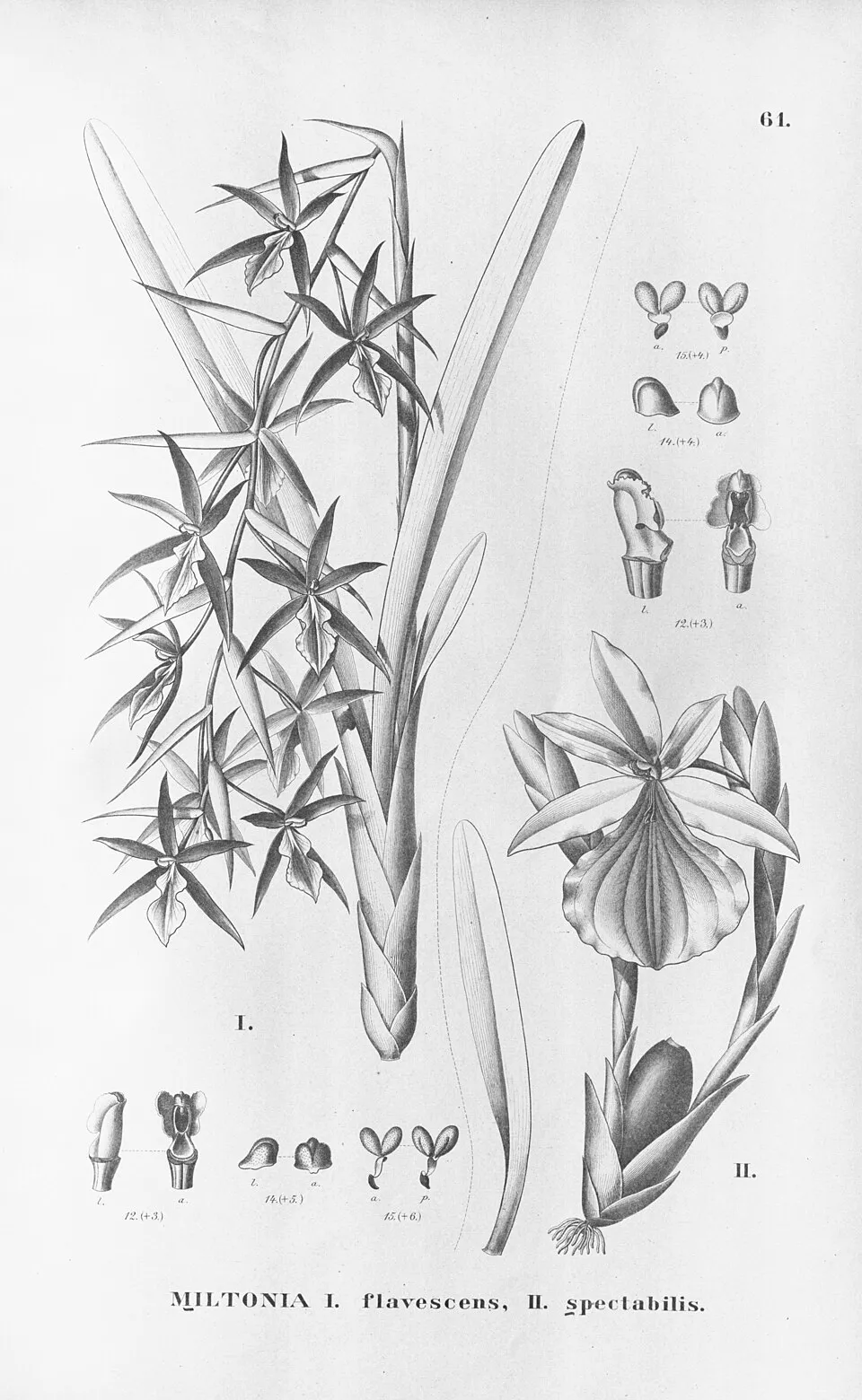
Miltonia spectabilis, affectionately known as the Miltonia Orchid or Pansy Orchid, is an exquisite member of the expansive Orchidaceae family, celebrated for its striking blossoms. This epiphytic species typically reaches a modest height of 30 to 60 centimeters, showcasing thick, strap-like leaves that can extend up to 30 centimeters in length, emerging from a sympodial growth habit. The plant is characterized by its smooth, water-storing pseudobulbs and thin, feathery roots, perfectly adapted to its natural epiphytic existence.
Its most captivating feature is undoubtedly its elegant flowers, which can measure up to 10 centimeters across. These delicate blooms present a stunning palette, predominantly in shades of white and lavender, often adorned with distinctive purple markings that enhance their allure. Each flower possesses a unique structure, featuring a prominent, often wavy, round labellum and a contrasting throat.
Native to the humid montane forests of Brazil, Miltonia spectabilis thrives at elevations ranging from 800 to 2,700 meters, where it naturally enjoys filtered sunlight. Taxonomically, it falls within the subfamily Epidendroideae, and its remarkable aesthetic appeal makes it a highly sought-after plant for both novice and experienced plant enthusiasts, adding a touch of tropical elegance to any indoor setting.
Trusted Scientific References
1. Authoritative external sources for Miltonia spectabilis
1.1 Wikipedia — Miltonia spectabilis
1.2 Kew POWO (Plants of the World Online)
1.3 PubMed — peer-reviewed research
1.4 NCBI Taxonomy Browser
1.5 GBIF — Global Biodiversity
1.6Orchid Miltonia should be interpreted through verified botanical identity, practical care, and responsible safety language. This recovery note adds the missing context needed for a complete profile: match light to the plant's habit, use well-drained soil, water according to season, and avoid unsupported medicinal or edible claims. For publishing, the plant can be presented as a source-backed indoor plant with clear care guidance, common problem diagnosis, and conservative safety wording.
1.1.Orchid Miltonia — Distinguishing Points
- ✓Captivating white and — Captivating white and lavender flowers with distinctive purple markings.
- ✓Elegant blooms reaching — Elegant blooms reaching up to 10 centimeters across with a prominent, wavy labellum.
- ✓Thick, strap — like leaves growing up to 30 centimeters in length.
- ✓Epiphytic growth habit — Epiphytic growth habit with thin, feathery roots adapted for aerial attachment.
- ✓Presence of smooth — Presence of smooth pseudobulbs for efficient water and nutrient storage.
- ✓Native distribution in — Native distribution in the humid montane forests of Brazil.
- ✓Requires filtered sunlight — Requires filtered sunlight and consistently high humidity (70%+) for thriving.
- ✓Considered relatively easier — Considered relatively easier to care for compared to some other orchid species.
- ✓Often associated with — Often associated with symbols of luxury, beauty, and refined taste.
- ✓Known for its — Known for its ability to create a serene and aesthetically pleasing indoor ambiance.
1.2.Orchid Miltonia — Concise Overview
- ✓Miltonia spectabilis is a captivating Brazilian orchid known for its elegant, colorful flowers.
- ✓Primarily valued for its ornamental beauty and indirect psychological and environmental wellness benefits.
- ✓Thrives in warm, humid, shaded conditions, requiring specific care for optimal health.
- ✓Generally considered non-toxic to humans and pets, making it safe for most indoor settings.
- ✓Contributes to stress reduction, mood enhancement, and improved indoor aesthetics.
- ✓Care involves precise light, water, humidity, and potting medium management.
2.Orchid Miltonia — Nomenclature & Classification
3.Orchid Miltonia — Fact Sheet
4.Orchid Miltonia — Botanical Features
5.Orchid Miltonia — Origin & Spread
6.Orchid Miltonia — Heritage Uses
7.Orchid Miltonia — Key Phytochemicals
- ✓Flavonoids — Compounds such as quercetin and kaempferol derivatives are present, known for their antioxidant and anti-inflammatory properties, contributing to cellular protection within the plant.
- ✓Anthocyanins — These water-soluble pigments, including delphinidin and cyanidin derivatives, are responsible for the vibrant purple and lavender hues of the Miltonia spectabilis flowers and possess antioxidant capacities.
- ✓Terpenoids — A diverse group of compounds, including monoterpenes and sesquiterpenes, contribute to the plant's natural fragrance and act as defense mechanisms against herbivores and pathogens.
- ✓Polysaccharides — Complex carbohydrates found in the plant's structural tissues, providing energy storage and playing roles in cell wall integrity and potential immunomodulatory effects in other plant species.
- ✓Phenolic Acids — Compounds like caffeic acid and gallic acid are present, noted for their significant antioxidant properties and ability to scavenge free radicals.
- ✓Alkaloids — Nitrogen-containing compounds, typically found in trace amounts in orchids, which often have diverse pharmacological activities in other plant species, serving as part of the plant's chemical defense system.
- ✓Phytosterols — Plant sterols such as beta-sitosterol are components of cell membranes, crucial for plant health and potentially offering anti-inflammatory properties if isolated.
- ✓Amino Acids — Essential building blocks for proteins, fundamental for the plant's growth, metabolic processes, and enzymatic functions.
- ✓Waxes and Cuticular Hydrocarbons — These form a protective layer on the leaves and pseudobulbs, minimizing water loss and offering a physical barrier against environmental stressors and pathogens.
8.Orchid Miltonia — Scientific Evidence
- ✓Stress Reduction — The presence of indoor plants like Miltonia spectabilis can contribute to lowering physiological stress indicators, promoting a sense of calm and relaxation through biophilic interaction.
- ✓Mood Enhancement — The vibrant colors and delicate beauty of Miltonia flowers are known to positively influence emotional states, fostering feelings of happiness and well-being.
- ✓Air Quality Improvement — As with many plants, Miltonia orchids engage in photosynthesis, releasing oxygen and potentially absorbing certain volatile organic compounds (VOCs), thus contributing to a fresher indoor environment.
- ✓Cognitive Function Support — Engaging with and observing indoor plants has been linked to improved concentration and reduced mental fatigue, indirectly supporting cognitive performance.
- ✓Aesthetic Therapy — The visual appeal of the Miltonia orchid serves as a form of passive aesthetic therapy, creating a visually pleasing and serene atmosphere that can be mentally soothing.
- ✓Biophilic Connection — Cultivating houseplants helps to strengthen the human-nature bond, alleviating feelings of isolation and promoting psychological comfort by bringing a piece of the natural world indoors.
- ✓Humidity Regulation — Through transpiration, Miltonia spectabilis can subtly increase ambient humidity levels, which may offer minor respiratory comfort in dry indoor climates.
- ✓Sensory Stimulation — The intricate patterns, colors, and occasional subtle fragrance of the flowers provide gentle sensory stimulation, engaging the visual and olfactory senses positively.
- ✓Symbolic Wellness — In various cultural contexts, orchids symbolize luxury, beauty, and refinement, contributing to an environment that evokes a sense of order, peace, and elevated taste, which in turn supports mental wellness.
- ✓Therapeutic Horticulture — The mindful act of caring for Miltonia spectabilis, from watering to repotting, can be a rewarding and meditative practice, offering mental engagement and a sense of accomplishment.
8.1.Orchid Miltonia — Reported Uses
9.Orchid Miltonia — Safety Considerations
9.1.Orchid Miltonia — Warnings
- ✓Allergic Reactions — While rare, individuals sensitive to plant sap or pollen may experience mild skin irritation or, in very susceptible cases, minor respiratory discomfort.
- ✓Ingestion Risk — Although generally considered non-toxic, accidental ingestion by young children or pets could lead to mild gastrointestinal upset due to the plant's fibrous material or potting medium.
- ✓Pest Infestations — Improper care or environmental conditions can lead to common orchid pests such as spider mites, mealybugs, or scale insects, potentially harming the plant and spreading to others.
- ✓Fungal Infections — Overwatering combined with poor air circulation can result in root rot or other fungal diseases, severely impacting the plant's health and vitality.
- ✓Environmental Stress — Inadequate light, improper temperatures, or insufficient humidity will manifest as leaf discoloration, stunted growth, or a failure to bloom, detracting from its ornamental value.
- ✓Accordion Pleats — A common sign of insufficient watering or low humidity, where the leaves develop characteristic accordion-like folds, indicating plant stress and potential long-term damage.
9.2.Orchid Miltonia — Toxicity Assessment
- ✓Non-Toxic Classification — Miltonia spectabilis is widely regarded as non-toxic to humans and common household pets, making it a safe choice for most indoor environments.
- ✓Handling Precautions — General plant handling practices are advised; wash hands after contact, and wear gloves if you have known skin sensitivities, though irritation is uncommon.
- ✓Child and Pet Placement — While non-toxic, it is prudent to place the orchid out of reach of very young children or curious pets to prevent accidental chewing or choking hazards.
- ✓Air Quality Management — When applying any plant care products like pesticides or fertilizers, ensure adequate ventilation in the area and follow product instructions precisely.
- ✓Water Stagnation Prevention — Avoid leaving standing water in saucers or decorative pots to prevent mosquito breeding and mitigate the risk of root diseases.
- ✓Integrated Pest Management — If pest control becomes necessary, prioritize environmentally friendly and organic solutions to maintain a safe and healthy indoor living space.
10.Orchid Miltonia — Preparations & Uses
- ✓Ornamental Display — Place the Miltonia spectabilis orchid in visible indoor locations to leverage its aesthetic beauty, enhancing decor and fostering a calming atmosphere.
- ✓Indoor Air Quality Enhancement — Position in living or workspaces to potentially contribute to improved indoor air quality through natural oxygen production and minor absorption of airborne toxins.
- ✓Psychological Well-being — Utilize its presence in personal spaces, such as bedrooms or offices, to create a serene environment conducive to stress reduction and mood elevation.
- ✓Horticultural Therapy — Engage in the cultivation and detailed care of the Miltonia orchid as a mindful and therapeutic activity, promoting mental focus and a sense of achievement.
- ✓Decorative Accent — Integrate the vibrant flowers and elegant foliage as a natural, living decorative element, adding a touch of tropical sophistication to interior design schemes.
- ✓Gifting — Present the Miltonia orchid as a thoughtful gift, symbolizing beauty, luxury, and refined taste, often conveying positive sentiments and well wishes.
- ✓Educational Specimen — Employ in botanical collections, classrooms, or conservatories to educate on orchid diversity, epiphytic plant adaptations, and specialized plant care techniques.
11.Orchid Miltonia — How to Grow
- ✓Light — Provide relatively shaded conditions, avoiding direct sunlight which can easily scorch the thin leaves; Miltonia spectabilis requires approximately 21,500 lumens (2,000 foot-candles) for optimal growth.
- ✓Temperature — Thrives in warmer environments, tolerating temperatures over 32°C (90°F) provided high humidity levels (70-75% or higher) are maintained; the minimum acceptable temperature is 16°C (60°F).
- ✓Watering — Requires abundant water, ensuring the potting medium drains perfectly; allow the plant to approach dryness between waterings and flush the medium every 4-5 waterings to prevent salt accumulation.
- ✓Humidity — Maintain high humidity, at least 70%, to support the plant’s significant water needs and prevent leaf pleating; however, avoid excessive humidity without adequate air circulation.
- ✓Fertilization — Apply a half-strength, balanced fertilizer every two weeks during active growth, reducing the frequency in winter or during overcast periods; a 10-30-20 blossom-booster is beneficial in early spring.
- ✓Potting — Repotting is best done after flowering as new growth emerges; Miltonia spectabilis prefers shallow pans or mounting on cork or tree fern, using a fine-rooted mix like seedling bark with charcoal and perlite, or tree fern and chopped sphagnum.
- ✓Air Circulation — Essential to prevent fungal diseases, especially in high-humidity environments; ensure good airflow around the plant to promote healthy growth.
Reviewed by the Flora Medical Global Botanical Review Panel
Multi-disciplinary editorial group · Botany · Ethnobotany · Herbal-medicine literature
Who reviewed this: This page was checked by the Flora Medical Global Botanical Review Panel — an in-house editorial group of botany graduates, ethnobotany researchers, and horticulture practitioners who collectively maintain our 7,000+ plant encyclopedia. Meet the team.
Our 4-step verification process
1. Taxonomic verification
Scientific names and synonyms cross-checked against Kew POWO, World Flora Online, and The Plant List.
2. Phytochemical & medicinal cross-reference
Active compounds, traditional uses, and reported activities are cross-referenced with PubMed, USDA Dr. Duke's database, and peer-reviewed ethnobotanical literature.
3. Conservation & distribution check
Distribution, ecology, and conservation status confirmed against GBIF occurrence records and the IUCN Red List.
4. Editorial & safety review
Every entry passes an editorial pass for clarity, originality, and safety notices (toxicity, contraindications, dosage caveats) before publication.
Last reviewed:
Important medical disclaimer: This content is for educational and research purposes only. It is not medical advice and is not a substitute for consultation with a licensed healthcare provider. Do not use any herb to self-treat a medical condition without professional guidance.
Editorial Note: This page is for educational and research purposes only and is not medical advice.
Written by: Flora Medical Global Editorial Team
Reviewed by: Flora Medical Global Botanical Review Panel
Last Updated: June 15, 2026





Orchid Miltonia — Comments & Community Reviews
Rate this plant