
Medical Disclaimer: This content is for educational purposes only. It is not medical advice. Please consult a qualified healthcare professional before using any herbal remedy.
Safety Overview
1.Orchid Paphiopedilum — Botanical Snapshot
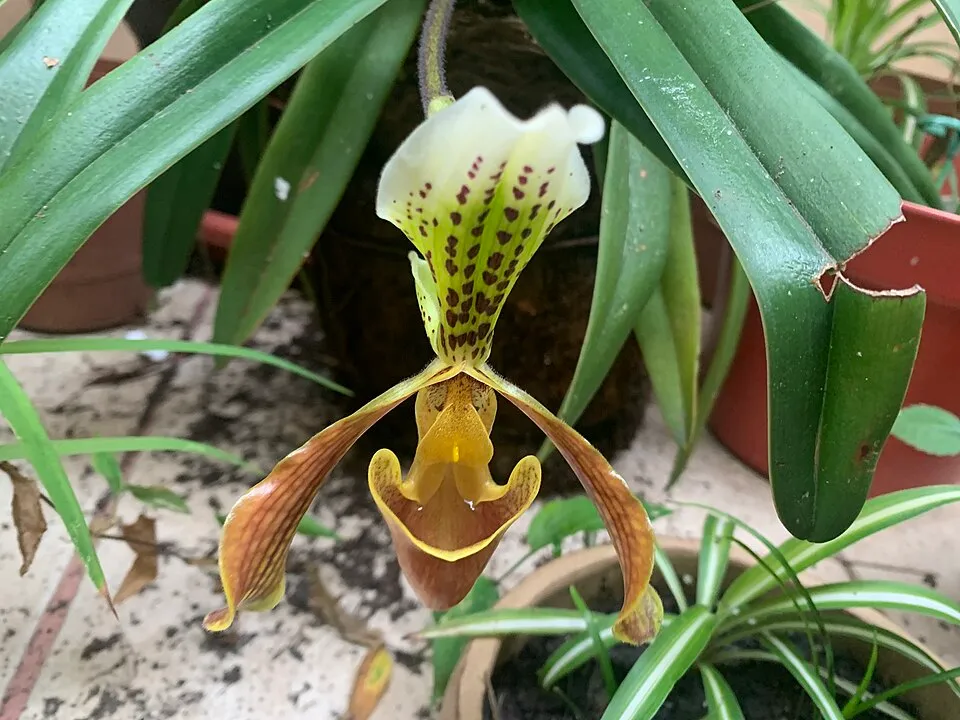
Paphiopedilum insigne, commonly known as the Orchid Paphiopedilum or Slipper Orchid, is a remarkable terrestrial or lithophytic species within the expansive Orchidaceae family. This captivating orchid typically reaches a modest height of 30-45 cm, making it an excellent choice for indoor cultivation. Its most distinguishing feature is its flower, which boasts a distinctive slipper-shaped labellum—a hallmark of the Cypripedioideae subfamily. These exotic blooms exhibit a spectrum of creamy yellow to pale green hues, frequently adorned with intricate maroon or brownish-purple patterns and spots, particularly on the dorsal sepal, which can be reflexed or cupped.
The petals often display undulated or twisted margins, enhancing their unique appeal. Below the floral display, the plant’s glossy, elliptical to oblong-lanceolate leaves, measuring 12-25 cm in length and 4-10 cm in width, are equally attractive. A notable characteristic of the foliage is its striking mottled pattern, comprising varying shades of green, ensuring aesthetic appeal even when the plant is not in bloom. Paphiopedilum insigne develops from a robust, creeping rhizome that firmly anchors the plant in its substrate.
The roots are fleshy, thick, and somewhat succulent, optimally adapted for absorbing moisture and nutrients from its humid environment. This species is indigenous to the humid, subtropical forests of Southeast Asia, with its natural range spanning regions of Myanmar, Thailand, and parts of the Indian subcontinent. It thrives in shaded understory locales, often found growing among leaf litter or on mossy rocks, preferring consistently mild temperatures and high humidity. Taxonomically, Paphiopedilum insigne is a significant member of the 'slipper orchid' group, renowned for its unique pollination mechanisms involving insect traps.
Trusted Scientific References
1. Authoritative external sources for Paphiopedilum insigne
1.1 Wikipedia — Paphiopedilum insigne
1.2 Kew POWO (Plants of the World Online)
1.3 PubMed — peer-reviewed research
1.4 NCBI Taxonomy Browser
1.5 GBIF — Global Biodiversity
1.1.Orchid Paphiopedilum — Highlights
- ✓Distinctive Slipper — Shaped Labellum — The most iconic feature, resembling a pouch.
- ✓Mottled Green Foliage — Leaves display an attractive pattern of varying green shades.
- ✓Creeping Rhizome Structure — Forms a robust, horizontal underground stem for growth and anchorage.
- ✓Fleshy, Succulent Roots — Adapted for efficient moisture and nutrient absorption.
- ✓Adaptable Indoor Plant — Relatively easy to grow indoors with proper care.
- ✓Blooms Fall to Late Winter — Provides vibrant color during colder months.
- ✓Pollination via Insect Traps — Utilizes a unique mechanism to attract and temporarily trap insects for pollination.
- ✓Moderate Stature (30 — 45 cm) — A compact size suitable for home cultivation.
- ✓Wide Color Spectrum in Flowers — Ranging from creamy yellow to pale green with maroon patterns.
- ✓Tolerant of Lower Light than Epiphytic Orchids — Thrives in shaded forest understory conditions.
1.2.Orchid Paphiopedilum — In Brief
- ✓Paphiopedilum insigne is known as the Slipper Orchid, recognized by its distinctive pouch-shaped labellum.
- ✓It is a terrestrial or lithophytic orchid native to humid, shaded forests of Southeast Asia.
- ✓Prized primarily for its ornamental value, featuring attractive mottled foliage and exotic blooms.
- ✓Requires specific care — indirect light, high humidity, consistently moist, well-drained orchid mix.
- ✓While not traditionally prominent in direct medicinal applications, theoretical benefits are explored based on general orchid phytochemistry.
- ✓Limited research exists on its medicinal properties, necessitating caution and expert consultation for any internal use.
2.Orchid Paphiopedilum — Nomenclature & Classification
3.Orchid Paphiopedilum — Key Data
4.Orchid Paphiopedilum — Botanical Description
5.Orchid Paphiopedilum — Native Range & Habitat
6.Orchid Paphiopedilum — Heritage Uses
7.Orchid Paphiopedilum — Chemical Profile
- ✓Flavonoids — Compounds like quercetin and kaempferol are anticipated, known for their antioxidant, anti-inflammatory, and potential cardioprotective actions.
- ✓Alkaloids — Various nitrogen-containing compounds may be present, often exhibiting diverse pharmacological activities, though specific types for P. insigne are not well-documented.
- ✓Terpenoids — Aromatic compounds, including monoterpenes and triterpenes like lupeol, contribute to plant defense and possess anti-inflammatory and antimicrobial properties.
- ✓Polysaccharides — Complex carbohydrates that can have immunomodulatory effects, supporting immune function and cellular communication.
- ✓Phenolic Acids — Such as gallic acid or caffeic acid derivatives, which are potent antioxidants and contribute to the plant's defense mechanisms.
- ✓Steroids/Phytosterols — Compounds like beta-sitosterol, which are plant-derived steroids with reported anti-inflammatory and cholesterol-lowering properties.
- ✓Glycosides — Molecules where a sugar is bound to a non-sugar component, often influencing solubility and bioavailability, and contributing to various biological activities.
- ✓Stilbenoids — Resveratrol-like compounds that are known for their strong antioxidant, anti-inflammatory, and potential anti-cancer activities.
- ✓Lipids — Essential fatty acids and other lipid components crucial for cell membrane integrity and energy storage within the plant.
- ✓Amino Acids — The fundamental building blocks of proteins, vital for plant growth, metabolism, and the synthesis of secondary metabolites.
8.Orchid Paphiopedilum — Scientific Evidence
- ✓Potential Anti-inflammatory Effects — Many plant species, including certain orchids, contain compounds like flavonoids and phenanthrenes that exhibit anti-inflammatory properties in preclinical studies, suggesting a theoretical benefit for reducing localized swelling and pain.
- ✓Antioxidant Support — The presence of various phenolic compounds and flavonoids provides a theoretical basis for antioxidant activity, which may help combat oxidative stress and protect cellular health.
- ✓Immunomodulatory Potential — While not specifically studied for Paphiopedilum insigne, some orchids are believed to possess compounds that could modulate immune responses, potentially enhancing or balancing the body's defenses.
- ✓Anxiolytic Properties (Theoretical) — In traditional Asian herbalism, certain orchid species are sometimes used to calm the mind and alleviate anxiety, suggesting a potential, albeit unproven, anxiolytic effect for this plant.
- ✓Digestive Aid (Hypothetical) — Historically, some plants with mucilaginous properties or bitter compounds have been used to support digestion; P. insigne's potential phytochemical profile might theoretically offer mild digestive comfort.
- ✓Respiratory Support (Speculative) — General herbal medicine often utilizes plants for respiratory ailments; a theoretical application for P. insigne could be for soothing minor coughs or congestion if appropriate compounds are present.
- ✓Skin Health Applications (Topical) — Extracts from various botanicals are used in dermatological preparations for soothing and protecting the skin; P. insigne could hypothetically be employed in balms or poultices for minor skin irritations or hydration.
- ✓Analgesic Effects (Unconfirmed) — Plants rich in certain terpenoids or alkaloids can offer pain relief; if such compounds are identified in P. insigne, a mild analgesic effect could be postulated.
- ✓Antimicrobial Activity (Preclinical Basis) — Many plant secondary metabolites exhibit antimicrobial properties; an extract of P. insigne could theoretically possess activity against certain bacteria or fungi in laboratory settings.
- ✓Cardioprotective Potential (Indirect) — Through its potential antioxidant and anti-inflammatory actions, P. insigne could indirectly contribute to cardiovascular health by protecting against cellular damage, though direct evidence is lacking.
- ✓Adaptogenic Qualities (Exploratory) — Some plants are considered adaptogens, helping the body cope with stress; future research might explore if P. insigne possesses compounds that support physiological balance.
- ✓Cognitive Enhancement (Unsubstantiated) — Certain botanicals are studied for their neuroprotective or cognitive-enhancing properties; this remains a highly speculative area for P. insigne without specific research.
8.1.Orchid Paphiopedilum — Reported Uses
9.Orchid Paphiopedilum — Safety & Side Effects
9.1.Orchid Paphiopedilum — Caution Notes
- ✓Allergic Reactions — Contact with plant sap or ingestion may cause allergic dermatitis, skin irritation, or respiratory discomfort in sensitive individuals.
- ✓Gastrointestinal Upset — Ingesting plant material, especially without proper preparation or in excessive amounts, could lead to nausea, vomiting, or diarrhea.
- ✓Unknown Drug Interactions — Due to limited research on Paphiopedilum insigne's medicinal properties, potential interactions with prescription medications are unknown and should be approached with caution.
- ✓Potential Toxicity — As with many unresearched botanicals, there's a theoretical risk of toxicity from unidentified compounds if ingested, particularly in concentrated forms.
- ✓Dermatitis — Direct handling of the plant, especially if sensitive, might result in skin redness, itching, or rash.
- ✓Overconsumption Issues — If used medicinally without established dosages, overconsumption could lead to adverse effects, the nature of which are currently unknown.
9.2.Orchid Paphiopedilum — Toxicity Assessment
- ✓Lack of Clinical Data — There is very limited scientific research on the medicinal safety and efficacy of Paphiopedilum insigne in humans; therefore, internal use is not recommended.
- ✓Pregnancy and Lactation — Pregnant or breastfeeding individuals should strictly avoid medicinal use due to insufficient safety data and the potential for unknown effects on development.
- ✓Pediatric Use — Not advisable for children without explicit guidance from a qualified healthcare professional due to the absence of safety studies in this demographic.
- ✓Allergic Sensitivities — Individuals with known plant allergies, especially to other orchids, should exercise caution and perform a patch test before any topical application.
- ✓Pre-existing Conditions — Patients with chronic health conditions or those on regular medications should consult a physician before considering any medicinal use of this plant.
- ✓Purity Concerns — If considering any form of medicinal preparation, ensuring the plant material is free from pesticides, heavy metals, and other contaminants is paramount, though its primary use is ornamental.
10.Orchid Paphiopedilum — Preparation Methods
- ✓Ornamental Cultivation — Primarily grown as an exotic houseplant for its stunning, unique flowers and attractive foliage, adding aesthetic value to indoor spaces.
- ✓Topical Application (Theoretical) — If future research confirms beneficial skin properties, infused oils or poultices made from leaves or rhizomes could theoretically be applied to soothe minor skin irritations.
- ✓Tinctures (Exploratory) — Hypothetically, an alcohol extract (tincture) of the plant could be prepared for internal use if specific medicinal compounds and safe dosages are identified through research.
- ✓Decoctions (Unconfirmed) — A decoction, made by simmering the rhizomes or roots in water, could be a theoretical preparation method for internal use, pending safety and efficacy studies.
- ✓Infusions (Speculative) — Leaves or flowers might theoretically be steeped in hot water to create an herbal infusion, similar to a tea, if the plant were to be consumed internally for its proposed benefits.
- ✓Aromatic Use (Limited) — While many Paphiopedilum species lack strong fragrance, those with a subtle aroma could theoretically be used in calming aromatic blends or for subtle environmental scenting.
- ✓Homeopathic Preparations (Potential) — In highly diluted forms, Paphiopedilum could theoretically be incorporated into homeopathic remedies based on its energetic signature, though this is outside conventional herbalism.
11.Orchid Paphiopedilum — Garden Cultivation
- ✓Light — Provide medium indirect light; an east-facing window is ideal, or a shaded south/west window. Mottled-leaf varieties like P. insigne require less light than solid green types.
- ✓Soil — Use a chunky, well-drained orchid mix comprising ingredients such as orchid bark, perlite, charcoal, and coconut husk. Standard potting soil is unsuitable.
- ✓Water — Water 1-2 times per week, ensuring the growing medium remains consistently moist but not waterlogged. Avoid allowing the medium to dry out completely, and refrain from using softened water.
- ✓Humidity — Maintain relative humidity between 40% and 70%. In dry environments, running a humidifier nearby is beneficial to mimic its native tropical conditions.
- ✓Temperature — Optimal temperatures range from 60-85°F (15-29°C), though the plant can tolerate short periods as low as 50°F (10°C) and up to 95°F (35°C).
- ✓Fertilizer — Fertilize weekly after watering with a balanced orchid fertilizer diluted to one-quarter strength. Flush the growing medium monthly to prevent salt buildup.
- ✓Repotting — Repot every 2-3 years, ideally in spring when new growth emerges and after flowering has concluded. Choose a pot only one size larger.
- ✓Pruning — Minimal pruning is needed; simply remove any dead or damaged leaves at the base of the plant using sterilized pruners.
Reviewed by the Flora Medical Global Botanical Review Panel
Multi-disciplinary editorial group · Botany · Ethnobotany · Herbal-medicine literature
Who reviewed this: This page was checked by the Flora Medical Global Botanical Review Panel — an in-house editorial group of botany graduates, ethnobotany researchers, and horticulture practitioners who collectively maintain our 7,000+ plant encyclopedia. Meet the team.
Our 4-step verification process
1. Taxonomic verification
Scientific names and synonyms cross-checked against Kew POWO, World Flora Online, and The Plant List.
2. Phytochemical & medicinal cross-reference
Active compounds, traditional uses, and reported activities are cross-referenced with PubMed, USDA Dr. Duke's database, and peer-reviewed ethnobotanical literature.
3. Conservation & distribution check
Distribution, ecology, and conservation status confirmed against GBIF occurrence records and the IUCN Red List.
4. Editorial & safety review
Every entry passes an editorial pass for clarity, originality, and safety notices (toxicity, contraindications, dosage caveats) before publication.
Last reviewed:
Important medical disclaimer: This content is for educational and research purposes only. It is not medical advice and is not a substitute for consultation with a licensed healthcare provider. Do not use any herb to self-treat a medical condition without professional guidance.
Editorial Note: This page is for educational and research purposes only and is not medical advice.
Written by: Flora Medical Global Editorial Team
Reviewed by: Flora Medical Global Botanical Review Panel
Last Updated: June 15, 2026





Orchid Paphiopedilum — Comments & Community Reviews
Rate this plant