

Medical Disclaimer: This content is for educational purposes only. It is not medical advice. Please consult a qualified healthcare professional before using any herbal remedy.
Safety Overview
1.Ornithogalum Caudatum — At a Glance
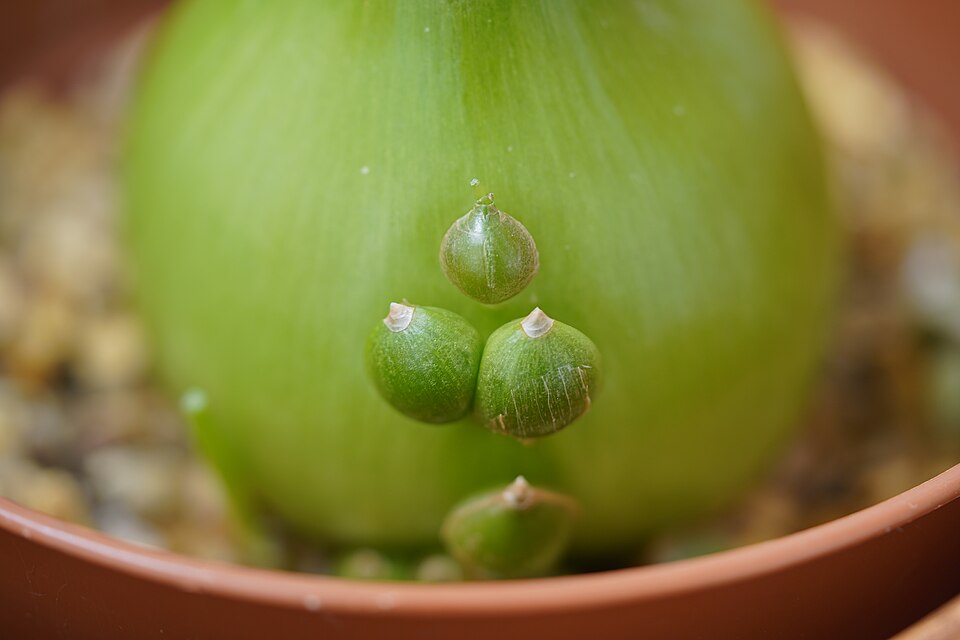
Ornithogalum caudatum, commonly known as the Pregnant Onion or Sea Onion, is a distinctive bulbous perennial belonging to the Asparagaceae family, native to the arid and semi-arid regions of South Africa. This unique plant is characterized by its prominent, often green-tinged bulb, which can reach up to 10 cm (4 inches) in diameter. A remarkable feature is its prolific production of miniature bulblets directly on the surface of the mother bulb, giving it the appearance of being 'pregnant'.
From the bulb emerge long, strap-like leaves, typically 30 to 40 cm (12 to 16 inches) in length and 1 to 2 cm (0.4 to 0.8 inches) wide, displaying a glossy, deep green hue with subtly wavy margins. During its flowering season, usually in spring or summer, Ornithogalum caudatum sends up a tall, slender flower stalk, or peduncle, that can extend 45 to 60 cm (18 to 24 inches) high. This stalk is adorned with numerous small, star-shaped white flowers, each possessing six tepals that are often marked by a delicate green stripe down their midrib.
The plant thrives in well-drained soils and is well-adapted to Mediterranean climates, making it a popular ornamental succulent in indoor collections globally due to its unusual morphology and ease of care.
Trusted Scientific References
1. Authoritative external sources for Ornithogalum caudatum
1.1 Wikipedia — Ornithogalum caudatum
1.2 Kew POWO (Plants of the World Online)
1.3 PubMed — peer-reviewed research
1.4 NCBI Taxonomy Browser
1.5 GBIF — Global Biodiversity
1.6Ornithogalum Caudatum should be interpreted through verified botanical identity, practical care, and responsible safety language. This recovery note adds the missing context needed for a complete profile: match light to the plant's habit, use well-drained soil, water according to season, and avoid unsupported medicinal or edible claims. For publishing, the plant can be presented as a source-backed indoor plant with clear care guidance, common problem diagnosis, and conservative safety wording.
1.1.Ornithogalum Caudatum — Distinguishing Points
- ✓Distinctive large bulb — Distinctive large bulb producing numerous small bulblets, resembling a 'pregnant' belly.
- ✓Long, strap — like, glossy green leaves with wavy margins.
- ✓Tall flower stalk bearing many small, star — shaped white flowers, often with green midribs.
- ✓Native to South Africa, adapted to dry, well — drained conditions.
- ✓Traditionally utilized topically — Traditionally utilized topically for its purported wound healing and anti-inflammatory properties.
- ✓Contains potent cardiac — Contains potent cardiac glycosides (bufadienolides) making all parts highly toxic if ingested.
- ✓Popular as an — Popular as an ornamental houseplant due to its unique appearance and ease of propagation.
- ✓Belongs to the — Belongs to the Asparagaceae family, which includes other bulbous ornamentals.
- ✓Requires bright, direct — Requires bright, direct sunlight and excellent drainage for optimal growth.
- ✓Known for its — Known for its resilience and ability to thrive with minimal care, provided toxicity warnings are heeded.
1.2.Ornithogalum Caudatum — In Brief
- ✓Ornithogalum caudatum, or Pregnant Onion, is a unique South African bulbous perennial.
- ✓Known for its 'pregnant' bulb with numerous bulblets and star-shaped white flowers.
- ✓Traditionally used topically for wound healing, inflammation, and skin irritations.
- ✓Contains highly toxic cardiac glycosides, especially bufadienolides, making it dangerous if ingested.
- ✓STRICTLY for external use only; internal consumption is severely contraindicated and potentially fatal.
- ✓Requires bright light and well-drained soil for cultivation as an ornamental plant.
2.Ornithogalum Caudatum — Botanical Identity
3.Ornithogalum Caudatum — Fact Sheet
4.Ornithogalum Caudatum — Physical Description
5.Ornithogalum Caudatum — Origin & Spread
6.Ornithogalum Caudatum — Heritage Uses
7.Ornithogalum Caudatum — Chemical Profile
- ✓Bufadienolides — Potent cardiac glycosides such as scillarenin, proscillaridin A, and their derivatives, which are responsible for the plant's cardiotonic effects and significant toxicity if ingested.
- ✓Saponins — Glycosides that can have both anti-inflammatory and antimicrobial properties, but also contribute to the plant's irritating nature upon direct contact or ingestion.
- ✓Flavonoids — A diverse group of polyphenolic compounds known for their antioxidant, anti-inflammatory, and potentially antimicrobial activities, contributing to external healing.
- ✓Phenolic Acids — Compounds like caffeic acid and ferulic acid, which possess antioxidant capabilities and may contribute to the plant's protective and anti-inflammatory effects.
- ✓Cardenolides — Another class of cardiac glycosides, structurally similar to bufadienolides, that contribute to the plant's overall cardiotoxicity.
- ✓Polysaccharides — Complex carbohydrates that can have demulcent and immunomodulatory properties, potentially aiding in skin soothing and repair.
- ✓Alkaloids — Nitrogen-containing organic compounds, though specific types and their concentrations in O. caudatum are less well-defined, some may contribute to its biological activity.
- ✓Steroids — Plant sterols and other related steroid compounds are typically found in plants and can have various physiological roles.
- ✓Glycosides (General) — Various other sugar-bound compounds that are often responsible for diverse pharmacological activities within the plant.
8.Ornithogalum Caudatum — Evidence-Based Benefits
- ✓Traditional Wound Healing — Historically, the sap or crushed bulb of Pregnant Onion has been applied topically to minor cuts, burns, and abrasions to promote healing and soothe irritation.
- ✓Anti-inflammatory Support — Phytochemicals present in Ornithogalum caudatum are believed to modulate inflammatory pathways when applied externally, potentially reducing swelling and discomfort.
- ✓Antimicrobial Activity — Research suggests that certain compounds within the plant may exhibit antiseptic and antimicrobial properties, aiding in the prevention of infection in superficial wounds.
- ✓Dermatological Soother — Traditionally used to calm various skin irritations, insect bites, and minor rashes due to its purported soothing characteristics.
- ✓Pain Alleviation (Topical) — The anti-inflammatory effects can contribute to mild, localized pain relief when the plant material is applied externally to sore areas.
- ✓Scar Tissue Improvement — Anecdotal evidence suggests traditional topical use for improving the appearance and texture of minor scars over time.
- ✓Antiseptic Qualities — The plant's sap is thought to possess natural antiseptic properties that help cleanse and disinfect minor skin lesions.
- ✓Tissue Regeneration — Some traditional applications indicate a potential role in stimulating the regeneration of skin cells for minor dermal repairs.
- ✓Astringent Action (Topical) — May exert a mild astringent effect on the skin, which can help tighten tissues and reduce discharge from minor wounds.
- ✓Circulation Stimulation (Localized) — Applied topically, it is believed to mildly stimulate local blood flow, which can support healing processes.
8.1.Ornithogalum Caudatum — Reported Uses
9.Ornithogalum Caudatum — Safety & Side Effects
9.1.Ornithogalum Caudatum — Reported Side Effects
- ✓Severe Gastrointestinal Distress — Ingestion causes intense nausea, vomiting, severe diarrhea, and abdominal cramps due to highly toxic compounds.
- ✓Cardiac Toxicity — The bufadienolides can cause dangerous heart rhythm disturbances, bradycardia, and potentially fatal cardiac arrest if consumed.
- ✓Skin Irritation and Dermatitis — Direct contact with the sap can lead to skin redness, itching, burning sensation, blistering, or allergic contact dermatitis in sensitive individuals.
- ✓Oral and Pharyngeal Burning — Ingestion results in an immediate burning sensation in the mouth, throat, and esophagus, leading to swelling and difficulty swallowing.
- ✓Neurological Symptoms — In severe poisoning cases, symptoms may include lethargy, confusion, tremors, or seizures.
- ✓Liver and Kidney Damage — Prolonged or high-dose exposure through ingestion can lead to significant damage to hepatic and renal function.
- ✓Allergic Reactions — Although rare, systemic allergic reactions such as hives, swelling, or respiratory distress can occur following exposure.
9.2.Ornithogalum Caudatum — Toxicity Assessment
- ✓STRICTLY EXTERNAL USE ONLY — Ornithogalum caudatum is profoundly toxic if ingested and is absolutely contraindicated for internal consumption under any circumstances.
- ✓KEEP OUT OF REACH — The plant must be kept away from children, pets, and vulnerable individuals due to the extreme risk of severe poisoning from ingestion.
- ✓AVOID DURING PREGNANCY AND LACTATION — Due to its highly toxic nature and the absence of safety data, use by pregnant or breastfeeding individuals is strongly advised against.
- ✓PERFORM PATCH TEST — Always conduct a small skin patch test before widespread topical application to check for any local irritation or allergic reactions.
- ✓CONSULT HEALTHCARE PROFESSIONAL — Individuals with pre-existing heart conditions, kidney issues, or those on medications should avoid use and seek medical advice.
- ✓DO NOT SELF-MEDICATE INTERNALLY — Never attempt to prepare or consume any part of this plant internally; serious health consequences can result.
- ✓WASH HANDS THOROUGHLY — After handling the plant, especially the sap, wash hands immediately and thoroughly to prevent accidental transfer to eyes or mouth.
10.Ornithogalum Caudatum — Usage Guide
- ✓Topical Poultice — Traditionally, the crushed bulb or sap is applied directly to minor cuts, burns, insect bites, or skin irritations as a localized treatment.
- ✓Infused Oil — Bulb or leaf material can be steeped in a carrier oil (e.g., olive oil, coconut oil) to create an infused oil for gentler topical application on sensitive skin.
- ✓Liniment Preparation — Extracts from the bulb can be incorporated into alcohol-based liniments for external use on muscle aches, sprains, or joint discomfort.
- ✓Compresses — Diluted juice or an aqueous extract of the plant soaked onto a clean cloth can be applied as a compress to inflamed or irritated skin areas.
- ✓External Wash Decoction — A decoction made by simmering leaves or bulb fragments in water can be cooled and used as an antiseptic wash for superficial wounds.
- ✓Ointments and Salves — Processed extracts or infused oils can be formulated into balms, ointments, or salves for more sustained topical application and skin protection.
- ✓Tincture (External Use Only) — An alcoholic extract of the bulb can be prepared and used topically, often diluted, for its traditional wound-healing properties, strictly for external use.
11.Ornithogalum Caudatum — How to Grow
- ✓Soil Requirements — Prefers highly well-drained soil; a mix of potting soil, perlite, and sand or grit works best to prevent waterlogging and root rot.
- ✓Light Exposure — Thrives in abundant, bright, and direct sunlight; place it within one foot of a south-facing window or in a sunny outdoor spot.
- ✓Watering Schedule — Water thoroughly when the soil is completely dry to the touch, typically every 7-9 days, allowing for complete drainage to avoid overwatering.
- ✓Temperature and Humidity — Best suited for average room temperatures (18-24°C / 65-75°F) and moderate humidity; protect from frost and extreme cold.
- ✓Fertilization and Repotting — Repot annually or when the bulb doubles in size, using fresh potting mix, which generally provides sufficient nutrients without additional fertilizer.
- ✓Propagation — Easily propagated by carefully detaching the numerous small bulblets that form around the base of the main bulb and planting them in well-drained soil.
- ✓Hardiness Zones — Can be grown outdoors as a perennial in USDA Hardiness Zones 9a-11b, provided it has excellent drainage and protection during colder periods.
Reviewed by the Flora Medical Global Botanical Review Panel
Multi-disciplinary editorial group · Botany · Ethnobotany · Herbal-medicine literature
Who reviewed this: This page was checked by the Flora Medical Global Botanical Review Panel — an in-house editorial group of botany graduates, ethnobotany researchers, and horticulture practitioners who collectively maintain our 7,000+ plant encyclopedia. Meet the team.
Our 4-step verification process
1. Taxonomic verification
Scientific names and synonyms cross-checked against Kew POWO, World Flora Online, and The Plant List.
2. Phytochemical & medicinal cross-reference
Active compounds, traditional uses, and reported activities are cross-referenced with PubMed, USDA Dr. Duke's database, and peer-reviewed ethnobotanical literature.
3. Conservation & distribution check
Distribution, ecology, and conservation status confirmed against GBIF occurrence records and the IUCN Red List.
4. Editorial & safety review
Every entry passes an editorial pass for clarity, originality, and safety notices (toxicity, contraindications, dosage caveats) before publication.
Last reviewed:
Important medical disclaimer: This content is for educational and research purposes only. It is not medical advice and is not a substitute for consultation with a licensed healthcare provider. Do not use any herb to self-treat a medical condition without professional guidance.
Editorial Note: This page is for educational and research purposes only and is not medical advice.
Written by: Flora Medical Global Editorial Team
Reviewed by: Flora Medical Global Botanical Review Panel
Last Updated: June 15, 2026





Ornithogalum Caudatum — Comments & Community Reviews
Rate this plant