
Medical Disclaimer: This content is for educational purposes only. It is not medical advice. Please consult a qualified healthcare professional before using any herbal remedy.
Safety Overview
1.Ornithogalum Thyrsoides — Overview
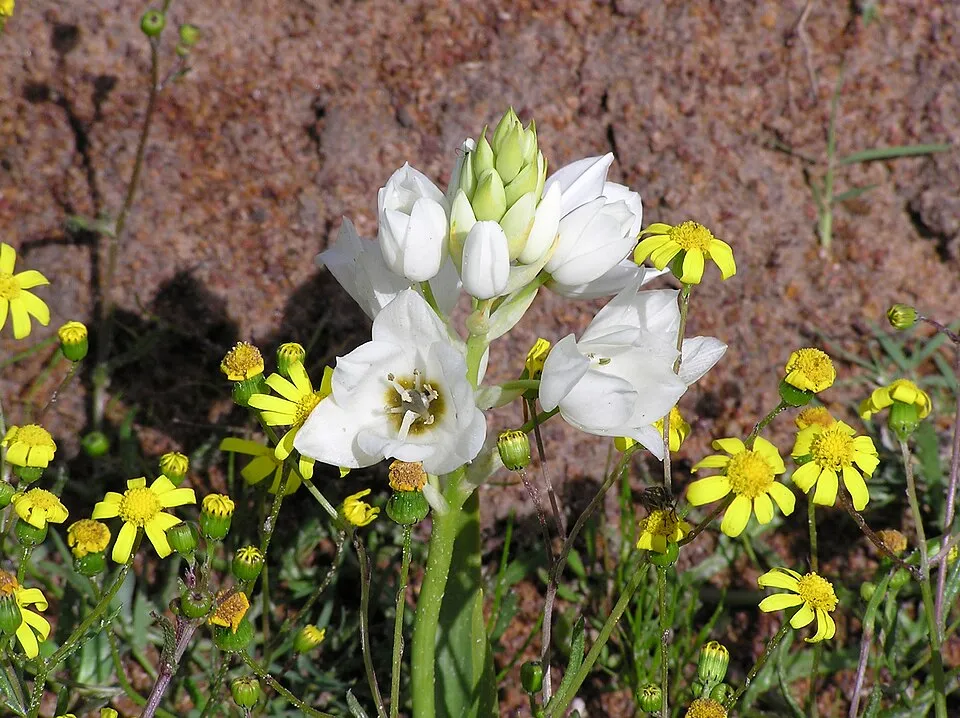
Ornithogalum thyrsoides, widely recognized as Chincherinchee, Cape Lily, Star-of-Bethlehem, or Wonder-flower, is a captivating perennial herbaceous plant indigenous to the Cape Provinces of South Africa. It thrives in the characteristic fynbos and renosterveld vegetation types, preferring well-drained sandy or loamy soils. Taxonomically, it belongs to the Asparagaceae family, specifically within the subfamily Scilloideae and tribe Ornithogaleae. This bulbous plant typically attains a height of 29 to 50 centimeters, entering a dormant phase during winter.
Its basal leaves are linear to lanceolate, measuring between 15 and 30 centimeters in length and 0.5 to 1.5 centimeters in width, exhibiting a smooth, soft texture before dying back post-flowering. The most striking feature of Ornithogalum thyrsoides is its inflorescence—a dense, terminal raceme or thyrse, or sometimes a looser corymb, bearing numerous bowl-shaped flowers. These blooms are typically pristine white to creamy-white, often marked with a distinctive green or brown stripe at their center, which fades with age. They are phototropic, turning towards the sun, and are celebrated for their exceptional longevity as cut flowers, symbolizing purity and cheerfulness.
The plant produces spindle-shaped capsular fruits containing small, black, shiny seeds. Its name 'thyrsoides' refers to its thyrse-like inflorescence, while 'chincherinchee' is derived from the Afrikaans 'tjienkerientjee,' alluding to the sound made by its stalks when rubbed together.
Trusted Scientific References
1. Authoritative external sources for Ornithogalum Thyrsoides
1.1 Wikipedia — Ornithogalum Thyrsoides
1.2 Kew POWO (Plants of the World Online)
1.3 PubMed — peer-reviewed research
1.4 NCBI Taxonomy Browser
1.5 GBIF — Global Biodiversity
1.6Ornithogalum Thyrsoides should be interpreted through verified botanical identity, practical care, and responsible safety language. This recovery note adds the missing context needed for a complete profile: match light to the plant's habit, use well-drained soil, water according to season, and avoid unsupported medicinal or edible claims. For publishing, the plant can be presented as a source-backed garden plant with clear care guidance, common problem diagnosis, and conservative safety wording.
1.1.Ornithogalum Thyrsoides — Defining Traits
- ✓Native to the — Native to the Cape Provinces of South Africa, thriving in fynbos and renosterveld.
- ✓Characterized by elegant, dense racemes of star — shaped white to creamy-white flowers.
- ✓Celebrated for its — Celebrated for its exceptionally long vase life, making it a popular cut flower globally.
- ✓Contains highly potent — Contains highly potent cardiac glycosides, rendering all parts of the plant extremely toxic if ingested.
- ✓Exhibits a perennial — Exhibits a perennial life cycle, forming bulbs that enable dormancy during unfavorable conditions.
- ✓Flowers are notably — Flowers are notably phototropic, orienting themselves towards the sun throughout the day.
- ✓Reaches a height of 29 — 50 cm, with lanceolate basal leaves appearing before or with the blooms.
- ✓Recognized with the — Recognized with the Royal Horticultural Society's Award of Garden Merit for its ornamental value.
- ✓Subject of scientific — Subject of scientific investigation for potential cytotoxic, anti-proliferative, and cardiotonic properties of isolated compounds.
- ✓Known by common — Known by common names such as Chincherinchee, Cape Lily, Star-of-Bethlehem, and Wonder-flower.
1.2.Ornithogalum Thyrsoides — Quick Summary
- ✓Ornithogalum thyrsoides, or Chincherinchee, is a bulbous, highly toxic ornamental plant from South Africa.
- ✓It contains potent cardiac glycosides, making all parts dangerous if ingested.
- ✓Research explores its isolated compounds for potential cardiotonic, cytotoxic, and anti-proliferative activities.
- ✓Absolutely no direct herbal medicinal use is recommended due to extreme toxicity and risk of fatal poisoning.
- ✓Primarily cultivated globally for its striking, long-lasting white flowers, cherished in floral arrangements.
2.Ornithogalum Thyrsoides — Scientific Profile
3.Ornithogalum Thyrsoides — Reference Facts
4.Ornithogalum Thyrsoides — Morphological Account
5.Ornithogalum Thyrsoides — Geographic Distribution
6.Ornithogalum Thyrsoides — Ethnobotanical Uses
7.Ornithogalum Thyrsoides — Secondary Metabolites
- ✓Cardiac Glycosides — These are the most notable active compounds, including bufadienolides and cardenolides, known for their potent effects on heart muscle contractility and significant toxicity in uncontrolled doses.
- ✓Flavonoids — A diverse group of polyphenolic compounds often found in plants, typically acting as antioxidants, anti-inflammatories, and offering protective cellular benefits.
- ✓Saponins — Glycosides that produce foam when agitated in water, sometimes exhibiting cytotoxic, hemolytic, or immune-modulating properties, though specific types and activities vary widely.
- ✓Alkaloids — Nitrogen-containing organic compounds, often with potent physiological effects, although their specific presence and types in Ornithogalum thyrsoides would require dedicated analysis.
- ✓Phenolic Acids — Simple phenolic compounds known for their antioxidant and anti-inflammatory activities, contributing to the overall defensive chemistry of the plant.
- ✓Steroidal Compounds — Including phytosterols, which are plant-derived steroids that can have various biological roles, such as modulating membrane fluidity and acting as precursors for other compounds.
- ✓Volatile Organic Compounds (VOCs) — Contributing to the plant's scent and potentially having antimicrobial or insect-repellent properties, though not typically associated with medicinal use for this species.
- ✓Polysaccharides — Complex carbohydrates found in plant cell walls, which can sometimes possess immune-modulating or prebiotic effects, although less studied for Ornithogalum thyrsoides.
- ✓Anthraquinones — A class of quinone derivatives, sometimes found in plants, with laxative or antimicrobial properties, though their presence in this specific plant needs verification.
- ✓Organic Acids — Various organic acids are present in plant metabolism, influencing pH and participating in metabolic pathways, with some having mild antimicrobial or antioxidant effects.
8.Ornithogalum Thyrsoides — Research Insights
- ✓Investigational Cardiotonic Support — Research on isolated cardiac glycosides from Ornithogalum thyrsoides suggests a potential to modulate heart muscle contractility, similar to digitalis, but direct plant ingestion is highly dangerous due to unpredictable potency.
- ✓Targeted Cytotoxicity Research — Specific compounds within Ornithogalum thyrsoides are being investigated for their selective cytotoxic effects against various cancer cell lines, indicating a promising area for future anti-cancer drug discovery.
- ✓Anti-proliferative Mechanism Studies — Constituents isolated from the plant show promise in laboratory settings for inhibiting abnormal cell growth and division, which is a key aspect in understanding and potentially treating proliferative disorders.
- ✓Programmed Cell Death Induction — Investigations are exploring the ability of plant-derived compounds to induce apoptosis in problematic cells, a crucial pathway for removing damaged or cancerous cells.
- ✓Glycoside-Mediated Biological Activity — The presence of cardiac glycosides signifies a class of compounds with known potent biological effects, prompting further study into their diverse pharmacological actions beyond cardiotonicity.
- ✓Phytochemical Screening for Bioactivity — Broader research aims to identify other bioactive compounds within Ornithogalum thyrsoides that might possess various therapeutic potentials, contributing to ethnopharmacological understanding.
- ✓Enzyme Inhibition Studies — Some plant compounds, particularly those with cytotoxic effects, are often explored for their ability to inhibit key enzymes involved in cell proliferation or survival, a pathway for drug development.
- ✓Natural Product Drug Discovery — Ornithogalum thyrsoides serves as a source for novel natural products, contributing to the broader field of drug discovery for complex diseases, emphasizing isolation and structural elucidation.
- ✓Oncology Research Potential — The collective findings on cytotoxicity, anti-proliferation, and apoptosis induction position Ornithogalum thyrsoides as a plant of significant interest in ongoing oncology research for new therapeutic agents.
- ✓Preclinical Pharmacological Investigations — Early-stage studies are crucial for understanding the safety and efficacy profiles of isolated compounds, paving the way for potential pharmaceutical applications under controlled conditions.
- ✓Understanding Cellular Pathways — Research into Ornithogalum thyrsoides compounds helps elucidate fundamental cellular pathways that are disrupted in diseases, offering insights into disease mechanisms and potential interventions.
- ✓Novel Compound Identification — The unique phytochemical profile of Ornithogalum thyrsoides drives efforts to identify and characterize novel compounds that could have distinct pharmacological properties.
8.1.Ornithogalum Thyrsoides — Health Applications
9.Ornithogalum Thyrsoides — Risk Profile
9.1.Ornithogalum Thyrsoides — Caution Notes
- ✓Severe Cardiotoxicity — Ingestion can lead to life-threatening cardiac arrhythmias, bradycardia, and potential heart failure due to the potent action of cardiac glycosides.
- ✓Gastrointestinal Distress — Common symptoms of poisoning include severe nausea, persistent vomiting, abdominal pain, and profuse diarrhea, indicating immediate systemic toxicity.
- ✓Neurological Symptoms — Individuals may experience dizziness, headache, confusion, visual disturbances, and in severe cases, seizures or altered consciousness.
- ✓Electrolyte Imbalance — The toxic effects can disrupt electrolyte balance, particularly potassium levels, further exacerbating cardiac and neurological complications.
- ✓Dermatitis and Irritation — Direct skin contact with the sap or plant parts can cause localized irritation, redness, or allergic dermatitis in sensitive individuals.
- ✓Fatal Outcomes — Due to its extreme toxicity, even small doses, especially of the bulbs, can be lethal if ingested, making it one of the most dangerous plants for self-medication.
9.2.Ornithogalum Thyrsoides — Toxicity Assessment
- ✓Extreme Toxicity — Ornithogalum thyrsoides is classified as highly toxic; under no circumstances should any part of the plant be ingested or applied medicinally.
- ✓Keep Out of Reach — Crucially, ensure the plant is kept strictly away from children and pets, as accidental ingestion can lead to severe and potentially fatal poisoning.
- ✓Handling Precautions — When handling the plant, especially the bulbs or broken stems, it is advisable to wear gloves to prevent potential skin irritation or dermatitis.
- ✓Emergency Protocol — In case of accidental ingestion, seek immediate medical attention or contact a poison control center without delay; induced vomiting is generally not recommended without professional guidance.
- ✓No Traditional Medicinal Use — Due to its inherent toxicity, Ornithogalum thyrsoides has no documented safe traditional medicinal uses in any system of herbalism.
- ✓Ornamental Use Only — Its cultivation is strictly for ornamental purposes, appreciating its aesthetic value while maintaining strict safety measures against contact or ingestion.
10.Ornithogalum Thyrsoides — Application Forms
- ✓NOT FOR DIRECT HERBAL USE — Ornithogalum thyrsoides is highly toxic due to cardiac glycosides; therefore, it is absolutely not recommended for any direct internal or external herbal medicinal application.
- ✓Pharmaceutical Research Extraction — Its compounds are primarily used in controlled laboratory settings for the extraction and isolation of specific cardiac glycosides for pharmacological research and potential drug development.
- ✓Controlled Clinical Studies — Any investigation into its medicinal properties occurs under strict medical supervision in clinical trials, utilizing purified and precisely dosed compounds, never the raw plant material.
- ✓Analytical Chemistry Applications — Plant material may be used in analytical chemistry to study its phytochemical profile, identify novel compounds, and quantify active constituents for scientific purposes.
- ✓Botanical Specimen Collection — For academic or conservation purposes, specimens are collected and preserved for botanical study, taxonomy, and genetic analysis, not for therapeutic preparation.
- ✓Ornamental Cultivation — Its primary safe use is as an ornamental garden plant or a long-lasting cut flower, appreciated solely for its aesthetic beauty and not for any self-medication.
11.Ornithogalum Thyrsoides — Growing Guide
- ✓Soil Requirements — Prefers well-drained, sandy or loamy soils, mimicking its native fynbos and renosterveld habitats.
- ✓Light Conditions — Thrives in full sun to partial shade, requiring sufficient light for robust flowering, especially in temperate climates.
- ✓Watering Schedule — Water regularly during its active growth period in late winter and spring, then reduce significantly as the plant enters dormancy in summer.
- ✓Temperature and Dormancy — Bulbs require protection from freezing temperatures during their winter dormancy; in colder regions, they should be lifted and stored.
- ✓Propagation — Can be propagated effectively from seeds, which should be sown in autumn, or by dividing offsets from mature bulbs during their dormant phase.
- ✓Fertilization — Benefits from a balanced, slow-release fertilizer applied at the beginning of its growing season to support strong bulb development and flower production.
- ✓Pests and Diseases — Generally robust, but watch for common bulb pests like slugs and snails, and ensure good air circulation to prevent fungal issues in humid conditions.
- ✓Ornamental Use — Highly valued for its long-lasting cut flowers and striking appearance in garden beds, especially in Mediterranean or mild temperate climates.
Reviewed by the Flora Medical Global Botanical Review Panel
Multi-disciplinary editorial group · Botany · Ethnobotany · Herbal-medicine literature
Who reviewed this: This page was checked by the Flora Medical Global Botanical Review Panel — an in-house editorial group of botany graduates, ethnobotany researchers, and horticulture practitioners who collectively maintain our 7,000+ plant encyclopedia. Meet the team.
Our 4-step verification process
1. Taxonomic verification
Scientific names and synonyms cross-checked against Kew POWO, World Flora Online, and The Plant List.
2. Phytochemical & medicinal cross-reference
Active compounds, traditional uses, and reported activities are cross-referenced with PubMed, USDA Dr. Duke's database, and peer-reviewed ethnobotanical literature.
3. Conservation & distribution check
Distribution, ecology, and conservation status confirmed against GBIF occurrence records and the IUCN Red List.
4. Editorial & safety review
Every entry passes an editorial pass for clarity, originality, and safety notices (toxicity, contraindications, dosage caveats) before publication.
Last reviewed:
Important medical disclaimer: This content is for educational and research purposes only. It is not medical advice and is not a substitute for consultation with a licensed healthcare provider. Do not use any herb to self-treat a medical condition without professional guidance.
Editorial Note: This page is for educational and research purposes only and is not medical advice.
Written by: Flora Medical Global Editorial Team
Reviewed by: Flora Medical Global Botanical Review Panel
Last Updated: June 15, 2026





Ornithogalum Thyrsoides — Comments & Community Reviews
Rate this plant