
Medical Disclaimer: This content is for educational purposes only. It is not medical advice. Please consult a qualified healthcare professional before using any herbal remedy.
Safety Overview
1.Osha — Botanical Snapshot
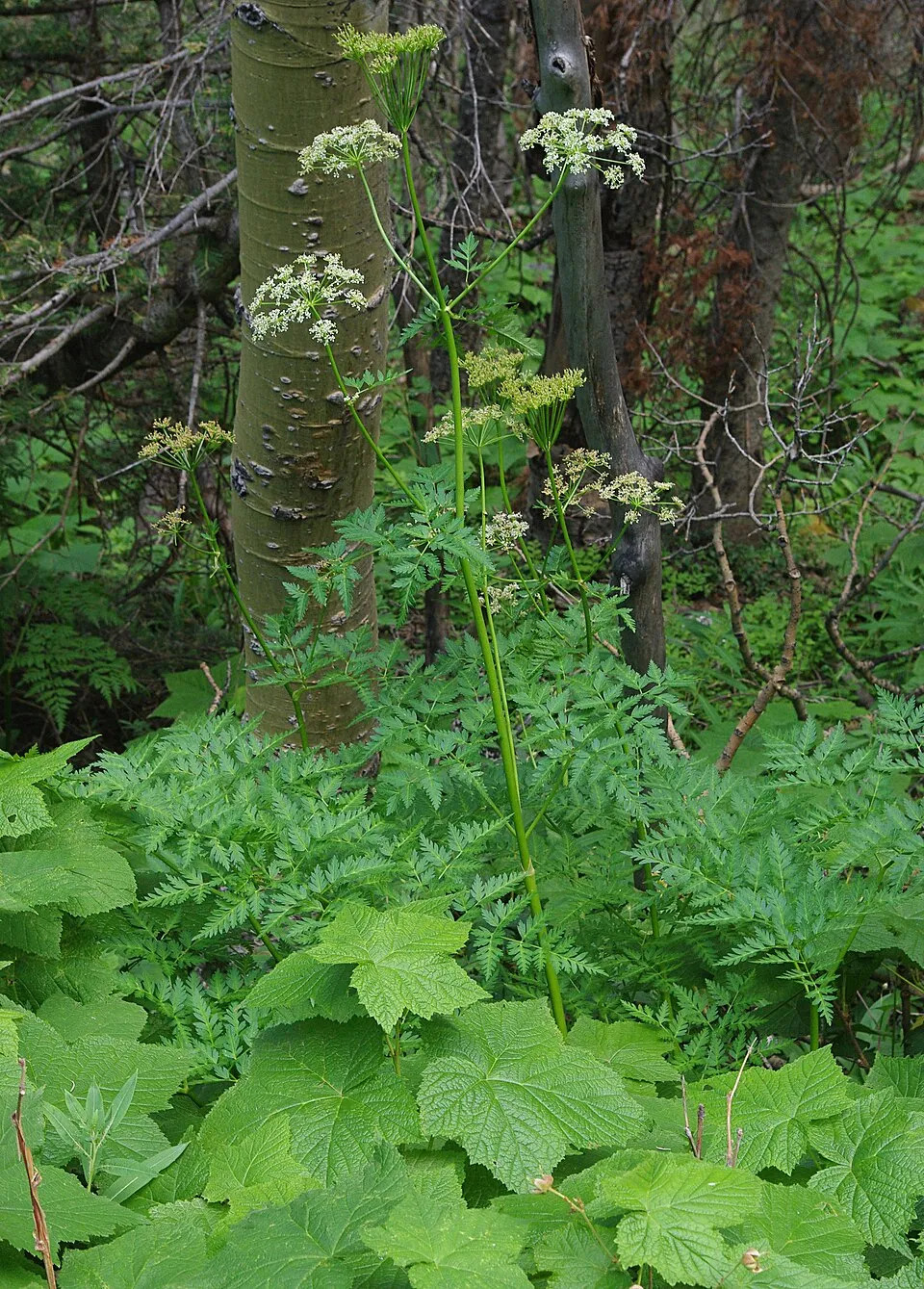
Osha (Ligusticum porteri), a revered member of the Apiaceae family, is a robust perennial herb native to high-altitude regions of North America, particularly the Rocky Mountains and surrounding areas. It thrives in subalpine and montane environments, often found in moist, well-drained soils within coniferous forests and open meadows at elevations ranging from 7,000 to 12,000 feet. The plant's morphology is distinct: it typically grows to 1-2 meters (3-6 feet) in height, featuring large, dark green, deeply dissected leaves that resemble those of its botanical relatives like parsley or celery.
Its characteristic hollow, sturdy stems support umbrella-like clusters of small, white to yellowish-white flowers, forming compound umbels that bloom from mid-summer to early autumn. The fruit consists of small, ribbed schizocarps. However, it is the root, thick and aromatic with a dark brown, wrinkled exterior and a pale, fibrous interior, that holds the primary medicinal value.
Its strong, pungent aroma, often described as a mix of celery and lovage with a hint of spice, is a key identifier. This deep taproot system allows Osha to anchor itself firmly in its challenging native habitat, accumulating potent bioactive compounds crucial for its traditional and modern therapeutic applications.
Trusted Scientific References
1. Authoritative external sources for Ligusticum porteri
1.1 Wikipedia — Ligusticum porteri
1.2 Kew POWO (Plants of the World Online)
1.3 PubMed — peer-reviewed research
1.4 NCBI Taxonomy Browser
1.5 GBIF — Global Biodiversity
1.6Osha should be interpreted through verified botanical identity, practical care, and responsible safety language. This recovery note adds the missing context needed for a complete profile: match light to the plant's habit, use well-drained soil, water according to season, and avoid unsupported medicinal or edible claims. For publishing, the plant can be presented as a source-backed medicinal plant with clear care guidance, common problem diagnosis, and conservative safety wording.
1.1.Osha — Notable Characteristics
- ✓Native North American Herb — Indigenous to the Rocky Mountains and high-altitude regions.
- ✓Apiaceae Family Member — Related to parsley, celery, and other aromatic plants.
- ✓Aromatic Taproot — The root is the primary medicinal part, known for its pungent, unique aroma.
- ✓Respiratory System Affinity — Highly valued for its expectorant, bronchodilatory, and antitussive actions.
- ✓Immunomodulatory Properties — Supports and strengthens the body's natural immune defenses.
- ✓Anti — inflammatory & Antimicrobial — Contains compounds that combat inflammation and various pathogens.
- ✓Traditional Medicine Staple — Long history of use in Indigenous North American folk medicine.
- ✓Slow — Growing Perennial — Requires several years to mature, impacting sustainability.
- ✓Distinctive Morphology — Large, deeply lobed leaves and compound umbels of white flowers.
- ✓Conservation Concern — Ethical sourcing and cultivation are important due to wild harvesting pressures.
1.2.Osha — Concise Overview
- ✓Osha (Ligusticum porteri) is a potent North American medicinal herb from the Apiaceae family.
- ✓Revered for its traditional use in respiratory and immune support, particularly for colds and flu.
- ✓Rich in phthalides, coumarins, and terpenes, contributing to its anti-inflammatory and antimicrobial properties.
- ✓Known for its strong, aromatic root, which is the primary medicinal part.
- ✓Requires careful cultivation or ethical wildcrafting due to its slow growth and specific habitat needs.
- ✓Contraindicated in pregnancy and requires caution with blood-thinning medications.
2.Osha — Botanical Identity
3.Osha — Key Data
4.Osha — Botanical Description
5.Osha — Ecological Habitat
6.Osha — Heritage Uses
7.Osha — Phytochemistry
- ✓Phthalides — Key compounds like Z-ligustilide, (E)-ligustilide, and senkyunolide A are responsible for Osha's characteristic aroma and contribute significantly to its anti-inflammatory, antispasmodic, and bronchodilatory effects.
- ✓Coumarins — Furanocoumarins such as osthol, psoralen, and bergapten are present, known for their anti-inflammatory, antimicrobial, and potential phototoxic properties.
- ✓Terpenoids — A diverse group including monoterpenes and sesquiterpenes, contributing to Osha's aromatic profile and exhibiting anti-inflammatory, antiseptic, and expectorant actions.
- ✓Flavonoids — Quercetin, kaempferol, and their glycosides are found, providing antioxidant, anti-inflammatory, and immune-modulating benefits.
- ✓Phenolic Acids — Caffeic acid and ferulic acid derivatives contribute to the plant's antioxidant and anti-inflammatory capacity.
- ✓Alkaloids — While less prominent than other classes, trace amounts may be present, potentially contributing to its overall pharmacological profile.
- ✓Saponins — These compounds contribute to Osha's expectorant properties, helping to thin mucus and facilitate its expulsion from the respiratory tract.
- ✓Tannins — Present in varying amounts, tannins offer astringent properties, useful in traditional applications for soothing irritated mucous membranes and providing antimicrobial effects.
- ✓Polysaccharides — Complex sugars that can contribute to immune-modulating effects, supporting the body's defense mechanisms.
- ✓Volatile Oils — A rich blend of compounds including alpha-pinene, beta-pinene, limonene, and various other terpenes, responsible for the strong aroma and contributing to its antimicrobial and respiratory benefits.
8.Osha — Scientific Evidence
- ✓Respiratory Support — Osha root is highly regarded for its ability to clear congestion, ease coughs, and support overall lung function, making it a valuable remedy for colds, flu, and bronchitis.
- ✓Anti-inflammatory Action — The plant's compounds help to reduce inflammation throughout the body, providing relief from various inflammatory conditions and supporting tissue healing.
- ✓Antimicrobial Properties — Osha exhibits broad-spectrum antimicrobial activity against bacteria, viruses, and fungi, contributing to its traditional use in fighting infections.
- ✓Immune System Modulation — It helps to strengthen and balance the immune response, enhancing the body's natural defenses against pathogens and stress.
- ✓Digestive Aid — Traditionally used to soothe digestive upset, promote healthy gut flora, and alleviate symptoms of indigestion and flatulence.
- ✓Pain Relief — Osha possesses mild analgesic properties, offering comfort from discomfort associated with respiratory issues, muscle aches, and mild inflammatory pain.
- ✓Circulatory Enhancement — Some traditional systems suggest it can improve peripheral circulation, supporting warmth in extremities and overall blood flow.
- ✓Diaphoretic Effect — It promotes sweating, which can be beneficial in fever management by helping the body cool down and excrete toxins.
- ✓Expectorant Action — The root helps to thin and expel mucus from the respiratory tract, providing relief from productive coughs and clearing airways.
- ✓Antiviral Activity — Specific compounds in Osha have been studied for their potential to inhibit viral replication, especially relevant for respiratory viral infections.
- ✓Antioxidant Protection — Rich in antioxidant compounds, Osha helps to neutralize free radicals, protecting cells from oxidative damage and supporting cellular health.
- ✓Adaptogenic Potential — While not a primary adaptogen, its overall supportive effects on the immune and respiratory systems may contribute to enhanced resilience against stressors.
8.1.Osha — Indications & Uses
9.Osha — Cautions & Contraindications
9.1.Osha — Caution Notes
- ✓Allergic Reactions — Individuals sensitive to plants in the Apiaceae family (e.g., celery, parsley, carrot) may experience allergic reactions, including skin rashes or respiratory distress.
- ✓Photosensitivity — Some furanocoumarins in Osha can increase skin sensitivity to sunlight, potentially leading to sunburn or skin irritation, especially with topical use.
- ✓Gastrointestinal Upset — High doses may cause mild stomach discomfort, nausea, or diarrhea in sensitive individuals.
- ✓Uterine Stimulation — Osha is traditionally contraindicated in pregnancy due to its potential to stimulate uterine contractions.
- ✓Blood-Thinning Interaction — Compounds in Osha might have mild antiplatelet effects, potentially interacting with anticoagulant medications and increasing bleeding risk.
- ✓Kidney Stress — Excessive, long-term use of Osha, particularly in individuals with pre-existing kidney conditions, should be approached with caution.
- ✓Drowsiness — In some rare cases, high doses may induce mild sedative effects, impacting alertness.
9.2.Osha — Safety Profile
- ✓Pregnancy and Lactation — Absolutely contraindicated during pregnancy due to potential uterine stimulation; avoid during breastfeeding as safety data is insufficient.
- ✓Allergic History — Exercise caution if you have known allergies to other members of the Apiaceae family (e.g., dill, fennel, anise, carrot).
- ✓Anticoagulant Medications — Individuals on blood-thinning medications should consult a healthcare professional before using Osha due to potential interactions.
- ✓Photosensitivity Risk — Advise caution regarding sun exposure, especially after topical application or high internal doses, to prevent phototoxic reactions.
- ✓Proper Identification — Osha can be confused with poisonous look-alikes from the Apiaceae family; ensuring correct identification is critical for safety.
- ✓Dosage Adherence — Adhere strictly to recommended dosages; excessive use can increase the risk of side effects.
- ✓Pre-existing Conditions — Individuals with kidney disease, liver conditions, or severe cardiovascular issues should seek medical advice before use.
10.Osha — Usage Guide
- ✓Decoction — The most common method; boil dried Osha root in water for 15-30 minutes to extract water-soluble compounds, often used for respiratory ailments.
- ✓Tincture — Alcohol-based extracts are potent and have a longer shelf life; prepared by soaking chopped fresh or dried root in high-proof alcohol for several weeks.
- ✓Infusion — While less common for roots, a strong hot water infusion can be made from finely powdered Osha root for internal use.
- ✓Powdered Root — Dried Osha root can be ground into a fine powder and encapsulated or mixed with liquids for easier consumption.
- ✓Topical Poultice — A paste made from powdered Osha root mixed with a small amount of water can be applied externally to soothe minor skin irritations or muscle aches.
- ✓Essential Oil — Though not widely available due to extraction difficulties, the volatile oils can be diffused or used in very diluted topical applications for respiratory support.
- ✓Syrups — Decoctions can be combined with honey or other natural sweeteners to create palatable syrups, particularly useful for coughs and sore throats.
- ✓Lozenges — Traditionally, small pieces of Osha root were chewed directly or incorporated into lozenges for throat and mouth health.
11.Osha — How to Grow
- ✓Habitat Mimicry — Osha thrives in cool, moist, high-altitude conditions; attempting to replicate these conditions is crucial for successful cultivation.
- ✓Seed Propagation — Seeds require a cold stratification period (3-6 months) and can be slow to germinate; sow in late fall or early spring.
- ✓Root Division — More reliable propagation method involves carefully dividing mature Osha roots in early spring, ensuring each section has a bud and healthy rootlets.
- ✓Soil Requirements — Prefers well-drained, rich, loamy soil with a slightly acidic to neutral pH (6.0-7.0), mimicking its natural forest floor environment.
- ✓Light Conditions — Thrives in partial shade, especially during the hottest parts of the day; direct, intense sunlight can stress the plant.
- ✓Water Needs — Requires consistently moist soil, but not waterlogged; regular watering is essential, particularly during dry spells.
- ✓Harvest Considerations — Osha is slow-growing; roots are typically harvested after 3-5 years of growth to ensure maturity and sustainable practices.
- ✓Conservation — Due to increasing demand and slow growth, ethical wildcrafting and cultivation are vital for the conservation of wild Osha populations.
Reviewed by the Flora Medical Global Botanical Review Panel
Multi-disciplinary editorial group · Botany · Ethnobotany · Herbal-medicine literature
Who reviewed this: This page was checked by the Flora Medical Global Botanical Review Panel — an in-house editorial group of botany graduates, ethnobotany researchers, and horticulture practitioners who collectively maintain our 7,000+ plant encyclopedia. Meet the team.
Our 4-step verification process
1. Taxonomic verification
Scientific names and synonyms cross-checked against Kew POWO, World Flora Online, and The Plant List.
2. Phytochemical & medicinal cross-reference
Active compounds, traditional uses, and reported activities are cross-referenced with PubMed, USDA Dr. Duke's database, and peer-reviewed ethnobotanical literature.
3. Conservation & distribution check
Distribution, ecology, and conservation status confirmed against GBIF occurrence records and the IUCN Red List.
4. Editorial & safety review
Every entry passes an editorial pass for clarity, originality, and safety notices (toxicity, contraindications, dosage caveats) before publication.
Last reviewed:
Important medical disclaimer: This content is for educational and research purposes only. It is not medical advice and is not a substitute for consultation with a licensed healthcare provider. Do not use any herb to self-treat a medical condition without professional guidance.
Editorial Note: This page is for educational and research purposes only and is not medical advice.
Written by: Flora Medical Global Editorial Team
Reviewed by: Flora Medical Global Botanical Review Panel
Last Updated: June 15, 2026





Osha — Comments & Community Reviews
Rate this plant