

Medical Disclaimer: This content is for educational purposes only. It is not medical advice. Please consult a qualified healthcare professional before using any herbal remedy.
Safety Overview
1.Osteospermum Ecklonis — At a Glance
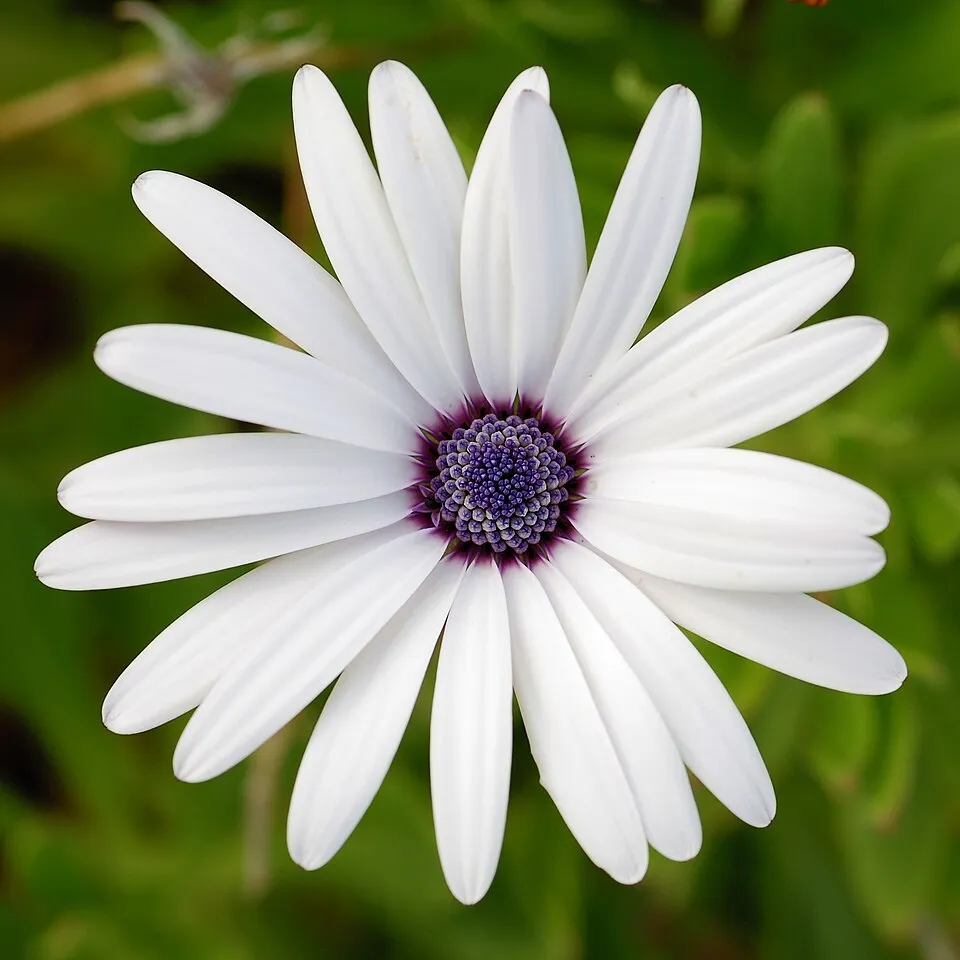
Osteospermum ecklonis, widely recognized as the African Daisy or Cape Daisy, is a strikingly beautiful and floriferous perennial member of the Asteraceae family. Indigenous to the Eastern Cape province of South Africa, this species has been extensively cultivated globally for its ornamental appeal, gracing gardens with its vibrant blooms. The plant typically exhibits a mounding or sprawling growth habit, reaching heights and widths of 30 to 90 cm (12 to 36 inches), which can vary significantly with cultivar selection and environmental factors. Its foliage is characterized by lance-shaped to obovate leaves, often featuring slightly to deeply serrated or lobed margins, presenting in shades ranging from bright green to grayish-green, sometimes with a subtle hirsute texture.
The most distinguishing feature of Osteospermum ecklonis is its solitary, daisy-like capitula, borne atop slender peduncles extending above the leaf canopy. These composite flowers are notable for their prominent central disc florets, which frequently display deep hues of blue, purple, or black, encircled by an impressive array of ray florets. These ray florets showcase an astonishing spectrum of colors, including pure white, creamy yellow, vibrant orange, soft pink, rich purple, and various captivating bicolors, with many modern hybrids exhibiting metallic or iridescent qualities. A fascinating phototropic characteristic means the flowers unfurl in direct sunlight and retract during overcast conditions or at night.
Optimal flowering periods typically occur during the cooler temperatures of spring and autumn, with blooming often diminishing or ceasing during intense summer heat, particularly in warmer climates. This fast-growing species is often cultivated as an annual in colder temperate zones or as a short-lived perennial in frost-free, warmer regions, valued primarily for its aesthetic contribution to landscapes.
Trusted Scientific References
1. Authoritative external sources for Osteospermum Ecklonis
1.1 Wikipedia — Osteospermum Ecklonis
1.2 Kew POWO (Plants of the World Online)
1.3 PubMed — peer-reviewed research
1.4 NCBI Taxonomy Browser
1.5 GBIF — Global Biodiversity
1.1.Osteospermum Ecklonis — Highlights
- ✓Strikingly vibrant, daisy — like flowers with diverse color palettes.
- ✓Phototropic blooms that — Phototropic blooms that open in sunlight and close at night or on cloudy days.
- ✓Native to the Eastern Cape of South Africa, well — adapted to specific climatic conditions.
- ✓Belongs to the — Belongs to the large Asteraceae family, sharing general botanical characteristics.
- ✓Forms a mounding — Forms a mounding or sprawling habit, suitable for various garden designs.
- ✓Relatively fast — growing, offering quick establishment and seasonal color.
- ✓Attracts beneficial insects — Attracts beneficial insects like bees and butterflies, supporting garden ecosystems.
- ✓Cultivated globally as — Cultivated globally as a popular ornamental annual or short-lived perennial.
- ✓Features lance — shaped to obovate leaves, often with serrated or lobed margins.
- ✓Exhibits a long — Exhibits a long flowering season, particularly in cooler spring and fall temperatures.
1.2.Osteospermum Ecklonis — Concise Overview
- ✓African Daisy is a vibrant, ornamental perennial from South Africa, cherished for its colorful, phototropic blooms.
- ✓Primarily an aesthetic garden plant, it offers visual appeal and attracts pollinators.
- ✓Contains potential phytochemicals like flavonoids and phenolic acids, suggesting mild antioxidant and anti-inflammatory properties.
- ✓Not traditionally recognized for strong medicinal uses; any therapeutic applications are largely speculative or require extensive research.
- ✓Easy to cultivate in full sun and well-drained soil, making it a popular choice for gardeners.
- ✓Exercise caution for potential allergic reactions, especially for individuals sensitive to the Asteraceae family.
2.Osteospermum Ecklonis — Nomenclature & Classification
3.Osteospermum Ecklonis — Vital Statistics
4.Osteospermum Ecklonis — Botanical Description
5.Osteospermum Ecklonis — Origin & Spread
6.Osteospermum Ecklonis — Traditional Uses
7.Osteospermum Ecklonis — Chemical Profile
- ✓Flavonoids — Includes compounds such as quercetin, kaempferol, and luteolin derivatives, known for their potent antioxidant, anti-inflammatory, and neuroprotective activities.
- ✓Phenolic Acids — Contains caffeic acid, chlorogenic acid, and ferulic acid, which contribute significantly to the plant's antioxidant capacity and may exert antimicrobial effects.
- ✓Sesquiterpene Lactones — While less prominent than in some other Asteraceae, certain sesquiterpenes may be present, imparting bitter principles and potential anti-inflammatory or cytotoxic properties.
- ✓Triterpenoids — Such as ursolic acid and oleanolic acid, which are recognized for their anti-inflammatory, hepatoprotective, and potential anticancer activities.
- ✓Essential Oils — Trace amounts of volatile organic compounds, including monoterpenes and sesquiterpenes, contributing to the plant's aroma and potentially possessing antimicrobial or insect-repellent properties.
- ✓Coumarins — Simple coumarins like scopoletin may be present, known for their anti-inflammatory, anticoagulant, and antimicrobial characteristics.
- ✓Saponins — Glycosides that can have foam-forming properties and may contribute to immunomodulatory or cholesterol-lowering effects, though less studied in this species.
- ✓Alkaloids — While not a primary class, minor alkaloid compounds might occur, requiring specific analytical detection for characterization.
- ✓Polysaccharides — Complex carbohydrates that can possess immunomodulatory and prebiotic properties, contributing to overall plant health and potentially human health benefits.
- ✓Carotenoids — Pigments like lutein and beta-carotene, responsible for the vibrant colors of the ray florets and acting as antioxidants with potential vision-protective benefits.
8.Osteospermum Ecklonis — Scientific Evidence
- ✓Anti-inflammatory Support — Contains compounds like flavonoids and triterpenoids that may modulate inflammatory pathways, potentially reducing localized swelling and discomfort.
- ✓Antioxidant Activity — Rich in phenolic acids and other antioxidants, which help neutralize free radicals, protecting cells from oxidative stress and supporting overall cellular health.
- ✓Mild Analgesic Properties — Traditionally speculated to offer minor pain relief through its potential anti-inflammatory effects, particularly for superficial aches or muscle soreness.
- ✓Antimicrobial Potential — Certain phytochemicals may exhibit inhibitory effects against specific bacteria and fungi, suggesting potential for topical antiseptic applications, though requiring further validation.
- ✓Skin Soothing Effects — Extracts may possess emollient and anti-irritant qualities, potentially calming minor skin irritations, redness, and promoting epidermal repair.
- ✓Mood Elevation (Aesthetic) — While not a direct pharmacological action, the plant's vibrant blooms and pleasant appearance are known to contribute to psychological well-being and stress reduction in horticultural therapy contexts.
- ✓Digestive Comfort (Traditional) — Anecdotal traditional uses suggest mild carminative properties for minor digestive upsets, though scientific backing for this specific plant is limited.
- ✓Immunomodulatory Potential — Some Asteraceae members contain polysaccharides and other compounds that could subtly influence immune responses, though specific research on Osteospermum ecklonis is needed.
- ✓Wound Healing Support — Through its potential anti-inflammatory and antimicrobial actions, extracts might support the natural wound healing process by keeping the area clean and reducing inflammation.
- ✓Circulatory Enhancement (Topical) — Hypothetically, some compounds could promote localized microcirculation when applied topically, assisting in the delivery of nutrients and removal of waste from tissue.
8.1.Osteospermum Ecklonis — Reported Uses
9.Osteospermum Ecklonis — Safety & Side Effects
9.1.Osteospermum Ecklonis — Possible Adverse Reactions
- ✓Allergic Contact Dermatitis — Individuals sensitive to the Asteraceae family may experience skin irritation, redness, or itching upon direct contact with sap or plant material.
- ✓Gastrointestinal Upset — Ingestion, especially of large quantities, may lead to mild nausea, vomiting, or diarrhea due to bitter compounds.
- ✓Photosensitivity — Some plant compounds, though not definitively linked to Osteospermum, can rarely increase skin sensitivity to sunlight.
- ✓Pollen Allergies — Like other daisies, its pollen may trigger allergic rhinitis or asthma in susceptible individuals during flowering season.
- ✓Drug Interactions (Hypothetical) — Theoretical interactions with medications are possible if concentrated extracts were consumed, particularly with anticoagulants or immunosuppressants due to potential coumarins or immunomodulatory compounds.
- ✓Oral Irritation — Direct chewing or ingestion of plant parts might cause minor irritation to the mouth or throat lining.
9.2.Osteospermum Ecklonis — Risk Assessment
- ✓Asteraceae Allergy Alert — Individuals with known allergies to plants in the daisy family (e.g., ragweed, marigolds) should exercise caution and avoid direct contact.
- ✓Not for Internal Medicinal Use — Due to limited research on human safety and efficacy, internal consumption for medicinal purposes is strongly discouraged.
- ✓Pregnancy and Lactation — Avoid use during pregnancy and breastfeeding due to insufficient safety data.
- ✓Pediatric Use — Not recommended for children without expert medical advice.
- ✓Skin Patch Test — Before topical application of any prepared extract, perform a small patch test on an inconspicuous area of skin to check for adverse reactions.
- ✓Keep Out of Reach of Pets — While generally considered low toxicity, ingestion by pets can cause mild gastrointestinal upset; consult a veterinarian if significant consumption occurs.
- ✓Consult Healthcare Professional — Always consult with a qualified healthcare provider before using any herbal product, especially if taking medications or having pre-existing health conditions.
10.Osteospermum Ecklonis — Preparation Methods
- ✓Ornamental Cultivation — Primarily grown for its aesthetic value in garden beds, borders, containers, and hanging baskets, providing vibrant color.
- ✓Dried Flower Potpourri — Petals can be carefully dried to retain some color and used in potpourri for decorative and mild aromatic purposes.
- ✓Topical Infused Oil (Experimental) — Macerate fresh or dried flowers in a carrier oil (e.g., almond, jojoba) for several weeks to create an infused oil, potentially for minor skin irritation relief.
- ✓Herbal Compress (Hypothetical) — Prepare a strong infusion from dried petals and leaves, soak a cloth, and apply as a compress to soothe minor muscular aches or skin blemishes.
- ✓Aromatic Bath Additive (Exploratory) — Infuse petals in warm bathwater for a relaxing and visually appealing experience, leveraging any subtle aromatic compounds.
- ✓Garden Tea (Non-Medicinal) — A mild, non-medicinal 'tea' can be made from the flowers, primarily for sensory enjoyment rather than therapeutic effect.
- ✓Eco-Dyeing (Artistic) — Experiment with petals and leaves as a natural dye source for textiles, though color fastness and vibrancy may vary.
- ✓Companion Planting — Utilize in gardens to attract beneficial pollinators like bees and butterflies, enhancing local biodiversity and garden health.
11.Osteospermum Ecklonis — Cultivation & Care
- ✓Site Selection — Prefers full sun exposure (at least 6 hours daily) for optimal flowering and robust growth.
- ✓Soil Requirements — Thrives in well-drained soil, ideally a sandy loam, with a slightly acidic to neutral pH (6.0-7.0); avoid heavy, waterlogged conditions.
- ✓Watering Regimen — Requires consistent moisture, especially during dry spells and establishment, but allow the top inch of soil to dry out between waterings to prevent root rot.
- ✓Fertilization — Benefit from a balanced, slow-release granular fertilizer applied in spring, or liquid feed every 2-4 weeks during peak growing season.
- ✓Deadheading — Regular removal of spent flowers encourages continuous blooming and prevents the plant from expending energy on seed production.
- ✓Pruning — Light pruning after the first flush of blooms can promote bushier growth and a second wave of flowers; a more significant cutback may be needed for overwintering perennials.
- ✓Pest and Disease Management — Generally robust, but monitor for aphids, whiteflies, and powdery mildew, treating with appropriate organic or chemical controls if necessary.
- ✓Propagation — Easily propagated from seeds sown in early spring or from softwood cuttings taken in late spring to early summer.
Reviewed by the Flora Medical Global Botanical Review Panel
Multi-disciplinary editorial group · Botany · Ethnobotany · Herbal-medicine literature
Who reviewed this: This page was checked by the Flora Medical Global Botanical Review Panel — an in-house editorial group of botany graduates, ethnobotany researchers, and horticulture practitioners who collectively maintain our 7,000+ plant encyclopedia. Meet the team.
Our 4-step verification process
1. Taxonomic verification
Scientific names and synonyms cross-checked against Kew POWO, World Flora Online, and The Plant List.
2. Phytochemical & medicinal cross-reference
Active compounds, traditional uses, and reported activities are cross-referenced with PubMed, USDA Dr. Duke's database, and peer-reviewed ethnobotanical literature.
3. Conservation & distribution check
Distribution, ecology, and conservation status confirmed against GBIF occurrence records and the IUCN Red List.
4. Editorial & safety review
Every entry passes an editorial pass for clarity, originality, and safety notices (toxicity, contraindications, dosage caveats) before publication.
Last reviewed:
Important medical disclaimer: This content is for educational and research purposes only. It is not medical advice and is not a substitute for consultation with a licensed healthcare provider. Do not use any herb to self-treat a medical condition without professional guidance.
Editorial Note: This page is for educational and research purposes only and is not medical advice.
Written by: Flora Medical Global Editorial Team
Reviewed by: Flora Medical Global Botanical Review Panel
Last Updated: June 15, 2026





Osteospermum Ecklonis — Comments & Community Reviews
Rate this plant