


Medical Disclaimer: This content is for educational purposes only. It is not medical advice. Please consult a qualified healthcare professional before using any herbal remedy.
Safety Overview
1.Otostegia — At a Glance
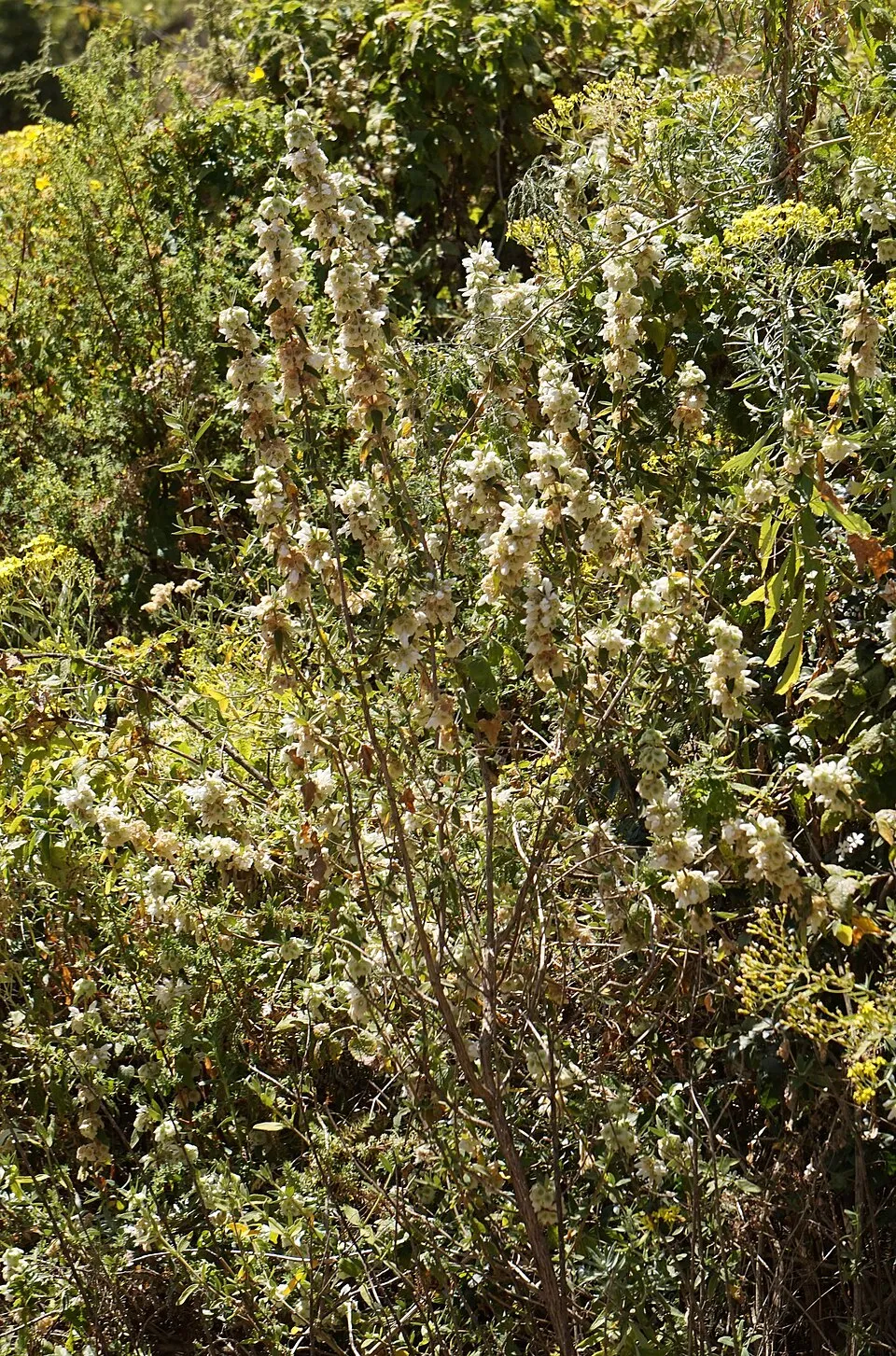
Otostegia integrifolia, often recognized by its common names Abyssinian rose or Tinjute, is a resilient perennial shrub belonging to the expansive Lamiaceae family, commonly known as the mint family. This robust plant typically attains a height of 1 to 4 meters, characterized by its much-branched growth habit. The stems are distinctive, often angled, with older sections developing an ash-grey, flaking bark and occasionally bearing paired spines at the nodes.
Its leaves are simple, nearly sessile, with an ob-lanceolate to lanceolate shape, measuring between 2 to 9 centimeters in length. They feature a cuneate base and are densely covered on both surfaces with white tomentum, giving them a soft, velvety texture. When crushed, the leaves emit a pleasantly aromatic scent, a hallmark of many Lamiaceae members.
The flowers are arranged in few to many 5-6 flowered whorls, exhibiting a two-lipped structure with a yellow or yellow-orange lower petal and a white or cream-colored upper petal, often enclosing orange anthers. Native and endemic to Ethiopia, particularly thriving in dry evergreen woodlands across various regions like Bale Mountains, Tigray, and Gojjam, it is also found in Yemen. Otostegia integrifolia flourishes at altitudes ranging from 1,300 to 2,800 meters above sea level, preferring well-drained soil and demonstrating remarkable resilience to drought, making it well-suited for arid to semi-arid environments.
Trusted Scientific References
1. Authoritative external sources for Otostegia integrifolia
1.1 Wikipedia — Otostegia integrifolia
1.2 Kew POWO (Plants of the World Online)
1.3 PubMed — peer-reviewed research
1.4 NCBI Taxonomy Browser
1.5 GBIF — Global Biodiversity
1.6Otostegia should be interpreted through verified botanical identity, practical care, and responsible safety language. This recovery note adds the missing context needed for a complete profile: match light to the plant's habit, use well-drained soil, water according to season, and avoid unsupported medicinal or edible claims. For publishing, the plant can be presented as a source-backed medicinal plant with clear care guidance, common problem diagnosis, and conservative safety wording.
1.1.Otostegia — Highlights
- ✓Endemic to Ethiopia and Yemen, flourishing in high — altitude dry woodlands.
- ✓Member of the — Member of the Lamiaceae (mint) family, characterized by aromatic foliage.
- ✓Highly drought — resilient, suitable for arid to semi-arid landscapes.
- ✓Traditional Ethiopian uses — Traditional Ethiopian uses include medicinal remedies and cultural rituals.
- ✓Contains a rich — Contains a rich profile of terpenes, flavonoids, and phenolic acids.
- ✓Exhibits significant antioxidant, anti — inflammatory, and antimicrobial properties.
- ✓Smoke from its wood is a well — known traditional insect repellent.
- ✓Flowers are distinctive, two — lipped with yellow/orange and white/cream petals.
- ✓Stem is typically square — shaped with ash-grey, flaking bark in older plants.
- ✓Known vernacularly as — Known vernacularly as 'Tinjute' in Amharic, highlighting its cultural importance.
1.2.Otostegia — In Brief
- ✓Otostegia integrifolia, or Abyssinian rose, is a Lamiaceae shrub native to Ethiopia.
- ✓Known for its aromatic leaves and drought resilience.
- ✓Traditionally used for immune support, anti-inflammatory, and antimicrobial benefits.
- ✓Rich in terpenes, flavonoids, and phenolic acids.
- ✓Also utilized as a natural insect repellent via fumigation.
- ✓Requires careful usage, especially regarding smoke inhalation and drug interactions.
2.Otostegia — Scientific Identity
3.Otostegia — Key Data
4.Otostegia — Ecological Habitat
5.Otostegia — Traditional Uses
6.Otostegia — Chemical Profile
- ✓Terpenoids — This broad category includes monoterpenes, sesquiterpenes, and diterpenes, which are largely responsible for the plant's characteristic aroma, insecticidal properties, and various bioactivities like anti-inflammatory and antimicrobial effects.
- ✓Flavonoids — These phenolic compounds are potent antioxidants, contributing to the plant's free radical scavenging capacity and offering anti-inflammatory and protective benefits to cellular health.
- ✓Phenolic Acids — Present in significant amounts, these compounds, like rosmarinic acid (common in Lamiaceae), contribute to the plant's strong antioxidant and antimicrobial activities.
- ✓Alkaloids — While typically in lower concentrations, alkaloids are nitrogen-containing compounds known for their diverse pharmacological activities, influencing various physiological processes.
- ✓Saponins — These glycosides are known for their foam-forming properties and can contribute to antimicrobial and immune-modulating effects.
- ✓Tannins — Astringent compounds that can contribute to antimicrobial effects and may offer protective benefits to mucous membranes.
- ✓Glycosides — Various glycosides are present, often influencing the plant's therapeutic actions, including antioxidant and anti-inflammatory pathways.
- ✓Essential Oils — The volatile fraction, rich in various terpenes, is responsible for the plant's distinct scent and contributes significantly to its antimicrobial and insect-repellent properties.
7.Otostegia — Evidence-Based Benefits
- ✓Antioxidant Support — Otostegia integrifolia is a potent source of natural antioxidants, which help to neutralize harmful free radicals in the body, protecting cells from oxidative damage and reducing the risk of chronic diseases.
- ✓Anti-inflammatory Properties — The plant contains bioactive compounds that exhibit significant anti-inflammatory effects, potentially alleviating pain and swelling associated with various inflammatory conditions.
- ✓Antimicrobial Activity — Extracts of Otostegia integrifolia have demonstrated broad-spectrum antimicrobial properties, helping to combat bacterial, fungal, and possibly viral infections, thus supporting overall immune health.
- ✓Antihyperglycemic Effects — Research suggests its potential in regulating blood sugar levels, making it a valuable adjunct for managing conditions like diabetes mellitus by improving glucose metabolism.
- ✓Immune System Modulation — Traditional uses and preliminary studies indicate its role in boosting the body's immune response, enhancing resistance against pathogens and promoting general wellness.
- ✓Digestive Health Aid — Traditionally used to support digestive functions, it may help in soothing gastrointestinal discomfort and promoting a healthy gut environment.
- ✓Ophthalmic Support — In folklore medicine, Otostegia has been used for the treatment of ophthalmia, suggesting potential benefits for eye health and alleviating eye infections or irritations.
- ✓Natural Insect Repellent — The smoke from burning Otostegia wood is traditionally used as an insect repellent, particularly against mosquitoes, owing to its insecticidal properties.
- ✓Postpartum Cleansing — In Ethiopian traditional practices, it is used in ritualistic fumigation for mothers after childbirth, believed to cleanse and aid recovery.
- ✓General Wellness Promotion — By addressing underlying oxidative stress, inflammation, and microbial imbalances, Otostegia contributes to overall vitality and disease prevention.
7.1.Otostegia — Indications & Uses
8.Otostegia — Safety Considerations
8.1.Otostegia — Possible Adverse Reactions
- ✓Allergic Reactions — Individuals sensitive to plants in the Lamiaceae family may experience skin irritation or respiratory issues upon contact or inhalation.
- ✓Gastrointestinal Upset — High doses taken internally may lead to mild digestive disturbances such as nausea or stomach discomfort.
- ✓Smoke Inhalation Risks — Prolonged or excessive inhalation of smoke from burning wood, especially in poorly ventilated areas, could cause respiratory irritation.
- ✓Drug Interactions — May interact with certain medications, particularly those affecting blood sugar or inflammation, due to its bioactive compounds.
- ✓Pregnancy and Lactation — Lack of sufficient research dictates avoidance or consultation with a healthcare professional during pregnancy and breastfeeding.
- ✓Hypotension — Due to potential antihyperglycemic effects, there's a theoretical risk of blood pressure changes, especially in individuals on hypotensive medication.
- ✓Photosensitivity — While not commonly reported, some Lamiaceae members can induce photosensitivity in susceptible individuals.
8.2.Otostegia — Safety Overview
- ✓Professional Consultation — Always consult a healthcare professional before using Otostegia integrifolia, especially if pregnant, nursing, or on medication.
- ✓Patch Testing — For topical applications, perform a patch test on a small skin area to check for allergic reactions before widespread use.
- ✓Dosage Adherence — Follow recommended dosages carefully; excessive intake may lead to adverse effects.
- ✓Avoid During Pregnancy/Lactation — Due to limited safety data, pregnant and breastfeeding women should avoid internal use.
- ✓Monitor Blood Sugar — Individuals with diabetes or on blood-sugar-lowering medication should monitor glucose levels closely if using this plant.
- ✓Respiratory Caution — Exercise caution with fumigation; ensure adequate ventilation to minimize smoke inhalation and respiratory irritation.
- ✓Quality Sourcing — Ensure the plant material is sourced from reputable suppliers to avoid contamination or misidentification.
9.Otostegia — Preparation Methods
- ✓Herbal Infusion/Tea — Dried leaves can be steeped in hot water to create a medicinal tea, traditionally used for immune support and digestive health.
- ✓Decoction — For more potent extraction, particularly from tougher plant parts, a decoction can be prepared by simmering the plant material in water.
- ✓Tincture — A concentrated liquid extract made by soaking plant material in alcohol, allowing for convenient and effective dosage.
- ✓Topical Application — Infused oils or poultices from crushed leaves can be applied externally for local anti-inflammatory or antimicrobial effects, for instance, on minor skin irritations.
- ✓Fumigation — The wood and dried leaves are traditionally burned to produce aromatic smoke, used as an insect repellent and for ceremonial postpartum cleansing.
- ✓Culinary Flavoring — The aromatic smoke from burning wood is also used to impart flavor to traditional Ethiopian beverages like 'tella' and to milk.
- ✓Essential Oil — The extracted essential oil can be used in aromatherapy or diluted for topical application, leveraging its antimicrobial and aromatic properties.
- ✓Poultice — Crushed fresh leaves can be applied directly to affected areas to draw out inflammation or for minor wound care, following traditional practices.
10.Otostegia — How to Grow
- ✓Soil Preference — Thrives in well-draining soil, tolerating a range of soil types from loamy to sandy.
- ✓Sunlight Requirements — Prefers full sun to partial shade, with adequate light promoting robust growth and flowering.
- ✓Watering Regimen — Requires regular watering, especially during dry periods, but is notably drought-resilient once established.
- ✓Climate Suitability — Best suited for tropical to subtropical climates, but can adapt to various temperate zones if protected from frost.
- ✓Altitude Adaptability — Grows naturally in altitudes between 1,300 to 2,800 meters above sea level, indicating adaptability to varied environmental pressures.
- ✓Propagation — Can be propagated through seeds or stem cuttings, with cuttings generally offering a faster establishment.
- ✓Pruning — Benefits from occasional pruning to maintain shape, encourage bushier growth, and promote flowering.
- ✓Pest and Disease Resistance — Generally robust, showing good resistance to common pests and diseases due to its inherent phytochemicals.
Reviewed by the Flora Medical Global Botanical Review Panel
Multi-disciplinary editorial group · Botany · Ethnobotany · Herbal-medicine literature
Who reviewed this: This page was checked by the Flora Medical Global Botanical Review Panel — an in-house editorial group of botany graduates, ethnobotany researchers, and horticulture practitioners who collectively maintain our 7,000+ plant encyclopedia. Meet the team.
Our 4-step verification process
1. Taxonomic verification
Scientific names and synonyms cross-checked against Kew POWO, World Flora Online, and The Plant List.
2. Phytochemical & medicinal cross-reference
Active compounds, traditional uses, and reported activities are cross-referenced with PubMed, USDA Dr. Duke's database, and peer-reviewed ethnobotanical literature.
3. Conservation & distribution check
Distribution, ecology, and conservation status confirmed against GBIF occurrence records and the IUCN Red List.
4. Editorial & safety review
Every entry passes an editorial pass for clarity, originality, and safety notices (toxicity, contraindications, dosage caveats) before publication.
Last reviewed:
Important medical disclaimer: This content is for educational and research purposes only. It is not medical advice and is not a substitute for consultation with a licensed healthcare provider. Do not use any herb to self-treat a medical condition without professional guidance.
Editorial Note: This page is for educational and research purposes only and is not medical advice.
Written by: Flora Medical Global Editorial Team
Reviewed by: Flora Medical Global Botanical Review Panel
Last Updated: June 15, 2026




Otostegia — Comments & Community Reviews
Rate this plant