

Medical Disclaimer: This content is for educational purposes only. It is not medical advice. Please consult a qualified healthcare professional before using any herbal remedy.
Safety Overview
1.Oxalis Iron Cross — Plant Snapshot
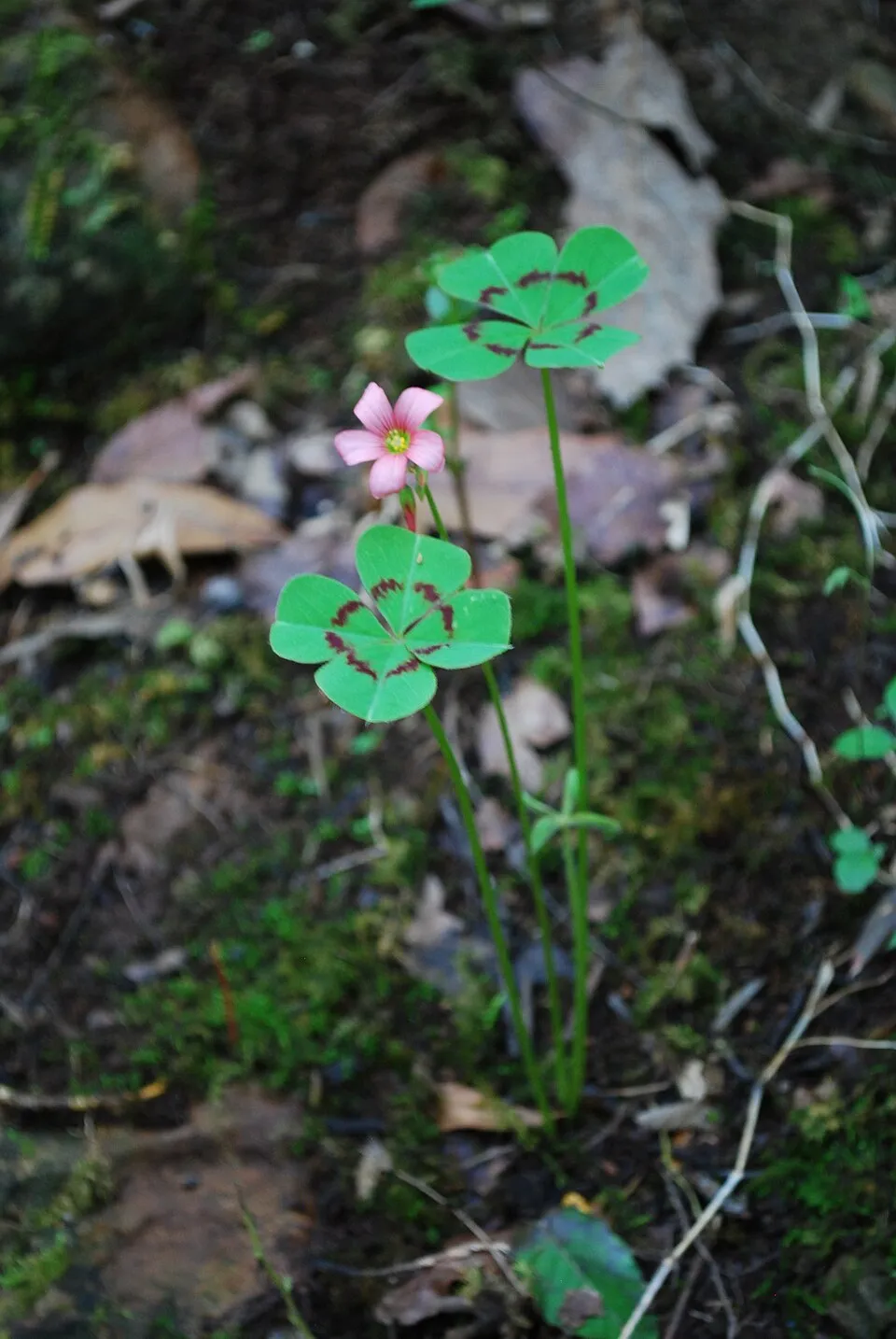
Oxalis tetraphylla, commonly known as Oxalis Iron Cross, is a captivating perennial herbaceous plant belonging to the diverse Oxalidaceae family. This species is highly valued for its distinctive ornamental foliage and delicate floral displays. It typically grows to a modest height of 12 to 18 inches (30 to 45 cm) with a similar spread, forming an attractive clump ideal for both indoor cultivation and shaded garden spots. The most striking morphological feature of Oxalis Iron Cross is its compound leaves, palmately divided into four leaflets.
These leaflets are symmetrically arranged, creating a cruciform or 'iron cross' pattern, which is the origin of its popular moniker and 'good luck plant' symbolism. Each leaflet presents a vibrant deep green color, beautifully contrasted by a prominent, often triangular or heart-shaped, purplish-brown blotch at its center, which intensifies under optimal light conditions. The leaves exhibit fascinating nyctinastic movements, folding downwards at night or in response to touch or intense light, a physiological adaptation to conserve moisture and protect against harsh conditions. The root system consists of small, bulb-like rhizomes or bulblets, which enable efficient vegetative propagation and perennation, allowing the plant to survive adverse conditions by going dormant.
During the warmer months, typically from spring through summer, slender, erect flower stalks emerge, bearing clusters of charming, five-petaled flowers. These blossoms range in color from soft pink to white, often with darker venation or centers, measuring approximately 1 inch (2.5 cm) in diameter. The delicate stems are typically light green, complementing the rich hues of the foliage. Oxalis tetraphylla is native to the warm temperate and subtropical regions of Mexico and parts of South America, where it naturally thrives in understory environments, preferring well-drained, sandy to loamy soils and partial to full indirect sunlight.
Trusted Scientific References
1. Authoritative external sources for Oxalis tetraphylla
1.1 Wikipedia — Oxalis tetraphylla
1.2 Kew POWO (Plants of the World Online)
1.3 PubMed — peer-reviewed research
1.4 NCBI Taxonomy Browser
1.5 GBIF — Global Biodiversity
1.1.Oxalis Iron Cross — Standout Qualities
- ✓Unique 'Iron Cross' — Unique 'Iron Cross' leaf pattern with four leaflets.
- ✓Striking deep green foliage with central purplish — brown markings.
- ✓Nyctinastic leaves that — Nyctinastic leaves that fold at night or in response to touch.
- ✓Produces charming pink to white, five — petaled flowers.
- ✓Grows from small, bulb — like rhizomes, allowing for easy propagation.
- ✓Native to Mexico — Native to Mexico and parts of South America, preferring partial shade.
- ✓Considered a 'Good — Considered a 'Good Luck Plant' and is a popular ornamental.
- ✓Relatively low maintenance — Relatively low maintenance and adaptable to various soil types.
- ✓Edible parts (leaves, — Edible parts (leaves, bulbs) are very sour due to oxalic acid, requiring extreme caution.
- ✓Excellent for container — Excellent for container gardening, rock gardens, and as a border plant.
1.2.Oxalis Iron Cross — Snapshot Summary
- ✓Distinctive 'Iron Cross' foliage with purplish-brown blotches.
- ✓Known as the 'Good Luck Plant' due to its four-leaf clover appearance.
- ✓Perennial bulbous plant, easy to grow in pots or gardens.
- ✓Exhibits nyctinastic leaf movements, folding at night.
- ✓Contains oxalic acid, making it cautiously edible in very small amounts.
- ✓Primarily cultivated as an ornamental plant for its unique aesthetic.
2.Oxalis Iron Cross — Taxonomic Classification
3.Oxalis Iron Cross — Botanical Stats
4.Oxalis Iron Cross — Structural Profile
5.Oxalis Iron Cross — Habitat & Distribution
6.Oxalis Iron Cross — Cultural & Traditional Roles
7.Oxalis Iron Cross — Secondary Metabolites
- ✓Oxalic Acid — The primary and most notable constituent, responsible for the characteristic sour taste and the main compound of concern regarding toxicity; it can bind with calcium, forming insoluble calcium oxalate crystals.
- ✓Flavonoids — A diverse group of polyphenolic compounds, including anthocyanins, contributing to the plant's colorful foliage and flowers, and potentially offering antioxidant and anti-inflammatory effects.
- ✓Ascorbic Acid (Vitamin C) — Present in varying amounts, contributing to the plant's nutritional profile and historical use as an antiscorbutic agent.
- ✓Anthocyanins — Pigments responsible for the purplish-brown blotches on the leaves and the pink to white hues of the flowers, acting as antioxidants and protecting against UV radiation.
- ✓Carotenoids — Pigments like beta-carotene, contributing to the green and yellow tones of the foliage and acting as antioxidants.
- ✓Terpenoids — A broad class of organic compounds, some of which may contribute to the plant's aroma or defense mechanisms, although specific active terpenoids in Oxalis tetraphylla are not widely documented.
- ✓Polysaccharides — Complex carbohydrates found in the plant's tissues and bulbs, contributing to its structural integrity and energy storage.
- ✓Tannins — Astringent polyphenols that may contribute to the plant's defense against herbivores and provide mild astringent effects in traditional applications.
8.Oxalis Iron Cross — Modern Studies
- ✓Digestive Aid — The plant's sour taste, primarily due to oxalic acid, may stimulate digestive secretions when consumed in very small, controlled amounts, potentially aiding appetite and digestion.
- ✓Diuretic Properties — Traditionally, some Oxalis species have been used as mild diuretics, promoting increased urine flow and assisting in the body's natural detoxification processes.
- ✓Cooling Agent — In some folk traditions, the slightly acidic nature of Oxalis leaves has been applied topically or consumed in small quantities to provide a cooling sensation and reduce minor inflammation.
- ✓Antiscorbutic Potential — Like other green leafy plants, Oxalis tetraphylla contains some Vitamin C, which historically made similar plants useful in preventing and treating scurvy, though not a primary source.
- ✓Mild Astringent — The presence of tannins and organic acids may impart mild astringent properties, potentially useful for minor skin irritations when applied externally as a poultice, with caution.
- ✓Antioxidant Activity — While not extensively studied for this specific species, other Oxalis varieties contain flavonoids and other phenolic compounds that exhibit antioxidant properties, protecting cells from oxidative stress.
- ✓Antimicrobial Effects (Speculative) — Some general Oxalis species have shown weak antimicrobial activity in vitro, suggesting potential, though unproven for O. tetraphylla, against certain pathogens.
- ✓Blood Purifier (Traditional) — In certain traditional medicine systems, plants with a slightly bitter or sour taste, like some Oxalis, were believed to 'purify' the blood or aid in general systemic cleansing.
- ✓Febrifuge (Folk Use) — The cooling nature attributed to Oxalis in folk medicine might have led to its use in reducing fever, though scientific evidence for O. tetraphylla is lacking.
- ✓Minor Wound Healing — When applied topically as a crushed leaf poultice, the plant's mild astringent and potential anti-inflammatory actions might traditionally have been used for minor cuts or abrasions, always with caution due to irritation potential.
8.1.Oxalis Iron Cross — Health Applications
9.Oxalis Iron Cross — Risk Profile
9.1.Oxalis Iron Cross — Side Effects & Warnings
- ✓Oxalic Acid Toxicity — Consumption of large quantities can lead to oxalic acid poisoning, causing kidney damage, kidney stone formation, and calcium depletion.
- ✓Digestive Upset — Ingesting too much can cause nausea, vomiting, diarrhea, and abdominal pain due to irritation of the gastrointestinal lining.
- ✓Oral Irritation — The raw leaves can cause a burning or tingling sensation in the mouth and throat due to the presence of calcium oxalate crystals.
- ✓Allergic Reactions — Sensitive individuals may experience skin irritation upon contact or allergic symptoms if ingested.
- ✓Nutrient Malabsorption — High intake of oxalic acid can interfere with the absorption of essential minerals like calcium, iron, and magnesium over time.
- ✓Cardiac Effects (Severe Cases) — In rare, severe cases of oxalic acid poisoning, cardiac arrhythmias and other heart issues can occur.
9.2.Oxalis Iron Cross — Risk Assessment
- ✓High Oxalic Acid Content — Oxalis tetraphylla contains significant levels of oxalic acid; consumption should be extremely limited and approached with caution, especially for individuals with sensitivities.
- ✓Contraindicated in Kidney Conditions — Individuals with a history of kidney stones, kidney disease, or gout should strictly avoid consuming any part of the plant.
- ✓Avoid During Pregnancy and Lactation — Due to insufficient safety data and the presence of oxalic acid, pregnant and breastfeeding women should refrain from use.
- ✓Not for Young Children — The plant should be kept out of reach of children and pets, as ingestion can lead to adverse health effects.
- ✓Drug Interactions — May interact with medications that affect calcium levels or kidney function; consult a healthcare professional before use if on medication.
- ✓Topical Irritation — Direct skin contact with the sap or crushed leaves may cause irritation in sensitive individuals.
- ✓Moderation is Key — If consumed, only very small amounts as an occasional garnish are advised, never as a staple food or in large quantities.
10.Oxalis Iron Cross — Application Forms
- ✓Ornamental Cultivation — Primarily grown as a decorative houseplant or garden perennial for its striking foliage and cheerful flowers, adding visual interest to pots, borders, and rock gardens.
- ✓Limited Culinary Use — The leaves and bulbs have a sharp, lemony flavor and can be consumed in very small quantities, typically raw as a garnish or in salads, but extreme caution is advised due to oxalic acid content.
- ✓Traditional External Poultice — In some folk practices, crushed leaves might have been applied topically to minor skin irritations or as a cooling compress, though this should be done with extreme caution due to potential irritation.
- ✓Infusion (Highly Cautious) — Extremely diluted infusions from dried leaves have been historically used in very small doses as a mild diuretic or digestive stimulant, but this practice carries significant risks.
- ✓Ground Cover — Due to its creeping habit and attractive foliage, it can be used as a charming ground cover in shaded garden areas, naturalizing easily in suitable climates.
- ✓Container Planting — Excellent for growing in pots, window boxes, and hanging baskets, especially for indoor display or on patios where its unique appearance can be appreciated.
- ✓Symbol of Luck — Given as a 'good luck plant' around the New Year, symbolizing hope and fortune, making it a popular gift.
11.Oxalis Iron Cross — Propagation & Care
- ✓Planting Bulbs — Plant the small, bulb-like rhizomes about 5 cm (2 inches) deep and 12 cm (5 inches) apart in spring for optimal growth.
- ✓Soil Requirements — Thrives in fertile, humus-rich, and well-draining soil; it can tolerate various soil types and pH levels as long as drainage is adequate.
- ✓Light Exposure — Prefers bright indirect light indoors; outdoors, it tolerates a mix of full sun and partial shade, which is unusual for many Oxalis species.
- ✓Watering Schedule — Keep soil consistently moist but never waterlogged during the growing season; reduce watering significantly once leaves begin to die back for dormancy.
- ✓Temperature Needs — Performs best in cooler temperatures, ideally between 12-22°C (54-72°F); protect from frost as it is not fully hardy in colder zones.
- ✓Fertilization — Apply a slow-release granular fertilizer in spring or a liquid houseplant fertilizer monthly during the active growing season to support vigorous growth.
- ✓Dormancy Management — Allow the plant to go dormant by stopping water when leaves yellow; store bulbs in a cool, dark, dry place for 2-3 months before re-emerging in spring.
- ✓Propagation — Easily propagated by dividing the bulbs or bulblets during dormancy or when repotting, allowing for an increase in plant collection.
Reviewed by the Flora Medical Global Botanical Review Panel
Multi-disciplinary editorial group · Botany · Ethnobotany · Herbal-medicine literature
Who reviewed this: This page was checked by the Flora Medical Global Botanical Review Panel — an in-house editorial group of botany graduates, ethnobotany researchers, and horticulture practitioners who collectively maintain our 7,000+ plant encyclopedia. Meet the team.
Our 4-step verification process
1. Taxonomic verification
Scientific names and synonyms cross-checked against Kew POWO, World Flora Online, and The Plant List.
2. Phytochemical & medicinal cross-reference
Active compounds, traditional uses, and reported activities are cross-referenced with PubMed, USDA Dr. Duke's database, and peer-reviewed ethnobotanical literature.
3. Conservation & distribution check
Distribution, ecology, and conservation status confirmed against GBIF occurrence records and the IUCN Red List.
4. Editorial & safety review
Every entry passes an editorial pass for clarity, originality, and safety notices (toxicity, contraindications, dosage caveats) before publication.
Last reviewed:
Important medical disclaimer: This content is for educational and research purposes only. It is not medical advice and is not a substitute for consultation with a licensed healthcare provider. Do not use any herb to self-treat a medical condition without professional guidance.
Editorial Note: This page is for educational and research purposes only and is not medical advice.
Written by: Flora Medical Global Editorial Team
Reviewed by: Flora Medical Global Botanical Review Panel
Last Updated: June 15, 2026





Oxalis Iron Cross — Comments & Community Reviews
Rate this plant