
Medical Disclaimer: This content is for educational purposes only. It is not medical advice. Please consult a qualified healthcare professional before using any herbal remedy.
Safety Overview
1.Paeonia Delavayi — Introduction & Highlights
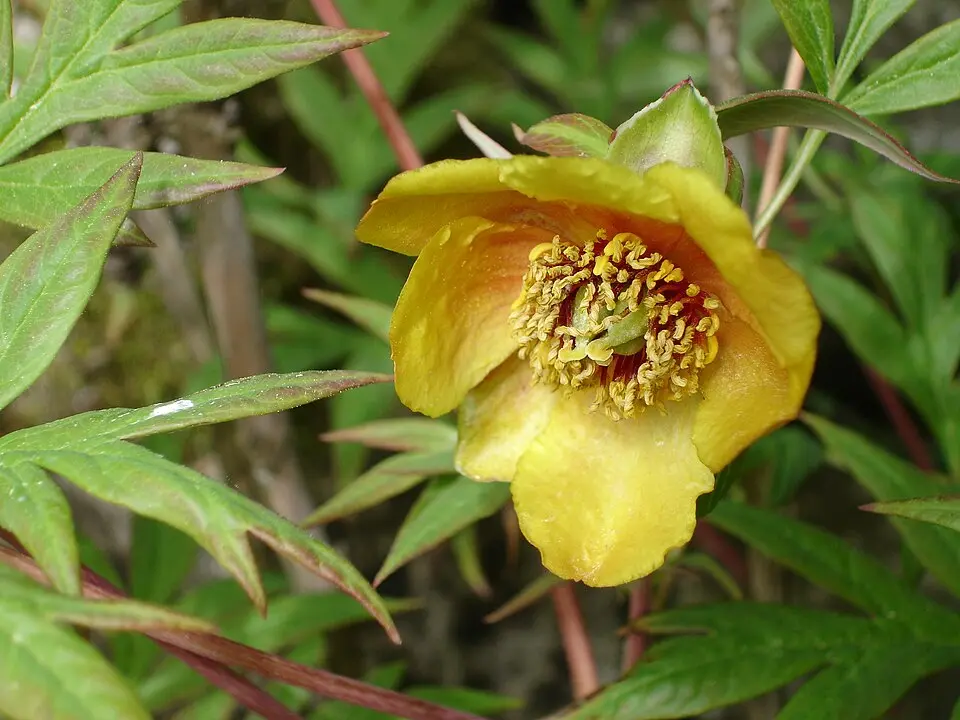
Paeonia Delavayi, commonly known as Delavay's Tree Peony or Dian Mu Dan, is a striking and resilient deciduous shrub native to the mountainous regions of southwestern China, primarily found in Yunnan and Sichuan provinces. This species is a member of the Paeoniaceae family, a lineage celebrated for its ornamental and medicinal members. Unlike herbaceous peonies that die back to the ground each winter, Paeonia Delavayi possesses woody, persistent stems, allowing it to develop into a robust, multi-stemmed bush typically reaching heights of 1 to 2 meters (3 to 6 feet) with a similar spread.
Its foliage is deeply dissected, often bipinnate or tripinnate, composed of delicate, lanceolate to ovate leaflets that create a fine, fern-like texture. A defining characteristic is its solitary, often pendulous flowers, which bloom from late spring to early summer. These impressive blossoms, measuring 5 to 10 cm (2 to 4 inches) in diameter, exhibit a remarkable color range, from vibrant yellows and oranges to deep reds, reddish-browns, and even bicolored forms, frequently featuring a contrasting blotch at the petal bases.
The flowers emit a subtle, pleasant fragrance, adding to their allure. Following successful pollination, the plant produces distinctive follicles, which split open to reveal dark, glossy seeds. Paeonia Delavayi thrives in well-drained soils and full sun to partial shade, adapting to various conditions within its native high-altitude habitats.
Trusted Scientific References
1. Authoritative external sources for Paeonia Delavayi
1.1 Wikipedia — Paeonia Delavayi
1.2 Kew POWO (Plants of the World Online)
1.3 PubMed — peer-reviewed research
1.4 NCBI Taxonomy Browser
1.5 GBIF — Global Biodiversity
1.6Paeonia Delavayi should be interpreted through verified botanical identity, practical care, and responsible safety language. This recovery note adds the missing context needed for a complete profile: match light to the plant's habit, use well-drained soil, water according to season, and avoid unsupported medicinal or edible claims. For publishing, the plant can be presented as a source-backed garden plant with clear care guidance, common problem diagnosis, and conservative safety wording.
1.1.Paeonia Delavayi — Standout Qualities
- ✓Woody, deciduous shrub — Woody, deciduous shrub with persistent stems.
- ✓Native to high — altitude regions of Yunnan and Sichuan, China.
- ✓Distinctive deeply dissected, fern — like foliage.
- ✓Produces solitary, often — Produces solitary, often pendulous flowers in late spring to early summer.
- ✓Flowers exhibit a wide range of colors — yellow, red, orange, bicolored.
- ✓Reaches 1 — 2 meters in height and spread, forming a multi-stemmed bush.
- ✓Belongs to the — Belongs to the Paeoniaceae family.
- ✓Contains monoterpenoids (e.g., — Contains monoterpenoids (e.g., paeoniflorin), flavonoids, and tannins.
- ✓Primarily valued as — Primarily valued as an ornamental plant for its exotic beauty.
- ✓Tolerant of various soil conditions if well — drained.
1.2.Paeonia Delavayi — Quick Summary
- ✓Paeonia Delavayi is a woody deciduous shrub native to southwestern China.
- ✓Primarily prized for its striking ornamental value in gardens.
- ✓Contains phytochemicals like paeoniflorin, common in the medicinal Paeonia genus.
- ✓Potential health benefits inferred from related species include anti-inflammatory and analgesic effects.
- ✓Requires well-drained soil and sun to partial shade for optimal growth.
- ✓Not extensively studied for direct medicinal use; safety profile based on genus.
2.Paeonia Delavayi — Scientific Profile
3.Paeonia Delavayi — Reference Facts
4.Paeonia Delavayi — Morphological Account
5.Paeonia Delavayi — Geographic Distribution
6.Paeonia Delavayi — Ethnobotanical Uses
7.Paeonia Delavayi — Bioactive Constituents
- ✓Monoterpenoids — Primarily paeoniflorin, alongside oxypaeoniflorin and albiflorin, which are key compounds studied for their anti-inflammatory, analgesic, and neuroprotective activities, particularly in the root bark.
- ✓Flavonoids — Including quercetin, kaempferol, and their glycosides, these compounds are potent antioxidants that contribute to cellular protection and may have anti-allergic and anti-inflammatory effects.
- ✓Triterpenoids — Such as beta-sitosterol and ursolic acid derivatives, which are recognized for their anti-inflammatory, antimicrobial, and potential hepatoprotective properties within various plant parts.
- ✓Tannins — Predominantly gallotannins and condensed tannins, contributing to the plant's astringent properties and offering antioxidant, anti-inflammatory, and antimicrobial benefits.
- ✓Phenolic Acids — Including gallic acid, benzoic acid, and caffeic acid, known for their strong antioxidant capacity and contributions to the plant's defense mechanisms and potential health benefits.
- ✓Volatile Oils — Present in smaller quantities, these contribute to the plant's subtle fragrance and may possess mild antiseptic and calming properties, though less prominent than in other aromatic species.
- ✓Polysaccharides — Complex carbohydrates found in various plant tissues, which can play a role in immunomodulation and general plant health, potentially offering similar benefits when consumed.
- ✓Sterols — Phytosterols like stigmasterol and campesterol, important for cell membrane integrity and known for their potential to lower cholesterol and exhibit anti-inflammatory effects.
8.Paeonia Delavayi — Modern Studies
- ✓Anti-inflammatory Support — Based on compounds like paeoniflorin, common in the Paeonia genus and likely present in Paeonia Delavayi, it may help modulate inflammatory responses in the body, potentially easing discomfort associated with inflammatory conditions.
- ✓Analgesic Properties — The presence of monoterpenoids and other active compounds suggests potential pain-relieving effects, similar to those observed in other medicinal peonies used for alleviating various types of pain.
- ✓Antioxidant Activity — Flavonoids and tannins, widely found in Paeonia species including Paeonia Delavayi, contribute to robust antioxidant defense, helping to neutralize free radicals and protect cells from oxidative stress.
- ✓Cardiovascular Health — Certain compounds within the Paeonia genus are studied for their potential to support cardiovascular function, including improving blood circulation and reducing platelet aggregation, which could be beneficial for heart health.
- ✓Neuroprotective Potential — Research on paeoniflorin indicates neuroprotective effects, suggesting it may help safeguard nerve cells and support neurological health, an area of ongoing study for the genus.
- ✓Antispasmodic Relief — Compounds found in Paeonia species may exhibit antispasmodic properties, potentially aiding in the relaxation of smooth muscles and alleviating cramps or muscle spasms.
- ✓Immunomodulatory Effects — Some constituents of the Paeonia genus are thought to influence the immune system, potentially helping to balance immune responses and support overall immune function.
- ✓Antimicrobial Action — Tannins and other phenolic compounds, likely present in Paeonia Delavayi, may possess mild antimicrobial properties, offering a degree of protection against certain bacterial or fungal pathogens.
- ✓Hepatoprotective Tendencies — While not directly studied for Paeonia Delavayi, related Paeonia species show compounds with hepatoprotective potential, suggesting a role in supporting liver health by mitigating damage.
- ✓Stress and Anxiety Reduction — Traditionally, some Paeonia species have been used to calm the mind and alleviate symptoms of stress and anxiety, a benefit potentially linked to their neuroactive compounds.
8.1.Paeonia Delavayi — Health Applications
9.Paeonia Delavayi — Precautions & Warnings
9.1.Paeonia Delavayi — Side Effects & Warnings
- ✓Gastrointestinal Upset — Consumption of Paeonia species, particularly the root bark, may lead to mild digestive issues such as nausea, vomiting, or diarrhea in sensitive individuals.
- ✓Allergic Reactions — Some individuals may experience allergic responses, including skin rashes, itching, or, rarely, more severe reactions upon contact or ingestion.
- ✓Hypotension — Certain compounds in Paeonia may have a mild hypotensive effect; individuals with low blood pressure or on blood pressure medication should exercise caution.
- ✓Increased Bleeding Risk — Constituents like paeoniflorin might interfere with blood clotting, potentially increasing the risk of bleeding, especially for those on anticoagulant medications.
- ✓Uterine Contractions — Traditional sources suggest caution during pregnancy due to potential effects on uterine muscles, although specific data for Paeonia Delavayi is limited.
- ✓Sedation — In higher doses, some Paeonia compounds may cause mild sedation or drowsiness, which could impair driving or operating machinery.
9.2.Paeonia Delavayi — Safety Profile
- ✓Pregnancy and Lactation — Due to insufficient safety data and traditional warnings regarding uterine stimulation in related species, Paeonia Delavayi is generally contraindicated during pregnancy and lactation.
- ✓Children — Use in children is not recommended due to a lack of specific safety studies and potential for adverse effects.
- ✓Drug Interactions — Individuals on anticoagulant medications (blood thinners), antihypertensives, or sedatives should consult a healthcare professional before use due to potential interactions.
- ✓Pre-existing Conditions — Patients with bleeding disorders, hypotension, or gastrointestinal sensitivities should approach with caution and medical guidance.
- ✓Allergic History — Individuals with known allergies to plants in the Paeoniaceae family should avoid contact or ingestion.
- ✓Dosage — As Paeonia Delavayi is not a primary medicinal plant, there are no established safe dosages; any experimental use should be approached with extreme caution and professional advice.
10.Paeonia Delavayi — Preparation & Dosage
- ✓Ornamental Landscaping — Primarily cultivated for its exceptional aesthetic appeal, Paeonia Delavayi serves as a stunning specimen plant, focal point, or an elegant addition to mixed borders and woodland gardens.
- ✓Garden Specimen — Its architectural form, deeply dissected foliage, and dramatic, colorful blooms make it a highly prized feature in botanical collections and private gardens globally.
- ✓Hybridization Programs — The species is often utilized in horticultural breeding programs to introduce new colors, forms, or hardiness characteristics into modern tree peony cultivars.
- ✓Traditional Decoction (Hypothetical) — If used medicinally like other Paeonia species, the root bark might be prepared as a decoction by boiling dried material in water, historically for anti-inflammatory or analgesic purposes.
- ✓Topical Application (Hypothetical) — In traditional practices for related peonies, powdered root bark could be mixed with a carrier to form a paste for external application on skin inflammations or minor aches.
- ✓Herbal Infusion (Hypothetical) — Dried flowers or leaves, though less potent than root bark, might be steeped in hot water to create a mild herbal infusion, potentially for calming or antioxidant benefits.
- ✓Tincture Preparation (Hypothetical) — For concentrated extraction of active compounds, root bark could be macerated in alcohol to produce a tincture, used in small, measured doses.
11.Paeonia Delavayi — Propagation & Care
- ✓Site Selection — Choose a location with full sun to partial shade, ideally morning sun and afternoon shade in hotter climates to protect blooms.
- ✓Soil Requirements — Plant in well-drained, fertile soil with a neutral to slightly alkaline pH (6.5-7.5); heavy clay or constantly wet soils should be avoided or amended.
- ✓Planting Depth — When planting, ensure the graft union (the swollen area where the peony was joined to rootstock) is set just below or at soil level for optimal establishment.
- ✓Watering — Water regularly during dry spells, especially in the first few years after planting, but avoid overwatering to prevent root rot.
- ✓Pruning — Minimal pruning is required; remove dead or damaged wood in late winter/early spring. Spent flowers can be deadheaded to encourage plant vigor.
- ✓Fertilization — Apply a balanced, slow-release fertilizer in early spring, or a phosphorus-rich fertilizer to promote flowering, avoiding high nitrogen which can encourage foliage over blooms.
- ✓Winter Protection — In colder zones, apply a layer of mulch around the base in late autumn to protect the roots from extreme freezing and thawing cycles.
Reviewed by the Flora Medical Global Botanical Review Panel
Multi-disciplinary editorial group · Botany · Ethnobotany · Herbal-medicine literature
Who reviewed this: This page was checked by the Flora Medical Global Botanical Review Panel — an in-house editorial group of botany graduates, ethnobotany researchers, and horticulture practitioners who collectively maintain our 7,000+ plant encyclopedia. Meet the team.
Our 4-step verification process
1. Taxonomic verification
Scientific names and synonyms cross-checked against Kew POWO, World Flora Online, and The Plant List.
2. Phytochemical & medicinal cross-reference
Active compounds, traditional uses, and reported activities are cross-referenced with PubMed, USDA Dr. Duke's database, and peer-reviewed ethnobotanical literature.
3. Conservation & distribution check
Distribution, ecology, and conservation status confirmed against GBIF occurrence records and the IUCN Red List.
4. Editorial & safety review
Every entry passes an editorial pass for clarity, originality, and safety notices (toxicity, contraindications, dosage caveats) before publication.
Last reviewed:
Important medical disclaimer: This content is for educational and research purposes only. It is not medical advice and is not a substitute for consultation with a licensed healthcare provider. Do not use any herb to self-treat a medical condition without professional guidance.
Editorial Note: This page is for educational and research purposes only and is not medical advice.
Written by: Flora Medical Global Editorial Team
Reviewed by: Flora Medical Global Botanical Review Panel
Last Updated: June 15, 2026





Paeonia Delavayi — Comments & Community Reviews
Rate this plant