
Medical Disclaimer: This content is for educational purposes only. It is not medical advice. Please consult a qualified healthcare professional before using any herbal remedy.
Safety Overview
1.Paeonia Mlokosewitschii — At a Glance
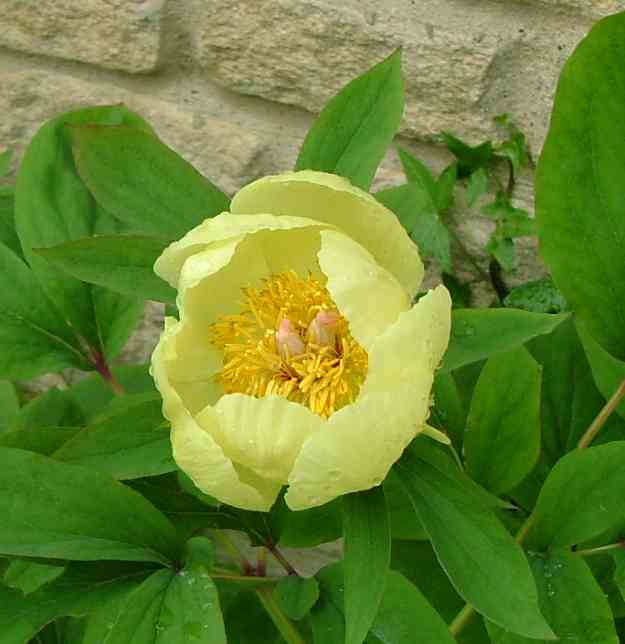
Paeonia Mlokosewitschii, widely recognized as the Caucasian Peony or Golden Peony, is a captivating herbaceous perennial native to the rugged, high-altitude regions of the Caucasus Mountains, specifically found in areas like the Lagodeki Valley. This species, sometimes classified taxonomically as Paeonia daurica ssp. mlokosewitschii, is celebrated for its remarkable ornamental qualities. It typically reaches an impressive height of 60-90 cm (2-3 feet) with a similar spread, forming a robust, bushy clump.
Its most distinguishing feature is the large, luminous, bowl-shaped flowers, which emerge in mid to late spring. These single blooms are a brilliant, often golden-yellow, with soft, crinkled petals that encircle a prominent boss of rich golden-yellow stamens, creating a visually stunning contrast. The foliage is equally attractive, composed of deeply lobed, glaucous green leaves that often display hints of red or bronze when young, persisting as a decorative element well into the summer months. These compound leaves, with their broad, ovate leaflets, contribute significant textural interest to the garden.
Paeonia Mlokosewitschii thrives in well-drained, humus-rich soil and prefers partial shade, particularly in warmer climates, to protect its delicate blooms and foliage. Its early flowering habit makes it an invaluable addition for extending the peony season, offering a unique splash of vibrant color in woodland gardens, mixed borders, or as a striking specimen plant.
Trusted Scientific References
1. Authoritative external sources for Paeonia Mlokosewitschii
1.1 Wikipedia — Paeonia Mlokosewitschii
1.2 Kew POWO (Plants of the World Online)
1.3 PubMed — peer-reviewed research
1.4 NCBI Taxonomy Browser
1.5 GBIF — Global Biodiversity
1.6Paeonia Mlokosewitschii should be interpreted through verified botanical identity, practical care, and responsible safety language. This recovery note adds the missing context needed for a complete profile: match light to the plant's habit, use well-drained soil, water according to season, and avoid unsupported medicinal or edible claims. For publishing, the plant can be presented as a source-backed garden plant with clear care guidance, common problem diagnosis, and conservative safety wording.
1.1.Paeonia Mlokosewitschii — Distinguishing Points
- ✓Luminous Yellow Flowers — Large, single, bowl-shaped blooms in brilliant golden-yellow.
- ✓Early to Mid — Spring Bloom — Extends the peony flowering season with its vibrant display.
- ✓Glaucous Green Foliage — Deeply lobed leaves with red/bronze tints when young, providing extended visual interest.
- ✓Native to Caucasus Mountains — Thrives in cooler, mountainous regions.
- ✓Herbaceous Perennial — Returns year after year, forming a bushy clump 60-90 cm tall.
- ✓Partial Shade Lover — Performs best with some afternoon shade, especially in warmer climates.
- ✓Deer Resistant — Generally unpalatable to deer, making it a good choice for deer-prone areas.
- ✓Cold Hardy — Tolerant down to USDA Zone 5, enduring significant winter cold.
- ✓Low Maintenance — Once established, requires minimal care beyond basic watering and feeding.
- ✓Attractive to Pollinators — Flowers can attract bees and other beneficial insects.
1.2.Paeonia Mlokosewitschii — Quick Summary
- ✓Paeonia Mlokosewitschii is a stunning Caucasian Peony, renowned for its luminous yellow flowers.
- ✓Primarily an ornamental plant, highly valued for its aesthetic appeal in gardens.
- ✓Contains monoterpene glucosides and flavonoids, similar to other Paeonia species.
- ✓Not traditionally or currently used for specific medicinal purposes in human herbalism.
- ✓Prefers partial shade and well-drained soil, hardy in USDA Zones 5-7.
- ✓All parts are considered mildly toxic if ingested, posing a risk to pets and children.
2.Paeonia Mlokosewitschii — Scientific Identity
3.Paeonia Mlokosewitschii — Key Data
4.Paeonia Mlokosewitschii — Physical Description
5.Paeonia Mlokosewitschii — Origin & Spread
6.Paeonia Mlokosewitschii — Folk Medicine Applications
7.Paeonia Mlokosewitschii — Phytochemistry
- ✓Monoterpene Glucosides — Key compounds include paeoniflorin, albiflorin, and oxypaeoniflorin, extensively studied in the Paeonia genus for their anti-inflammatory, analgesic, and neuroprotective actions.
- ✓Triterpenoids — Such as oleanolic acid and ursolic acid derivatives, which contribute to the plant's potential anti-inflammatory and hepatoprotective properties.
- ✓Flavonoids — Including quercetin, kaempferol, and their glycosides, known for potent antioxidant, anti-inflammatory, and cardioprotective activities.
- ✓Phenolic Compounds — Examples like gallic acid, ellagic acid, and their derivatives, providing significant antioxidant capacity and contributing to general cellular protection.
- ✓Tannins — A class of polyphenols that impart astringent properties and may offer antioxidant and antimicrobial benefits.
- ✓Steroids — Various phytosterols are present, which can have hormone-like effects and contribute to overall plant physiology and potential health benefits.
- ✓Volatile Oils — Though in small quantities, these contribute to the plant's subtle fragrance and may possess mild antimicrobial or insect-repellent qualities.
- ✓Fatty Acids — Essential fatty acids found in seeds, vital for cell membrane integrity and various metabolic functions.
- ✓Polysaccharides — Complex carbohydrates that can possess immunomodulatory and prebiotic properties.
8.Paeonia Mlokosewitschii — Scientific Evidence
- ✓Ornamental Value — Paeonia Mlokosewitschii is primarily cultivated for its exceptional aesthetic appeal, providing vibrant yellow flowers and attractive foliage to gardens and landscapes.
- ✓Potential Anti-inflammatory Effects (from Paeonia genus) — While specific research on P. Mlokosewitschii is limited, other Paeonia species contain compounds like paeoniflorin, which exhibit anti-inflammatory activity by modulating immune responses and inhibiting pro-inflammatory cytokines.
- ✓Antioxidant Activity (from Paeonia genus) — The presence of flavonoids and phenolic compounds in Paeonia species, including P. Mlokosewitschii constituents, suggests potential antioxidant benefits that help neutralize free radicals and reduce oxidative stress.
- ✓Neuroprotective Potential (from Paeonia genus) — Studies on related Paeonia species indicate that monoterpene glucosides like paeoniflorin may offer neuroprotective effects, potentially beneficial for cognitive health and mitigating neuronal damage.
- ✓Analgesic Properties (from Paeonia genus) — Constituents such as paeoniflorin, found in the Paeonia genus, have demonstrated analgesic effects, which could contribute to pain relief by influencing pain perception pathways.
- ✓Antispasmodic Actions (from Paeonia genus) — Extracts from other Paeonia species have shown antispasmodic properties, suggesting a potential to alleviate muscle cramps and spasms.
- ✓Cardioprotective Indications (from Paeonia genus) — Certain compounds within the Paeonia genus have been explored for their potential to support cardiovascular health through mechanisms like improving blood flow and reducing lipid peroxidation.
- ✓Immunomodulatory Support (from Paeonia genus) — Some Paeonia constituents are thought to possess immunomodulatory effects, helping to regulate the immune system's balance.
- ✓Antimicrobial Properties (from Paeonia genus) — Research on other Paeonia species suggests the presence of compounds with mild antimicrobial activity against certain pathogens.
8.1.Paeonia Mlokosewitschii — Health Applications
9.Paeonia Mlokosewitschii — Cautions & Contraindications
9.1.Paeonia Mlokosewitschii — Reported Side Effects
- ✓Accidental Ingestion — While primarily ornamental, ingestion of any Paeonia plant parts can cause mild gastrointestinal upset, including nausea, vomiting, or diarrhea.
- ✓Skin Irritation — Direct contact with sap or plant material may cause mild skin irritation or allergic reactions in sensitive individuals.
- ✓Allergic Reactions — Rare, but individuals sensitive to plants in the Paeoniaceae family could experience allergic responses upon exposure.
- ✓Pet Toxicity — Ingestion by pets (dogs, cats) can lead to symptoms like vomiting, diarrhea, and lethargy; keep out of reach of animals.
- ✓Livestock Poisoning — Large quantities ingested by grazing animals can potentially cause more severe digestive disturbances.
- ✓Horticultural Pests — Overly damp conditions can lead to fungal issues like botrytis blight, affecting plant health.
9.2.Paeonia Mlokosewitschii — Safety Overview
- ✓Ornamental Use Only — Paeonia Mlokosewitschii is cultivated solely for its beauty and is not recommended for internal medicinal use.
- ✓Keep Out of Reach of Children and Pets — Ensure young children and domestic animals do not ingest any part of the plant.
- ✓Wear Gloves When Handling — For individuals with sensitive skin, wearing gloves during planting or pruning is advisable to prevent potential irritation.
- ✓Consult a Healthcare Professional — If accidental ingestion occurs and symptoms develop, seek medical attention immediately.
- ✓Not for Pregnant or Breastfeeding Individuals — Due to lack of safety data for internal use, avoid consumption during pregnancy or lactation.
- ✓No Known Drug Interactions — As it is not for internal medicinal use, specific drug interactions are not documented; however, caution is always advised with any plant material.
- ✓General Plant Safety — Treat as a decorative garden plant; do not process for herbal remedies without expert guidance.
10.Paeonia Mlokosewitschii — Usage Guide
- ✓Garden Specimen — Plant as a focal point in borders, woodland gardens, or mixed perennial beds for its striking yellow flowers.
- ✓Cut Flower — Harvest blooms in the 'marshmallow' stage (buds soft to the touch) for long-lasting, fragrant indoor arrangements.
- ✓Mass Planting — Use in groups to create a dramatic visual impact and extend the spring flowering season in larger landscapes.
- ✓Shade Garden Enhancement — Its tolerance for partial shade makes it an excellent choice for brightening dappled areas under deciduous trees.
- ✓Wildlife Attraction — Its nectar-rich flowers may attract pollinators like bees and butterflies.
- ✓Foliage Interest — Utilize its attractive, deeply lobed, glaucous green leaves for textural contrast even after the flowering period.
- ✓Landscape Design — Incorporate into cottage gardens, informal borders, or as an elegant accent near paths and entryways.
11.Paeonia Mlokosewitschii — Cultivation & Care
- ✓Site Selection — Choose a location with partial shade, especially in hot climates, to protect foliage and flowers from scorching sun.
- ✓Soil Preparation — Ensure well-drained, fertile soil enriched with organic matter; peonies dislike 'wet feet'.
- ✓Planting Depth — Plant the tuberous roots with the 'eyes' (buds) no more than 2-5 cm (1-2 inches) below the soil surface for optimal blooming.
- ✓Watering — Provide consistent moisture, particularly during dry spells and the growing season, but avoid overwatering.
- ✓Fertilization — Apply a balanced, slow-release fertilizer in early spring as new growth emerges, avoiding high nitrogen which promotes foliage over flowers.
- ✓Support — Taller plants may benefit from staking or peony rings to prevent heavy blooms from flopping.
- ✓Pests and Diseases — Generally robust, but monitor for botrytis blight in wet conditions; ensure good air circulation.
- ✓Winter Care — In colder zones (USDA 5-7), a layer of mulch can protect roots, though it is quite cold-hardy.
Reviewed by the Flora Medical Global Botanical Review Panel
Multi-disciplinary editorial group · Botany · Ethnobotany · Herbal-medicine literature
Who reviewed this: This page was checked by the Flora Medical Global Botanical Review Panel — an in-house editorial group of botany graduates, ethnobotany researchers, and horticulture practitioners who collectively maintain our 7,000+ plant encyclopedia. Meet the team.
Our 4-step verification process
1. Taxonomic verification
Scientific names and synonyms cross-checked against Kew POWO, World Flora Online, and The Plant List.
2. Phytochemical & medicinal cross-reference
Active compounds, traditional uses, and reported activities are cross-referenced with PubMed, USDA Dr. Duke's database, and peer-reviewed ethnobotanical literature.
3. Conservation & distribution check
Distribution, ecology, and conservation status confirmed against GBIF occurrence records and the IUCN Red List.
4. Editorial & safety review
Every entry passes an editorial pass for clarity, originality, and safety notices (toxicity, contraindications, dosage caveats) before publication.
Last reviewed:
Important medical disclaimer: This content is for educational and research purposes only. It is not medical advice and is not a substitute for consultation with a licensed healthcare provider. Do not use any herb to self-treat a medical condition without professional guidance.
Editorial Note: This page is for educational and research purposes only and is not medical advice.
Written by: Flora Medical Global Editorial Team
Reviewed by: Flora Medical Global Botanical Review Panel
Last Updated: June 15, 2026





Paeonia Mlokosewitschii — Comments & Community Reviews
Rate this plant