
Medical Disclaimer: This content is for educational purposes only. It is not medical advice. Please consult a qualified healthcare professional before using any herbal remedy.
Safety Overview
1.Paeonia Tenuifolia — Essential Profile
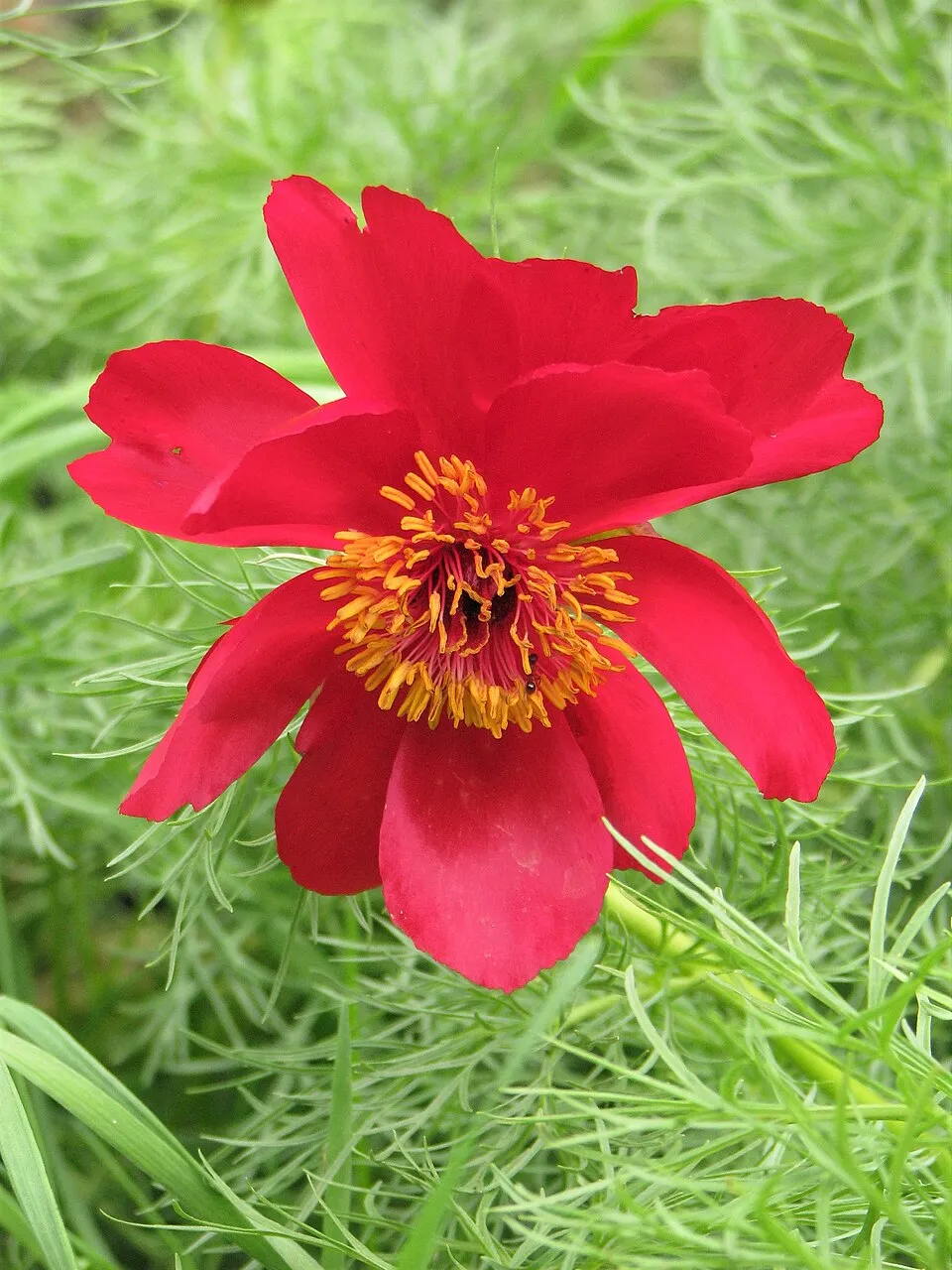
Paeonia tenuifolia, commonly known as the Fernleaf Peony, Fennel-Leaved Peony, or Slender-Leaved Peony, is a truly distinctive herbaceous perennial belonging to the Paeoniaceae family. Native to the grasslands and rocky slopes of Eastern Europe and Western Asia, including regions spanning Russia and the Balkans, this species is celebrated for its unique morphological characteristics. It typically forms a compact, rounded mound, reaching an average height and spread of 30 to 60 centimeters (1 to 2 feet).
The most striking feature is its exceptionally finely dissected foliage, which emerges in early spring with a delicate, almost ethereal, fern-like texture, providing a captivating visual contrast to other garden plants. In late spring to early summer, it unfurls vibrant, cup-shaped, single flowers, usually a rich, deep crimson or dark red. These striking blooms are often adorned with a prominent boss of golden-yellow stamens at their center, creating a stunning focal point.
Paeonia tenuifolia’s early bloom time makes it a cherished herald of the gardening season, offering both unparalleled texture and vivid color to rock gardens, borders, and as a specimen plant. Its robust nature allows it to thrive in USDA hardiness zones 3 through 8, making it a resilient and highly prized addition to diverse landscapes.
Trusted Scientific References
1. Authoritative external sources for Paeonia Tenuifolia
1.1 Wikipedia — Paeonia Tenuifolia
1.2 Kew POWO (Plants of the World Online)
1.3 PubMed — peer-reviewed research
1.4 NCBI Taxonomy Browser
1.5 GBIF — Global Biodiversity
1.6Paeonia Tenuifolia should be interpreted through verified botanical identity, practical care, and responsible safety language. This recovery note adds the missing context needed for a complete profile: match light to the plant's habit, use well-drained soil, water according to season, and avoid unsupported medicinal or edible claims. For publishing, the plant can be presented as a source-backed garden plant with clear care guidance, common problem diagnosis, and conservative safety wording.
1.1.Paeonia Tenuifolia — Highlights
- ✓Finely Dissected Foliage — Distinctive, fern-like leaves providing exceptional textural interest.
- ✓Vibrant Red Blooms — Single, cup-shaped dark crimson flowers with prominent golden-yellow stamens.
- ✓Early Spring Bloomer — One of the earliest peonies to grace the garden with its stunning display.
- ✓Compact Growth Habit — Forms a tidy, rounded mound, ideal for rock gardens, borders, and specimen planting.
- ✓Ornamental Value — Highly prized for its aesthetic appeal, unique texture, and vivid color.
- ✓Traditional Medicinal Uses — Roots of the genus are historically used for pain, inflammation, and muscle spasms.
- ✓Rich Phytochemistry — Contains potent compounds like paeoniflorin, paeonol, flavonoids, and triterpenoids.
- ✓Pollinator Attractor — Its vibrant flowers attract beneficial pollinators such as bees and butterflies.
- ✓Deer and Rabbit Resistant — A low-maintenance plant that is generally unappealing to common garden pests.
- ✓Cold Hardy — Resilient in USDA zones 3 through 8, tolerating harsh winter conditions.
1.2.Paeonia Tenuifolia — Concise Overview
- ✓Fernleaf Peony (Paeonia tenuifolia) is a captivating herbaceous perennial from Eastern Europe and Western Asia.
- ✓Valued for its unique finely dissected foliage and vibrant red, cup-shaped flowers with golden stamens.
- ✓Traditionally, the roots of the Paeonia genus are used for anti-inflammatory, analgesic, and antispasmodic properties.
- ✓Key chemical constituents include paeoniflorin, paeonol, flavonoids, and triterpenoids.
- ✓Internal use requires extreme caution and professional guidance due to potential toxicity and specific preparation requirements.
2.Paeonia Tenuifolia — Nomenclature & Classification
3.Paeonia Tenuifolia — Fact Sheet
4.Paeonia Tenuifolia — Botanical Features
5.Paeonia Tenuifolia — Native Range & Habitat
6.Paeonia Tenuifolia — Folk Medicine Applications
7.Paeonia Tenuifolia — Key Phytochemicals
- ✓Monoterpene Glycosides — Paeoniflorin is the most prominent compound, known for its significant anti-inflammatory, analgesic, and antispasmodic activities, crucial for the plant's medicinal profile.
- ✓Phenolic Compounds — Includes Paeonol, Gallic acid, and Benzoic acid, which contribute to the plant's antioxidant, anti-inflammatory, and antimicrobial properties.
- ✓Flavonoids — A diverse group of polyphenols such as quercetin and kaempferol derivatives, offering potent antioxidant, anti-inflammatory, and protective effects on cellular health.
- ✓Triterpenoids — Compounds like betulinic acid and oleanolic acid derivatives are present, known for their anti-inflammatory, hepatoprotective, and potential cytotoxic activities.
- ✓Tannins — These astringent compounds contribute to the plant's traditional use in wound healing and reducing inflammation, acting as natural desiccants and protectants.
- ✓Volatile Oils — While less dominant than other constituents, trace amounts contribute to the plant's subtle aroma and may possess minor antimicrobial or calming effects.
- ✓Polysaccharides — Complex carbohydrates that can modulate immune responses and contribute to the plant's overall adaptogenic potential, supporting general well-being.
- ✓Alkaloids — Present in very minor quantities, these nitrogen-containing compounds can have diverse physiological effects, though their role in Paeonia tenuifolia's medicinal profile is less studied.
8.Paeonia Tenuifolia — Pharmacological Findings
- ✓Anti-inflammatory Properties — Extracts from Paeonia tenuifolia roots, rich in compounds like paeoniflorin, have demonstrated potential to modulate inflammatory pathways, offering relief from conditions characterized by swelling and discomfort.
- ✓Analgesic Effects — Traditionally, parts of the Paeonia genus are employed for their pain-relieving qualities, suggesting an ability to alleviate various types of pain, including muscle aches and general discomfort.
- ✓Antispasmodic Action — Compounds found in Fernleaf Peony may help relax smooth muscles, making it potentially useful for reducing muscle cramps, spasms, and tension.
- ✓Sedative Qualities — Certain constituents, such as paeonol, contribute to its traditional use in calming nervous disorders and promoting a sense of tranquility, potentially aiding in mild stress and anxiety.
- ✓Cardiovascular Support — Preliminary research on related Paeonia species indicates potential benefits for cardiovascular health, including effects on blood circulation and blood pressure regulation.
- ✓Antioxidant Activity — The presence of phenolic compounds and flavonoids provides antioxidant defense, helping to neutralize free radicals and protect cells from oxidative damage.
- ✓Digestive Aid — In some traditional systems, the root has been used to address digestive discomforts, particularly those involving spasms or mild inflammation within the gastrointestinal tract.
- ✓Women's Health Support — Traditionally, certain peony species have been incorporated into remedies for menstrual discomfort and other gynecological issues, suggesting potential hormonal or uterine relaxant effects.
- ✓Neuroprotective Potential — Emerging research on active compounds from the Paeonia genus hints at neuroprotective properties, potentially supporting brain health and function.
8.1.Paeonia Tenuifolia — Therapeutic Indications
9.Paeonia Tenuifolia — Safety & Side Effects
9.1.Paeonia Tenuifolia — Side Effects & Warnings
- ✓Gastrointestinal Upset — Internal ingestion without proper preparation or in excessive doses can lead to nausea, vomiting, stomach pain, and diarrhea.
- ✓Drowsiness and Sedation — Due to its potential sedative properties, high doses may cause drowsiness, dizziness, or impair coordination, especially when combined with other sedatives.
- ✓Allergic Reactions — Sensitive individuals may experience allergic responses, including skin rashes, itching, or, in rare cases, more severe anaphylactic reactions.
- ✓Hypotension Risk — There is a potential for Paeonia tenuifolia to lower blood pressure, which could be problematic for individuals already on hypotensive medications or with low blood pressure.
- ✓Drug Interactions — May interact with anticoagulant medications, sedatives, or drugs for blood pressure, potentially potentiating their effects and leading to adverse outcomes.
- ✓Liver Toxicity — Prolonged or excessive internal use, particularly of improperly prepared roots, carries a theoretical risk of hepatotoxicity.
9.2.Paeonia Tenuifolia — Clinical Safety Notes
- ✓Professional Consultation — Essential before any internal use due to the potential toxicity of the plant and the need for expert guidance on preparation and dosage.
- ✓Pregnancy and Lactation — Avoid use during pregnancy and breastfeeding, as there is insufficient safety data and potential risks to the fetus or infant are unknown.
- ✓Pediatric Use — Not recommended for use in children without explicit guidance and supervision from a qualified medical herbalist or physician.
- ✓Pre-existing Conditions — Individuals with cardiovascular disease, liver or kidney conditions, bleeding disorders, or those undergoing surgery should exercise extreme caution.
- ✓Dosage Adherence — Strict adherence to prescribed dosages is crucial for any internal application to minimize the risk of adverse effects and ensure therapeutic safety.
- ✓External Use Predominance — Generally considered safer for external applications (e.g., poultices, topical creams), though a patch test is advisable to check for skin sensitivity.
- ✓Toxicity to Pets — Like other peonies, Paeonia tenuifolia is known to be toxic to cats, dogs, and horses if ingested, causing gastrointestinal distress.
10.Paeonia Tenuifolia — Preparation Methods
- ✓Decoction of Roots — Traditionally, dried roots are simmered in water to create a potent decoction, often used internally for pain, inflammation, and muscle spasms under professional guidance.
- ✓Tinctures — Alcoholic extracts of the root can be prepared, offering a concentrated form for internal use. Dosage must be strictly controlled by a qualified herbalist due to potency.
- ✓Poultices — Crushed fresh or rehydrated dried roots can be applied externally as a poultice to localized areas for relief from muscle aches, bruises, or inflammatory skin conditions.
- ✓Topical Oils/Creams — Infused oils or commercially prepared creams containing Paeonia extracts can be massaged onto the skin to soothe sore muscles, joint pain, and reduce localized inflammation.
- ✓Herbal Teas (External/Aromatic) — While internal tea is rare due to toxicity, infusions of the leaves or flowers may be used externally as a wash or for their aromatic qualities.
- ✓Standardized Extracts — Available in some markets, these offer precise concentrations of active compounds like paeoniflorin, requiring careful adherence to manufacturer guidelines or professional advice.
- ✓Traditional Formulas — In traditional herbal medicine, peony root is often combined with other synergistic herbs to enhance its therapeutic effects for specific conditions.
11.Paeonia Tenuifolia — Cultivation & Care
- ✓Light Requirements — Thrives best in full sun to partial shade, requiring at least six hours of direct sunlight daily for optimal flowering and robust growth.
- ✓Soil Preferences — Prefers rich, fertile, and exceedingly well-drained soil. A neutral to slightly alkaline pH is ideal for healthy development.
- ✓Watering — Requires regular watering, especially during dry spells and its active growing season. Ensure the soil remains consistently moist but never waterlogged to prevent root rot.
- ✓Fertilization — Apply a balanced, slow-release granular fertilizer in early spring as new growth emerges. Avoid high-nitrogen formulas, which can promote foliage at the expense of floral production.
- ✓Pruning & Maintenance — Deadhead spent blooms after flowering to maintain a tidy appearance and prevent seed formation. In autumn, cut back all foliage to the ground after it has died down naturally.
- ✓Propagation — Best propagated by careful division of the root clump in autumn, typically every few years, to maintain plant vigor and encourage new growth.
- ✓Hardiness & Climate — Hardy in USDA zones 3 through 8, demonstrating excellent cold tolerance. It is also relatively resistant to deer and rabbits.
Reviewed by the Flora Medical Global Botanical Review Panel
Multi-disciplinary editorial group · Botany · Ethnobotany · Herbal-medicine literature
Who reviewed this: This page was checked by the Flora Medical Global Botanical Review Panel — an in-house editorial group of botany graduates, ethnobotany researchers, and horticulture practitioners who collectively maintain our 7,000+ plant encyclopedia. Meet the team.
Our 4-step verification process
1. Taxonomic verification
Scientific names and synonyms cross-checked against Kew POWO, World Flora Online, and The Plant List.
2. Phytochemical & medicinal cross-reference
Active compounds, traditional uses, and reported activities are cross-referenced with PubMed, USDA Dr. Duke's database, and peer-reviewed ethnobotanical literature.
3. Conservation & distribution check
Distribution, ecology, and conservation status confirmed against GBIF occurrence records and the IUCN Red List.
4. Editorial & safety review
Every entry passes an editorial pass for clarity, originality, and safety notices (toxicity, contraindications, dosage caveats) before publication.
Last reviewed:
Important medical disclaimer: This content is for educational and research purposes only. It is not medical advice and is not a substitute for consultation with a licensed healthcare provider. Do not use any herb to self-treat a medical condition without professional guidance.
Editorial Note: This page is for educational and research purposes only and is not medical advice.
Written by: Flora Medical Global Editorial Team
Reviewed by: Flora Medical Global Botanical Review Panel
Last Updated: June 15, 2026





Paeonia Tenuifolia — Comments & Community Reviews
Rate this plant