
Medical Disclaimer: This content is for educational purposes only. It is not medical advice. Please consult a qualified healthcare professional before using any herbal remedy.
Safety Overview
1.Pardancanda Norrisii — Introduction & Highlights
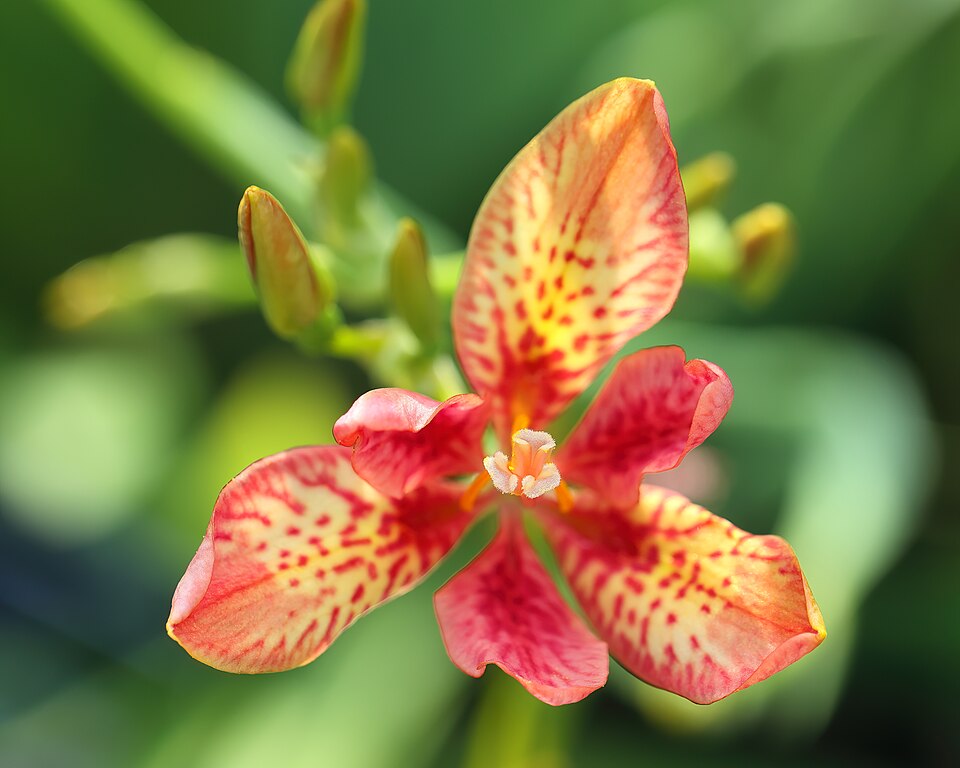
Pardancanda Norrisii, commonly known as Candy Lily or Pardancanda Iris, is an exquisite intergeneric hybrid, meticulously cultivated from a cross between Belamcanda chinensis (now reclassified as Iris domestica, also known as Blackberry Lily) and various true Iris species. This robust perennial is celebrated for its truly unique and captivating floral display, which often resembles miniature orchids. The flowers exhibit an extraordinary palette of colors, typically blending shades of yellow, orange, red, and purple, frequently adorned with intricate spots and streaks that create a painterly effect.
Each individual flower is ephemeral, lasting only a single day, but the plant's prolific nature ensures a continuous succession of blooms from mid-summer through early autumn, providing a prolonged period of vibrant garden interest. The foliage is distinctly iris-like, forming attractive, sword-shaped leaves arranged in fan-like clumps, which offer a strong architectural element to the landscape even when not in flower. Sturdy flower stalks emerge from these basal clumps, holding multiple blossoms aloft.
Following the flowering period, the plant develops distinctive seed pods that, for the Belamcanda parent, resemble a cluster of blackberries, hence the common name 'Blackberry Lily.' However, seeds of Pardancanda Norrisii are typically smooth and brown. This hybrid is primarily valued for its ornamental appeal, thriving as a relatively low-maintenance addition to diverse garden settings and landscapes, where it introduces an exotic and vibrant flair.
Trusted Scientific References
1. Authoritative external sources for Pardancanda Norrisii
1.1 Wikipedia — Pardancanda Norrisii
1.2 Kew POWO (Plants of the World Online)
1.3 PubMed — peer-reviewed research
1.4 NCBI Taxonomy Browser
1.5 GBIF — Global Biodiversity
1.6Pardancanda Norrisii should be interpreted through verified botanical identity, practical care, and responsible safety language. This recovery note adds the missing context needed for a complete profile: match light to the plant's habit, use well-drained soil, water according to season, and avoid unsupported medicinal or edible claims. For publishing, the plant can be presented as a source-backed garden plant with clear care guidance, common problem diagnosis, and conservative safety wording.
1.1.Pardancanda Norrisii — Standout Qualities
- ✓Intergeneric Hybrid — A unique cross between Iris domestica and Iris species.
- ✓Striking Flowers — Displays orchid-like blossoms with diverse colors and patterns.
- ✓Extended Bloom Time — Flowers continuously from mid-summer to early autumn.
- ✓Sword — shaped Foliage — Provides architectural interest similar to traditional irises.
- ✓Ornamental Value — Primarily cultivated for its aesthetic appeal in gardens.
- ✓Low Maintenance — Relatively easy to grow and care for in suitable climates.
- ✓Drought Tolerant — Once established, it shows good resistance to dry conditions.
- ✓Deer Resistant — Generally not favored by deer, making it suitable for many landscapes.
- ✓Unique Seed Pods — Develops blackberry-like seed capsules after flowering.
- ✓Resilient Perennial — Returns year after year with minimal intervention.
1.2.Pardancanda Norrisii — In Brief
- ✓Ornamental intergeneric hybrid known as Candy Lily.
- ✓Prized for its vibrant, orchid-like flowers and sword-shaped foliage.
- ✓No direct medicinal uses for Pardancanda Norrisii itself.
- ✓Parent plant, Iris domestica, is historically used in traditional Asian medicine.
- ✓Traditional uses of Iris domestica include respiratory support and anti-inflammatory actions.
- ✓A low-maintenance, visually stunning garden perennial.
2.Pardancanda Norrisii — Scientific Profile
3.Pardancanda Norrisii — Reference Facts
4.Pardancanda Norrisii — Plant Morphology
5.Pardancanda Norrisii — Where It Grows
6.Pardancanda Norrisii — Ethnobotanical Uses
7.Pardancanda Norrisii — Bioactive Constituents
- ✓The specific chemical constituents of Pardancanda Norrisii as a hybrid are not extensively documented. However, its primary medicinal parent, Iris domestica (Belamcanda chinensis), is rich in a variety of bioactive compounds that underpin its traditional uses.
- ✓Isoflavones — Key compounds include tectorigenin, irisflorentin, and tectoridin, known for their anti-inflammatory, antioxidant, and potential anticancer activities.
- ✓Flavonoids — A broad class of polyphenolic compounds contributing to antioxidant and free radical scavenging properties, enhancing overall cellular health.
- ✓Iridoids — Such as belamcandal, which have demonstrated antiviral, antibacterial, and cytotoxic effects in various studies.
- ✓Saponins — These glycosides contribute to the plant's expectorant properties, helping to loosen and expel phlegm from the respiratory tract.
- ✓Phenolic Acids — Including caffeic acid and ferulic acid, which possess antioxidant and anti-inflammatory attributes.
- ✓Steroids — Plant steroids may contribute to the overall pharmacological profile, though specific active steroids are less characterized.
- ✓Volatile Oils — Present in small quantities, contributing to the plant's aroma and potentially some therapeutic effects.
- ✓Polysaccharides — Contribute to immunomodulatory effects and overall plant health, and may have demulcent properties.
- ✓Tannins — Astringent compounds that can help reduce inflammation and have mild antiseptic properties, useful for mucous membrane health.
8.Pardancanda Norrisii — Modern Studies
- ✓While Pardancanda Norrisii itself is primarily cultivated for its aesthetic appeal and possesses no widely documented medicinal benefits as a hybrid, its primary parent, Iris domestica (formerly Belamcanda chinensis), holds a significant place in traditional Asian medicine.
- ✓Respiratory Support — Iris domestica rhizomes are traditionally used to clear heat, resolve phlegm, and alleviate symptoms of respiratory conditions such as coughs, bronchitis, and asthma by acting as an expectorant.
- ✓Anti-inflammatory Action — Compounds within Iris domestica have been historically applied to reduce inflammation, particularly in cases of sore throat, swollen glands, and other inflammatory processes.
- ✓Diuretic Properties — Traditional practitioners utilized Iris domestica to promote urination, aiding in the reduction of edema and supporting kidney function.
- ✓Detoxification — In traditional systems, it was believed to have properties that help clear toxins from the body, often used in formulations for various febrile illnesses.
- ✓Fever Reduction — The plant has been traditionally employed as an antipyretic to help reduce fevers associated with infections or inflammatory states.
- ✓Sore Throat Relief — Decoctions of Iris domestica are gargled or consumed to soothe irritated throats and diminish pain and swelling.
- ✓Skin Conditions — Topically, it has been applied as a poultice or wash for skin ailments such as boils, abscesses, and minor infections due to its potential antimicrobial properties.
- ✓Menstrual Regulation — Some traditional uses suggest its application in managing certain menstrual irregularities, though this area requires more research.
- ✓Antiviral Activity — Preliminary research on Iris domestica indicates potential antiviral effects, particularly against certain respiratory viruses, supporting its traditional use in colds and flu.
- ✓Antimicrobial Effects — Extracts have shown in vitro activity against various bacteria and fungi, providing a scientific basis for its traditional use in infectious conditions.
8.1.Pardancanda Norrisii — Conditions Traditionally Used For
9.Pardancanda Norrisii — Precautions & Warnings
9.1.Pardancanda Norrisii — Side Effects & Warnings
- ✓These side effects are primarily associated with the medicinal parent, Iris domestica, as Pardancanda Norrisii is not typically consumed.
- ✓Gastrointestinal Upset — May cause nausea, vomiting, or diarrhea, especially with high doses or in sensitive individuals.
- ✓Allergic Reactions — Potential for skin rashes or other hypersensitivity reactions in susceptible individuals.
- ✓Oral Irritation — Raw rhizome of Iris domestica can cause irritation to mucous membranes of the mouth and throat.
- ✓Uterine Stimulation — Traditional texts suggest potential uterine stimulant effects, posing a risk during pregnancy.
- ✓Drug Interactions — May interact with medications such as diuretics or blood thinners due to its traditional properties.
- ✓Liver Toxicity — Extremely high doses or prolonged use of Iris domestica without supervision could theoretically impact liver function.
- ✓Spleen Deficiency — Contraindicated in traditional Chinese medicine for individuals with spleen deficiency presenting with loose stools.
9.2.Pardancanda Norrisii — Risk Assessment
- ✓The following safety considerations pertain to the medicinal use of Iris domestica, not the ornamental hybrid Pardancanda Norrisii.
- ✓Pregnancy and Lactation — Contraindicated during pregnancy and lactation due to potential uterine stimulating effects and lack of safety data.
- ✓Children — Not recommended for use in children without explicit guidance from a qualified healthcare professional.
- ✓Pre-existing Conditions — Individuals with chronic health conditions, especially liver or kidney issues, should consult a doctor before use.
- ✓Medication Interactions — Consult a healthcare provider if taking prescription medications, particularly diuretics, anticoagulants, or anti-inflammatory drugs.
- ✓Dosage Adherence — Strict adherence to recommended dosages is crucial to avoid adverse effects and potential toxicity.
- ✓Traditional Contraindications — Avoid use in cases of 'spleen deficiency with loose stools' as per Traditional Chinese Medicine principles.
- ✓Raw Plant Material — Avoid consuming raw Iris domestica rhizome due to its irritating properties; always process according to traditional methods.
10.Pardancanda Norrisii — How to Use
- ✓It is crucial to reiterate that Pardancanda Norrisii is an ornamental hybrid and not traditionally used for medicinal purposes. The following methods describe the traditional preparation of its parent, Iris domestica (Blackberry Lily), for which medicinal uses are documented.
- ✓Decoction — The dried rhizome of Iris domestica is commonly prepared as a decoction by simmering in water, traditionally taken orally for respiratory issues.
- ✓Tincture — An alcoholic extract of the Iris domestica rhizome can be made, allowing for concentrated dosing and longer shelf life.
- ✓Powdered Form — Dried rhizomes may be ground into a fine powder for encapsulation or mixing into other preparations, often used in traditional formulas.
- ✓Topical Poultice — For external skin conditions like abscesses or boils, the crushed fresh or rehydrated dried rhizome of Iris domestica can be applied directly.
- ✓Traditional Formulas — Iris domestica rhizome is often combined with other herbs in complex Traditional Chinese Medicine (TCM) formulations to enhance specific therapeutic effects.
- ✓Gargle — A diluted decoction of Iris domestica can be used as a gargle for sore throats and mouth inflammations.
- ✓Dosage — Traditional dosages for Iris domestica rhizome typically range from 3-9 grams per day in decoction, but should only be used under the guidance of a qualified practitioner.
11.Pardancanda Norrisii — Growth Requirements
- ✓Site Selection — Plant Pardancanda Norrisii in a location receiving full sun to partial shade for optimal flowering and growth.
- ✓Soil Requirements — Thrives in average, well-drained garden soil; avoid heavy, waterlogged conditions which can lead to rhizome rot.
- ✓Watering — Water regularly during dry spells, especially in the first growing season; established plants are moderately drought-tolerant.
- ✓Hardiness Zones — Best suited for USDA hardiness zones 5-9, tolerating both cold winters and hot summers.
- ✓Propagation — Can be propagated by division of rhizomes in early spring or fall, or by seed, though hybrid seeds may not come true to type.
- ✓Fertilization — Generally low-maintenance, a light application of balanced fertilizer in spring can encourage vigorous growth.
- ✓Maintenance — Deadhead spent flower stalks to encourage more blooms and prevent unwanted self-seeding; cut back foliage after it yellows in late autumn.
- ✓Pest and Disease — Relatively pest and disease resistant, though watch for common garden issues like aphids or fungal spots in overly damp conditions.
Reviewed by the Flora Medical Global Botanical Review Panel
Multi-disciplinary editorial group · Botany · Ethnobotany · Herbal-medicine literature
Who reviewed this: This page was checked by the Flora Medical Global Botanical Review Panel — an in-house editorial group of botany graduates, ethnobotany researchers, and horticulture practitioners who collectively maintain our 7,000+ plant encyclopedia. Meet the team.
Our 4-step verification process
1. Taxonomic verification
Scientific names and synonyms cross-checked against Kew POWO, World Flora Online, and The Plant List.
2. Phytochemical & medicinal cross-reference
Active compounds, traditional uses, and reported activities are cross-referenced with PubMed, USDA Dr. Duke's database, and peer-reviewed ethnobotanical literature.
3. Conservation & distribution check
Distribution, ecology, and conservation status confirmed against GBIF occurrence records and the IUCN Red List.
4. Editorial & safety review
Every entry passes an editorial pass for clarity, originality, and safety notices (toxicity, contraindications, dosage caveats) before publication.
Last reviewed:
Important medical disclaimer: This content is for educational and research purposes only. It is not medical advice and is not a substitute for consultation with a licensed healthcare provider. Do not use any herb to self-treat a medical condition without professional guidance.
Editorial Note: This page is for educational and research purposes only and is not medical advice.
Written by: Flora Medical Global Editorial Team
Reviewed by: Flora Medical Global Botanical Review Panel
Last Updated: June 15, 2026





Pardancanda Norrisii — Comments & Community Reviews
Rate this plant