
Medical Disclaimer: This content is for educational purposes only. It is not medical advice. Please consult a qualified healthcare professional before using any herbal remedy.
Safety Overview
1.Parsley — At a Glance
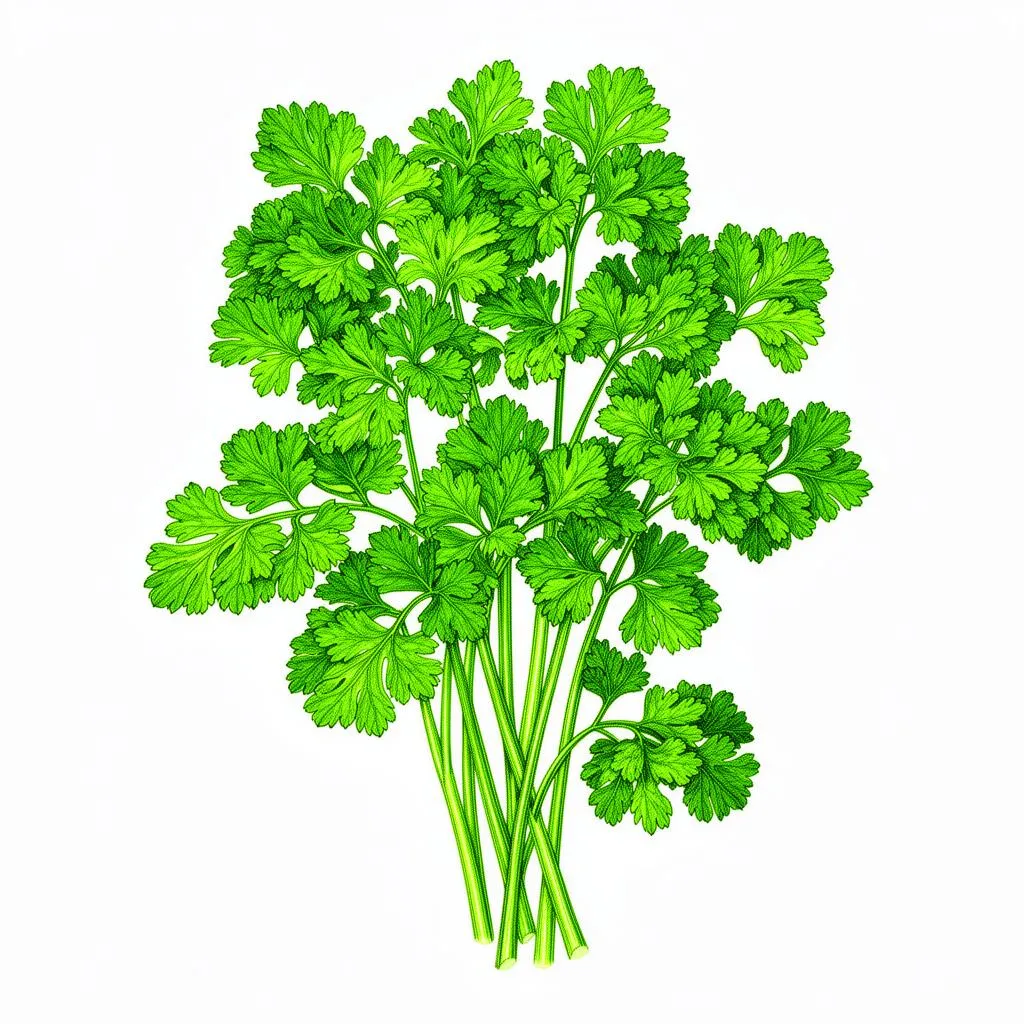
Parsley, scientifically known as Petroselinum crispum (Mill.) Nyman ex A.W. Hill, is a distinguished biennial herb belonging to the Apiaceae family, which also includes culinary favorites like carrots and celery. Originating from the central Mediterranean region, encompassing areas like Sardinia, Lebanon, Algeria, and Tunisia, its historical significance dates back over two millennia.
Ancient Greeks primarily revered parsley for symbolic purposes, adorning victors and tombs, rather than for consumption. The Romans, however, pioneered its culinary and medicinal applications, notably as a breath freshener and digestive aid. Throughout medieval Europe, its use expanded into various traditional remedies for conditions ranging from kidney ailments to menstrual irregularities.
Botanically, Petroselinum crispum typically reaches a height of 30-70 cm. Its characteristic finely divided, vibrant green leaves come in two main varieties: the curly-leaved (var. crispum) and the flat-leaved (var. neapolitanum or italianum).
During its second year, the plant produces small, inconspicuous greenish-yellow flowers arranged in compound umbels, which later develop into small, ribbed seeds. Beyond its widespread culinary appeal, contributing a fresh, slightly peppery, and earthy flavor to diverse cuisines, parsley holds a revered place in traditional medicine systems. Ayurveda classifies it as drying and heating, valuing its diuretic and carminative properties. Unani medicine utilizes it for its diuretic, emmenagogue, and stomachic effects.
While not a primary herb in classical Traditional Chinese Medicine, its properties align with principles such as promoting diuresis and invigorating blood circulation. Modern research increasingly validates these historical applications, with studies focusing on its rich content of bioactive compounds like flavonoids.
Trusted Scientific References
Authoritative external sources for Petroselinum crispum (Mill.) Nyman ex A.W. Hill:
Wikipedia — Petroselinum crispum (Mill.) Nyman ex A.W. Hill
Kew POWO (Plants of the World Online)
PubMed — peer-reviewed research
NCBI Taxonomy Browser
GBIF — Global Biodiversity
1.1.Parsley — Notable Characteristics
- ✓Biennial herb from — Biennial herb from the Apiaceae family.
- ✓Rich source of — Rich source of vitamins K, C, and A.
- ✓High concentration of — High concentration of antioxidant flavonoids like apigenin and luteolin.
- ✓Recognized for its — Recognized for its potent diuretic properties.
- ✓Traditional uses include — Traditional uses include digestive support and breath freshening.
- ✓Demonstrated efficacy in — Demonstrated efficacy in reducing muscle cramps.
- ✓Potential for treating — Potential for treating inflammatory skin conditions like dermatitis.
- ✓Offers hepatoprotective and — Offers hepatoprotective and nephroprotective benefits.
- ✓Contains essential oils — Contains essential oils (myristicin, apiol) with diverse actions.
- ✓Widely cultivated and — Widely cultivated and utilized in global cuisines.
1.2.Parsley — At-a-Glance Summary
- ✓Parsley is a versatile biennial herb, valued culinarily and medicinally, originating from the Mediterranean.
- ✓It is rich in vitamins (K, C, A), minerals, and potent antioxidants like flavonoids.
- ✓Traditionally used as a diuretic, digestive aid, and for menstrual regulation.
- ✓Modern research supports its role in alleviating muscle cramps, treating dermatitis, and offering hepatoprotective benefits.
- ✓Generally safe in food amounts, but medicinal doses require caution, especially during pregnancy or with certain medications.
- ✓Its essential oils, particularly myristicin and apiol, contribute to its distinct properties but demand careful use.
2.Parsley — Nomenclature & Classification
3.Parsley — Vital Statistics
4.Parsley — Physical Description
5.Parsley — Ecological Habitat
6.Parsley — Traditional Uses
7.Parsley — Chemical Profile
- ✓Flavonoids — Primarily apigenin and luteolin, along with kaempferol and quercetin, these compounds are potent antioxidants and contribute to parsley's anti-inflammatory effects.
- ✓Volatile Oils — Key components include myristicin, apiol, limonene, and eugenol, which impart the herb's characteristic aroma and contribute to its diuretic, carminative, and antimicrobial properties.
- ✓Furanocoumarins — Such as psoralen and bergapten, these compounds can increase photosensitivity and have been studied for various biological activities, including potential anti-cancer effects.
- ✓Vitamins — Abundant in Vitamin K1 (phylloquinone), essential for blood clotting and bone health, as well as Vitamin C, Vitamin A (as beta-carotene), and folate, supporting immune function and cellular processes.
- ✓Minerals — Contains significant levels of iron, crucial for red blood cell formation, along with calcium, potassium, magnesium, and manganese, vital for numerous physiological functions.
- ✓Phenolic Acids — Including caffeic acid and chlorogenic acid, these compounds contribute to the plant's overall antioxidant capacity and protective effects.
- ✓Polyacetylenes — Falcarinol is a notable polyacetylene found in parsley, recognized for its potential antifungal and cytotoxic properties.
- ✓Saponosides — These compounds contribute to the plant's emulsifying properties and have been noted in phytochemical analyses for their diverse biological activities.
- ✓Mucilages — Present in parsley, mucilages are complex carbohydrates that provide a soothing effect on mucous membranes.
- ✓Tannins — Both catechin and gallic tannins are found, contributing astringent and additional antioxidant properties to the plant extract.
8.Parsley — Evidence-Based Benefits
- ✓Diuretic Action — Parsley acts as a natural diuretic, promoting urine production and excretion, which aids in flushing out excess fluids and potentially preventing kidney stone formation.
- ✓Antioxidant Properties — Rich in flavonoids such as apigenin and luteolin, parsley effectively neutralizes free radicals, protecting cells from oxidative damage and reducing chronic disease risk.
- ✓Anti-inflammatory Effects — Its high concentration of antioxidants and volatile oils contributes to reducing systemic inflammation, beneficial for conditions like arthritis and inflammatory skin issues.
- ✓Muscle Cramp Alleviation — Recent studies indicate that consuming parsley, particularly as juice, can significantly reduce the incidence and severity of muscle cramps, improving muscular function.
- ✓Dermatitis Treatment — Topical application of parsley extract has shown promising results in decreasing dermatological parameters like redness, thickness, and scaling associated with psoriasiform dermatitis.
- ✓Hepatoprotective Activity — Ethanolic extracts of parsley have demonstrated a notable ability to mitigate liver toxicity and prevent damage induced by substances like paracetamol, supporting liver health.
- ✓Nephroprotective Benefits — Parsley aids in preventing kidney damage and addressing proteinuria, suggesting a protective role for renal function.
- ✓Digestive Aid — Traditionally used as a carminative, parsley helps relieve bloating, gas, and indigestion, also serving as a natural breath freshener.
- ✓Immunological Tolerability — Research has shown high immunological tolerability to parsley, with a very low incidence of adverse IgG reactions in a significant cohort.
- ✓Bone Health Support — Parsley is an excellent source of Vitamin K, crucial for bone mineralization and maintaining bone density, thereby reducing the risk of osteoporosis.
- ✓Menstrual Regulation — In traditional systems like Unani, parsley is valued for its emmenagogue properties, helping to stimulate and regulate menstrual flow.
- ✓Antimicrobial Properties — The essential oils in parsley possess mild antimicrobial and antifungal activities, which can help inhibit the growth of certain pathogens.
8.1.Parsley — Therapeutic Indications
9.Parsley — Safety Considerations
9.1.Parsley — Caution Notes
- ✓Photosensitivity — High consumption, especially of seeds or essential oil, can increase skin sensitivity to sunlight due to furanocoumarins, leading to sunburn or rashes.
- ✓Allergic Reactions — Individuals sensitive to other Apiaceae family members (e.g., celery, carrots) may experience allergic reactions to parsley.
- ✓Anticoagulant Interference — High Vitamin K content can interfere with anticoagulant medications like warfarin, reducing their effectiveness.
- ✓Kidney Damage — Excessive intake of parsley essential oil, particularly apiol and myristicin, can be nephrotoxic and should be avoided by individuals with kidney disease.
- ✓Uterine Stimulation — Large medicinal doses of parsley, especially its essential oil, may stimulate uterine contractions and are contraindicated in pregnancy.
- ✓Blood Sugar Fluctuations — Parsley may have a mild effect on blood sugar levels, requiring caution for individuals with diabetes.
- ✓Digestive Upset — In rare cases, very large amounts may cause mild stomach upset or diarrhea.
9.2.Parsley — Safety Overview
- ✓Generally Recognized As Safe (GRAS) — Culinary amounts of parsley are considered safe for most healthy individuals.
- ✓Pregnancy and Lactation — Avoid medicinal doses during pregnancy and breastfeeding due to potential uterine stimulant effects; consult a healthcare provider.
- ✓Bleeding Disorders — Individuals with bleeding disorders or those on anticoagulant therapy should use parsley cautiously due to its high Vitamin K content.
- ✓Kidney Conditions — Patients with existing kidney disease should avoid large medicinal doses or parsley essential oil due to potential nephrotoxicity.
- ✓Surgical Procedures — Discontinue parsley supplements or high medicinal doses at least two weeks before scheduled surgery to minimize bleeding risk.
- ✓Drug Interactions — May interact with diuretics (potentiating effect), lithium (affecting excretion), and blood thinners.
- ✓Topical Application — Perform a patch test before extensive topical use, especially if sensitive to sunlight, to check for photosensitivity reactions.
10.Parsley — Preparations & Uses
- ✓Fresh Culinary Use — Finely chop fresh parsley leaves to garnish dishes, add to salads, soups, stews, and sauces for a vibrant flavor boost.
- ✓Herbal Infusion (Tea) — Steep 1-2 teaspoons of fresh or dried parsley leaves in hot water for 5-10 minutes to make a diuretic and digestive tea.
- ✓Decoction — Simmer parsley roots or seeds in water for a stronger extract, traditionally used for kidney support or menstrual regulation.
- ✓Fresh Juice — Blend fresh parsley leaves with a small amount of water to create a potent juice, particularly noted for muscle cramp relief and detoxification.
- ✓Topical Poultice or Compress — Crush fresh leaves to form a paste and apply directly to skin for inflammation, insect bites, or dermatitis relief, as per traditional practice.
- ✓Tincture — Prepare an alcohol-based extract from fresh or dried parsley to concentrate its medicinal compounds for internal use.
- ✓Essential Oil — Parsley seed essential oil is highly concentrated and used cautiously in aromatherapy or diluted topically for certain conditions, never internally without expert guidance.
- ✓Dried Herb — Dry parsley leaves for long-term storage, using them in cooking or herbal preparations when fresh is unavailable, though flavor and potency may be reduced.
11.Parsley — Garden Cultivation
- ✓Soil Preparation — Parsley thrives in rich, moist, well-drained soil with a pH between 6.0 and 7.0; amend with compost for optimal growth.
- ✓Seed Sowing — Sow seeds directly outdoors in spring after the last frost or start indoors 6-8 weeks before, as germination can be slow and erratic.
- ✓Watering — Maintain consistent soil moisture, especially during dry periods, but avoid waterlogging to prevent root rot.
- ✓Sunlight Requirements — Prefers full sun (at least 6 hours direct sunlight) but can tolerate partial shade, particularly in hotter climates.
- ✓Fertilization — Light feeding with a balanced liquid fertilizer every 4-6 weeks can promote lush leaf growth.
- ✓Harvesting — Begin harvesting outer leaves once the plant is established, cutting stems at the base to encourage continuous production.
- ✓Pest Management — Generally resilient, but watch for aphids and spider mites; use organic pest control methods if necessary.
- ✓Biennial Cycle — As a biennial, parsley will produce leaves in its first year and flower, set seed, and die in its second year.
Reviewed by the Flora Medical Global Botanical Review Panel
Multi-disciplinary editorial group · Botany · Ethnobotany · Herbal-medicine literature
Who reviewed this: This page was checked by the Flora Medical Global Botanical Review Panel — an in-house editorial group of botany graduates, ethnobotany researchers, and horticulture practitioners who collectively maintain our 7,000+ plant encyclopedia. Meet the team.
Our 4-step verification process
1. Taxonomic verification
Scientific names and synonyms cross-checked against Kew POWO, World Flora Online, and The Plant List.
2. Phytochemical & medicinal cross-reference
Active compounds, traditional uses, and reported activities are cross-referenced with PubMed, USDA Dr. Duke's database, and peer-reviewed ethnobotanical literature.
3. Conservation & distribution check
Distribution, ecology, and conservation status confirmed against GBIF occurrence records and the IUCN Red List.
4. Editorial & safety review
Every entry passes an editorial pass for clarity, originality, and safety notices (toxicity, contraindications, dosage caveats) before publication.
Last reviewed:
Important medical disclaimer: This content is for educational and research purposes only. It is not medical advice and is not a substitute for consultation with a licensed healthcare provider. Do not use any herb to self-treat a medical condition without professional guidance.
Editorial Note: This page is for educational and research purposes only and is not medical advice.
Written by: Flora Medical Global Editorial Team
Reviewed by: Flora Medical Global Botanical Review Panel
Last Updated: June 15, 2026





Parsley — Comments & Community Reviews
Rate this plant