

Medical Disclaimer: This content is for educational purposes only. It is not medical advice. Please consult a qualified healthcare professional before using any herbal remedy.
Safety Overview
1.Parthenium Integrifolium — Overview
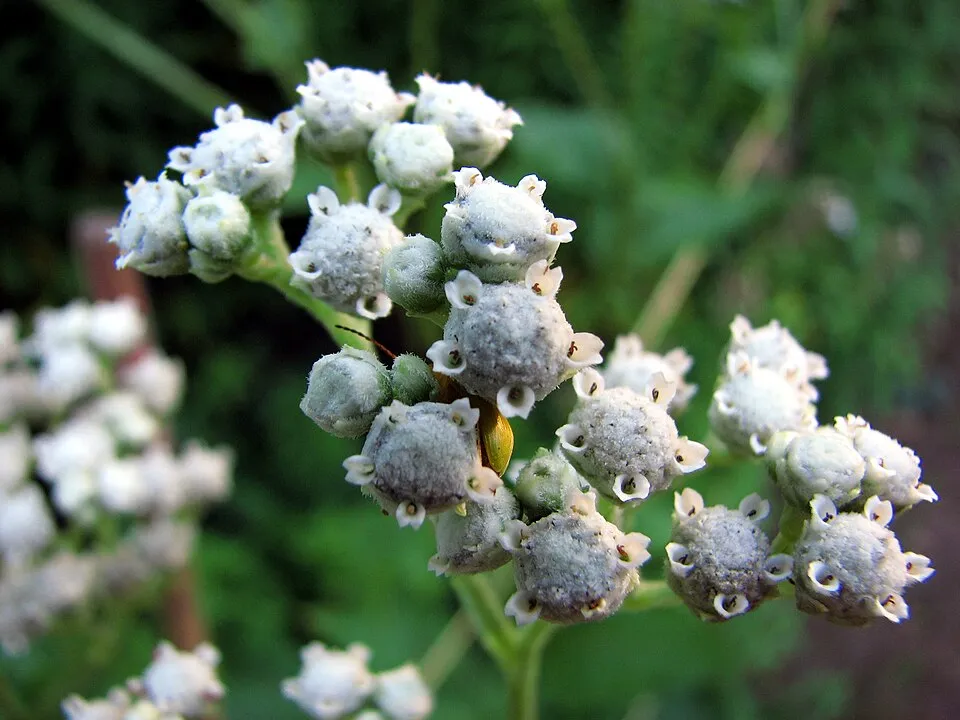
Parthenium integrifolium, commonly known as Wild Quinine or American Feverfew, is a robust herbaceous perennial belonging to the extensive Asteraceae family. This distinctive plant is indigenous to the eastern and central regions of North America, flourishing in diverse habitats such as prairies, open woodlands, and savannas. It typically exhibits an upright growth habit, reaching a mature height of 2 to 4 feet (0.6 to 1.2 meters), occasionally taller in optimal conditions.
The basal leaves form a prominent rosette, characterized by their ovate to lanceolate shape and often soft, hairy (tomentose) texture, sometimes extending up to 12 inches (30 cm) in length. As the growing season progresses, sturdy, leafy stems emerge, culminating in a showy inflorescence. The plant produces numerous small, daisy-like flower heads, each composed of pristine white ray florets encircling a dense central disc of yellowish-green tubular florets.
These flower heads are arranged in a flat-topped, corymbose panicle, creating a striking display from late spring through the summer months. Parthenium integrifolium develops a deep, taproot-like root system, which significantly contributes to its remarkable drought tolerance once established. Its resilience and adaptability to various well-drained soil types and preferences for full sun to partial shade make it a valuable species for ecological restoration projects, pollinator gardens, and naturalistic landscapes, offering both aesthetic appeal and vital ecological support.
Trusted Scientific References
1. Authoritative external sources for Parthenium integrifolium
1.1 Wikipedia — Parthenium integrifolium
1.2 Kew POWO (Plants of the World Online)
1.3 PubMed — peer-reviewed research
1.4 NCBI Taxonomy Browser
1.5 GBIF — Global Biodiversity
1.6Parthenium Integrifolium should be interpreted through verified botanical identity, practical care, and responsible safety language. This recovery note adds the missing context needed for a complete profile: match light to the plant's habit, use well-drained soil, water according to season, and avoid unsupported medicinal or edible claims. For publishing, the plant can be presented as a source-backed garden plant with clear care guidance, common problem diagnosis, and conservative safety wording.
1.1.Parthenium Integrifolium — Standout Qualities
- ✓Native North American Perennial — Indigenous to prairies and open woodlands of central and eastern North America.
- ✓Asteraceae Family Member — Belongs to the sunflower family, characterized by its composite flower heads.
- ✓White, Daisy — like Flowers — Produces showy white ray florets around a yellowish-green center, blooming late spring to summer.
- ✓Traditional Antipyretic Herb — Historically used as a 'fever reducer' by Native American tribes.
- ✓Potential Anti — inflammatory Action — Contains sesquiterpene lactones and flavonoids known for anti-inflammatory properties.
- ✓Drought — Tolerant Plant — Establishes a deep taproot, making it resilient in dry conditions once mature.
- ✓Important Pollinator Attractor — Its flowers are a valuable nectar and pollen source for various insects.
- ✓Low — Maintenance Ornamental — Easy to grow in well-drained soil and full sun to partial shade, suitable for naturalistic landscapes.
- ✓Unique Phytochemical Profile — Characterized by specific sesquiterpene lactones and a range of phenolic compounds.
- ✓Ethnobotanical Significance — Holds historical importance in traditional folk medicine practices.
1.2.Parthenium Integrifolium — At-a-Glance Summary
- ✓Parthenium integrifolium, or Wild Quinine, is a native North American perennial from the Asteraceae family.
- ✓Traditionally used by Native Americans as an antipyretic, digestive aid, and for skin issues.
- ✓Rich in sesquiterpene lactones, flavonoids, and tannins, contributing to its medicinal properties.
- ✓Valued for its aesthetic appeal, drought tolerance, and role as a pollinator plant in gardens.
- ✓Modern scientific validation for its traditional uses is limited, primarily relying on ethnobotanical evidence.
- ✓Caution is advised due to potential allergic reactions and lack of comprehensive safety data for internal use.
2.Parthenium Integrifolium — Taxonomic Classification
3.Parthenium Integrifolium — Reference Facts
4.Parthenium Integrifolium — Morphological Account
5.Parthenium Integrifolium — Habitat & Distribution
6.Parthenium Integrifolium — Historical Applications
7.Parthenium Integrifolium — Secondary Metabolites
- ✓Sesquiterpene Lactones — These are primary bioactive compounds, including specific derivatives like psilostachyin C and other guaianolides, known for their anti-inflammatory, antimicrobial, and potential cytotoxic activities.
- ✓Flavonoids — A diverse group of polyphenols such as quercetin and kaempferol derivatives are present, contributing significant antioxidant, anti-inflammatory, and free radical scavenging properties.
- ✓Tannins — Both hydrolyzable and condensed tannins are found, conferring astringent effects that are useful in reducing inflammation, acting as antimicrobials, and aiding in wound healing.
- ✓Essential Oils (Volatile Compounds) — The plant contains a complex mixture of monoterpenes and sesquiterpenes in its volatile oil, which contribute to its characteristic aroma and may possess antimicrobial and insecticidal qualities.
- ✓Polysaccharides — Various complex carbohydrates, including mucilaginous polysaccharides, are present, which may offer demulcent properties and potentially modulate immune responses.
- ✓Sterols — Plant sterols like beta-sitosterol are found, which are known for their cholesterol-lowering and anti-inflammatory potential.
- ✓Triterpenes — Compounds such as ursolic acid and oleanolic acid derivatives may be present, often associated with anti-inflammatory and hepatoprotective activities.
- ✓Phenolic Acids — Beyond flavonoids, other simple phenolic acids like caffeic acid and chlorogenic acid derivatives contribute to the plant's overall antioxidant capacity.
8.Parthenium Integrifolium — Modern Studies
- ✓Antipyretic Action — Traditionally, Wild Quinine was highly valued by Native American tribes for its ability to reduce fevers, a property from which it derives its common name.
- ✓Anti-inflammatory Support — The presence of sesquiterpene lactones and flavonoids suggests potential anti-inflammatory effects, which could alleviate discomfort from various inflammatory conditions.
- ✓Digestive Aid — Historically used as a bitter tonic, Parthenium integrifolium may stimulate appetite and promote healthy digestion by enhancing the secretion of digestive enzymes.
- ✓Antimicrobial Properties — Certain compounds within the plant, such as tannins and some sesquiterpene lactones, may exhibit antimicrobial activity, helping to combat bacterial or fungal infections.
- ✓Expectorant Effects — Traditional uses for coughs suggest expectorant qualities, potentially assisting in clearing respiratory passages and easing congestion.
- ✓Wound Healing — Applied topically as a poultice, the plant was used to soothe skin irritations and promote the healing of minor wounds, likely due to its astringent and antimicrobial constituents.
- ✓Astringent Action — Tannins contribute to the plant's astringent properties, which can help to tighten tissues, reduce secretions, and may be beneficial for mild diarrhea or topical skin issues.
- ✓Antioxidant Activity — Flavonoids and other phenolic compounds provide antioxidant benefits, helping to protect cells from oxidative stress and free radical damage.
- ✓Immune System Modulation — While not fully elucidated, some plant polysaccharides can have immunomodulatory effects, potentially supporting the body's natural defenses.
- ✓Pain Relief — The 'American Feverfew' moniker hints at historical use for pain management, possibly linked to its anti-inflammatory compounds, though specific analgesic mechanisms require further study.
8.1.Parthenium Integrifolium — Conditions Traditionally Used For
9.Parthenium Integrifolium — Risk Profile
9.1.Parthenium Integrifolium — Possible Adverse Reactions
- ✓Allergic Dermatitis — Contact with the plant, especially in sensitive individuals, may cause skin irritation or allergic contact dermatitis due to sesquiterpene lactones.
- ✓Allergic Reactions — Individuals with known allergies to other plants in the Asteraceae family (e.g., ragweed, chamomile, marigolds) may experience cross-reactivity.
- ✓Gastrointestinal Upset — High doses taken internally may lead to mild digestive discomfort, nausea, or stomach upset.
- ✓Photosensitivity — While rare, some plant compounds can increase skin sensitivity to sunlight in susceptible individuals.
- ✓Drug Interactions — Due to limited research, potential interactions with prescription medications, particularly those affecting the immune system or blood clotting, are unknown and warrant caution.
- ✓Pregnancy and Lactation — Lack of safety data dictates avoidance during pregnancy and breastfeeding to prevent potential adverse effects on the fetus or infant.
9.2.Parthenium Integrifolium — Safety Overview
- ✓Professional Consultation — Always consult a qualified healthcare practitioner or medical herbalist before using Parthenium integrifolium, especially for internal applications.
- ✓Allergy Precaution — Individuals with allergies to plants in the Asteraceae family should exercise extreme caution or avoid use due to potential cross-reactivity.
- ✓Topical Patch Test — Before extensive topical application, perform a patch test on a small area of skin to check for any allergic reactions or irritation.
- ✓Pregnancy and Breastfeeding — Avoid use during pregnancy and lactation due to insufficient safety data and the presence of potentially active compounds.
- ✓Children and Infants — Not recommended for use in children or infants due to a lack of specific pediatric safety studies.
- ✓Internal Use Caution — Internal use should be undertaken with extreme caution and under expert supervision due to limited modern scientific validation and potential for adverse effects.
- ✓Dosage Adherence — Adhere strictly to recommended dosages from a qualified practitioner; excessive intake may increase the risk of side effects.
10.Parthenium Integrifolium — Preparation & Dosage
- ✓Decoction (Root) — The dried root is traditionally simmered in water to extract its compounds, used internally for fevers and digestive issues.
- ✓Infusion (Leaves/Flowers) — Dried leaves and flowers can be steeped in hot water to create a tea, often consumed for respiratory complaints or as a bitter tonic.
- ✓Topical Poultice — Crushed fresh leaves or a paste from dried, powdered plant material can be applied directly to skin irritations, insect bites, or minor wounds.
- ✓Tincture — A concentrated liquid extract made by steeping plant material in alcohol, allowing for convenient internal dosing under professional guidance.
- ✓Powdered Herb — Dried plant parts can be finely ground and encapsulated for internal consumption, or mixed with a carrier for topical applications.
- ✓Herbal Compress — Cloths soaked in a strong infusion or decoction can be applied externally to inflamed areas or for localized pain relief.
- ✓Bitter Tonic — Small amounts of a root decoction or leaf infusion can be taken before meals to stimulate digestive secretions and improve appetite.
11.Parthenium Integrifolium — Propagation & Care
- ✓Seed Propagation — Seeds can be sown directly in early spring after stratification or in the fall for natural cold stratification, requiring light for germination.
- ✓Division — Established clumps can be divided in early spring or fall, ensuring each division has roots and shoots, a reliable method for vegetative propagation.
- ✓Soil Requirements — Prefers well-drained soils, tolerating a range from sandy to clay loams; it is adaptable but does not thrive in constantly wet conditions.
- ✓Light Exposure — Thrives in full sun (at least 6 hours direct sunlight daily) but can tolerate partial shade, though flowering may be less prolific.
- ✓Watering — Once established, Wild Quinine is remarkably drought-tolerant, requiring minimal supplemental watering; newly planted specimens need regular moisture.
- ✓Hardiness Zones — Hardy in USDA Zones 3 through 8, making it suitable for a wide range of temperate climates.
- ✓Maintenance — Generally low-maintenance; deadheading spent flowers can encourage a tidier appearance and prevent excessive self-seeding, though typically not required.
- ✓Pest and Disease Resistance — This plant is generally robust and resistant to most common pests and diseases, making it an excellent choice for naturalistic gardening.
Reviewed by the Flora Medical Global Botanical Review Panel
Multi-disciplinary editorial group · Botany · Ethnobotany · Herbal-medicine literature
Who reviewed this: This page was checked by the Flora Medical Global Botanical Review Panel — an in-house editorial group of botany graduates, ethnobotany researchers, and horticulture practitioners who collectively maintain our 7,000+ plant encyclopedia. Meet the team.
Our 4-step verification process
1. Taxonomic verification
Scientific names and synonyms cross-checked against Kew POWO, World Flora Online, and The Plant List.
2. Phytochemical & medicinal cross-reference
Active compounds, traditional uses, and reported activities are cross-referenced with PubMed, USDA Dr. Duke's database, and peer-reviewed ethnobotanical literature.
3. Conservation & distribution check
Distribution, ecology, and conservation status confirmed against GBIF occurrence records and the IUCN Red List.
4. Editorial & safety review
Every entry passes an editorial pass for clarity, originality, and safety notices (toxicity, contraindications, dosage caveats) before publication.
Last reviewed:
Important medical disclaimer: This content is for educational and research purposes only. It is not medical advice and is not a substitute for consultation with a licensed healthcare provider. Do not use any herb to self-treat a medical condition without professional guidance.
Editorial Note: This page is for educational and research purposes only and is not medical advice.
Written by: Flora Medical Global Editorial Team
Reviewed by: Flora Medical Global Botanical Review Panel
Last Updated: June 15, 2026





Parthenium Integrifolium — Comments & Community Reviews
Rate this plant