
Medical Disclaimer: This content is for educational purposes only. It is not medical advice. Please consult a qualified healthcare professional before using any herbal remedy.
Safety Overview
1.Passionflower Vine — Plant Snapshot
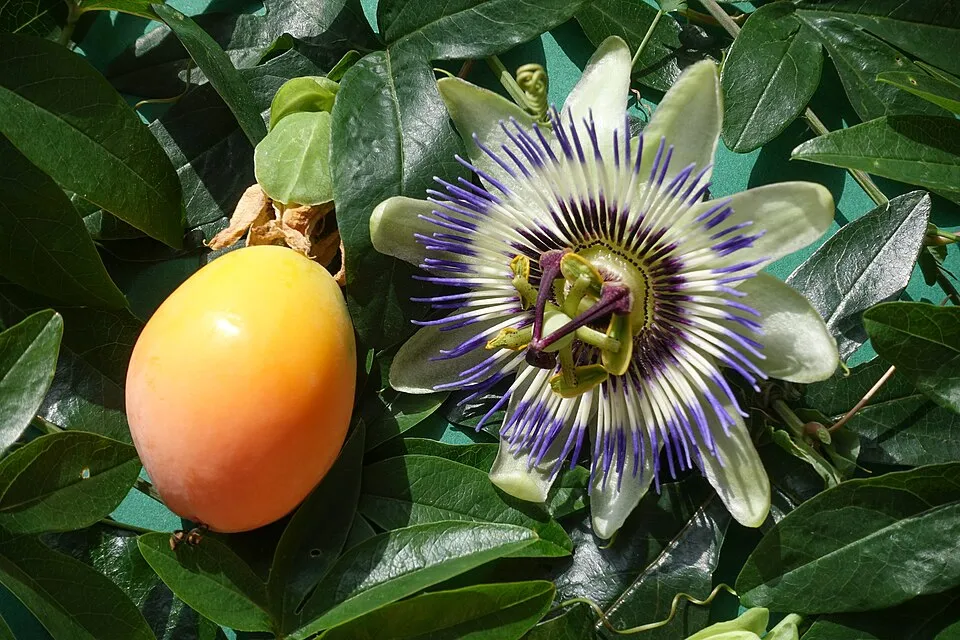
Passionflower Vine, scientifically known as Passiflora caerulea, is a captivating perennial climbing vine belonging to the diverse Passifloraceae family. Native to the subtropical regions of South America, including Brazil, Argentina, and Paraguay, it has become widely cultivated globally for its ornamental beauty and medicinal properties.
This vigorous climber features slender, coiled tendrils that allow it to ascend trellises, fences, and other structures, often reaching lengths of up to 10 meters. Its leaves are typically palmately lobed, often with five to seven deep lobes, presenting a lush, green foliage.
The most striking feature of Passiflora caerulea is its intricate and exotic flowers, which bloom from summer to autumn. These large, fragrant blossoms are typically 8-10 cm in diameter, exhibiting a mesmerizing array of white or pale blue petals and sepals, surmounted by a distinctive corona of delicate blue and white filaments. The flower's central structure includes five greenish-yellow stamens and a three-branched pistil.
Following successful pollination, the vine produces ovoid, orange-yellow fruits, approximately 4-6 cm long, which are edible though often considered bland. Passiflora caerulea thrives in well-drained soils and requires ample sunlight, adapting well to a variety of temperate and subtropical climates, making it a resilient and visually stunning addition to many landscapes.
Trusted Scientific References
1. Authoritative external sources for Passiflora caerulea
1.1 Wikipedia — Passiflora caerulea
1.2 Kew POWO (Plants of the World Online)
1.3 PubMed — peer-reviewed research
1.4 NCBI Taxonomy Browser
1.5 GBIF — Global Biodiversity
1.6Passionflower Vine should be interpreted through verified botanical identity, practical care, and responsible safety language. This recovery note adds the missing context needed for a complete profile: match light to the plant's habit, use well-drained soil, water according to season, and avoid unsupported medicinal or edible claims. For publishing, the plant can be presented as a source-backed medicinal plant with clear care guidance, common problem diagnosis, and conservative safety wording.
1.1.Passionflower Vine — Key Features
- ✓Natural Anxiolytic — Renowned for its significant calming and anxiety-reducing effects.
- ✓Herbal Sleep Aid — Effectively promotes restful sleep and helps manage insomnia.
- ✓Rich Phytochemical Profile — Contains a complex array of flavonoids and indole alkaloids.
- ✓Traditional Medicine Staple — Utilized across various traditional healing systems for nervous disorders.
- ✓Ornamental Beauty — Features strikingly intricate and beautiful blue and white flowers.
- ✓Adaptogenic Potential — Helps the body adapt to and cope with stress.
- ✓South American Origin — Native to subtropical regions of Brazil, Argentina, and Paraguay.
- ✓MAO — Inhibitor Activity — Contains harmine, contributing to its unique pharmacological actions.
- ✓Versatile Preparations — Can be consumed as tea, tincture, extract, or in capsule form.
- ✓Research — Backed — Modern studies support many of its traditional uses for nervous system support.
1.2.Passionflower Vine — Quick Summary
- ✓Passionflower Vine (Passiflora caerulea) is a South American native known for its calming properties.
- ✓Primarily used to alleviate anxiety, promote sleep, and reduce stress.
- ✓Contains anxiolytic flavonoids and MAO-inhibiting alkaloids like harmine.
- ✓Available in teas, tinctures, capsules, and extracts.
- ✓Contraindicated in pregnancy and caution advised with sedatives and before surgery.
- ✓Offers antioxidant and anti-inflammatory benefits.
2.Passionflower Vine — Scientific Profile
3.Passionflower Vine — Quick Facts
4.Passionflower Vine — Plant Morphology
5.Passionflower Vine — Where It Grows
6.Passionflower Vine — Historical Applications
7.Passionflower Vine — Secondary Metabolites
- ✓Flavonoids — Key compounds like chrysin, vitexin, isovitexin, orientin, and apigenin are abundant, known for their anxiolytic, sedative, and antioxidant properties, often interacting with GABA receptors.
- ✓Indole Alkaloids — Passiflora caerulea is notably rich in beta-carboline alkaloids, including harmine, harman, harmol, and norharman, which act as monoamine oxidase (MAO) inhibitors, contributing to its mood-enhancing and sedative effects.
- ✓Cyanogenic Glycosides — Compounds such as gynocardin are present, which can release hydrogen cyanide upon enzymatic hydrolysis, though typically in low, non-toxic concentrations in prepared herbal remedies.
- ✓Maltol and Ethyl Maltol — These pyrone derivatives are recognized for their sedative and hypnotic effects, contributing to the plant’s overall calming profile.
- ✓Phenolic Acids — Various phenolic acids, including caffeic acid and ferulic acid, contribute to the plant’s antioxidant capacity and anti-inflammatory actions.
- ✓Coumarins — Certain coumarin derivatives may be present, known for their potential anti-inflammatory and anticoagulant properties.
- ✓Glycosides — Other complex glycosides, beyond cyanogenic types, contribute to the plant’s diverse pharmacological activities.
- ✓Essential Oils — Trace amounts of volatile compounds contribute to the plant's characteristic aroma and may possess mild therapeutic effects.
8.Passionflower Vine — What Research Suggests
- ✓Anxiolytic Properties — Passionflower Vine is extensively recognized for its calming effects, helping to alleviate symptoms of generalized anxiety and nervousness through its interaction with neurotransmitter systems.
- ✓Sleep Support — It acts as a natural sedative, promoting restful sleep and aiding individuals suffering from insomnia by reducing sleep latency and improving overall sleep quality.
- ✓Pre-Surgical Anxiety Reduction — Clinical observations suggest that oral administration of Passionflower can significantly reduce anxiety levels in patients prior to medical procedures, comparable to some conventional anxiolytics.
- ✓Stress Relief — The plant’s adaptogenic qualities assist the body in managing physiological and psychological stress, fostering a sense of tranquility and emotional balance.
- ✓Mood Enhancement — By influencing neurotransmitter activity, particularly through its MAO-inhibiting alkaloids, Passiflora caerulea may contribute to improved mood and a reduction in mild depressive symptoms.
- ✓Anti-inflammatory Action — Research indicates the presence of compounds with anti-inflammatory effects, which can help mitigate inflammation throughout the body and support overall well-being.
- ✓Antioxidant Defense — Rich in flavonoids and other phenolic compounds, Passionflower Vine provides robust antioxidant protection, neutralizing free radicals and safeguarding cellular health.
- ✓Digestive Comfort — Traditionally, it has been used to calm nervous digestion and relieve symptoms of irritable bowel syndrome (IBS) stemming from stress and anxiety.
- ✓Neurological Support — The plant’s constituents, including certain alkaloids, may offer neuroprotective benefits and support cognitive function, particularly in stress-related contexts.
- ✓Muscle Relaxation — Its mild antispasmodic properties can help relax tense muscles, offering relief from muscle cramps and tension headaches often associated with stress.
8.1.Passionflower Vine — Conditions Traditionally Used For
9.Passionflower Vine — Risk Profile
9.1.Passionflower Vine — Possible Adverse Reactions
- ✓Drowsiness — May cause sedation and drowsiness, particularly when taken in higher doses or combined with other sedatives.
- ✓Dizziness — Some individuals may experience dizziness or lightheadedness, affecting coordination and concentration.
- ✓Confusion — In rare cases, especially with high doses, temporary confusion or impaired cognitive function has been reported.
- ✓Gastrointestinal Upset — Mild stomach upset, nausea, or vomiting can occur in sensitive individuals.
- ✓Allergic Reactions — Although uncommon, allergic skin reactions such as rash or itching are possible.
- ✓Headaches — A small percentage of users might experience headaches as a side effect.
- ✓Hypotension — Potentially may cause a slight drop in blood pressure, especially in susceptible individuals.
9.2.Passionflower Vine — Toxicity Assessment
- ✓Pregnancy Contraindication — Passionflower is possibly unsafe during pregnancy due to potential uterine stimulant effects, which could induce early labor.
- ✓Breast-feeding Avoidance — Insufficient reliable information exists regarding its safety during breast-feeding; therefore, avoidance is recommended.
- ✓Sedative Interactions — Use with caution when combined with other central nervous system (CNS) depressants, including alcohol, benzodiazepines, and opioid pain relievers, due to additive sedative effects.
- ✓Surgical Precautions — Discontinue use at least two weeks before scheduled surgery as it may interact with anesthesia and prolong sedative effects.
- ✓Liver Metabolism — May interact with medications metabolized by the liver (CYP3A4 substrates), potentially altering their effectiveness or side effects.
- ✓Children's Use — Generally considered possibly safe for short-term use in children aged 6-13 under professional guidance, using specific, well-researched products.
- ✓Driving/Operating Machinery — Due to potential drowsiness and dizziness, avoid driving or operating heavy machinery until you know how Passionflower affects you.
10.Passionflower Vine — Preparation & Dosage
- ✓Herbal Tea — Dried leaves and flowers can be steeped in hot water for 5-10 minutes to create a calming infusion, typically consumed before bedtime.
- ✓Tinctures — Alcoholic extracts of the aerial parts are common, allowing for concentrated dosing; usually taken in drops mixed with water.
- ✓Capsules/Tablets — Standardized extracts are available in capsule or tablet form, offering convenient and precise dosing for consistent therapeutic effects.
- ✓Liquid Extracts — Glycerine-based or hydro-alcoholic liquid extracts provide an alternative for those avoiding alcohol or seeking a different administration method.
- ✓Topical Applications — Infused oils or creams can be prepared for localized relief of muscle tension or skin irritation, though less common for its primary uses.
- ✓Culinary Use — The fruits of Passiflora caerulea are edible and can be consumed fresh or used in jams, jellies, and beverages for a mild, unique flavor.
- ✓Consultation — Always consult a qualified healthcare practitioner or herbalist for appropriate dosing and preparation methods, especially for specific health conditions.
11.Passionflower Vine — Propagation & Care
- ✓Soil Requirements — Thrives in well-drained, fertile soil with a slightly acidic to neutral pH (6.0-7.0).
- ✓Sunlight Exposure — Requires full sun to partial shade; at least 6 hours of direct sunlight daily for optimal flowering and growth.
- ✓Watering Regimen — Maintain consistent moisture, especially during dry periods; avoid waterlogging to prevent root rot.
- ✓Propagation Techniques — Can be propagated from seeds (which may require stratification) or more commonly from semi-hardwood cuttings in spring or summer.
- ✓Support Structure — As a vigorous climbing vine, it requires a sturdy trellis, arbor, or fence for support to grow upward.
- ✓Pruning Practices — Prune in late winter or early spring to control size, remove dead or weak growth, and encourage bushier habit and more flowers.
- ✓Pest and Disease Management — Generally robust, but watch for common pests like aphids, spider mites, and whiteflies; ensure good air circulation to prevent fungal issues.
Reviewed by the Flora Medical Global Botanical Review Panel
Multi-disciplinary editorial group · Botany · Ethnobotany · Herbal-medicine literature
Who reviewed this: This page was checked by the Flora Medical Global Botanical Review Panel — an in-house editorial group of botany graduates, ethnobotany researchers, and horticulture practitioners who collectively maintain our 7,000+ plant encyclopedia. Meet the team.
Our 4-step verification process
1. Taxonomic verification
Scientific names and synonyms cross-checked against Kew POWO, World Flora Online, and The Plant List.
2. Phytochemical & medicinal cross-reference
Active compounds, traditional uses, and reported activities are cross-referenced with PubMed, USDA Dr. Duke's database, and peer-reviewed ethnobotanical literature.
3. Conservation & distribution check
Distribution, ecology, and conservation status confirmed against GBIF occurrence records and the IUCN Red List.
4. Editorial & safety review
Every entry passes an editorial pass for clarity, originality, and safety notices (toxicity, contraindications, dosage caveats) before publication.
Last reviewed:
Important medical disclaimer: This content is for educational and research purposes only. It is not medical advice and is not a substitute for consultation with a licensed healthcare provider. Do not use any herb to self-treat a medical condition without professional guidance.
Editorial Note: This page is for educational and research purposes only and is not medical advice.
Written by: Flora Medical Global Editorial Team
Reviewed by: Flora Medical Global Botanical Review Panel
Last Updated: June 15, 2026





Passionflower Vine — Comments & Community Reviews
Rate this plant