


Medical Disclaimer: This content is for educational purposes only. It is not medical advice. Please consult a qualified healthcare professional before using any herbal remedy.
Safety Overview
1.Patola (Pointed Gourd) — At a Glance
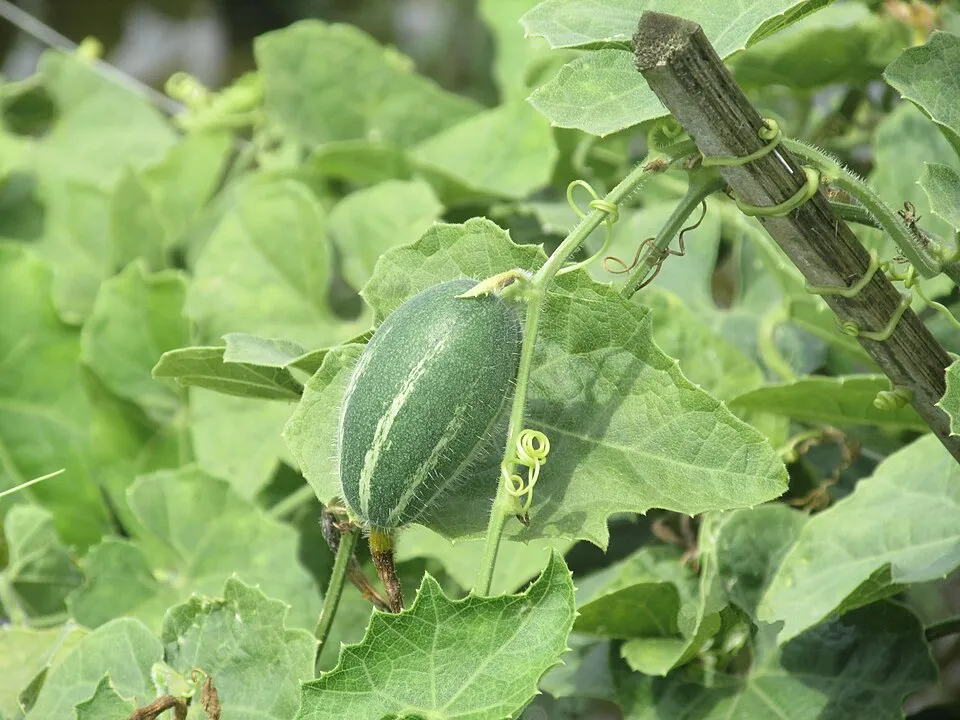
Trichosanthes dioica, commonly known as Patola or pointed gourd, is a vigorous herbaceous tropical vine belonging to the Cucurbitaceae family, which also includes various squashes, melons, and cucumbers. This dioecious species typically extends its slender, climbing stems to lengths of 3 to 4 meters, utilizing its specialized tendrils to ascend vertical structures. The leaves are distinctly heart-shaped (cordate), measuring approximately 10 to 15 cm in width, exhibiting a deep green hue on their upper surface and a lighter shade underneath.
Its striking pale yellow flowers are solitary and axillary, each featuring five petals often adorned with a distinctive purple marking at the base, crucial for attracting pollinators. The fruit, the most prized part of the plant, is elongated and cylindrical, tapering to a pointed tip, and can grow 6 to 25 cm in length. Initially smooth and vibrant green, the fruit transitions to a yellowish-green upon ripening, encapsulating a fleshy, edible pulp filled with numerous seeds.
Patola thrives in warm, humid tropical and subtropical environments, primarily found across the Indo-Burma region. It demonstrates a preference for well-draining, fertile soils ranging from sandy to loamy, especially those rich in organic matter, making alluvial plains ideal for its cultivation. Taxonomically, its placement within the Cucurbitaceae family underscores its shared botanical characteristics and often similar nutritional and medicinal profiles with many other important food and health crops.
Trusted Scientific References
1. Authoritative external sources for Trichosanthes dioica
1.1 Wikipedia — Trichosanthes dioica
1.2 Kew POWO (Plants of the World Online)
1.3 PubMed — peer-reviewed research
1.4 NCBI Taxonomy Browser
1.5 GBIF — Global Biodiversity
1.6Patola (Pointed Gourd) should be interpreted through verified botanical identity, practical care, and responsible safety language. This recovery note adds the missing context needed for a complete profile: match light to the plant's habit, use well-drained soil, water according to season, and avoid unsupported medicinal or edible claims. For publishing, the plant can be presented as a source-backed medicinal plant with clear care guidance, common problem diagnosis, and conservative safety wording.
1.1.Patola (Pointed Gourd) — Highlights
- ✓Botanical Name — Trichosanthes dioica
- ✓Common Names — Patola, Pointed Gourd, Parwal
- ✓Family — Cucurbitaceae
- ✓Energetics (Ayurveda) — Sheeta Virya (cooling), Madhura (sweet), Tikta (bitter) Rasa
- ✓Key Active Compounds — Trichosanthin, Flavonoids (Quercetin, Kaempferol), Cucurbitacin glycosides
- ✓Primary Uses — Digestive aid, Pitta pacifier, urinary support, antioxidant
- ✓Habitat — Tropical and subtropical regions of Indo-Burma
- ✓Growth Habit — Climbing herbaceous vine with tendrils
- ✓Edible Parts — Young fruits, leaves, and tender shoots
- ✓Traditional Systems — Ayurveda, Unani, folk medicine
1.2.Patola (Pointed Gourd) — Concise Overview
- ✓Prized Ayurvedic herb (Patola) from the Cucurbitaceae family.
- ✓Known for its cooling energetics and Pitta-pacifying properties.
- ✓Rich in antioxidants (flavonoids), immunomodulatory proteins (trichosanthin).
- ✓Supports digestion, urinary health, and may moderate blood sugar.
- ✓Available as juice, powder, extracts, and used culinarily.
- ✓Exercise caution during pregnancy, lactation, and with diabetes medication.
2.Patola (Pointed Gourd) — Botanical Identity
3.Patola (Pointed Gourd) — Key Data
4.Patola (Pointed Gourd) — Botanical Features
5.Patola (Pointed Gourd) — Ecological Habitat
6.Patola (Pointed Gourd) — Folk Medicine Applications
7.Patola (Pointed Gourd) — Key Phytochemicals
- ✓Ribosome-Inactivating Proteins (RIPs) — Primarily Trichosanthin, a well-studied protein known for its immunomodulatory and potential antiviral activities in various lab settings.
- ✓Flavonoids — Key compounds include Quercetin and Kaempferol, potent antioxidants that scavenge free radicals, reduce inflammation, and support cardiovascular health.
- ✓Cucurbitacin Glycosides — Bitter triterpenoids responsible for some of its mild digestive stimulation and potential diuretic effects, though present in trace, safe amounts.
- ✓Vitamins — Rich in Vitamin C (ascorbic acid) which supports immune function and acts as an antioxidant, and Vitamin A (beta-carotene precursors) vital for vision and skin health.
- ✓Minerals — Contains essential minerals such as potassium, crucial for electrolyte balance and blood pressure regulation, and small amounts of iron for hemoglobin synthesis.
- ✓Saponins — Natural detergents found in plants, contributing to its potential anti-inflammatory and cholesterol-lowering properties.
- ✓Phenolic Acids — Compounds like gallic acid and caffeic acid, contributing to the plant's overall antioxidant capacity and protective effects.
- ✓Dietary Fiber — Abundant in the fruit pulp, aiding in digestive regularity, promoting gut health, and contributing to satiety.
- ✓Alkaloids — Present in minor quantities, these nitrogen-containing compounds can exert various pharmacological effects, though specific active alkaloids in Patola are less studied.
- ✓Carotenoids — Pigments like beta-carotene, precursors to Vitamin A, contributing to antioxidant activity and overall nutritional value.
8.Patola (Pointed Gourd) — Evidence-Based Benefits
- ✓Pitta Pacifier — Its inherent cooling energetics (Sheeta Virya) and bitter taste help balance excessive heat and inflammation associated with Pitta dosha, alleviating symptoms like acid reflux and skin irritation.
- ✓Digestive Support — The mild bitter compounds and dietary fiber stimulate bile flow, enhancing lipid digestion, improving appetite, and reducing bloating and indigestion.
- ✓Urinary Health — Traditionally used to alleviate dysuria (painful urination) and support healthy urine output, possibly due to mild diuretic actions of its cucurbitacin compounds.
- ✓Antioxidant Protection — Rich in flavonoids like quercetin and kaempferol, Patola offers significant cellular defense against oxidative stress, supporting overall metabolic balance and longevity.
- ✓Anti-inflammatory Action — Phytochemicals such as flavonoids have demonstrated in-vitro inhibition of pro-inflammatory cytokines, contributing to its use in calming inflammatory conditions.
- ✓Blood Sugar Moderation — Early research suggests Patola extracts may exhibit modest hypoglycemic effects, supporting healthy glucose levels, aligning with traditional folk uses.
- ✓Immunomodulatory Effects — Studies on trichosanthin, a ribosome-inactivating protein, indicate potential modulation of immune cell activity, contributing to its use in low-grade fevers.
- ✓Skin Condition Relief — Topical application of leaf pastes is traditionally employed to soothe itchy rashes, minor swellings, and skin boils due to its anti-inflammatory properties.
- ✓Detoxification Support — Its diuretic and mild laxative properties assist in the elimination of toxins from the body, particularly supporting liver and kidney function.
- ✓Nutritional Enhancement — A good source of vitamins A and C, and essential minerals like potassium and iron, contributing to tissue repair and electrolyte balance.
8.1.Patola (Pointed Gourd) — Therapeutic Indications
9.Patola (Pointed Gourd) — Cautions & Contraindications
9.1.Patola (Pointed Gourd) — Caution Notes
- ✓Mild Gastrointestinal Upset — High dosages may lead to loose stools or diarrhea due to its mild laxative and diuretic effects.
- ✓Headache or Dizziness — Sensitive individuals might experience these symptoms, potentially from a rapid cooling effect (Pitta pacification).
- ✓Allergic Skin Reactions — Topical application of leaf paste can cause allergic rashes in individuals sensitive to the Cucurbitaceae family.
- ✓Electrolyte Imbalance — Excessive intake, particularly due to its diuretic action, could potentially alter electrolyte levels.
- ✓Blood Sugar Fluctuations — Individuals with diabetes should monitor blood glucose closely, as Patola can significantly lower levels when combined with medication.
- ✓Uterine Stimulant Effects — High doses, particularly of trichosanthin, may have a uterine stimulant effect, posing a risk during pregnancy.
9.2.Patola (Pointed Gourd) — Safety Overview
- ✓Pregnancy and Lactation — Avoid heavy use during pregnancy and lactation without explicit expert oversight due to potential uterine stimulant effects.
- ✓Diabetes Management — Diabetic patients on medication must monitor blood sugar levels carefully, as Patola can augment hypoglycemic effects.
- ✓Kidney Disorders — Individuals with pre-existing kidney conditions should use Patola sparingly, as its diuretic action might impact electrolyte balance.
- ✓Allergic Sensitivity — Exercise caution if there is a known allergy or sensitivity to plants in the Cucurbitaceae family.
- ✓Drug Interactions — Always disclose Patola supplementation to a healthcare provider, especially if on antidiabetic or diuretic medications.
- ✓Pediatric Use — For children under 12, professional medical guidance is essential before administering Patola; older children may use lower, supervised doses.
- ✓Dosage Adherence — Adhere strictly to recommended dosages, as excessive intake can lead to adverse effects.
10.Patola (Pointed Gourd) — Usage Guide
- ✓Fresh Fruit Juice — Consume 30-50 mL twice daily, preferably before meals, to soothe gastric fire and support digestive health.
- ✓Dried Powder — Take 2-4 grams of dried fruit or leaf powder mixed with warm water or honey, up to twice a day, for Pitta imbalances or mild inflammation.
- ✓Decoction — Prepare a decoction by boiling chopped Patola fruit or leaves in water, reducing it to a quarter, and consuming 50-100 mL for urinary support.
- ✓Herbal Extracts — Standardized extracts (e.g., 5:1 concentration) in capsule form, typically 250-500 mg once or twice daily, ideally on an empty stomach.
- ✓Leaf Poultice — Crush fresh Patola leaves and apply externally as a poultice to minor wounds, rashes, or localized swellings, securing with a clean cloth for 20-30 minutes.
- ✓Culinary Use — Integrate young, green Patola fruits into stir-fries, curries, or vegetable dishes with spices like cumin and turmeric for a nutritious and cooling meal.
- ✓Fermented Preparations — In some traditional practices, Patola may be incorporated into fermented foods or beverages to enhance bioavailability and gut health.
- ✓Topical Oils/Gels — Extracts can be incorporated into topical oils or gels for localized relief from skin irritations, leveraging its anti-inflammatory properties.
11.Patola (Pointed Gourd) — Cultivation & Care
- ✓Climate Preference — Thrives in warm, humid tropical and subtropical climates, requiring consistent temperatures for optimal growth.
- ✓Soil Requirements — Prefers well-draining, fertile loamy or sandy-loamy soils, ideally enriched with ample organic matter to support vigorous vine growth.
- ✓Water Management — Requires regular and consistent watering, especially during dry periods and fruit development, but avoids waterlogging.
- ✓Propagation — Primarily propagated from seeds or stem cuttings, with seeds typically sown directly or started in nurseries before transplanting.
- ✓Support Structures — As a climbing vine, it necessitates trellises, stakes, or fences to support its growth, ensuring proper air circulation and fruit development.
- ✓Harvesting — Fruits are best harvested when young and green (6-8 cm length) for optimal taste and nutrient density, before they turn yellowish.
- ✓Organic Practices — Organic cultivation is highly recommended, avoiding synthetic pesticides and fertilizers to ensure the purity of medicinal parts.
- ✓Pest Management — Implement integrated pest management strategies, as cucurbits can be susceptible to common garden pests like aphids and fruit flies.
Reviewed by the Flora Medical Global Botanical Review Panel
Multi-disciplinary editorial group · Botany · Ethnobotany · Herbal-medicine literature
Who reviewed this: This page was checked by the Flora Medical Global Botanical Review Panel — an in-house editorial group of botany graduates, ethnobotany researchers, and horticulture practitioners who collectively maintain our 7,000+ plant encyclopedia. Meet the team.
Our 4-step verification process
1. Taxonomic verification
Scientific names and synonyms cross-checked against Kew POWO, World Flora Online, and The Plant List.
2. Phytochemical & medicinal cross-reference
Active compounds, traditional uses, and reported activities are cross-referenced with PubMed, USDA Dr. Duke's database, and peer-reviewed ethnobotanical literature.
3. Conservation & distribution check
Distribution, ecology, and conservation status confirmed against GBIF occurrence records and the IUCN Red List.
4. Editorial & safety review
Every entry passes an editorial pass for clarity, originality, and safety notices (toxicity, contraindications, dosage caveats) before publication.
Last reviewed:
Important medical disclaimer: This content is for educational and research purposes only. It is not medical advice and is not a substitute for consultation with a licensed healthcare provider. Do not use any herb to self-treat a medical condition without professional guidance.
Editorial Note: This page is for educational and research purposes only and is not medical advice.
Written by: Flora Medical Global Editorial Team
Reviewed by: Flora Medical Global Botanical Review Panel
Last Updated: June 15, 2026





Patola (Pointed Gourd) — Comments & Community Reviews
Rate this plant