
Medical Disclaimer: This content is for educational purposes only. It is not medical advice. Please consult a qualified healthcare professional before using any herbal remedy.
Safety Overview
1.Pau D Arco — Overview
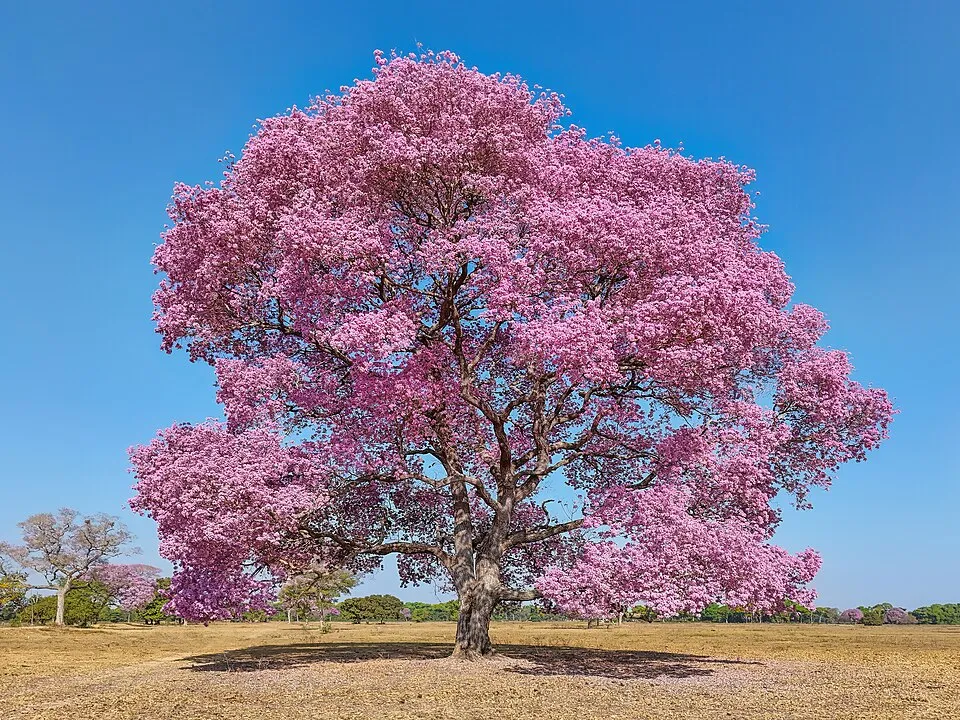
Pau D'Arco, scientifically known as Handroanthus impetiginosus (formerly classified under Tabebuia impetiginosa and Tabebuia avellanedae), is a majestic evergreen tree native to the tropical rainforests of Central and South America, particularly the Amazon basin. A member of the Bignoniaceae family, it is commonly referred to as 'Purple Trumpet Tree' due to its vibrant, trumpet-shaped purple or pink flowers that bloom profusely before the leaves emerge. The tree can reach impressive heights of up to 30 meters (100 feet), characterized by its hard, durable wood and distinctive deeply furrowed, greyish-brown bark.
The inner bark, or phloem, is the part traditionally harvested for its medicinal properties, revealing a yellowish hue beneath the rough exterior. Its leaves are palmately compound, typically with five leaflets, and its fruit is a long, slender capsule containing winged seeds. The name 'Pau D'Arco' itself is Portuguese for 'bow tree,' a testament to its wood's strength and historical use by indigenous peoples for crafting hunting bows.
This botanical marvel thrives in well-drained soils and warm, humid climates, forming an integral part of its native ecosystem and cultural heritage.
Trusted Scientific References
1. Authoritative external sources for Handroanthus impetiginosus
1.1 Wikipedia — Handroanthus impetiginosus
1.2 Kew POWO (Plants of the World Online)
1.3 PubMed — peer-reviewed research
1.4 NCBI Taxonomy Browser
1.5 GBIF — Global Biodiversity
1.6Pau D Arco should be interpreted through verified botanical identity, practical care, and responsible safety language. This recovery note adds the missing context needed for a complete profile: match light to the plant's habit, use well-drained soil, water according to season, and avoid unsupported medicinal or edible claims. For publishing, the plant can be presented as a source-backed medicinal plant with clear care guidance, common problem diagnosis, and conservative safety wording.
1.1.Pau D Arco — Key Features
- ✓Indigenous to Amazonian — Indigenous to Amazonian rainforests of South America.
- ✓Distinctive purple — pink trumpet-shaped flowers.
- ✓Inner bark (phloem) — Inner bark (phloem) is the primary medicinal part.
- ✓Contains powerful naphthoquinone — Contains powerful naphthoquinone compounds.
- ✓Renowned for immune — boosting and anti-inflammatory actions.
- ✓Exhibits broad — spectrum antimicrobial activity.
- ✓Historically used by — Historically used by native tribes for bows and medicine.
- ✓Available in various forms — teas, capsules, tinctures, topical.
- ✓Requires careful dosing — Requires careful dosing due to potential for adverse effects.
- ✓An important subject — An important subject of ongoing modern pharmacological research.
1.2.Pau D Arco — Concise Overview
- ✓Amazonian 'Bow Tree' with rich ethnobotanical history.
- ✓Inner bark is prized for its diverse medicinal properties.
- ✓Contains potent naphthoquinones like lapachol and beta-lapachone.
- ✓Traditionally used for immune, anti-inflammatory, and antimicrobial support.
- ✓Caution advised due to potential side effects, especially at high doses.
- ✓Contraindicated during pregnancy and with anticoagulant medications.
2.Pau D Arco — Systematic Position
3.Pau D Arco — Reference Facts
4.Pau D Arco — Morphological Account
5.Pau D Arco — Where It Grows
6.Pau D Arco — Ethnobotanical Uses
7.Pau D Arco — Active Compounds
- ✓Naphthoquinones — Key compounds include lapachol, beta-lapachone, and other related quinones, which are primarily responsible for Pau D'Arco's notable antimicrobial, anti-inflammatory, and potential anticancer activities.
- ✓Flavonoids — A diverse group of plant pigments such as quercetin and kaempferol, contributing significant antioxidant properties and supporting cardiovascular health.
- ✓Iridoids — These monoterpenoid compounds are known for their anti-inflammatory and immunomodulatory effects, playing a role in the plant's overall therapeutic profile.
- ✓Alkaloids — While present, their specific contributions to the plant's medicinal effects are less extensively studied compared to naphthoquinones, but they can have various pharmacological actions.
- ✓Saponins — These glycosides exhibit detergent-like properties and may contribute to immune modulation and cholesterol-lowering effects, though in Pau D'Arco they are less dominant.
- ✓Tannins — Astringent compounds that can help reduce inflammation, provide antioxidant benefits, and contribute to the plant's traditional use for digestive complaints.
- ✓Phenolic Compounds — A broad category including various acids and polyphenols, collectively offering potent antioxidant, anti-inflammatory, and protective cellular benefits.
- ✓Anthraquinones — Related to naphthoquinones, these compounds can contribute to laxative effects and antimicrobial activity, though their presence in Handroanthus impetiginosus is generally in lower concentrations.
8.Pau D Arco — What Research Suggests
- ✓Immune System Support — Pau D'Arco is traditionally revered for its ability to bolster the body's natural defenses, potentially enhancing the activity of immune cells and supporting overall immune function.
- ✓Anti-inflammatory Properties — Bioactive compounds, particularly naphthoquinones like lapachol and beta-lapachone, may help mitigate inflammatory responses throughout the body, offering relief from various inflammatory conditions.
- ✓Antimicrobial Action — Research suggests Handroanthus impetiginosus exhibits broad-spectrum antimicrobial effects against bacteria, fungi, and viruses, making it a traditional remedy for infections.
- ✓Antioxidant Activity — Rich in flavonoids and other phenolic compounds, Pau D'Arco helps combat oxidative stress by neutralizing free radicals, thereby protecting cells from damage.
- ✓Digestive Health Enhancement — Traditionally used to soothe gastrointestinal discomfort, it may support a healthy gut microbiome and alleviate symptoms associated with digestive imbalances.
- ✓Potential Anticancer Effects — Lapachol and beta-lapachone have been investigated for their ability to inhibit the growth of certain cancer cells and induce apoptosis in laboratory settings, though human studies are limited.
- ✓Anti-diabetic Potential — Some traditional uses and preliminary studies point to its role in managing blood sugar levels, warranting further scientific exploration.
- ✓Wound Healing Acceleration — Its traditional application for external wounds and skin conditions is supported by its antimicrobial and anti-inflammatory properties, which can aid in tissue repair.
- ✓Antifungal Properties — Particularly effective against Candida albicans and other fungal pathogens, Pau D'Arco is a popular herbal remedy for yeast infections.
- ✓Pain Management — Through its anti-inflammatory pathways, it may offer analgesic effects, contributing to the relief of pain associated with inflammation.
8.1.Pau D Arco — Reported Uses
9.Pau D Arco — Precautions & Warnings
9.1.Pau D Arco — Caution Notes
- ✓Nausea and Vomiting — High doses, particularly of lapachol, can lead to severe gastrointestinal upset.
- ✓Diarrhea — Excessive consumption may cause loose stools or diarrhea.
- ✓Dizziness — Some individuals may experience dizziness, especially with higher intakes.
- ✓Internal Bleeding Risk — Constituents like lapachol may interfere with blood clotting, increasing the risk of bleeding.
- ✓Anemia — Prolonged high-dose use of certain isolated compounds has been associated with effects on red blood cells.
- ✓Allergic Reactions — Rare instances of skin rash or other hypersensitivity reactions have been reported.
- ✓Hepatic/Renal Stress — Very high doses over extended periods might put a strain on liver and kidney function.
9.2.Pau D Arco — Risk Assessment
- ✓Pregnancy and Breastfeeding — Pau D'Arco is possibly unsafe during pregnancy due to potential effects on fetal development and blood clotting; avoid use.
- ✓Blood Clotting Disorders — Individuals with clotting disorders or those on anticoagulant medications should avoid Pau D'Arco due to increased bleeding risk.
- ✓Scheduled Surgery — Discontinue use at least two weeks prior to any scheduled surgery to minimize the risk of excessive bleeding.
- ✓High Dose Toxicity — High doses of the whole bark or isolated compounds like lapachol are associated with significant adverse effects and are considered unsafe.
- ✓Lack of Standardized Dosing — Reliable information on appropriate dosing for Pau D'Arco is often insufficient; consult a healthcare professional.
- ✓Product Adulteration — Commercial products containing Pau D'Arco may be mislabeled or adulterated, emphasizing the need for reputable sources.
- ✓Children and Infants — Due to limited safety data and potential risks, Pau D'Arco is generally not recommended for use in children or infants.
10.Pau D Arco — Preparation & Dosage
- ✓Herbal Tea (Decoction) — The most common method; boil pieces of inner bark in water for 10-20 minutes, then strain and drink. Often consumed for general wellness or immune support.
- ✓Tinctures — Alcohol-based extracts of the inner bark, offering a concentrated form for convenient dosing and extended shelf life.
- ✓Capsules/Tablets — Standardized extracts or powdered bark encapsulated for ease of use, providing precise dosages for various health concerns.
- ✓Topical Applications — Infused oils, salves, or poultices made from the bark can be applied externally for skin conditions, wounds, or fungal infections.
- ✓Bath Additive — A strong decoction can be added to bathwater to soothe skin irritations or body aches.
- ✓Herbal Syrups — Bark extracts can be combined with honey or other natural sweeteners to create palatable syrups, especially for respiratory support.
- ✓Infused Oils — Bark steeped in carrier oils can be used for massage or as a base for topical preparations for localized anti-inflammatory effects.
11.Pau D Arco — Propagation & Care
- ✓Climate Preference — Thrives in tropical and subtropical climates with high humidity and consistent warmth.
- ✓Soil Requirements — Prefers deep, well-drained, fertile soil with a slightly acidic to neutral pH (6.0-7.0).
- ✓Sunlight Exposure — Requires full sun exposure for optimal growth, at least 6-8 hours of direct sunlight daily.
- ✓Propagation Methods — Can be propagated effectively from seeds, which should be sown in sandy, well-draining soil, or from semi-hardwood cuttings.
- ✓Watering Regimen — Young trees need regular watering to establish, while mature trees are more drought-tolerant but benefit from consistent moisture.
- ✓Pest and Disease Resistance — Generally robust, Handroanthus impetiginosus shows good natural resistance to many common pests and diseases, requiring minimal chemical intervention.
- ✓Sustainable Harvesting — For medicinal use, the inner bark is harvested; sustainable practices involve selective harvesting to ensure tree regeneration and ecosystem health.
- ✓Growth Rate — Exhibits a moderate to fast growth rate under ideal conditions, making it suitable for agroforestry systems.
Reviewed by the Flora Medical Global Botanical Review Panel
Multi-disciplinary editorial group · Botany · Ethnobotany · Herbal-medicine literature
Who reviewed this: This page was checked by the Flora Medical Global Botanical Review Panel — an in-house editorial group of botany graduates, ethnobotany researchers, and horticulture practitioners who collectively maintain our 7,000+ plant encyclopedia. Meet the team.
Our 4-step verification process
1. Taxonomic verification
Scientific names and synonyms cross-checked against Kew POWO, World Flora Online, and The Plant List.
2. Phytochemical & medicinal cross-reference
Active compounds, traditional uses, and reported activities are cross-referenced with PubMed, USDA Dr. Duke's database, and peer-reviewed ethnobotanical literature.
3. Conservation & distribution check
Distribution, ecology, and conservation status confirmed against GBIF occurrence records and the IUCN Red List.
4. Editorial & safety review
Every entry passes an editorial pass for clarity, originality, and safety notices (toxicity, contraindications, dosage caveats) before publication.
Last reviewed:
Important medical disclaimer: This content is for educational and research purposes only. It is not medical advice and is not a substitute for consultation with a licensed healthcare provider. Do not use any herb to self-treat a medical condition without professional guidance.
Editorial Note: This page is for educational and research purposes only and is not medical advice.
Written by: Flora Medical Global Editorial Team
Reviewed by: Flora Medical Global Botanical Review Panel
Last Updated: June 15, 2026





Pau D Arco — Comments & Community Reviews
Rate this plant