
Medical Disclaimer: This content is for educational purposes only. It is not medical advice. Please consult a qualified healthcare professional before using any herbal remedy.
Safety Overview
1.Pau d'Arco — Introduction & Highlights
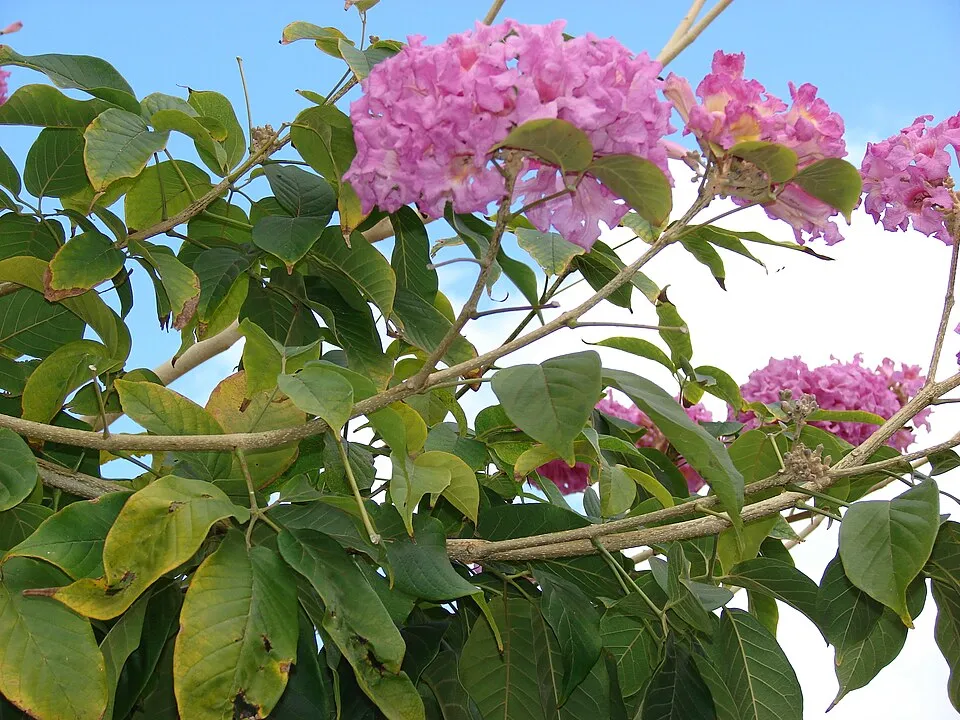
Pau d'Arco, scientifically designated Tabebuia impetiginosa, is an impressive deciduous tree native to the tropical rainforests of South America, particularly prevalent across Brazil, Argentina, Paraguay, and parts of Bolivia. Belonging to the Bignoniaceae family, this species is renowned for its remarkable stature, often reaching heights of 25 to 30 meters, with a trunk diameter that can exceed one meter. The mature bark, which is the primary medicinal part, transitions from smooth in younger trees to deeply fissured and textured with age, typically displaying a grayish-brown hue.
Its large, broad, palmate leaves are composed of five to seven leaflets, each measuring 10 to 18 cm, presenting a glossy dark green surface that may turn yellow before seasonal leaf drop. However, the most striking feature of Pau d'Arco is its spectacular bloom of vibrant purple or lavender tubular flowers, which appear in dense clusters, often before the new leaves emerge, creating a breathtaking display that contrasts sharply with the dark bark. These flowers develop into elongated, woody seed pods.
Pau d'Arco thrives in well-drained, fertile to moderately poor soils, preferring full sun exposure and often found along riverbanks or in open forest clearings, indicating its adaptability and resilience within its native range. The tree's name, 'Pau d'Arco,' translates from Portuguese as 'bow tree,' reflecting its historical use by indigenous peoples for crafting hunting bows due to its strong and durable wood.
Trusted Scientific References
1. Authoritative external sources for Tabebuia impetiginosa
1.1 Wikipedia — Tabebuia impetiginosa
1.2 Kew POWO (Plants of the World Online)
1.3 PubMed — peer-reviewed research
1.4 NCBI Taxonomy Browser
1.5 GBIF — Global Biodiversity
1.6Pau d'Arco should be interpreted through verified botanical identity, practical care, and responsible safety language. This recovery note adds the missing context needed for a complete profile: match light to the plant's habit, use well-drained soil, water according to season, and avoid unsupported medicinal or edible claims. For publishing, the plant can be presented as a source-backed medicinal plant with clear care guidance, common problem diagnosis, and conservative safety wording.
1.1.Pau d'Arco — Standout Qualities
- ✓Native to South — Native to South American tropical rainforests.
- ✓Distinctive purple — lavender tubular flowers.
- ✓Inner bark is — Inner bark is the primary medicinal part.
- ✓Contains potent naphthoquinones — Lapachol and Beta-lapachone.
- ✓Known for strong — Known for strong antifungal and antimicrobial properties.
- ✓Traditional immune modulator and anti — inflammatory agent.
- ✓Historically used by — Historically used by indigenous cultures for various ailments.
- ✓Potential, but toxic, — Potential, but toxic, anticancer research interest.
- ✓Requires careful dosing — Requires careful dosing due to narrow safety margin.
- ✓Portuguese name 'Pau — Portuguese name 'Pau d'Arco' means 'bow tree'.
1.2.Pau d'Arco — Concise Overview
- ✓Amazonian 'bow tree' known for vibrant flowers and medicinal bark.
- ✓Rich in naphthoquinones like lapachol and beta-lapachone.
- ✓Traditionally used for immune support, anti-inflammatory, and antimicrobial actions.
- ✓Modern research supports antifungal (Candida) and immune-modulating effects.
- ✓High doses are associated with significant side effects, including bleeding risks.
- ✓Essential to consult healthcare professionals due to safety concerns and interactions.
2.Pau d'Arco — Taxonomic Classification
3.Pau d'Arco — Quick Facts
4.Pau d'Arco — Morphological Account
5.Pau d'Arco — Geographic Distribution
6.Pau d'Arco — Historical Applications
7.Pau d'Arco — Secondary Metabolites
- ✓Naphthoquinones — Lapachol and Beta-lapachone are the primary active compounds, well-researched for their potent antifungal, antimicrobial, anti-inflammatory, and potential anticancer properties.
- ✓Anthraquinones — Present in smaller amounts, these compounds contribute to the plant's color and may possess laxative or antimicrobial activities.
- ✓Flavonoids — Including Quercetin, Kaempferol, and Diosmin, these are powerful antioxidants and anti-inflammatory agents, protecting against cellular damage and reducing inflammation.
- ✓Benzenoids — Simple phenolic compounds that contribute to the overall antioxidant capacity and may have mild antimicrobial effects.
- ✓Iridoid Glycosides — These compounds often contribute to a plant's bitter taste and can have a range of pharmacological activities, including anti-inflammatory and immune-modulating effects.
- ✓Tannins — Astringent polyphenols that contribute to the bark's traditional use for wound healing and as an antimicrobial, forming complexes with proteins.
- ✓Saponins — Natural detergents that can modulate immune function and may have adaptogenic properties, though their presence in Pau d'Arco is less prominent than naphthoquinones.
- ✓Volatile Oils — A complex mixture of terpenes and other aromatic compounds, contributing to the plant's characteristic scent and possessing minor antimicrobial or insecticidal properties.
- ✓Phenolic Acids — Such as Caffeic acid and p-Coumaric acid, which are known for their antioxidant and anti-inflammatory benefits, supporting cellular health.
- ✓Lignans — These plant compounds have antioxidant and estrogenic properties, contributing to the overall therapeutic profile.
8.Pau d'Arco — Research Insights
- ✓Antifungal Activity — Lapachol and beta-lapachone, key naphthoquinones in Pau d'Arco, demonstrate potent antifungal properties, particularly against Candida species, by disrupting fungal cell membrane integrity and metabolic processes.
- ✓Immune System Modulation — Research indicates that compounds within Tabebuia impetiginosa can enhance immune responses by stimulating macrophage and natural killer (NK) cell activity, thus bolstering the body's defense mechanisms.
- ✓Anti-inflammatory Effects — Pau d'Arco has been shown to reduce markers of chronic inflammation, potentially by inhibiting pro-inflammatory cytokines and enzymes, offering relief from inflammatory conditions.
- ✓Antioxidant Protection — The presence of various phenolic compounds, including flavonoids and naphthoquinones, provides significant antioxidant activity, helping to neutralize free radicals and protect cells from oxidative damage.
- ✓Antimicrobial Properties — Beyond its antifungal action, Pau d'Arco exhibits broad-spectrum antimicrobial effects against certain bacteria and viruses, making it a traditional remedy for various infections.
- ✓Potential Anticancer Activity — Preliminary studies suggest that lapachol and beta-lapachone may inhibit the growth of certain cancer cells and slow tumor progression, though high doses required for these effects are associated with significant toxicity.
- ✓Antiparasitic Action — Traditionally, Pau d'Arco has been used to combat various internal and external parasites, a use supported by some in vitro evidence of its antiparasitic compounds.
- ✓Wound Healing Support — Beta-lapachone has been investigated for its ability to promote wound healing, potentially by influencing cellular proliferation and tissue regeneration processes.
- ✓Anti-ulcerogenic Effects — Bark extracts of Tabebuia impetiginosa have demonstrated anti-ulcer activity, possibly by protecting the gastric mucosa and reducing gastric acid secretion.
- ✓Blood Clotting Regulation — Compounds in Pau d'Arco, particularly certain naphthoquinones, may slow blood clotting, which can be beneficial in some contexts but also poses a risk for bleeding in others.
- ✓Antidiabetic Potential — Traditional uses suggest a role in managing blood sugar, with some modern research exploring its potential to inhibit pancreatic lipase, thereby affecting glucose metabolism.
8.1.Pau d'Arco — Therapeutic Indications
9.Pau d'Arco — Risk Profile
9.1.Pau d'Arco — Possible Adverse Reactions
- ✓Nausea and Vomiting — High doses of Pau d'Arco, particularly due to lapachol, can induce severe nausea and vomiting.
- ✓Diarrhea — Gastrointestinal upset, including diarrhea, is a common side effect at elevated dosages.
- ✓Dizziness — Some individuals may experience dizziness, especially with higher concentrations of the herb.
- ✓Internal Bleeding Risk — Pau d'Arco may slow blood clotting, increasing the risk of bruising and internal bleeding.
- ✓Anemia — Prolonged use or high doses may lead to a reduction in red blood cell count.
- ✓Allergic Reactions — Rare cases of skin rashes or other allergic responses have been reported.
- ✓Hepatic/Renal Stress — Extremely high doses could potentially stress liver and kidney function.
9.2.Pau d'Arco — Safety Overview
- ✓Pregnancy and Breastfeeding — Possibly unsafe; avoid use during pregnancy and breastfeeding due to insufficient data and potential risks like embryolethality.
- ✓Bleeding Disorders and Surgery — Discontinue use at least two weeks before any scheduled surgery or if you have a bleeding disorder, as it may slow blood clotting.
- ✓Drug Interactions — May interact with anticoagulant/antiplatelet medications (e.g., Warfarin, Aspirin) by increasing the risk of bleeding.
- ✓Dosage Sensitivity — The therapeutic window for Pau d'Arco is narrow; high doses are associated with significant toxicity and adverse effects.
- ✓Product Quality — Be cautious of mislabeled or adulterated products; seek reputable sources and consult a healthcare professional.
- ✓Children — Not recommended for use in children due to lack of safety data.
- ✓Pre-existing Conditions — Individuals with liver or kidney conditions should exercise extreme caution or avoid use.
10.Pau d'Arco — Preparation & Dosage
- ✓Decoction (Tea) — The inner bark is commonly boiled in water to extract active compounds, typically consumed as a daily tonic.
- ✓Tincture — Alcohol extracts of the bark provide a concentrated form, taken orally in drops diluted in water.
- ✓Capsules/Tablets — Standardized bark extracts are available in encapsulated forms for convenient dosing.
- ✓Topical Application — Infused oils or poultices made from the bark can be applied externally for skin conditions or wounds.
- ✓Powders — Dried and powdered bark can be mixed into smoothies or other foods, though less common.
- ✓Traditional Infusion — Indigenous communities often prepare cold infusions or macerations of the bark for various ailments.
- ✓Herbal Synergies — Often combined with other herbs like Echinacea or Goldenseal for enhanced immune support.
- ✓Dosage — Always consult a healthcare professional for appropriate dosing, as concentrations vary and high doses can be toxic.
11.Pau d'Arco — Growth Requirements
- ✓Climate Preference — Thrives in tropical and subtropical climates with high humidity and consistent warmth.
- ✓Soil Requirements — Prefers well-drained, sandy or loamy soils, adaptable to moderate soil fertility.
- ✓Light Exposure — Requires full sun exposure for optimal growth and flowering, at least 6-8 hours daily.
- ✓Water Needs — Tolerates some drought once established but benefits from regular watering, especially during dry periods.
- ✓Propagation — Primarily propagated from seeds, which germinate readily, or through stem cuttings.
- ✓Growth Rate — Exhibits a moderate to fast growth rate under ideal conditions, reaching maturity in several years.
- ✓Pruning — Requires minimal pruning, mainly for shaping or removing dead/diseased branches.
- ✓Pest and Disease Management — Generally resistant to most pests and diseases in its native habitat.
Reviewed by the Flora Medical Global Botanical Review Panel
Multi-disciplinary editorial group · Botany · Ethnobotany · Herbal-medicine literature
Who reviewed this: This page was checked by the Flora Medical Global Botanical Review Panel — an in-house editorial group of botany graduates, ethnobotany researchers, and horticulture practitioners who collectively maintain our 7,000+ plant encyclopedia. Meet the team.
Our 4-step verification process
1. Taxonomic verification
Scientific names and synonyms cross-checked against Kew POWO, World Flora Online, and The Plant List.
2. Phytochemical & medicinal cross-reference
Active compounds, traditional uses, and reported activities are cross-referenced with PubMed, USDA Dr. Duke's database, and peer-reviewed ethnobotanical literature.
3. Conservation & distribution check
Distribution, ecology, and conservation status confirmed against GBIF occurrence records and the IUCN Red List.
4. Editorial & safety review
Every entry passes an editorial pass for clarity, originality, and safety notices (toxicity, contraindications, dosage caveats) before publication.
Last reviewed:
Important medical disclaimer: This content is for educational and research purposes only. It is not medical advice and is not a substitute for consultation with a licensed healthcare provider. Do not use any herb to self-treat a medical condition without professional guidance.
Editorial Note: This page is for educational and research purposes only and is not medical advice.
Written by: Flora Medical Global Editorial Team
Reviewed by: Flora Medical Global Botanical Review Panel
Last Updated: June 15, 2026





Pau d'Arco — Comments & Community Reviews
Rate this plant