

Medical Disclaimer: This content is for educational purposes only. It is not medical advice. Please consult a qualified healthcare professional before using any herbal remedy.
Safety Overview
1.Pear Tree — Overview
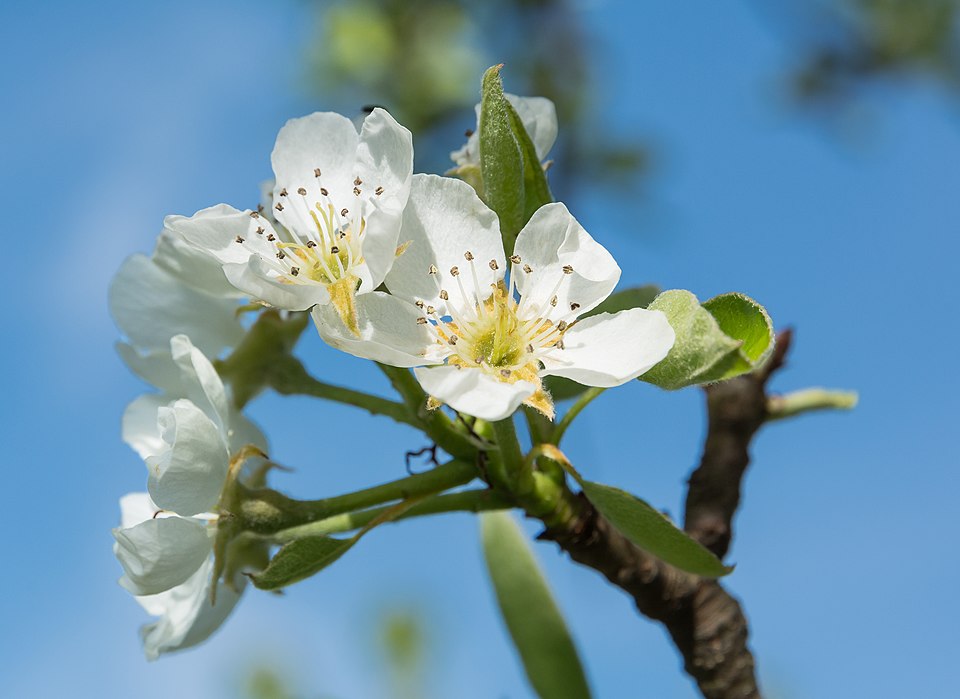
The Pear Tree, known scientifically as Pyrus communis, is a prominent deciduous fruit tree belonging to the extensive Rosaceae family, which also includes apples, roses, and cherries. Native to a vast region spanning central and western Europe, extending into parts of Asia, this species has been cultivated for millennia for its highly prized, succulent fruits. Typically, a mature Pyrus communis tree can reach impressive heights of 10 to 17 meters, though selective breeding and grafting techniques have also yielded more compact, dwarf varieties suitable for smaller orchards and home gardens. Its foliage consists of simple, alternately arranged leaves that are oval to oblong-ovate in shape, featuring finely serrated margins and a distinctive glossy dark green hue.
In the autumn, these leaves undergo a stunning transformation, displaying vibrant shades of red, orange, and gold. Early spring heralds the appearance of fragrant, delicate white flowers, each approximately 2-3 cm in diameter. These blossoms emerge in attractive corymbs, or clusters, often before the leaves are fully developed, creating a picturesque display and serving as a vital attractant for pollinators. The fruit, globally recognized as a pear, is a type of pome, characterized by its classic bell-shaped or pyriform structure.
Pear fruit coloration varies widely among cultivars, ranging from verdant greens and sunny yellows to deep russets and blush reds. A defining characteristic of the pear is its unique, slightly gritty texture, which is attributed to the presence of specialized stone cells, or sclereids, embedded within its juicy flesh. Beyond its culinary appeal, the pear is nutritionally significant, offering a rich source of dietary fiber and essential vitamins, contributing to its reputation as a healthful and refreshing food.
Trusted Scientific References
1. Authoritative external sources for Pyrus communis
1.1 Wikipedia — Pyrus communis
1.2 Kew POWO (Plants of the World Online)
1.3 PubMed — peer-reviewed research
1.4 NCBI Taxonomy Browser
1.5 GBIF — Global Biodiversity
1.1.Pear Tree — Key Features
- ✓Deciduous Fruit Tree — Sheds leaves seasonally, producing fruit annually.
- ✓Pome Fruit — Classified as a pome, characterized by its fleshy pericarp derived from the floral hypanthium.
- ✓High Dietary Fiber — Excellent source of both soluble and insoluble fiber for digestive health.
- ✓Rich in Antioxidants — Contains significant levels of flavonoids and phenolic acids.
- ✓Rosaceae Family Member — Belongs to the rose family, closely related to apples and stone fruits.
- ✓Widely Cultivated — One of the most important temperate fruit crops globally with numerous cultivars.
- ✓Distinctive Gritty Texture — Presence of stone cells (sclereids) gives pears their unique mouthfeel.
- ✓Spring Blossoms — Produces beautiful, fragrant white flowers in early spring.
- ✓Autumn Foliage — Leaves turn vibrant red, orange, and yellow hues in the fall.
- ✓Low Glycemic Index — Fiber content contributes to a slower rise in blood sugar.
1.2.Pear Tree — Quick Summary
- ✓Nutrient-Rich Fruit — Pears are packed with essential vitamins, minerals, and dietary fiber, supporting overall health.
- ✓Digestive Powerhouse — High fiber content aids in promoting healthy digestion and preventing constipation.
- ✓Antioxidant Benefits — Rich in phytonutrients like flavonoids and phenolic acids, offering protection against oxidative stress.
- ✓Versatile Culinary Use — Enjoyed fresh, dried, juiced, or cooked in a wide array of sweet and savory dishes.
- ✓Generally Safe — Considered a safe and beneficial food for most individuals when consumed as part of a balanced diet.
- ✓Blood Sugar Friendly — Low glycemic index due to fiber helps manage blood glucose levels effectively.
2.Pear Tree — Taxonomic Classification
3.Pear Tree — Reference Facts
4.Pear Tree — Structural Profile
5.Pear Tree — Habitat & Distribution
6.Pear Tree — Historical Applications
7.Pear Tree — Secondary Metabolites
- ✓Dietary Fiber — Pears are an excellent source of both soluble fiber (pectin) and insoluble fiber (cellulose, hemicellulose, lignin), crucial for digestive health, blood sugar regulation, and cholesterol reduction.
- ✓Phenolic Acids — Key compounds include chlorogenic acid, caffeic acid, p-coumaric acid, and ferulic acid, primarily concentrated in the peel, exhibiting potent antioxidant and anti-inflammatory activities.
- ✓Flavonoids — Significant flavonoids present are quercetin, kaempferol, catechin, epicatechin, and anthocyanins (in red-skinned varieties), known for their robust antioxidant, anti-inflammatory, and cardioprotective effects.
- ✓Triterpenoids — Ursolic acid and oleanolic acid are found, particularly in the peel, which have demonstrated anti-inflammatory, hepatoprotective, and potential anti-cancer properties.
- ✓Vitamins — Pears are a good source of Vitamin C (ascorbic acid), an essential antioxidant, and Vitamin K (phylloquinone), important for blood clotting and bone health, along with smaller amounts of B-complex vitamins.
- ✓Minerals — Essential minerals include potassium, vital for blood pressure regulation and fluid balance, as well as copper, manganese, and boron, which support bone health and enzyme function.
- ✓Organic Acids — Malic acid, citric acid, and succinic acid contribute to the pear's characteristic flavor profile and may have roles in energy metabolism and antioxidant activity.
- ✓Volatile Compounds — Esters, aldehydes, and alcohols contribute to the pear's distinctive aroma and flavor, though their direct medicinal contributions are generally less prominent than other phytochemicals.
- ✓Carotenoids — While not as abundant as in other fruits, some carotenoids are present, contributing to antioxidant defense and potentially supporting eye health.
8.Pear Tree — Research Insights
- ✓Digestive Health — Pears are exceptionally rich in dietary fiber, both soluble and insoluble, which promotes regular bowel movements, prevents constipation, and supports a healthy gut microbiome by acting as a prebiotic.
- ✓Antioxidant Protection — Abundant in flavonoids like quercetin and kaempferol, along with phenolic acids, pears actively neutralize free radicals, thereby reducing oxidative stress and cellular damage throughout the body.
- ✓Anti-inflammatory Effects — The phytonutrients found in pears, particularly triterpenoids and various phenolic compounds, exhibit anti-inflammatory properties that can help mitigate systemic inflammation and reduce the risk of chronic diseases.
- ✓Cardiovascular Support — The high fiber content aids in lowering cholesterol levels, while potassium helps regulate blood pressure, collectively contributing to improved heart health and reduced risk of cardiovascular ailments.
- ✓Blood Sugar Regulation — Despite their natural sweetness, pears have a relatively low glycemic index due to their fiber content, which helps slow sugar absorption and can assist in managing blood glucose levels, particularly beneficial for individuals with diabetes.
- ✓Bone Health — Pears contain essential minerals like Vitamin K and boron, which play crucial roles in calcium metabolism and bone mineralization, supporting strong bones and potentially reducing the risk of osteoporosis.
- ✓Hydration and Electrolyte Balance — With a high water content and a good source of potassium, pears contribute to maintaining proper hydration and electrolyte balance, which is vital for various bodily functions.
- ✓Immune System Boost — Vitamin C, present in pears, is a powerful antioxidant that enhances immune function, supporting the body's defense mechanisms against infections and illnesses.
- ✓Respiratory Health — In traditional Chinese medicine (TCM), pears are often consumed to moisten the lungs, clear heat, and alleviate coughs and sore throats, suggesting a soothing effect on the respiratory system.
- ✓Skin Health — The antioxidants in pears help protect skin cells from damage caused by environmental factors, potentially promoting a healthier complexion and slowing signs of aging.
- ✓Weight Management — Low in calories and fat, yet high in fiber, pears provide a feeling of fullness, which can help reduce overall calorie intake and support healthy weight management efforts.
- ✓Detoxification Support — The diuretic properties attributed to pears in some traditional systems, along with their fiber content, aid in the body's natural detoxification processes by promoting waste elimination.
8.1.Pear Tree — Reported Uses
9.Pear Tree — Adverse Effects
9.1.Pear Tree — Reported Side Effects
- ✓Allergic Reactions — Individuals sensitive to Rosaceae family members may experience oral allergy syndrome symptoms like itching or swelling of the mouth and throat.
- ✓Digestive Discomfort — Excessive consumption, particularly due to high fiber content, can lead to bloating, gas, or diarrhea in sensitive individuals.
- ✓Pesticide Residues — Non-organic pears may contain pesticide residues on their skin, necessitating thorough washing or peeling.
- ✓Sugar Content — While natural, the sugar content of pears should be considered by individuals managing diabetes, especially when consuming large quantities or pear juice.
- ✓Fructose Malabsorption — Some individuals with fructose malabsorption may experience digestive upset from the natural sugars in pears.
- ✓Cross-Reactivity — People allergic to birch pollen may experience cross-reactivity with pears.
9.2.Pear Tree — Clinical Safety Notes
- ✓Generally Recognized As Safe (GRAS) — Pyrus communis fruit is widely considered safe for consumption by the general population when eaten in moderation.
- ✓Pregnancy and Lactation — Consumption of pear fruit is generally considered safe and beneficial during pregnancy and lactation due to its nutritional value.
- ✓Medication Interactions — No significant adverse interactions with medications are commonly reported for pear fruit consumption; however, individuals on specific diets or medications should consult a healthcare professional.
- ✓Allergen Awareness — Individuals with known allergies to other Rosaceae fruits (e.g., apples, peaches) should exercise caution due to potential cross-reactivity.
- ✓Thorough Washing — Always wash fresh pears thoroughly to remove surface dirt, bacteria, and potential pesticide residues, especially if consuming the peel.
- ✓Skin Sensitivity — While rare, some individuals might experience mild skin irritation from direct contact with pear tree sap, though this is not typical for fruit consumption.
10.Pear Tree — How to Use
- ✓Fresh Consumption — The most common method; pears can be eaten raw, providing a refreshing snack rich in fiber and vitamins.
- ✓Juices and Smoothies — Pears can be juiced or blended into smoothies, offering a convenient way to consume their nutrients and aid hydration.
- ✓Dried Pears — Sliced and dried, pears make a concentrated, portable snack, preserving many of their beneficial compounds.
- ✓Culinary Applications — Incorporated into various dishes, including desserts (pies, tarts, crumbles), salads, and savory dishes, often paired with cheeses or meats.
- ✓Traditional Decoctions — In some traditional medicine systems, parts of the pear tree, particularly the fruit or leaves, are sometimes prepared as a decoction for respiratory ailments or digestive complaints.
- ✓Poultices — Historically, crushed pear leaves or fruit pulp have been applied topically as poultices to soothe skin irritations or minor wounds.
- ✓Preserves and Jams — Pears are excellent for making preserves, jams, and chutneys, extending their shelf life and allowing for year-round enjoyment.
- ✓Fermented Products — Pears can be fermented into ciders or vinegars, offering alternative forms of consumption with potential probiotic benefits.
11.Pear Tree — Growing Guide
- ✓Climate Requirements — Pyrus communis thrives in temperate climates, requiring a distinct cold period for proper dormancy and fruit set, typically needing 600-900 chill hours below 7°C (45°F).
- ✓Soil Preference — Prefers well-drained, fertile loamy soils with a pH between 6.0 and 7.0; good drainage is crucial to prevent root rot.
- ✓Propagation — Commonly propagated by grafting desired cultivars onto compatible rootstocks (e.g., quince or Pyrus calleryana) to control tree size and improve disease resistance.
- ✓Planting — Plant bare-root trees in late winter or early spring in a sunny location, ensuring proper spacing (e.g., 4-6 meters for standard trees, less for dwarfs).
- ✓Watering — Requires consistent moisture, especially during dry periods and fruit development; deep watering is more effective than frequent shallow watering.
- ✓Pruning — Annual pruning in late winter is essential for maintaining tree structure, promoting fruit production, improving air circulation, and removing dead or diseased wood.
- ✓Fertilization — Apply balanced fertilizer in early spring, adjusting based on soil test results to meet nutrient needs, particularly nitrogen, phosphorus, and potassium.
- ✓Pest and Disease Management — Monitor for common issues like pear scab, fire blight, codling moth, and pear psylla, employing integrated pest management strategies for control.
Reviewed by the Flora Medical Global Botanical Review Panel
Multi-disciplinary editorial group · Botany · Ethnobotany · Herbal-medicine literature
Who reviewed this: This page was checked by the Flora Medical Global Botanical Review Panel — an in-house editorial group of botany graduates, ethnobotany researchers, and horticulture practitioners who collectively maintain our 7,000+ plant encyclopedia. Meet the team.
Our 4-step verification process
1. Taxonomic verification
Scientific names and synonyms cross-checked against Kew POWO, World Flora Online, and The Plant List.
2. Phytochemical & medicinal cross-reference
Active compounds, traditional uses, and reported activities are cross-referenced with PubMed, USDA Dr. Duke's database, and peer-reviewed ethnobotanical literature.
3. Conservation & distribution check
Distribution, ecology, and conservation status confirmed against GBIF occurrence records and the IUCN Red List.
4. Editorial & safety review
Every entry passes an editorial pass for clarity, originality, and safety notices (toxicity, contraindications, dosage caveats) before publication.
Last reviewed:
Important medical disclaimer: This content is for educational and research purposes only. It is not medical advice and is not a substitute for consultation with a licensed healthcare provider. Do not use any herb to self-treat a medical condition without professional guidance.
Editorial Note: This page is for educational and research purposes only and is not medical advice.
Written by: Flora Medical Global Editorial Team
Reviewed by: Flora Medical Global Botanical Review Panel
Last Updated: June 15, 2026





Pear Tree — Comments & Community Reviews
Rate this plant